Is it true that up to 95 percent of the human genome consists of “junk DNA”?
Defenders of the modern version of Darwinism argue that the prevalence of “dead genes” is evidence of poor design. The human genome contains about 3 billion nucleotides linked together in chains. Specific segments of these nucleotides carry instructions for producing specific proteins, which in turn form the building blocks of tissues as well as the enzymes, hormones, and carrier molecules that carry out most cellular functions. In other words, DNA holds a genetic program that encodes the proteins responsible for directing embryonic development. According to evolutionists, mutations occasionally alter this genetic program to create new proteins (or modify their locations), and natural selection then acts on these changes to drive evolution. The key point is that our genetic manual contains the instructions for the proteins that form and power our bodies. However, in the 1970s, molecular biologists discovered that most of our DNA does not code for proteins. In fact, only about 5 percent of our DNA consists of protein-coding genes. The remaining 95 percent is noncoding—that is, it does not provide instructions for protein production. In 1972, Susumu Ohno, a Japanese-American geneticist and evolutionary biologist who was a pioneering figure in molecular evolution, referred to this noncoding DNA as “junk.”1 Hence, evolutionists claim that the non-protein-coding DNA, which makes up more than 95% of our genome, is “junk” with no real purpose—in other words, that most of our genome is essentially garbage. They argue that this so-called “junk DNA” serves as strong evidence for Darwin’s theory and against intelligent design, reasoning that an intelligent designer would not have filled our genome with so much useless material.
The concept of junk DNA arose from the evolutionary paradigm. Simply put, evolutionists argue that millions of years of random mutations—essentially accidental events—have gradually filled our genome with useless junk DNA, meaning DNA that serves no function. In other words, junk DNA refers to segments of our genome that are not there for any meaningful purpose related to helping us live, function, or survive—they exist for no reason at all. In this view, junk DNA is simply genetic clutter, the result of countless mutations that bloated our genome with non-functional material. One might ask: when scientists examine a segment of the genome, how do they determine whether it is junk or not? According to evolutionists, scientists are justified in assuming that a stretch of DNA is junk if they cannot identify a function for it. They claim that such segments make up a large portion of our genome. Their argument, essentially, is this: we do not know what this part of the genome does, therefore it must be junk. Although evolutionists may not always use these exact words, the structure of their argument follows this line of reasoning. To many, this seems like a weak argument, yet the evolutionary mindset remains strongly attached to the idea of junk DNA. The expectation of finding junk DNA fits naturally within their framework. When discussing this topic, it is important to begin by examining the predictions made by both evolutionists and proponents of intelligent design regarding junk DNA. From there, one can turn to the most recent scientific findings to see which view is more consistent with the evidence. Casey Luskin highlighted the contrasting expectations: he cited statements from evolutionists who asserted that non-coding DNA is junk and serves no purpose, as well as early predictions from intelligent design theorists who argued that these regions would likely have function. Many of these quotes are from mainstream scientific papers, books, or book chapters of a technical nature, while quite a few are from mainstream scientific or journalistic sources of a more popular style.2
Let us begin with the quotes from evolutionists. It is noteworthy that many of these quotes date back several decades, highlighting how the idea of junk DNA was born and nurtured within the evolutionary paradigm—though some are more recent. In 1963, Charles F. Ehret and Gérard De Haller wrote:3

In 1969, Jack Lester King and Thomas H. Jukes proposed the following:4

A particularly notable quote from the early days of the junk DNA concept comes from the well-known evolutionary biologist Susumu Ohno. As previously mentioned, Ohno’s 1972 paper titled “So much ‘junk’ DNA in our genome” is one of the works that helped coin the term junk DNA. Ohno stated:5

It is important to understand that Susumu Ohno is considered the founder of the field of neutral evolution, which is essentially the idea that random mutations can occur frequently in our DNA, gradually filling our genomes with unnecessary, non-functional sequences—useless junk. In 1976, Richard Dawkins wrote:6

However, from the perspective of Darwinian evolution, there is no paradox:7

L. E. Orgel and F. H. C. Crick made a prediction in a 1980 paper published in Nature titled “Selfish DNA: The Ultimate Parasite.” They stated that a large body of evidence suggests that much of the DNA in higher organisms is little more than junk:8

Orgel and Crick essentially predicted that much of our DNA would have no function—that it would be what they called “selfish DNA.” They even stated that it would be folly to search for a function. In other words, they not only predicted that this DNA would be junk, but also discouraged scientists from attempting to find any functional purpose for it. In 1980, W. F. Doolittle and C. Sapienza stated:9

In 1995, Philip Yam wrote:10

Oddly enough, even in 2009, Jerry A. Coyne still considered much of our DNA to be parasitic:11

Coyne continued:12

There is an overwhelming number of other quotes like this.13 It is truly striking that as recently as 2023, Larry Moran wrote in a book he published:14

Meanwhile, intelligent design theorists have long made a very different set of predictions regarding junk DNA. In stark contrast to evolutionists, they were predicting as early as the late 1990s and early 2000s that non-coding DNA—the so-called junk DNA—would ultimately be shown to have function, well before the “junk DNA” revolution gained momentum. In 1994, in a letter to Science, a pro–intelligent design engineer named Forrest Mims cautioned against assuming that junk DNA was useless:15

Science rejected Mims’ letter, but nonetheless, he made the prediction.16 In 1998, William A. Dembski, a prominent intelligent design theorist, wrote the following in an article published in the journal First Things:17

Likewise, in 2002, pro–intelligent design biologist Richard Sternberg predicted that so-called junk DNA would have function.18

In 2004, Jonathan Wells published a paper in which he not only strongly predicted that scientists would eventually find function for junk DNA, but also documented hundreds of studies that had already identified functional roles for so-called junk DNA by that time.19

Luskin noted that there is a multitude of such quotes.20 As is clear from all the above quotations, the predictions stemming from the evolutionary paradigm and those from the design-based paradigm differ sharply. This serves as a strong example in which proponents of intelligent design made a successful prediction that was later confirmed.
Here is an analogy that Luskin considers effective in helping laypeople engage with the topic of junk DNA in the genome: Imagine a cookbook. Evolutionists view this cookbook as if it were written by randomly throwing a basketball at a keyboard—implying that only certain sections contain actual recipes for producing meals, while the rest is meaningless junk. In contrast, intelligent design advocates believe this cookbook was written by someone with the deliberate intention of producing quality recipes. They argue that we need to scientifically investigate those parts of the book that seem unrelated to recipes, as they may contain important information—such as nutritional guidance, oven maintenance tips, or other supportive content. In the genome, this would mean that the seemingly “junk” sections are actually related to the functioning of the cell, even if not directly involved in protein coding—which appears to be the narrow criterion evolutionists often use to define function.21 Luskin noted that this analogy highlights a crucial point—namely, why intelligent design predicts that we would find function in so-called junk DNA. Quite simply, when intelligent agents create something—such as a recipe—they do so with intention, aiming for purpose and function. In the same way, if our genome is the product of design, as William Dembski argued, then we should expect to find, wherever possible, meaningful purpose and function in its components. In contrast, from an evolutionary standpoint, the analogy of a basketball thrown at a keyboard represents the effect of random mutations—producing disordered, nonfunctional output. Just as that chaotic process would result in mostly meaningless text, evolution is expected to yield large amounts of genetic material without purpose. Therefore, the differing predictions arise naturally from the distinct causal frameworks of evolutionary biology and intelligent design. In this light, the rationale behind intelligent design's expectation of function in junk DNA becomes clear and straightforward.22 Again, the naturalistic, Darwinian prediction holds that approximately 90% of the genome consists of junk DNA, whereas the prediction from the design perspective is much lower—around 10 to 20%—even though proponents of intelligent design typically do not specify an exact figure.23 In other words, intelligent design advocates predict that, by and large, the genome will prove to be overwhelmingly functional, whereas evolutionists maintain that it is, for the most part, overwhelmingly non-functional—junk.
Now, the question is: what have scientists discovered over the past 40 years of research? Who has been proven right? The findings from the last four decades of scientific investigation reveal overwhelming evidence of biochemical functionality throughout the human genome. As will be further detailed shortly, this breakthrough stems from the Encyclopedia of DNA Elements (ENCODE) project, which found that over 80% of the genome exhibits signs of biochemical activity—essentially meaning that these regions of DNA are being transcribed into RNA. We will expand on the ENCODE project shortly. Luskin noted that, in preparation for a recent debate on junk DNA with biologist Dan Stern Cardinale (also known as CreationMyths),24 he consulted an RNA biologist at an Ivy League university who supports intelligent design. Although this scientist preferred to remain anonymous, Luskin asked him about the prevailing view in his field regarding transcribed regions of DNA and whether the notion of junk RNA still holds. The biologist explained that, in his field, the prevailing trend is: if a segment of DNA is being transcribed into RNA, then it likely serves a purpose—there is probably a functional reason behind it.25 The bottom line is that evolutionists have been proven wrong: far from being mostly junk, evidence from genome-sequencing projects reveals that virtually all of an organism’s DNA is transcribed into RNA. While most of this RNA is not translated into proteins, it nonetheless carries out essential regulatory functions. Scientific journals continue to publish new articles each month uncovering additional roles for these RNA molecules. As Jonathan Wells has noted, this is not some recent revelation—the evidence has been steadily accumulating since 2003, when the human genome was first fully sequenced, showing that “pseudogenes” and other so-called “junk DNA” sequences are, in fact, functional. These examples represent just a fraction of the many scientific articles published since 2003 that document the functionality of what was once dismissed as junk DNA.26 In 2021, Alexander J. Gates and his colleagues published an article in the journal Nature in which they tracked the growing number of protein-coding genes identified by scientists over time, alongside the rising number of non–protein-coding genetic elements—many of which were once dismissed as junk DNA—that have since been found to serve specific functions.27 The curve representing the rate at which scientists are discovering functions for specific non–protein-coding DNA elements—previously labeled as junk DNA—is rising at an exponential pace. The authors documented over 130,000 distinct genetic elements that were once thought to be non-functional but are now recognized as having specific roles. These are only the elements for which scientists have already identified clear functions; many more are likely still awaiting discovery. Gates and his colleagues wrote:28

They also wrote:29

They further wrote:30

In short, science is progressing at its usual slow pace, but what is clear from the ENCODE project is that the vast majority of the genome exhibits evidence of biochemical functionality. When a segment of DNA is transcribed into RNA, scientists generally understand this as an indication of purpose—that it likely serves a function. The point is that we now have strong evidence supporting the functionality of most of the genome. Unfortunately, evolutionists continue to ignore this substantial body of evidence, which directly contradicts the Darwinian prediction that our genome should be filled with “dead” DNA. Unsurprisingly, they repeatedly resort to theological arguments—the very kind that Steven R. Scadding once said “should be given no place in a scientific discussion of evolution.”31
Hence, contrary to what biologists believed for the past three decades, the vast majority of human DNA is involved in maintaining an individual’s well-being. This is one of the key insights of the Encyclopedia of DNA Elements project, known as ENCODE—widely regarded as one of the most significant milestones in modern science. ENCODE is an ongoing, multi-national public research consortium—an international collaboration involving numerous research groups, institutions, laboratories, and hundreds of scientists from around the world.32 The University of Washington (UW) in Seattle is a major contributor to this effort, and the U.S. National Human Genome Research Institute (NHGRI) serves as a primary source of funding for the ENCODE project. This ambitious initiative was launched in September 2003 by the NHGRI and is considered the second most critical project undertaken by the institute, following the successful completion of the Human Genome Project (HGP). In essence, ENCODE was designed to pick up where the HGP left off, with the goal of identifying and analyzing the complete set of functional elements in the human genome—including those that operate at the protein and RNA levels, as well as regulatory elements that control when and where genes are active. The Human Genome Project itself was an international research initiative that began in 1990 in the United States, with the official aim of mapping the complete DNA sequence of human beings. In May 2003, the HGP was declared complete, having sequenced the three billion DNA bases that make up the human genome and provided a basic catalog of genes. However, only around 21,000 genes were identified—far fewer than biologists had expected. These genes accounted for merely 2 percent of the cell’s DNA, leaving scientists to question the role of the remaining 98 percent. As a follow-up to the HGP, the NHGRI launched the ENCODE project to address this very question. It has since become the most comprehensive effort to understand the full complexity of the three billion nucleotides within our cells by identifying all functional regulatory regions across the entire genome. On September 5, 2012, ENCODE researchers released their initial—but groundbreaking—findings, representing five years of progress. These results prompted scientists worldwide to reconsider foundational assumptions in genetics, including the definition of a gene and the notion of junk DNA. One of ENCODE’s most significant discoveries was the identification of approximately four million sites involved in regulating gene activity—compared to just a few thousand previously known. Researchers uncovered millions of DNA switches that determine how, when, and where different genes are activated in the body—essentially identifying the genome’s operating system. In total, at least 80 percent of the genome was found to be biochemically active at some point in a person’s life. Dr. John A. Stamatoyannopoulos, director of the UW ENCODE center, explained why understanding the function of the human genome is vital to advancing genomic medicine:33

In the current century, interpreting human genome data has become one of the foremost challenges faced by scientists worldwide. To address this, the NHGRI launched its most ambitious initiative—the ENCODE project—in 2003. Between 2003 and 2007, researchers applied all available DNA analysis techniques to study approximately 1% of the human genome, amounting to about 30 million base pairs. In 2007, the project was expanded to encompass the entire human genome. At that stage, new and advanced technologies were incorporated to enhance accuracy, reduce costs, and improve efficiency in data analysis. 34 It turns out—contrary to earlier expectations—that the human genome contains a relatively modest number of genes, around 20,000, but these genes are regulated by millions of DNA switches, forming a complex system that functions much like an operating system for the cell. The University of Washington lab was the most prolific contributor to developing the first comprehensive maps of these regulatory switches and played a leading role in the collaborative “team science” effort involving over 400 scientists participating in the ENCODE project. On September 5, 2012, ENCODE released a substantial set of findings to the public, publishing 30 papers across multiple scientific journals: 6 in Nature, 18 in Genome Biology, and 6 in Genome Research. 35 These results are based on 1,640 genome-wide data sets generated across 147 different cell types. As previously noted, one of ENCODE’s most striking findings relates to the concept of so-called junk DNA. Until recently, it was widely believed that at least 80% of human DNA was non-functional—junk. However, the ENCODE consortium reported that functional roles could be assigned to more than 80% of the genome. As a result, many regions of the genome that were once considered non-functional or overlooked are now recognized as being filled with regulatory elements such as promoters, enhancers, and RNA transcripts, all of which play a crucial role in controlling gene expression.36 Indeed, September 5, 2012 was a landmark day for Dr. John Stamatoyannopoulos, professor of medicine and genome sciences at the University of Washington (UW). On that day, he served as senior author on four ENCODE-related papers published in some of the most prestigious scientific journals: one in Science, another in Cell, and two in Nature. By the end of the day, news from his UW laboratory—which applies large-scale molecular, computational, and genome engineering technologies to decipher the regulatory circuitry of the human and other complex genomes—along with findings from fellow researchers on the federally funded ENCODE project, had made headlines around the world.37 This project has systematically mapped regions of transcription, transcription factor binding, chromatin structure, and histone modification. These comprehensive data sets have enabled scientists to assign biochemical functions to 80% of the genome, particularly in areas outside the well-studied protein-coding regions. Many of the identified candidate regulatory elements are physically linked to one another and to expressed genes, offering valuable new insights into the mechanisms underlying gene regulation. Moreover, these newly identified elements show a statistical correlation with sequence variants associated with human disease, thereby enhancing researchers’ ability to interpret genetic variation. Overall, the ENCODE project has provided profound new understanding of the organization and regulation of our genes and genome, and it serves as a far-reaching resource of functional annotations for ongoing biomedical research.38 The bottom line is that much of what was once dismissed as junk DNA—far from being an evolutionary byproduct—has turned out to contain vital instructions that regulate the switching on and off of genes across various cell types. Alterations in these regulatory instructions can influence a wide range of traits and conditions, from color vision to the likelihood of developing diabetes, cardiovascular disease, and numerous other disorders. As Dr. Stamatoyannopoulos noted:39

Richard Myers of the HudsonAlpha Institute for Biotechnology in Alabama, one of the leading figures of the ENCODE project, said: “This concept of ‘junk DNA’ is really not accurate. It is an outdated metaphor.”40 Ewan Birney of the European Bioinformatics Institute in Britain, another leading figure in the ENCODE project, said:41

Elise Feingold of the National Human Genome Research Institute—the federal agency that provided approximately $200 million in funding for the ENCODE project—said:42

In a nutshell, ENCODE has helped explain how such a small number of genes can give rise to an organism as complex as a human being. As scientists have clarified, the key lies in regulation—controlling when genes are turned on or off in different types of cells, adjusting the level of gene expression, and coordinating interactions among genes. This is where much of the biological activity takes place. Ongoing research will undoubtedly continue to reveal that virtually all of the DNA passed down from generation to generation—including the once-misunderstood portions of the genome labeled as “junk DNA”—has been preserved for a purpose.
In his book The Myth of Junk DNA, biologist Jonathan Wells exposes the claim that the human genome is largely composed of junk DNA as an anti-scientific myth—one that disregards mounting evidence, relies on illegitimate theological speculation, and hinders biomedical progress. Wells demonstrates that, contrary to the assertions of evolutionists, the genome is increasingly being recognized as a multidimensional, integrated system in which non–protein-coding DNA carries out a wide range of essential biological functions. If anything, the genome points toward intelligent design rather than away from it. Indeed, anyone who reads Wells’s book will come away with a profoundly different understanding of the genome—and of those who purport to speak for science while misrepresenting the evidence. Wells received widespread praise for his groundbreaking work. Dr. Norman C. Nevin, professor emeritus of medical genetics at Queen’s University, Belfast, said:43

Ralph Seelke, professor of microbial genetics and cell biology at the University of Wisconsin–Superior, said:44

Russell W. Carlson, professor of biochemistry and molecular biology at the University of Georgia, said:45

Michael Denton, a medical geneticist and author of Nature’s Destiny, said:46

Wolf-Ekkehard Lönnig, who worked for 25 years as a research scientist at the Max Planck Institute for Plant Breeding Research in Cologne, Germany, said:47

Jay Richards, a senior fellow at Discovery Institute’s Center for Science and Culture, co-author of The Privileged Planet: How Our Place in the Cosmos Is Designed for Discovery, and editor of God and Evolution, said:48

Christian apologists Wintery Knight and Desert Rose conducted an interview with Dr. Casey Luskin on the topic of junk DNA.49 Wintery Knight and two of her colleagues, Jonathan McLatchie and Richard Sternberg, decided to review the research papers at their disposal that reported functions for junk DNA. In doing so, they compiled a bibliography of over 800 studies demonstrating functional roles for what was once considered non-functional genetic material. Wintery Knight observed: “this is literally just scratching the surface; it is just the tip of the iceberg, preferably speaking. So, there is so much more out there. “50 At the close of the podcast episode, Luskin was asked whether it is fair to say that belief in the evolutionary paradigm functions as a science stopper—hindering or slowing down scientific discovery regarding the true nature of the genome. His answer was:51

A 2003 article in the journal Science stated that, although the term “junk DNA” was certainly catchy, it discouraged mainstream researchers from investigating non-coding genetic material for many years:52

It is both interesting and deeply significant that even the journal Science acknowledged how the concept of junk DNA hindered scientific progress by discouraging researchers from exploring its function. Clearly, much of the responsibility for this misdirection lies with the evolutionary paradigm. John S. Mattick, a professor of RNA biology at the University of New South Wales (UNSW Sydney) and one of the world’s leading experts in the field, together with Paulo Amaral, an assistant professor of bioengineering at Insper in São Paulo, Brazil, addressed this issue in their groundbreaking book RNA, The Epicenter of Genetic Information, in which they stated:53

Essentially, Mattick and Amaral argue that the idea of junk DNA having function stands in direct opposition to the dogmas of evolutionary theory—dogmas that have hindered scientific progress and understanding in this area. In short, junk DNA serves as a clear example of how the evolutionary paradigm can function as a science stopper. By contrast, had intelligent design been the prevailing framework, it likely would have enabled scientists to make progress much more rapidly. In fact, even mainstream evolutionists have begun to acknowledge that a paradigm shift has occurred. John S. Mattick, who has long been a vocal critic of the junk DNA narrative within the evolutionary community, published an important paper in BioEssays. He deserves significant credit for challenging the prevailing view in the field. In that article, published just last year, Mattick affirmed that there has indeed been a paradigm shift away from the concept of junk DNA.54

When the ENCODE papers were released in 2012, the journal Science published an article titled “ENCODE Project Writes Eulogy for Junk DNA.”55 Indeed, the ENCODE project effectively declared the death of “junk DNA,” as it provided conclusive evidence that the vast majority—at least 80%—of our genome is highly biochemically active, revealing functional elements throughout.
Several mainstream scientific sources have asserted that scientists have experienced a shift in their thinking—namely, that junk DNA actually has function. Some have even admitted that evolutionary assumptions hindered scientific discovery in this area, delaying the recognition of functionality in non-coding DNA. As scientific understanding has advanced and new findings have emerged, a number of prominent figures in the field have reconsidered their stance on whether junk DNA has a purpose. One such figure is Richard Dawkins, who for years maintained that the vast majority of our genome was junk. Dawkins was one of the key proponents of the concept of “selfish genes”—the idea that genes exist not for the benefit of the organism, but to ensure their own replication. This concept underpinned the notion of selfish or parasitic DNA—DNA that merely replicates itself without offering any functional benefit to the organism—and helped establish the foundation for the junk DNA narrative. However, after the ENCODE papers were published, Dawkins was confronted with this new evidence during a debate. Here is what he said:56

Dawkins is now attempting to rewrite the long history of predictions in which he—and many other evolutionary scientists—claimed that the genome was filled with junk. He is essentially saying, “Oh no, this is what we were predicting all along.” But clearly, he saw the evidence and shifted his stance. Another prominent figure who changed his mind is Francis S. Collins, who led the Human Genome Project and directed a wide range of research initiatives as the head of the National Human Genome Research Institute (NHGRI) from 1993 to 2008. After the ENCODE results were released, Collins remarked that it would be hubris to continue using the term “junk DNA.” He delivered this comment during his talk at the 33rd Annual J. P. Morgan Healthcare Conference in San Francisco (January 12–15, 2015). His presentation took place in the late afternoon on Tuesday, January 13. The podcast is available on the conference website [J. P. Morgan Healthcare Conference], and the relevant comment appears at the 30-minute mark, where he addressed a question concerning junk DNA.57

Collins also stated in his book The Language of Life:58

It is truly hard to believe that this is the same Collins who, in The Language of God—his 2006 autobiographical account of the Human Genome Project (HGP) and its scientific, historical, and societal significance—stated that it “strains credulity” to think that more than a few pieces of so-called “junk DNA” could be functional in the cell. It is worth recalling that the HGP was completed in 2003, and in that very book, Collins claimed that about 45% of our genome is a sort of flotsam and jetsam—nonfunctional remnants—and used this assertion as part of his argument against intelligent design.59 But he tells us in his new book:60

Wayt Gibbs, a freelance science writer based in Seattle and a former editor at Scientific American, said:61

Helen Pearson, a science journalist, author and Chief Magazine Editor for the journal Nature, said: “DNA previously written off as junk actually carries biological information.”62 Michele Morgante, professor of genetics at the University of Udine, Italy, said:63

Mathew W. Wright and Elspeth A. Bruford wrote:64

Gina Kolata, a senior medical writer for The New York Times, said:65

Ewan Birney, a director of the European Bioinformatics Institute (EMBL-EBI) and a senior scientist at the European Molecular Biology Laboratory, said:66

Maria Assunta Biscotti, associate professor in the Department of Life and Environmental Sciences at the Polytechnic University of Marche Ancona, Italy, and her colleagues wrote:67

Daniel Bastardo Blanco, a scientist, writer and project manager in Memphis, Tennessee, said:68

Seth W. Cheetham—a molecular biologist and biochemist specializing in the molecular mechanisms of gene regulation, with a long-standing interest in the functions of so-called “junk” DNA—and his colleagues said:69

Epidemiologist Elise J. Farley and her colleagues wrote:70

Emily Mortola—a freelance writer and medical editor for the National Board of Osteopathic Medical Examiners—and Manyuan Long—a China-born American evolutionary biologist and geneticist—said:71

Maria Stitz and her team stated:72

Vivien Marx, a multi-platform journalist covering various fields of science and technology, wrote:73

Marx also wrote:74

Marx further wrote:75

And he wrote:76

Peter A. Corning, an American biologist, consultant, and complex systems scientist, along with his colleagues, wrote:77

Iain Konigsberg, research instructor in the Department of Biomedical Informatics at the University of Colorado School of Medicine, said:78

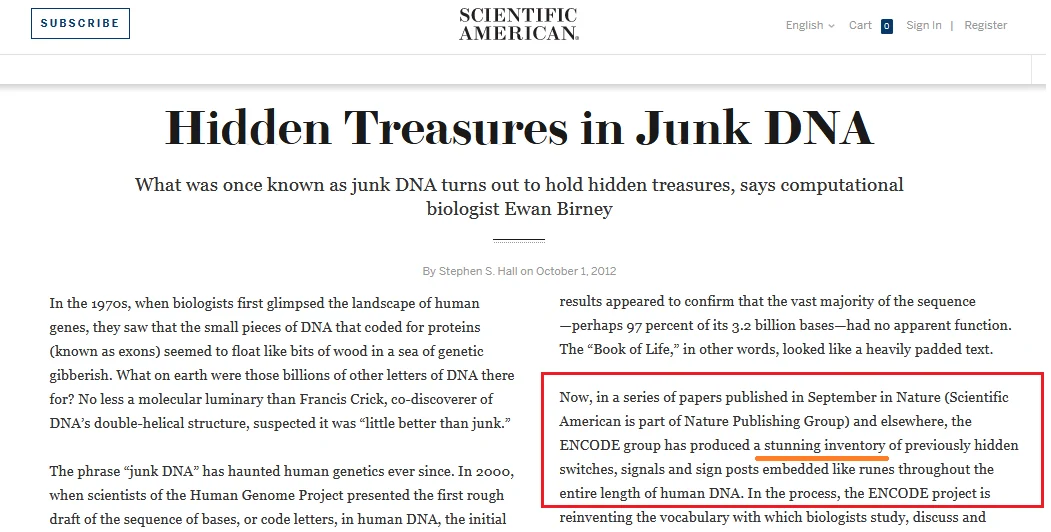
In a nutshell, when scientists examine the roles of various genetic elements, they consistently find that these elements are functional. In other words, the more researchers investigate the so-called non-coding DNA, the more evidence they uncover of its functionality. They are not finding that this DNA is simply random, bloated genetic junk filling our genomes; rather, they are discovering that it plays a critical role in the overall function of the genome. It is becoming increasingly clear that, over time, scientists will discover that virtually every nucleotide is associated with a specific biochemical function. Luskin concluded: “The trend line of the data shows mass functionality in our genome, and the junk DNA is wrong.”79 It is vitally important to delve deeply into the topic of junk DNA, as it is becoming an increasingly significant area of research. Scientists are continually uncovering more about epigenetics and discovering that the genome—and the mechanisms of life—are far more intricate than previously understood. Research increasingly shows that what was once dismissed as “junk DNA” is, in fact, the maestro of the genome: orchestrating its activity, directing its operations, and regulating some of its most complex biological processes. As computational biologist Ewan Birney told Scientific American, what was once labeled junk DNA is now revealing hidden treasures.80
Interestingly, a new scientific field called epigenetics has emerged to investigate the functions and properties of what was once considered junk DNA—essentially, the science of no-longer-junk DNA. Epigenetics, derived from the Greek prefix epi- meaning “above” or “on top of” genetics, refers to the study of gene expression regulation that is not caused by changes in the DNA sequence itself. Instead, it involves external modifications to DNA that switch genes “on” or “off.” These modifications do not alter the genetic code but influence how cells interpret and utilize genetic information.81 On a final note, when one reflects on the various arguments regarding the origin of the universe, the origin of life, and fine-tuning, it becomes clear that early scientific predictions often followed a naturalistic trajectory: the universe is eternal, the Milky Way and Earth are unremarkable, and there is nothing inherently special about our universe that supports life. Yet discovery after discovery—thirty, forty, fifty and counting—has gradually overturned these assumptions. As Luskin observed, the progress of science—what he refers to as the “trend line”—increasingly challenges the naturalist’s ability to assert, with a straight face, “Gee, this doesn’t look designed!”82 We see this pattern repeating itself time and again—in cosmology, paleontology, and now genetics: materialistic predictions consistently fail to hold up under scrutiny. Rank-and-file biologists, those approaching the data without an evolutionary agenda, clearly recognized that the ENCODE results marked the demise of the junk DNA narrative. The evidence overwhelmingly shows that scientists are uncovering increasing functionality across our genome. In a word, intelligent design stands out as the paradigm poised to guide biology into a new era—one in which scientists are realizing that life operates with far more information, control, and regulation than previously imagined.
Notes and References
- 1
Susumu Ohno, “So much ‘junk’ DNA in our genome,” Brookhaven Symposia in Biology, vol. 23, 1972, pp. 366–70.
- 2
Casey Luskin, “Junk DNA” from Three Perspectives: Some Key Quotes, Evolution News, 2 May 2024, https://evolutionnews.org/2024/05/junk-dna-from-three-perspectives-some-key-quotes/.
- 3
Charles F. Ehret and Gérard De Haller, “Origin, Development, and Maturation of Organelles and Organelle Systems of the Cell Surface in Paramecium,” Journal of Ultrastructure Research, vol. 9, supplement 1, Oct. 1963, pp.1, 3–42. DOI: https://doi.org/10.1016/S0022-5320(63)80088-X.
- 4
Jack Lester King and Thomas H. Jukes, “Non-Darwinian Evolution: Most Evolutionary Change in Proteins May Be Due to Neutral Mutations and Genetic Drift,” Science, 16 May 1969, vol. 164, issue 3881, pp. 788–798. DOI: https://doi.org/10.1126/science.164.3881.788.
- 5
Susumu Ohno, “So Much "Junk" DNA in Our Genome,” Brookhaven Symposia in Biology, vol. 23, 1972, pp. 366–70.
- 6
Richard Dawkins, The Selfish Gene, (New York, U.S.: Oxford University Press, 1976), p. 47.
- 7
Ibid.
- 8
L. E. Orgel & F. H. C. Crick, “Selfish DNA: the Ultimate Parasite,” Nature, vol. 284, 1980, pp. 604–607. DOI: https://doi.org/10.1038/284604a0.
- 9
W. F. Doolittle and C. Sapienza, “Selfish Genes, the Phenotype Paradigm and Genome Evolution,” Nature, vol. 284, issue 5757, 1980, pp. 601–3. DOI: https://doi.org/10.1038/284601a0.
- 10
Philip Yam, “Talking Trash: Linguistic Patterns Show up in Junk DNA,” Scientific American, 1 Mar. 1995, https://www.scientificamerican.com/article/talking-trash/.
- 11
Jerry A. Coyne, Why Evolution Is True, (London, U.K.: Penguin Books, 2010), pp. 66–67.
- 12
Ibid.
- 13
Casey Luskin, “Junk DNA” from Three Perspectives: Some Key Quotes, Evolution News, 2 May 2024, https://evolutionnews.org/2024/05/junk-dna-from-three-perspectives-some-key-quotes/.
- 14
Larry Moran, What’s in Your Genome? 90% of Your Genome Is Junk Hardcover, (Toronto, Canada: Aevo UTP, 2023).
- 15
Faye Flam, “Hints of a Language in Junk DNA,” Science, vol. 266, issue 5189, 25 Nov. 1994, p. 1320. DOI: https://doi.org/10.1126/science.7973718.
- 16
Casey Luskin, “Junk DNA” from Three Perspectives: Some Key Quotes, Evolution News, 2 May 2024, https://evolutionnews.org/2024/05/junk-dna-from-three-perspectives-some-key-quotes/.
- 17
William Dembski, “Science and Design,” First Things, Oct. 1998, https://www.firstthings.com/article/1998/10/science-and-design.
- 18
Richard Sternberg, “On the Roles of Repetitive DNA Elements in the Context of a Unified Genomic-Epigenetic System,” Annals of the New York Academy of Sciences, vol. 981, 2002, pp. 154–88. DOI: https://doi.org/10.1111/j.1749-6632.2002.tb04917.x.
- 19
Jonathan Wells, “Using Intelligent Design Theory to Guide Scientific Research,” Intelligent Design, 10 May 2004, https://www.discovery.org/a/19867/.
- 20
Casey Luskin, “Junk DNA from Three Perspectives: Some Key Quotes,” Evolution News, 2 May 2024, https://evolutionnews.org/2024/05/junk-dna-from-three-perspectives-some-key-quotes/.
- 21
Wintery Knight and Desert Rose, “Casey Luskin: Debunking the Myth of Junk DNA,” Knight & Rose Show, 22 June 2024, https://opentheo.org/i/7151716208267356946/casey-luskin-debunking-the-myth-of-junk-dna.
- 22
Ibid.
- 23
Ibid.
In fact, even evolutionists do not have a clear idea of the number. That is, depending on who you ask, you will see 90% junk, 80% junk. Francis Collins in his book, The Language of God, said that 45% of our DNA is what he called flotsam and jetsam, which is of course, trash floating in the ocean. So, they make different numbers, but the predictions are clear.
- 24
“Dr. Casey Luskin vs. Dr. Dan Stern Cardinale: Is the Human Genome Largely Junk DNA?” YouTube, uploaded by The NonSequitur Show, 3 May 2024, https://www.youtube.com/live/JPs2xwxT4rI.
- 25
Ibid.
- 26
E. S. Balakirev and F.J. Ayala, “Pseudogenes: Are They ‘Junk’ or Functional DNA?” Annual Review of Genetics, vol. 37, 2003, pp. 123–151; A. Hüttenhofer et al., “Non-Coding RNAs: Hope or Hype?” Trends in Genetics, vol. 21, 2005, pp. 289–297; J. S. Mattick and I.V. Makunin, “Non-Coding RNA,” Human Molecular Genetics, vol. 15, 2006, pp. R17–R29; R. K. Slotkin and R. Martienssen, “Transposable Elements and the Epigenetic Regulation of the Genome,” Nature Reviews Genetics, vol. 8, 2007, pp. 272–285; P. Carninci et al., “Multifaceted Mammalian Transcriptome,” Current Opinion in Cell Biology, vol. 20, 2008, pp. 274–80; C. D. Malone and G. J. Hannon, “Small RNAs as Guardians of the Genome,” Cell, vol. 136, 2009, pp. 656–668; C. P. Ponting et al., “Evolution and Functions of Long Noncoding RNAs,” Cell, vol. 136, 2009, pp. 629–641.
- 27
Alexander J. Gates, “A Wealth of Discovery Built on the Human Genome Project — by the Numbers,” Nature, vol. 590, issue 7845, 11 Feb. 2021, https://www.nature.com/articles/d41586-021-00314-6.
- 28
Ibid.
- 29
Ibid.
- 30
Ibid.
- 31
Steven R. Scadding, “Do ‘Vestigial Organs’ Provide Evidence for Evolution?” Evolutionary Theory, vol. 5, 1981, pp. 173–176; Steven R. Scadding, “Do ‘Vestigial Organs’ Provide Evidence for Evolution?” Evolutionary Theory, vol. 6, 1982, pp. 171–173.
- 32
Ewan Birney, “The Making of ENCODE: Lessons for Big Data Projects,” Nature, vol. 489, issue 7414, 6 Sep. 2012, pp. 49–51. DOI: https://doi.org/10.1038/489049a.
- 33
Stephanie Seiler and Leila Gray, “Encyclopedia of DNA Elements Compiled; UW a Key Force in Project ENCODE,” University of Washington, 5 Sep. 2012, https://www.washington.edu/news/2012/09/05/encyclopedia-of-dna-elements-compiled-uw-a-key-force-in-project-encode/.
- 34
The ENCODE Project started in 2003 with the ENCODE Pilot Project, which focused on 1% of the human genome and subsequently completed two additional phases (ENCODE 2 and ENCODE 3) which conducted whole-genome analyses on the human and mouse genomes. With the success of these three phases of the ENCODE Project and the recognition that additional effort was needed to complete and understand the catalog of candidate regulatory elements compiled, the NHGRI funded the fourth phase of ENCODE (ENCODE 4) in February 2017 to continue and expand on its work to understand the human and mouse genomes.
- 35
Joseph R. Ecker et al., “Genomics: ENCODE Explained,” Nature, vol. 489, issue 7414, 6 Sep. 2012, pp. 52–54. DOI: https://doi.org/10.1038/489052a.
- 36
ENCODE Project Consortium, “An Integrated Encyclopedia of DNA Elements in the Human Genome,” Nature, vol. 489, issue 7414, 6 Sep. 2012, pp. 57–74. DOI: https://doi.org/10.1038/nature11247.
- 37
Julie Garner, “No Such Thing as ‘Junk’ DNA, Researchers Say,” University of Washington Magazine, issue Dec. 2012, https://magazine.washington.edu/feature/no-such-thing-as-junk-dna-researchers-say/.
- 38
The ENCODE Project Consortium, “An Integrated Encyclopedia of DNA Elements in the Human Genome,” Nature, vol. 489, issue 7414, 06 Sep. 2012, pp. 57–74. DOI: https://doi.org/10.1038/nature11247.
- 39
Julie Garner, “No Such Thing as ‘Junk’ DNA, Researchers Say,” University of Washington Magazine, issue Dec. 2012, https://magazine.washington.edu/feature/no-such-thing-as-junk-dna-researchers-say/.
- 40
David Brown and Hristio Boytchev, “‘Junk DNA’ Concept Debunked by New Analysis of Human Genome,” The Washington Post, 5 Sep. 2012, https://www.washingtonpost.com/national/health-science/junk-dna-concept-debunked-by-new-analysis-of-human-genome/2012/09/05/cf296720-f772-11e1-8398-0327ab83ab91_story.html.
- 41
Ibid.
- 42
Ibid.
- 43
Jonathan Wells, “The Myth of Junk DNA,” Discovery Institute, https://www.discovery.org/b/the-myth-of-junk-dna/.
- 44
Ibid.
- 45
Ibid.
- 46
Ibid.
- 47
Ibid.
- 48
Ibid.
- 49
Wintery Knight and Desert Rose, “Casey Luskin: Debunking the Myth of Junk DNA,” Knight & Rose Show, 22 June 2024, https://opentheo.org/i/7151716208267356946/casey-luskin-debunking-the-myth-of-junk-dna.
- 50
Ibid.
- 51
Ibid.
- 52
Wojciech Makalowski, “What Is Junk DNA, and What Is It Worth?” Scientific American, 12 Feb. 2007, https://www.scientificamerican.com/article/what-is-junk-dna-and-what/
- 53
John S. Mattick and Paulo Amaral, RNA, the Epicenter of Genetic Information, (Boca Raton, U.S.: CRC Press, 2002). DOI: https://doi.org/10.1201/9781003109242.
- 54
John S. Mattick, “A Kuhnian Revolution in Molecular Biology: Most Genes in Complex Organisms Express Regulatory RNAs,” BioEssays, 15 June 2023, https://doi.org/10.1002/bies.202300080.
- 55
Elizabeth Pennisi, “ENCODE Project Writes Eulogy for Junk DNA,” Science, vol. 337, issue 6099, 7 Sep. 2012, pp. 1159–1161. DOI: https://doi.org/10.1126/science.337.6099.1159.
- 56
“Jonathan Sacks and Richard Dawkins at BBC RE: Think festival 12 September 2012,” YouTube, uploaded by Brian Sacks, 15 Sep. 2012, https://www.youtube.com/watch?v=roFdPHdhgKQ.
- 57
“Collins F. 2015. Speech at the JP Morgan Healthcare Conference on 2015 Jan 13,” available from: Laurence A. Moran, “Francis Collins rejects junk DNA,” Sandwalk, 18 Jan. 2015, https://sandwalk.blogspot.com/2015/01/francis-collins-rejects-junk-dna.html.
- 58
Francis S. Collins, The Language of Life: DNA and the Revolution in Personalized Medicine, (New York, U.S.: Harper Perennial, 2011), p. 6.
- 59
Francis S. Collins, The Language of God: A Scientist Presents Evidence for Belief, (New York, U.S.: Free Press, 2006), pp. 129–130.
Darwin’s theory predicts that mutations that do not affect function (namely, those located in “junk DNA”) will accumulate steadily over time. Mutations in the coding regions of genes, however, are expected to be observed less frequently, since most of these will be deleterious, and only a rare such event will provide a selective advantage and be retained during the evolutionary process. That is exactly what is observed. This latter phenomenon even applies to the fine details of the coding regions of genes… If, as some might argue, these genomes were created by individual acts of creation, why would this particular feature appear?
- 60
Francis S. Collins, The Language of Life: DNA and the Revolution in Personalized Medicine, (New York, U.S.: Harper Perennial, 2011), p. 293.
- 61
Wayt Gibbs, “The Unseen Genome: Gems among the Junk,” Scientific American, vol. 289, issue 5, Nov. 2003, pp. 26–33. DOI: https://doi.org/10.1038/scientificamerican1103-46.
- 62
Helen Pearson, “Genetic Information: Codes and Enigmas,” Nature, vol. 444, issue 7117, 16 Nov. 2006, pp. 259–61. DOI: https://doi.org/10.1038/444259a.
- 63
Michele Morgante, “Plant Genome Organisation and Diversity: The Year of the Junk!” Current Opinion in Biotechnology, vol. 17, issue 2, 2006, Apr. 2006, pp. 168–73. DOI: https://doi.org/10.1016/j.copbio.2006.03.001.
- 64
Mathew W. Wright and Elspeth A. Bruford, “Naming 'Junk': Human Non-Protein Coding RNA (ncRNA) Gene Nomenclature,” Human Genomics, vol. 5, issue 2, 1 Jan. 2011, pp. 90–8. DOI: https://doi.org/10.1186/1479-7364-5-2-90.
- 65
Gina Kolata, “Bits of Mystery DNA, Far From ‘Junk,’ Play Crucial Role,” The New York Times, 5 Sept. 2012, https://www.nytimes.com/2012/09/06/science/far-from-junk-dna-dark-matter-proves-crucial-to-health.html.
- 66
As quoted in Ed Yong, “ENCODE: The Guide to the Human Genome: Not Exactly Rocket Science,” Discover Magazine, 5 Sep. 2012, https://www.discovermagazine.com/the-sciences/encode-the-rough-guide-to-the-human-genome.
- 67
Maria Assunta Biscotti et al., “Transcription of Tandemly Repetitive DNA: Functional Roles,” Chromosome Research: An International Journal on the Molecular, Supramolecular and Evolutionary Aspects of Chromosome Biology, vol. 23, issue 3, 25 Sep. 2015, pp. 463–77. DOI: https://doi.org/10.1007/s10577-015-9494-4.
- 68
Daniel Bastardo Blanco, “Our Cells Are Filled With ‘Junk DNA’ — Here’s Why We Need It,” Discover Magazine, 13 Aug. 2019, https://www.discovermagazine.com/health/our-cells-are-filled-with-junk-dna-heres-why-we-need-it.
- 69
Seth W. Cheetham, “Overcoming Challenges and Dogmas to Understand the Functions of Pseudogenes,” Nature Reviews Genetics, vol. 21, Mar. 2020, pp. 191–201. DOI: https://doi.org/10.1038/s41576-019-0196-1.
- 70
Elise J. Farley et al., “Filtering the Junk: Assigning Function to the Mosquito Non-Coding Genome,” Insects, vol. 12, issue 2, 22 Feb. 2021. DOI: https://doi.org/10.3390/insects12020186.
- 71
Emily Mortola and Manyuan Long, “Turning Junk into Us: How Genes Are Born,” American Scientist, vol. 109, number 3, May-June 2021, p. 174. DOI: https://doi.org/10.1511/2021.109.3.174https://www.americanscientist.org/article/turning-junk-into-us-how-genes-are-born.
- 72
Maria Stitz et al., “Satellite-Like W-Elements: Repetitive, Transcribed, and Putative Mobile Genetic Factors with Potential Roles for Biology and Evolution of Schistosoma mansoni,” Genome Biology and Evolution, vol. 13, issue 10, 2021: evab204. DOI: https://doi.org/10.1093/gbe/evab204.
- 73
Vivien Marx, “Some Roads Ahead for Noncoding RNAs,” Nature Methods, vol. 19, Oct. 2022, pp. 1171–1174. DOI: https://doi.org/10.1038/s41592-022-01628-7.
- 74
Vivien Marx, “How Noncoding RNAs Began to Leave the Junkyard,” Nature Methods, vol. 19, Oct. 2022, pp. 1167–1170. DOI: https://doi.org/10.1038/s41592-022-01627-8.
- 75
Ibid.
- 76
Ibid.
- 77
Peter A. Corning et al., Evolution "On Purpose" Teleonomy in Living Systems, (Cambridge, U.S.: The MIT Press, 2023). DOI: https://doi.org/10.7551/mitpress/14642.001.0001.
- 78
Kara Mason, “No Longer Useless: The Important Roles of ‘Junk DNA,’” University of Colorado Anschutz Medical Campus, 11 June 2024, https://news.cuanschutz.edu/dbmi/what-is-junk-dna?utm_source=chatgpt.com.
- 79
Wintery Knight and Desert Rose, “Casey Luskin: Debunking the Myth of Junk DNA,” Knight & Rose Show, 22 June 2024, https://opentheo.org/i/7151716208267356946/casey-luskin-debunking-the-myth-of-junk-dna.
- 80
Stephen S. Hall, “Hidden Treasures in Junk DNA: What Was Once Known as Junk DNA Turns out to Hold Hidden Treasures, Says Computational Biologist Ewan Birney,” Scientific American, 1 Oct. 2012, https://www.scientificamerican.com/article/hidden-treasures-in-junk-dna/.
- 81
Rachael Rettner, “Epigenetics: Definition & Examples,” LiveScience, 25 June 2013, https://www.livescience.com/37703-epigenetics.html.
- 82
Wintery Knight and Desert Rose, “Casey Luskin: Debunking the Myth of Junk DNA,” Knight & Rose Show, 22 June 2024, https://opentheo.org/i/7151716208267356946/casey-luskin-debunking-the-myth-of-junk-dna.