Are feelings of love and hate driven by brain chemistry?
Let us assume that the feelings we associate with the heart are, in reality, merely chemicals and hormones flooding the brain. If the so-called hormones of love and hate were placed on a sheet of filter paper in a laboratory, would that filter paper experience love or hate?
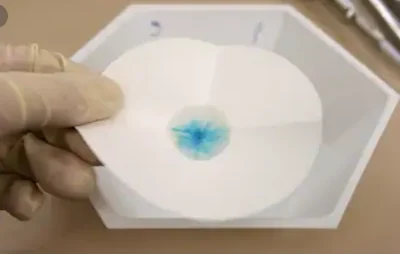
The connection between feelings and brain chemistry is synchronous. As stated earlier, correlation does not imply causation. In other words, the correlation between feelings and hormones in the brain does not necessarily mean that the latter cause the former. When a person falls in love, oxytocin—the so-called “love hormone”—is released, but this hormone does not cause the person to fall in love. Likewise, receiving a phone call from someone one loves can trigger the release of oxytocin, whereas encountering someone one dislikes can trigger the release of cortisol—the primary stress hormone. The point is that feelings are not single entities, and neurotransmitters do not directly cause them. If feelings were “all in the brain,” as atheists claim, it would be possible to fully control people’s feelings by controlling their hormones. For instance, one could bring nearly every man and woman together in ḥalāl (i.e., marriage) simply by injecting them with the “love” hormone. However, feelings are consciously experienced and are not merely hormones.