Is vegetarianism / veganism an act of mercy toward animals?
Vegetarianism and veganism are broad terms that encompass a diverse range of dietary practices that avoid flesh foods. However, while vegetarians exclude meat from their diets but still consume animal products such as honey, eggs, and dairy-based foods, veganism is more restrictive, requiring the complete elimination of all animal products and by-products. Both are based on the idea of protecting animals from “human cruelty” and from “usurping their possessions.” This perspective conflicts with the Qurʾān and the Sunnah, as its proponents prohibit what Allāh has made permissible. Allāh has permitted all foods that He has made lawful and good for people. Hence, vegetarians and vegans adopt dietary practices that contradict many Qurʾānic verses. Allāh says:
•{They ask you, ˹O Prophet,˺ what is permissible for them ˹to eat˺. Say, “What is good and lawful. Also what is caught by your hunting animals and birds of prey which you have trained as instructed by Allāh. So eat what they catch for you, but mention the Name of Allāh over it ˹first˺.” And be mindful of Allāh. Surely Allāh is swift in reckoning} (Qurʾān 5:4).
•{Why should you not eat of what is slaughtered in Allāh’s Name when He has already explained to you what He has forbidden to you—except when compelled by necessity? Many ˹deviants˺ certainly mislead others by their whims out of ignorance. Surely your Lord knows the transgressors best} (Qurʾān 6:119).
•{Some cattle are fit for labour, others are too small. Eat of what Allāh has provided for you and do not follow Satan’s footsteps. Certainly, he is your sworn enemy} (Qurʾān 6:142).
•{And He is the One Who has subjected the sea, so from it you may eat tender seafood and extract ornaments to wear. And you see the ships ploughing their way through it, so you may seek His bounty and give thanks ˹to Him˺} (Qurʾān 16:14).
•{All grazing livestock has been made lawful to you} (Qurʾān 5:1).
•{So they may obtain the benefits ˹in store˺ for them, and pronounce the Name of Allāh on appointed days over the sacrificial animals He has provided for them. So eat from their meat and feed the desperately poor} (Qurʾān 22:28).
•{We have made sacrificial camels ˹and cattle˺ among the symbols of Allāh, in which there is ˹much˺ good for you. So pronounce the Name of Allāh over them when they are lined up ˹for sacrifice˺. Once they have fallen ˹lifeless˺ on their sides, you may eat from their meat, and feed the needy—those who do not beg, and those who do. In this way We have subjected these ˹animals˺ to you so that you may be grateful} (Qurʾān 22:36).
The permissibility of consuming the meat of the animals that Allāh has made lawful is part of what is necessarily known in Islam—basic, agreed-upon matters that every Muslim is obliged to know. Hence, whoever adopts a vegetarian or vegan diet on the basis that eating meat involves animal cruelty and should therefore be avoided has opposed the Qurʾān, the Sunnah, and the consensus of the Muslims. To believe that Allāh has permitted something whose harm absolutely outweighs its benefit amounts to contesting the knowledge and wisdom of the Lord of the worlds and, in effect, attributing ignorance and falsehood to Him, which is tantamount to shirk al-ulūhiyyah wa-r-rubūbiyyah (associating partners with Allāh in His Divinity and His Lordship). Allāh says: {He permits for them what is lawful and forbids to them what is impure} (Qurʾān 7:157). Certainly, all that Allāh has permitted is among the aṭ-ṭayyibāt (that which is pure and wholesome). Therefore, it is not permissible to prohibit what Allāh has made lawful. Allāh says: {O believers! Do not forbid the good things which Allāh has made lawful for you, and do not transgress. Indeed, Allāh does not like transgressors} (Qurʾān 5:87). Allah also says: {Ask, ˹O Prophet,˺ “Who has forbidden the adornments and lawful provisions Allāh has brought forth for His servants?” Say, “They are for the enjoyment of the believers in this worldly life, but they will be exclusively theirs on the Day of Judgment. This is how We make Our revelations clear for people of knowledge”} (Qurʾān 7:32). Why should anyone prohibit the meat of animals that Allāh has made lawful? Allāh says: {Why should you not eat of what is slaughtered in Allāh’s Name when He has already explained to you what He has forbidden to you—except when compelled by necessity? Many ˹deviants˺ certainly mislead others by their whims out of ignorance. Surely your Lord knows the transgressors best} (Qurʾān 6:119). In fact, prohibiting the meat of animals that Allāh has made lawful is an act of Jāhiliyyah (the pre-Islamic Age of Ignorance). Allāh says: {They say, “These cattle and crops are reserved—none may eat them except those we permit,” so they claim. Some other cattle are exempted from labour and others are not slaughtered in Allāh’s Name—falsely attributing lies to Him. He will repay them for their lies} (Qurʾān 6:138). Allah also says: {and a pair of camels and a pair of oxen. Ask ˹them˺, “Has He forbidden ˹to you˺ the two males or the two females or what is in the wombs of the two females? Or were you present when Allāh gave you this commandment?” Who does more wrong than those who fabricate lies against Allāh to mislead others without ˹any˺ knowledge? Surely Allāh does not guide the wrongdoing people} (Qurʾān 6:144). It is not permissible to prohibit people from consuming the meat of animals that Allāh has made lawful, including birds, fish, and other sea creatures: {Say, ˹O Prophet,˺ “I do not find in what has been revealed to me anything forbidden to eat except carrion, running blood, swine—which is impure—or a sinful offering in the name of any other than Allāh. But if someone is compelled by necessity—neither driven by desire nor exceeding immediate need—then surely your Lord is All-Forgiving, Most Merciful”} (Qurʾān 6:145). The prohibition of something without evidence from the Sharīʿah amounts to attributing falsehood to the Lord of the worlds: {Say, ˹O Prophet,˺ “Bring your witnesses who can testify that Allāh has forbidden this.” If they ˹falsely˺ testify, do not testify with them. And do not follow the desires of those who deny Our proofs, disbelieve in the Hereafter, and set up equals with their Lord} (Qurʾān 6:150).
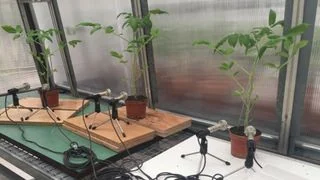
The proponents of vegetarianism and veganism argue that it is cruel and unethical to kill animals for food. This is because, in their view, the animals consumed by “flesh-eaters” are capable of feeling pain and experiencing stress, given that they possess pain receptors as well as a brain and a central nervous system. However, the question arises: who has said that plant-based diets are free from killing and harm? Like animals, plants are not inanimate objects; rather, they are living organisms as well. Interestingly, vegetables are harvested and often consumed while still alive, yet while animal rights activists frequently appear in the media, no one has ever called for “vegetable rights.” A team of scientists from Tel Aviv University has reported that, much like humans sometimes express distress with a squeal under intense stress, plants may exhibit a comparable response. That is, plants “scream” in response to stress; however, unlike human screams, these sounds are at frequencies too high for humans to hear. Nevertheless, when researchers placed microphones near stressed tomato and tobacco plants, the instruments detected ultrasonic “squeals” from the crops from a distance of about 4 inches (10 centimeters).1
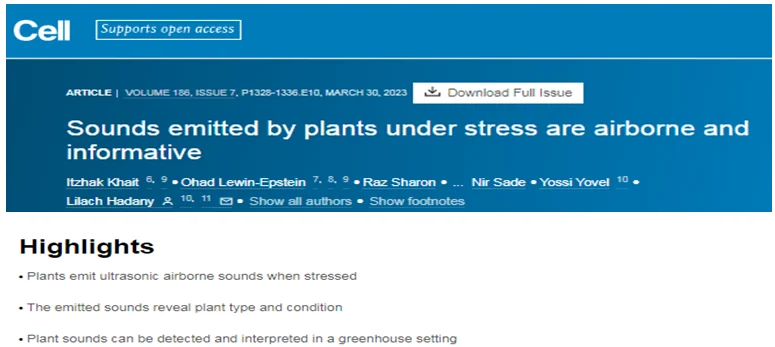
This may look like plants performing stand-up comedy, but the photo is actually from an experiment that showed that stressed plants emit ultrasonic “screams.”2
Moreover, researchers at the University of Missouri–Columbia (MU) conducted a study combining audio and chemical analysis and found that plants respond to the specific sounds made by caterpillars as they feed on them. These sounds even prompt the plants to activate additional defenses.3

Hence, plants do not just “feel” themselves being eaten, but they also fight back. That is, vegetarians/vegans can be absolutely certain that plants can actually hear them sinking their teeth into them. Now, if plants react to the sound that a caterpillar makes when chewing, how do they “feel” when they are inside the mouth of a human? The “vegan Nazis,” as Connie Veneracion calls them, will claim that the plants are already dead by the time they reach the mouth of a human and thus they cannot “feel” anything by then, but that is not really so! Veneracion observed:4
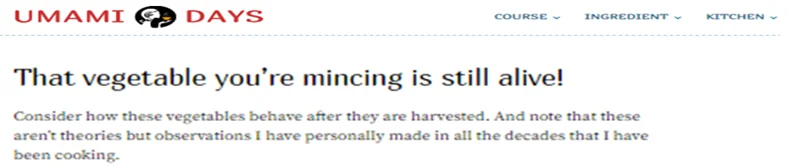
Veneracion explained:5
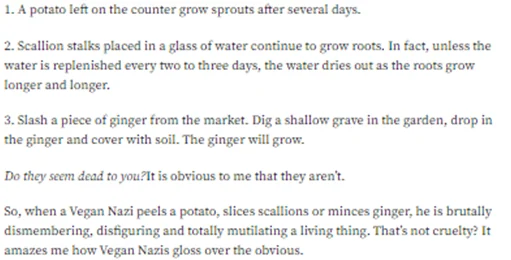
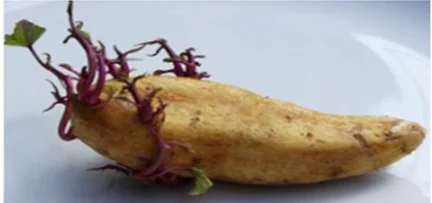
Given that there is evidence that plants do “feel” and respond to attack, vegetarians and vegans should reconsider the consistency of their ethical arguments. Some scientific research suggests that plants are conscious, sentient beings. In fact, Switzerland has even placed a ban on the humiliation of plants.6
What authority do the advocates of vegetarianism or veganism have to support the belief that it is ethical to kill and eat plants but not animals? Plants lack nerves, a brain, and locomotor movement, but they do respond to their environment in complex ways. Allāh, with His absolute wisdom and power, has endowed every living creature with what it needs. Plants do not move around because they do not need to move, as they can produce their own food. That is, they are fixed to the ground because they have roots that provide them with water and nutrients from the soil. Conversely, the majority of animals usually move their whole bodies—often supported by specialised locomotor organs such as fins, wings, and legs—because they obtain their food from plants or from other animals. Hence, movement is a means for them to obtain food and avoid being eaten. It should be noted that lacking an anatomical brain or nervous system does not necessarily mean that plants are not conscious, nor that plant life is inferior to animal life. In fact, there are carnivorous plants that attract, trap, and digest animals, such as the insectivorous Venus flytrap (Dionaea muscipula), which has remarkable mechanisms by which it can distinguish between capturing a living insect as prey and an inedible object or a false alarm.

There is evidence that this carnivorous plant has something akin to a short-term “memory,” as it “remembers” when it captures prey. A team of Japanese scientists has found evidence that the mechanism underlying this memory lies in changes in calcium concentrations within its leaves.7

Amazingly, the Venus flytrap uses mathematics to hunt its prey. That is, it appears to know how to count, and uses this ability to decide when to trap and digest its prey. This is shown in a study in which researchers from Spain’s National Center for Biotechnology participated alongside scientists from German and Australian research centers.8
The authors of this study stated that the Venus flytrap is able to count how many times the sensory hairs on the surface of the capture leaf that it uses to detect prey are touched by an insect in order to determine whether it is worth capturing and digesting. Basically, a single contact with a sensory hair is not enough to close the trap—it could simply be a false alarm—but instead acts as an alert. If there is a second contact within less than 30 seconds, the capture organ will close on the prey.9 Moreover, studies have shown that plants such as Mimosa pudica—an exotic herb native to South and Central America that rapidly closes its leaves in response to touch stimulation, hypothetically as a defense against herbivory (being eaten by animals)—have long-term memory and are indeed capable of learning. Biologists from Australia and Italy, using the same experimental framework normally applied to test learned behavioral responses in animals, successfully demonstrated that Mimosa pudica can learn and remember just as animals are expected to do.10 This plant is commonly known as the sensitive plant or the touch-me-not plant.11
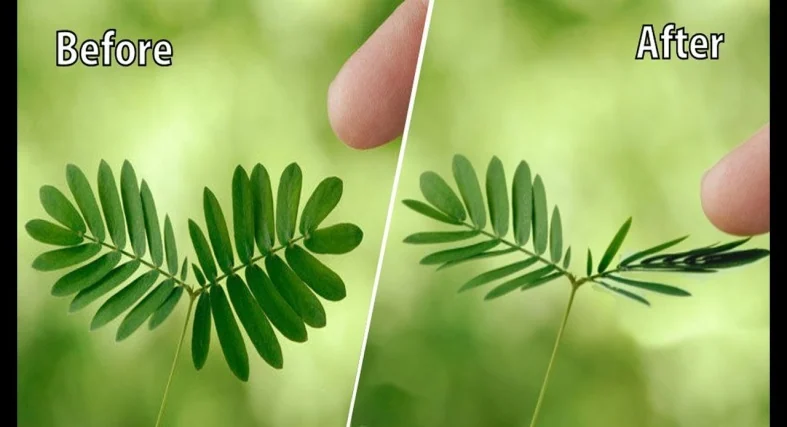
This diagram shows the folding of the leaflets and drooping of the petiole (the stalk that supports the leaf) in a Mimosa pudica when touched.12

Dr. Monica Gagliano and her colleagues designed their experiments as if Mimosa pudica plants were indeed animals. They tested short- and long-term memory in both high- and low-light environments by repeatedly dropping water onto the plants using a custom-designed apparatus. The researchers showed that Mimosa plants stopped closing their leaves when they learned that the repeated disturbance caused no real damage. In fact, the plants were able to acquire the learned behavior within seconds, and, as in animals, learning was faster in less favourable environments (i.e., more stressful conditions). The most remarkable finding is that these plants were able to remember what had been learned for several weeks, even after environmental conditions had changed. The biologists wrote:13

They explained:14

The biologists conceded that they do not yet understand the biological basis for this learning mechanism. Notwithstanding, their experiments have major implications. They radically change the way we perceive plants and the boundaries between plants and animals, including our definition of learning as a property previously thought to be exclusive to organisms with a nervous system. Hence, although plants do not have a nervous system, a growing body of botanical research over the past 25 years shows that plants possess sophisticated systems for detecting and responding to environmental stimuli.15 Furthermore, biologists have succeeded in showing that even unicellular organisms (also known as single-celled organisms), such as amoebae, are capable of a type of learning called habituation—the simplest form of learning. Peter J. M. van Haastert, an academic researcher from the Department of Biochemistry at the University of Groningen, has reported that even single-celled amoebae possess a form of memory and therefore something akin to consciousness.16

Slowly but surely, Van Haastert has gathered evidence for a particularly bold claim: amoebae have short-term memory, which means that they have some kind of consciousness.17

In fact, amoebae also have long-term memory.18
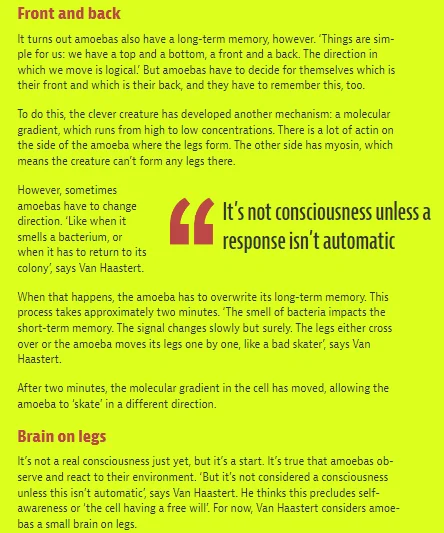
Indeed, the humble amoeba has in recent years surprised researchers with its ability to behave in an “intelligent” way.19

The receptors on the surface of the amoeba detect chemical signals on the surface of an item (food, predator, or other object). The amoeba then, through chemical signaling pathways, determines whether to move towards or avoid it and responds accordingly. It senses the direction of food based on the concentration of chemical signals—the stronger or more numerous the signals, the more likely food is in that direction, and thus the amoeba moves towards that point. Overall, the evidence accumulated by scientists demonstrates that consciousness is not a phenomenon specific to humans, or even to locomoting animals. Rather, traces of consciousness exist even in single-celled organisms. Most importantly, some research has confirmed that plants exhibit forms of intelligence and even beyond that consciousness by many of the same standards used to assess human consciousness, namely memory, learning, and response to stimuli. As elaborated above, they perceive and interact with their environment in sophisticated ways, and may even emit high-frequency airborne distress sounds under environmental stress. We are told in the Qurʾān that all creatures glorify Allāh: {The seven heavens, the earth, and all those in them glorify Him. There is not a single thing that does not glorify His praises—but you ˹simply˺ cannot comprehend their glorification. He is indeed Most Forbearing, All-Forgiving} (Qurʾān 17:44). The point is that it is hypocritical to defend animal rights without also defending plant rights. That is, prohibiting the eating of animals on the grounds that it is wrong to harm them because they are conscious and sentient would, by the same reasoning, necessarily entail prohibiting the eating of plants for the same reason.
It is important to note that numerous studies have shown the negative health impacts associated with a strict vegetarian or vegan diet. To begin with, vegetarians and vegans have a higher prevalence of depleted iron stores. Compared to non-vegetarian and non-vegan individuals, they are more likely to develop iron-deficiency anaemia. It is well known that the best source of iron is animal-based foods such as meat and eggs, rather than plants, and iron is an important mineral for human health because its primary function is to carry oxygen in the blood to every cell in the body via haemoglobin. Additionally, individuals who follow a strict vegetarian or vegan diet suffer from vitamin B12 deficiency due to low intake. Professor Martin Warren of the Quadram Institute in Norwich, UK, said: “There is a hidden epidemic of vitamin B12 deficiency among vegetarian and vegan populations.”20 Vitamin B12 is found naturally in animal sources such as meat, eggs, seafood, and dairy. That is, plant-based foods do not naturally contain vitamin B12, which is essential for the nervous system, particularly in relation to myelin synthesis, nerve metabolism, and neuronal regeneration. It is noteworthy that vitamin B12 deficiency is a significant public health issue due to its serious complications if not detected and treated appropriately. Vegetarians and vegans are also deficient in other micronutrients, such as vitamins B2, niacin (B3), and D, as well as iodine, zinc, calcium, potassium, and selenium.21
Inadequate zinc intake alone is associated with mental health problems (e.g., depression), dermatitis, diarrhoea, and alopecia, all of which are more prevalent among vegetarians and vegans. Moreover, a major study suggests that vegetarians and vegans have a higher stroke risk than their meat-eating counterparts.22 Besides, there is some evidence to suggest that a vegetarian or vegan diet may contribute to the development of a “leaky gut” (increased intestinal permeability). In fact, a wholesome diet is essential for maintaining a healthy gut flora, which in turn is pivotal in avoiding inflammatory disorders (conditions caused by excessive or chronic inflammation in the body). Furthermore, vegetarians and vegans have a higher prevalence of mental health problems, which may lead to a poorer quality of life. Urska Dobersek and her colleagues reviewed 18 studies examining the relationship between meat consumption or avoidance and psychological health. The majority of studies, especially the higher-quality ones, showed that those who avoided meat consumption had significantly higher rates or risk of depression, anxiety, and/or self-harm behaviors. These researchers found that one in three vegetarians suffer from depression or anxiety in their lifetime, and compared to meat-eaters, vegetarians are twice as likely to take prescription medications for mental illness.23

Atul Bali and Roopa Naik elaborated in their review article that vegetarianism in its various forms, particularly veganism, has been associated with adverse health outcomes, including impairments of the nervous, skeletal, and immune systems, haematological disorders, as well as mental health problems due to the potential for micronutrient and macronutrient deficiencies. Bali and Naik discussed the current literature concerning the impact and long-term consequences of veganism on vulnerable populations, including children, adolescents, pregnant and breastfeeding women, and fetal outcomes among strict vegan mothers. They also focused on the many deficiencies associated with the vegan diet and the related increased risk of malignancies (cancers).24
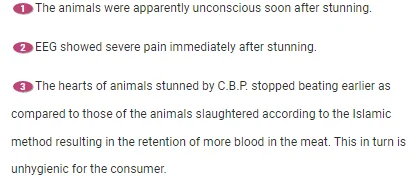
The problem with vegetarians and vegans is that they exhibit excessive compassion towards animals. Meanwhile, secularists and atheists, by their very nature, adopt and promote deviant ideas, such as vegetarianism and veganism. What vegetarians and vegans seem to ignore is that although animals do experience emotions, they experience them differently from humans. For example, animals are generally unaware that they are on their way to slaughter. If they were fearful in the same way humans are, one might expect them to resist, back away, or refuse to move forward. However, when conditions are properly arranged, animals walk calmly into the place of slaughter. The expression “like a lamb to the slaughter” carries this very connotation. If someone goes somewhere “like a lamb to the slaughter,” they do so unaware that something bad is about to happen and therefore remain calm rather than resisting the situation. Animal rights activists frequently criticize the Islamic practice of slaughtering animals by making a sharp cut to the front of the neck, describing it as cruel and inhumane. However, they may be surprised to learn of experiments conducted by Wilhelm Schulze and his colleagues at the University of Veterinary Medicine Hannover concerning pain perception and consciousness during the conventional slaughter method (captive bolt stunning) and the religiously mandated slaughter method (ritual cutting) in sheep and calves. Ritual slaughter is defined in accordance with the religious principles of Islam and Judaism and refers to the slaughtering of livestock for meat. The researchers concluded that Islamic slaughter is the most humane method of slaughter, whereas captive bolt stunning, commonly practiced in the West, causes severe pain to the animal.25 In these experiments, the researchers surgically implanted several electrodes at various points on the skull of all animals, reaching the surface of the brain. The animals were allowed to recover for several weeks. Some animals were then slaughtered using the Islamic method—by making a swift, deep incision with a sharp knife in the neck, cutting the jugular veins and carotid arteries as well as the trachea and esophagus—whereas other animals were stunned using a captive bolt pistol (CBP). During the experiments, an electroencephalograph (EEG) and an electrocardiogram (ECG) recorded the condition of the brain and heart of all animals during slaughter and stunning. The results were as follows concerning the Islamic method:26

The results for the Western method (captive bolt pistol stunning) were as follows:27
It is important to understand that animals certainly feel physical pain, but not in human-like ways. Essentially, they do not have a conscious awareness of pain. That is, the emotional suffering that humans experience cannot be said to apply in the same way to animals. It is an established scientific fact that animals, unlike humans, cannot mentally travel backwards in time to recollect past painful events, nor do they anticipate pain or worry about the future. In fact, ethologists—scientists who study animal behaviour in their natural environment—have revealed to us that, contrary to the prevailing view that predators which devour their prey alive are “vicious brutes,” prey animals do not experience pain in the way it is commonly imagined. This is because the dramatic and sudden nature of death by attack from a predator masks pain due to the release of stress hormones and stress-related physiological responses that can temporarily suppress or alter the perception of pain—nature’s way of allowing an animal to endure the moment. British ethologist Jane Goodall has stated that prey animals do not feel as much pain as is often assumed.28 There is evidence that sharks do not feel pain because they lack a key region of the spinal dorsal horn (a region of the spinal cord involved in transmitting pain signals) that, in mammals, is responsible for transmitting nociceptive (pain-related) activity to the brain. They also lack certain nerve fibers responsible for the intense pain-induced suffering experienced by conscious humans. According to whalemen’s accounts, sharks feeding at a whale carcass are undeterred from their bloody feast by even the most serious injuries, such as being savagely stabbed and sliced by flensing knives (specialized long-bladed knives used to strip blubber, fat, or skin from whale carcasses) or being bitten repeatedly by other sharks. There are even reports of sharks that have been split in two by whalemen or disemboweled by other sharks continuing to feed, apparently ignoring their mortal wounds as though insensate to them.29 The point is that the pain experienced by animals does not constitute suffering. They merely experience immediate, temporary sensations of pain, which generate an unconscious memory and awareness of previous threats that serve the purpose of helping them avoid dangerous situations in the future.30 That is, this inherent mechanism placed by Allāh in animals allows them to avoid situations in which they have previously been hurt. For example, an animal that is stung by fire will not approach it again, and one that falls into a pit will be more careful next time. In short, without pain, animals would face the same dangerous situations repeatedly. However, pain in animals is not as intense as it is in humans.
To conclude, the fact of neurological similarity between humans and animals does not necessitate the attribution of a genuine pain state to animals. Compared to humans, the extent and manner in which animals can experience pain are limited to the sensation of physical pain. That is, animals are incapable of sophisticated forms of suffering because they are less cognitively complex than humans. This is due to their lack of self-awareness and a sense of past and future—self- and time-awareness. Undeniably, animals sense noxious stimuli and react to them; that is, they withdraw from harmful stimuli and exhibit pain-related behaviour. However, conscious pain states cannot be attributed to them because consciousness of pain is properly attributable only to rational agents (i.e., thinking beings). That is, the ability to feel one’s pain is tied to the capacity to engage in practical reasoning (reasoning about actions, decisions, and goals). In other words, to be able to feel pain, the concept of pain must have meaning within an individual’s cognitive framework. Therefore, animals cannot consciously feel their pain because they are not thinking beings. The point is that only thinking beings can be aware of their pain, and animals can neither have beliefs nor thoughts about their experiences. In a word, animal experience of pain is unconscious. Animals appear to perceive, and pain behaviour requires perception, but perception need not be conscious. In fact, organisms can respond to perceptual cues in the environment without ever being aware that they are responding to them. Even humans unconsciously respond to perceptual cues regularly. For example, consider driving a car along a familiar route while thinking, or even daydreaming, about other things. This driving example is not an instance of unconscious pain, but it illustrates that the notion of unconscious experience is familiar to humans. In simple terms, it is part of the normal function of pain to intrude upon consciousness so that one may give full attention to aversive behaviour (actions taken to avoid harm). However, an unconscious pain could, in principle, produce aversive behaviour without any conscious quality or any conscious desire for the cessation of the pain. This is the widely held view in philosophy and the biological sciences.Possible examples of non-conscious pain in humans come from cases where someone is concentrating very intently on a task and later reports having felt no pain upon injury, yet nevertheless displays aversive behaviour. One such example is a soldier in the midst of battle who may be too caught up in fighting to notice pain when he badly burns his hand on the red-hot barrel of a gun, yet an observer would see him jerk his hand away in a manner characteristic of someone in pain. Obviously, we would be sympathetic to the soldier’s injury in such a case, but not to his suffering, since he in fact felt no pain. Hence, the neurophysiology of pain perception suggests that cases in which the full or nearly full range of pain behaviour is displayed but the subject is not conscious of any pain are, in principle, possible.31 In a nutshell, animals do not experience existential anxiety, as they neither reflect on the meaning of their lives nor have a concept of death. Moreover, they feel pain for a shorter time because they have a limited short-term memory. In this sense, animal experience lacks the depth of subjective awareness associated with human consciousness, and therefore mere animal pain behaviour should be of limited moral concern.
Now let us shed light on how Islam safeguards animal welfare. Islam calls for mercy towards animals, trees, and plants. It is unlawful to confine, starve, or torture animals, to overburden them with work, or to use them as targets for shooting arrows or bullets as a form of amusement. It was narrated that ʿAbd Allāh ibn ʿUmar said: “Verily, the Messenger of Allāh (PBUH) cursed anyone who uses anything that has a soul (a living being) as a target [for marksmanship].”32 Rather, there is a ḥadīth (Prophetic tradition) that teaches us not to curse animals, but to treat them kindly and be patient with them. ʿImrān ibn Ḥuṣayn reported: “We were with the Messenger of Allāh (PBUH) on one of his journeys, and there was a woman from the ʾAnṣār (lit. the Helpers) riding a she-camel. She became upset with it and cursed it. When the Messenger of Allāh (PBUH) heard this, he said: ‘Unload it and set it free, for it is cursed.’”33 Indeed, Islam upholds the right of animals to kind treatment and justice in ways that humanity has never fully lived up to at any point in history, not even in modern times. The Prophet (PBUH) once reprimanded a group of his Companions who had taken the young of a bird. ʿAbd Allāh ibn Masʿūd said: “We were with the Messenger of Allāh (PBUH) during a journey. He went to relieve himself, and we saw a bird with her two young ones, so we took them. The bird came and began flapping its wings. Then the Messenger of Allāh (PBUH) came and said: ‘Who has distressed this bird by taking its young? Return its young ones to it.’ He also saw an ant colony that we had burned. He asked: ‘Who burned this?’ We replied: ‘We did.’ He said: ‘No one should punish with fire except the Lord of the Fire.’”34 Moreover, the Prophet (PBUH) forbade al-muthlah bil-ḥayawān (mutilating an animal, i.e., cutting or disfiguring it while it is still alive). It was narrated that Ibn ʿUmar said: “I heard the Messenger of Allāh say: ‘Cursed is the one who commits muthlah on an animal.’”35 Further, the Prophet (PBUH) forbade cutting down trees unnecessarily. He (PBUH) said: “If anyone cuts down a lote-tree, Allāh will cast him headlong into Hell.”36 Abū Dāwūd was asked about the meaning of this tradition. He said: “This is a concise tradition. It means that if anyone unnecessarily, unjustly and without any right cuts down a lote-tree under whose shade travellers and animals take shelter, Allāh will cast him headlong into Hell.”
Allāh has subjected animals to humans for use, not for abuse. The Sharīʿah places great emphasis on animal rights. It enjoins kindness towards them and warns sternly against harming them. It is stated in a ḥadīth (Prophetic tradition) that a woman was thrown into Hellbecause of a cat which she kept locked up until it died. She neither provided it with food and water while keeping it locked up, nor allowed it to feed from the vermin of the earth. This is regarded as a major sin. Ibn ʿUmar reported that the Messenger of Allāh (PBUH) said: “A woman was tormented because of a cat which she had kept locked up until it died, and she was thrown into Hell for that, for she neither fed it nor gave it water while keeping it locked up, nor released it so that it could eat from the vermin of the earth.”37 On the other hand, Allāh forgave a prostitute from the Children of Israel because she gave water to a dog suffering from extreme thirst. The Prophet (PBUH) said: “While a dog was going around a well and was about to die of thirst, a prostitute from the Children of Israel saw it. So, she took off her shoe, filled it with water, and gave it to drink. She was forgiven for that.”38 The compassion of the Sharīʿah extends even to the slaughter of animals. Islamic teachings on slaughtering animals are based on kindness and mercy. Muslims are only permitted to eat meat from animals that are killed in a humane way, with minimal suffering. The animal should be slaughtered by a swift cut to the jugular vein. This method severs the main blood flow to the brain quickly, rapidly and significantly reducing the duration of pain. Additionally, the knife must be sharp to minimize suffering, and it should not be sharpened in front of the animal. Likewise, the slaughter should not take place in the presence of other animals, as witnessing it may cause them unnecessary stress. In cases where multiple animals are to be slaughtered, this should be done in a way that prevents other animals from witnessing the slaughter. The Prophet (PBUH) said: “Verily, Allāh has enjoined iḥsān (excellence) upon all things; so when you kill, kill with iḥsān, and when you slaughter, slaughter with iḥsān. Let one of you sharpen his blade and let the slaughtered animal die comfortably [quickly].”39 Muʿāwiyah ibn Qurrah reported that his father said: “A man said: ‘I slaughter a sheep and I feel compassion for it’—or he said, ‘I feel such compassion for the sheep that I find it hard to slaughter it.’ The Prophet (PBUH) said: ‘As for the sheep, if you show mercy to it, Allāh will show mercy to you’—repeating it twice.”40 ʿAbd Allāh ibn ʿAbbās reported that a man laid a sheep on its side while he was sharpening his knife. When the Prophet (PBUH) saw him, he said: “Do you want to kill it twice? Why did you not sharpen your knife before laying it down?”41 Abū Umāmah al-Bāhilī reported that the Messenger of Allāh (PBUH) said: “Whoever shows mercy to an animal being slaughtered, Allāh will show mercy to him on the Day of Resurrection.” And in another narration: “Whoever shows mercy even to a sparrow being slaughtered, Allāh will show mercy to him on the Day of Resurrection.”42 As earlier stated, Islam urges Muslims to be merciful to all living creatures, including humans, animals, trees, and plants, as they are all creations of Allāh. Islamic law is founded on absolute mercy, wisdom, and justice. On the other hand, vegetarianism and veganism are flawed and inconsistent, benefiting neither human health nor animal welfare. Ironically, as Mike Archer—a professor at the School of Biological, Earth and Environmental Sciences at the University of New South Wales (UNSW)—explains, veganism kills more animals than meat-based diets and causes greater environmental damage.43
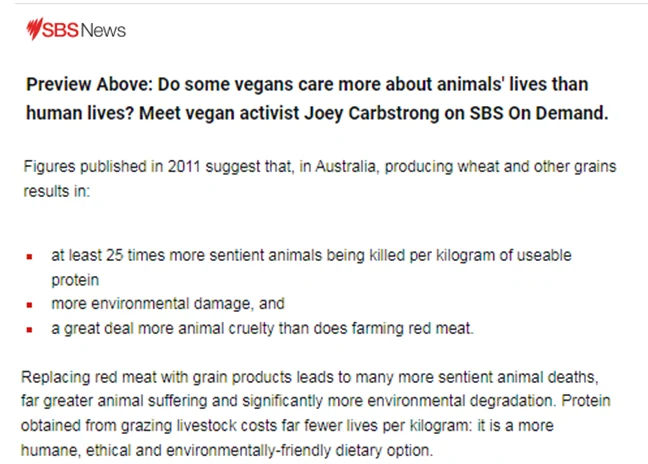
Funnily enough, to apply vegetarian or vegan ethics with complete consistency, one would have to:
•Abstain even from plant-based foods, since they are living organisms that also respond to their environment.
•Stop washing so as not to kill the millions of bacteria living on the skin, since bacteria are living organisms as well—they breathe, reproduce, and react to environmental stimuli.
•And even refrain from defecation so as not to destroy intestinal flora.
In a nutshell, the Qurʾān teaches Muslims to make use of the lawful provisions granted by Allāh. The meat of permitted animals is a blessing from Allāh for the sustenance of humankind, contributing to their survival and well-being. The use of meat for human nourishment and health can be compared to the use of antiseptics to eliminate harmful microorganisms and prevent infection in wounds. Indeed, the rise of irrational and false ideas, and the decline of reason, are the inevitable result of going against the true religion of Islam.
Notes and References
- 1
Itzhak Khait, “Sounds Emitted by Plants under Stress are Airborne and Informative,” Cell, vol. 186, issue 7, 30 March 2023, pp. 1328–1336. DOI: https://doi.org/10.1016/j.cell.2023.03.00.
- 2
Nicoletta Lanese, “Stressed Plants ‘Scream’, and it Sounds like Popping Bubble Wrap,” Live Science, 30 March 2023, https://www.livescience.com/stressed-plants-scream-and-it-sounds-like-popping-bubble-wrap Image credit: Ohad Lewin-Epstein.
- 3
H. M. Appel and R. B. Cocroft, “Plants Respond to Leaf Vibrations Caused by Insect Herbivore Chewing,” Oecologia, vol. 175, no. 4, August 2014, pp. 1257–1266. DOI: https://doi.org/10.1007/s00442-014-2995-6.
- 4
Connie Veneracion, “Which is Less Cruel: Eating Animals or Plants?” Umami Days, 05 Dec. 2021, https://umamidays.com/which-is-less-cruel-eating-animals-or-plants/.
- 5
Ibid.
- 6
Meg Hamill, “Switzerland Places Ban on the Humiliation of Plants,” Planet Save, 18 Oct. 2008, https://planetsave.com/2008/10/18/switzerland-places-ban-on-the-humiliation-of-plants/.
- 7
Hiraku Suda et al., “Calcium dynamics during trap closure visualized in transgenic Venus flytrap,” Nature Plants, vol. 6, 6 June 2020, pp. 1219–1224. DOI: https://doi.org/10.1038/s41477-020-00773-1.
- 8
Jennifer Böhm et al., “The Venus Flytrap Dionaea Muscipula Counts Prey-Induced Action Potentials to Induce Sodium Uptake,” Current Biology, vol. 26, issue 3, 8 Feb. 2016. DOI: http://dx.doi.org/10.1016/j.cub.2015.11.057.
- 9
Ibid.
- 10
Monica Gagliano et al., “Experience Teaches Plants to Learn Faster and Forget Slower in Environments where it Matters,” Oecologia, vol. 175, no. 3, Jul. 2014, pp. 63–72. DOI: https://doi.org/10.1007/s00442-013-2873-7.
- 11
“Touch Me not Plant | Mimosa Pudica - The Sensitive Plant,” YouTube, uploaded by Arnab LHT, 10 Apr. 2019, https://youtu.be/OOXYgs-eFVs?feature=shared.
- 12
“Lesson Explainer: Sensitivity in Mimosa Plants,” Nagwa, accessed 14 Sep. 2023, https://www.nagwa.com/en/explainers/702159062142/.
- 13
Monica Gagliano et al., “Experience Teaches Plants to Learn Faster and Forget Slower in Environments where it Matters,” Oecologia, vol. 175, no. 3, Jul. 2014, pp. 63–72. DOI: https://doi.org/10.1007/s00442-013-2873-7.
- 14
Ibid.
- 15
Vladimir Sukhov et al., “Long-Distance Electrical Signals as a Link between the Local Action of Stressors and the Systemic Physiological Responses in Higher Plants,” Progress in Biophysics and Molecular Biology, vol. 146, Sep. 2019, pp. 63–84. DOI: https://doi.org/10.1016/j.pbiomolbio.2018.11.009.
- 16
Door Rouèl Gnodde, “Single-Celled Organisms Have Memories, Too: Walking with Amoebas,” Ukrant, 6 Apr. 2021, https://ukrant.nl/magazine/walking-with-amoebas/?lang=en.
- 17
Ibid.
- 18
Ibid.
- 19
Colin Barras, “Smart Amoebas Reveal Origins of Primitive Intelligence,” New Scientist, 29 Oct. 2008, https://www.newscientist.com/article/dn15068-smart-amoebas-reveal-origins-of-primitive-intelligence/.
- 20
“Warning on Vitamin B12 Deficiency for Vegans and Vegetarians,” Quadram Institute, 30 Dec. 2021, https://quadram.ac.uk/warning-on-vitamin-b12-deficiency-for-vegans-and-vegetarians/.
- 21
Dimitra Rafailia Bakaloudi, “Intake and Adequacy of the Vegan Diet. A Systematic Review of the Evidence,” Clinical Nutrition, vol. 40, issue 5, May 2021, pp. 3503–3521. DOI: https://doi.org/10.1016/j.clnu.2020.11.035.
- 22
Tammy Y. N. Tong et al., “Risks of Ischaemic Heart Disease and Stroke in Meat Eaters, Fish Eaters, and Vegetarians over 18 Years of Follow-Up: Results from the Prospective EPIC-Oxford Study,” BMJ, vol. 366, Sep. 2019. DOI: https://doi.org/10.1136/bmj.l4897.
- 23
Urska Dobersek et al., “Meat and Mental health: A Systematic Review of Meat Abstention and Depression, Anxiety, and Related Phenomena,” Critical Reviews in Food Science and Nutrition, vol. 61, issue 4, 2021, pp. 622–635. DOI: https://doi.org/10.1080/10408398.2020.1741505.
- 24
Atul Bali and Roopa Naik, “The Impact of a Vegan Diet on Many Aspects of Health: The Overlooked Side of Veganism,” Cureus, vol. 15, issue 2, pp. e35148, 18 Feb. 2023. DOI: https://doi.org/10.7759/cureus.35148.
- 25
Wilhelm Schulze et al., “Experiments for the Objectification of Pain and Consciousness during Conventional (captive bolt stunning) and Religiously Mandated (“Ritual Cutting”) Slaughter Procedures for Sheep and Calves,” Deutsche tierarztliche Wochenschrift, vol. 85, issue 2, 1978, pp. 62–6.
- 26
Aisha El-Awady, “Is Islamic Slaughtering Cruel to Animals,” Islam Online, accessed 13 Sep. 2023, https://islamonline.net/en/is-islamic-slaughtering-cruel-to-animals/.
- 27
Ibid.
- 28
Hugo Van Lawick-Goodall and Jane Van Lawick-Goodall, Innocent Killers: A Fascinating Journey through the Worlds of the Hyena, the Jackal, and the Wild Dog, (Boston, U.S.: Houghton Mifflin, 1971).
- 29
H. David Baldridge, Shark Attack, (New York, U.S.: Berkley Publishing Group, 1978), p. 222.
- 30
Jacques Roger, Buffon: A Life in Natural History, trans. Sarah Lucille Bonnefoi, (Ithaca, U.S.: NCROL, 1997), p. 245.
- 31
Peter Carruthers, “Brute Experience,” The Journal of Philosophy, vol. 86, no. 5, May 1989, pp. 258–69, available at JSTOR, https://doi.org/10.2307/2027110.
- 32
Muslim ibn al-Ḥajjāj, Ṣaḥīḥ Muslim, (Bayrūt, Lebanon: Dār al-Kutub ʿIlmiyyah, 2020), book: 34, ḥadīth: 91, available at: https://sunnah.com/muslim:1958b.
- 33
Ibid., book 45, ḥadīth: 102, available at: https://sunnah.com/muslim:2595a.
- 34
Abū Dāwūd as-Sijistānī, Sunan Abī Dāwūd, (Cairo, Egypt: Maktabat al-Maʿārif, 1998), book: 43, ḥadīth: 496, available at: https://sunnah.com/abudawud:5268.
- 35
Muḥammad al-Bukhārī, Ṣaḥīḥ al-Bukhārī, (Cairo, Egypt: Dār as-Salām. 1999), book: 72, ḥadīth: 41, available at: https://sunnah.com/bukhari:5515.
- 36
Abū Dāwūd as-Sijistānī, Ṣaḥīḥ Sunan Abī Dāwūd, (Cairo, Egypt: Maktabat al-Maʿārif, 1998), book: 43, ḥadīth: 467, available at: https://sunnah.com/abudawud:5239, grade of ḥadīth: ṣaḥīḥ.
- 37
Agreed upon ḥadīth, Muḥammad al-Bukhārī, Ṣaḥīḥ al-Bukhārī, (Cairo, Egypt: Dār as-Salām. 1999), book: 60, ḥadīth: 149, available at: https://sunnah.com/bukhari:3482; Muslim ibn al-Ḥajjāj, Ṣaḥīḥ Muslim, (Bayrūt, Lebanon: Dār al-Kutub ʿIlmiyyah, 2020), book: 39, ḥadīth: 203, available at: https://sunnah.com/muslim:2242a.
- 38
Agreed upon ḥadīth, Muḥammad al-Bukhārī, Ṣaḥīḥ al-Bukhārī, (Cairo, Egypt: Dār as-Salām. 1999), book: 60, ḥadīth: 134, available at: https://sunnah.com/bukhari:3467; Muslim ibn al-Ḥajjāj, Ṣaḥīḥ Muslim, (Bayrūt, Lebanon: Dār al-Kutub ʿIlmiyyah, 2020), book: 39, ḥadīth: 212, available at: https://sunnah.com/muslim:2245b.
- 39
Muslim ibn al-Ḥajjāj, Ṣaḥīḥ Muslim, (Bayrūt, Lebanon: Dār al-Kutub ʿIlmiyyah, 2020), book: 34, ḥadīth: 84, available at: https://sunnah.com/muslim:1955a.
- 40
Muqbil ibn Hādī al-Wadiʿī, aṣ-Ṣaḥīḥ al-Musnad, (Sanʿāʾ, Yemen: Dār al-ʾĀthār, 2005), ḥadīth: 1081.
- 41
Abū ʿAbd Allāh Muḥammad ibn ʿAbd Allāh al-Ḥākim an-Naysābūrī, al-Mustadrak ʿalā aṣ-Ṣaḥīḥayn, (Bayrūt, Lebanon: Dār al-Kutub al-ʿIlmiyyah, 1990), ḥadīth: 7570, grade of ḥadīth: ṣaḥīḥ.
- 42
Muḥammad Nāṣir ad-Dīn al-ʾAlbānī, Ṣaḥīḥ al- Jāmiʿ aṣ-Ṣaġīr, (Bayrūt, Lebanon: al-Maktab al-Islāmī, 1988), ḥadīth: 8678, grade of ḥadīth: ṣaḥīḥ.
- 43
Mike Archer, “Ordering the Vegetarian Meal? There is More Animal Blood on your Hands,” SBS News, 23 Apr. 2019, https://www.sbs.com.au/news/insight/article/ordering-the-vegetarian-meal-theres-more-animal-blood-on-your-hands/dyyi45f5r.