Is there another proof of the truth of Islam besides the Qurʾān?
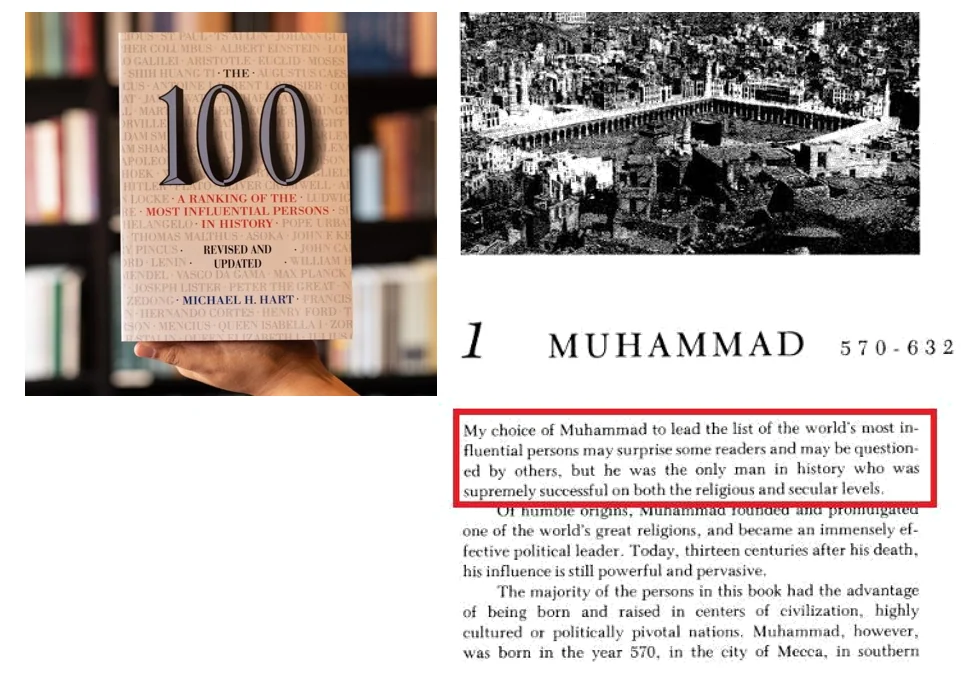
The sīrah (Prophetic biography) is another powerful proof of the truth of Islam. Any fair-minded person, regardless of their nationality or religion, who studies the biography of Prophet Muḥammad (PBUH) will readily recognize that he was indeed a true Prophet. His biography is the most complete and reliable in human history. In fact, no other biography has been preserved with the same degree of accuracy and detail as that of Prophet Muḥammad (PBUH). The events of his life—from his youth to his old age, both in his settled life and in his travels—have reached us through reliable and rigorously authenticated reports. Remarkably, while most people struggle to recall the details of their own lives from twenty years ago, Ibn Ḥazm devoted hundreds of pages to describing just the ablution of Prophet Muḥammad (PBUH). The Companions transmitted every aspect of his life, even incidents as seemingly minor as a cough during prayer. For example, Imām Muslim ibn al-Ḥajjāj reported on the authority of ʿAbd Allāh ibn as-Sāʾib: “The Messenger of Allāh (PBUH) led us in the dawn prayer in Makkah and began reciting chapter al-Muʾminūn. But when he reached the mention of Moses and Aaron (verse 45), or the mention of Jesus (verse 50), he was overcome by a cough and bowed.”1 The Prophetic biography is also the most reliable as it was transmitted by the most truthful of people—the Companions—who were fully aware of the grave warning against lying about the Prophet (PBUH), in accordance with his statement: “Lying about me is not like lying about anyone else. Whoever deliberately lies about me, let him take his seat in the Hellfire.”2 The Companions were truthful and reliable transmitters of the Prophetic biography, due to their righteousness and their precision in conveying his sayings, to the extent that they would preserve even the exact wording. For instance, in the report concerning the containers which Prophet Muḥammad (PBUH) forbade for preparing nabīḏ (water mixed with dates or grapes), Jundub ibn Sufyān al-Bajallī narrated on the authority of ʿĀʾishah bint abī Bakr [may Allāh be pleased with her] that she said: “The Prophet forbade us [his family] to prepare nabīḏ in ad-dubbāʾ (gourd vessels) and al-muzaffat (pitch-coated vessels).” Jundub was asked whether the Prophet (PBUH) said “an yunbaḏa fīhi,” (to prepare nabīḏ therein) and he replied: “No, yuntabaḏa fīhi.”3 Both yunbaḏa and yuntabaḏa are Arabic passive forms derived from intibāḏ (preparing nabīḏ by placing dates or grapes in water for a day or two until it becomes sweet), with the latter containing an additional tāʾ consonant. Indeed, the Companions memorized the words of the Prophet (PBUH) with exceptional precision and conveyed them to us with utmost accuracy. Additionally, the noble biography of the final Messenger (PBUH) is the greatest, as he is the greatest man ever to have lived on earth. Indeed, he was the greatest leader, the greatest husband, the greatest father, the greatest teacher, the greatest inspirer, the greatest role model, as well as the most devout worshipper. Unquestionably, any rational person who studies the life of Prophet Muḥammad (PBUH) with fairness and impartiality will be convinced that he is the greatest figure in human history. Michael H. Hart, a Jewish American astrophysicist, historian, researcher, and author of The 100: A Ranking of the Most Influential Persons in History, stated: “My choice of Muhammad to lead the list of the world’s most influential persons may surprise some readers and may be questioned by others, but he was the only man in history who was supremely successful on both the religious and secular level.” 4
Prophet Muḥammad (PBUH) was tested more than anyone due to his elevated status. Indeed, his life was marked by hardship from its earliest stages. He was born an orphan, since his father had died before his birth, and at the age of six he lost his mother to illness. In addition, all his children passed away during his lifetime except his daughter Fāṭimah [may Allāh be pleased with her]. Moreover, the Prophet (PBUH) and his followers endured severe persecution during the first thirteen years of his mission in Makkah. The opposition of Quraysh initially took the form of ridicule and sarcasm, but later developed into open and sustained persecution against him (PBUH) and his followers. Indeed, the physical harm inflicted upon the Prophet (PBUH) by the people of Makkah was among the most severe endured by any Prophet.5 What is more, the Prophet (PBUH), his clans (Banū Hāshim and Banū al-Muṭṭalib), and his followers were subjected to an economic and social boycott for three years, during which they were forced to withdraw from Makkah and live in Shiʿb abī Ṭālib.6 During this siege, they endured the pangs of hunger and thirst, as well as the extremes of heat in summer and cold in winter. Shortly after this boycott, in the year known as the Year of Sorrow, Khadījah bint Khuwaylid, the beloved wife of the Prophet (PBUH), and abū Ṭālib ibn ʿAbd al-Muṭṭalib, his uncle and protector, passed away within a very short period of each other. Furthermore, Prophet Muḥammad (PBUH) faced countless attempts to silence him. The Makkan leaders sought to strike a deal with him (PBUH), offering him whatever worldly privileges he desired on condition that he abandon his call to the new religion. They approached his uncle Abū Ṭālib before his death, proposing a compromise through which enmity between them and the Prophet (PBUH) might be brought to an end. Their aim was that he (PBUH) should leave them to their gods and refrain from condemning them and their forefathers as misguided. They offered him entry into their inner circle, kingship, wealth, and a favourable marriage alliance. Abū Ṭālib pleaded with the Prophet (PBUH), saying: “Spare yourself and me, and do not burden me with what I cannot bear.” However, the Prophet (PBUH)’s eyes filled with tears as he replied: “Uncle, by Allāh, if they were to place the sun in my right hand and the moon in my left hand on condition that I abandon this matter, I would not do so until Allāh makes it prevail or I perish in the attempt.” Allāh says: {They wish that you would compromise so they would yield ˹to you˺} (Qurʾān 68:9). The polytheists of Makkah thus sought a compromise from the Prophet (PBUH), but he rejected all their offers and continued to call to the way of Allāh with patience and perseverance. When they failed to dissuade him despite these offers, they turned to more extreme measures in an attempt to uproot the message at its source by seeking to end his life. They made several attempts to kill him (PBUH), including the night when his house was besieged by selected men of Quraysh.7 By the grace of Allāh, all attempts to harm the Prophet (PBUH) ultimately failed. Allāh says: {Indeed, they devised every plot, which was fully known to Allāh, even though their plotting was enough to ˹even˺ overpower mountains} (Qurʾān 14:46). Indeed, words cannot do justice to this great man (PBUH) who changed the course of history for all time.
Prophet Muḥammad (PBUH) had lived his entire life in purity and virtue among the people of Makkah, and this was acknowledged even by his most staunch opponents. All the Makkans, without exception, knew him to be the most truthful among them, and they bore witness to his truthfulness, saying: “We have not found you saying anything other than the truth.”8 For this reason, the senior Companions believed in him (PBUH) even before witnessing any of the miracles he performed, such as the splitting of the moon, and before any of his prophecies had been fulfilled. They believed in him (PBUH) and endured severe persecution at the hands of the Quraysh with patience because they were firmly convinced that his message was revelation from Allāh to mankind. The first people to embrace Islam were Khadījah, his wife; ʿAlī ibn abī Ṭālib, his cousin; Zayd ibn Ḥārithah, his freedman and adopted son before Islam; and Abū Bakr, one of his closest friends even before the advent of Islam. They were intimately familiar with his noble character, which is why it is not surprising that they embraced Islam without hesitation. Allāh says: {Say, “...I had lived my whole life among you before this ˹revelation˺. Do you not understand?”} (Qurʾān 10:16). This verse presents a powerful argument against the Quraysh’s claim that Prophet Muḥammad (PBUH) himself authored the Qurʾān and falsely attributed it to Allāh. The argument is that they had witnessed the full forty years of his life prior to his Prophethood. He (PBUH) was born among them, and he lived his childhood, youth, and middle age before their very eyes. He lived among them and interacted with them in every sphere of life—social, economic, and marital—such that no aspect of his life was hidden from them. Throughout those forty years of his life prior to his Prophethood, what distinguished him (PBUH) was his unparalleled integrity, for he was never known to have told a lie or committed any form of deceit or forgery. Therefore, all those who had interacted with him in any capacity bore witness that he was truthful and trustworthy, without any blemish. The Qurʾān instructed the polytheists to set aside their whims and prejudices and to reflect upon the life of their companion. Allāh says: {Say, ˹O Prophet,˺ “I advise you to do ˹only˺ one thing: stand up for ˹the sake of˺ Allāh—individually or in pairs—then reflect. Your fellow man is not insane. He is only a warner to you before ˹the coming of˺ a severe punishment”} (Qurʾān 34:46). This is, without doubt, evidence for the truth of Islam. The Prophet (PBUH) has been described by his wife ʿĀʾishah [may Allāh be pleased with her] as being “a walking Qurʾān.”9 That is, he (PBUH) embodied the Qurʾān in his daily life and fully implemented its divine guidance in practice.
Notes and References
- 1
Muslim ibn al-Ḥajjāj, Ṣaḥīḥ Muslim, (Bayrūt, Lebanon: Dār al-Kutub al-ʿIlmiyyah, 2020), ḥadīth: 455, available at: https://sunnah.com/muslim:455.
- 2
Agreed upon ḥadīth, Muḥammad al-Bukhārī, Ṣaḥīḥ al-Bukhārī, (Cairo, Egypt: Dār as-Salām. 1999), ḥadīth: 1291; available at: https://sunnah.com/bukhari:1291; Muslim ibn al-Ḥajjāj, Ṣaḥīḥ Muslim, (Bayrūt, Lebanon: Dār al-Kutub al-ʿIlmiyyah, 2020), ḥadīth: 4, available at: https://sunnah.com/muslim:4a.
- 3
Al-Khaṭīb al-Baġdādī, al-Kifāyah fī Maʿrifat Uṣūl ʿIlm ar-Riwāyah, (Alexandria, Egypt: Dār al-Hudá, 2003), p. 162.
- 4
Michael H. Hart, The 100: A Ranking of the Most Influential Persons in History, (New York, U.S.: Hart Publishing Company, 1978), p. 3.
- 5
Thāmir ibn Nāṣir, Risālat Khātam an-Nabiyyīn (The Message of the Last Prophet), (ar-Riyāḍ, Saudi Arabia: Maktabat ar-Rushd, 2005).
- 6
A historical valley (a narrow mountain pass) in Makkah, located east of the Kaʿbah between the mountains of Abū Qubays and Khandamah. The area was the property of ʿAbd al-Muṭṭalib.
- 7
Ibid.
- 8
Muḥammad al-Bukhārī, Ṣaḥīḥ al-Bukhārī, (Cairo, Egypt: Dār as-Salām. 1999), ḥadīth: 4770, available at: https://sunnah.com/bukhari:4770.
- 9
Aḥmad ibn Ḥanbal, al-Musnad, (Cairo, Egypt: Dār al-Ḥadīth, 1990), ḥadīth: 1740, grade of ḥadīth: authentic, ḥadīth: 25813, grade of ḥadīth: authentic.