How should the believer deal with the mutashābihāt (verses that are not entirely clear)?
In addition to informing us that some of the Qurʾān’s verses are unequivocal and self-explanatory (i.e., muḥkamāt), while others are equivocal and require clarification through the muḥkamāt (i.e., mutashābihāt), Allāh also warns that there are two types of people in relation to these verses: those who are “well-grounded in knowledge,” who interpret the mutashābihāt in the intended manner, and those “with deviant hearts,” who pursue them for various ulterior motives. We live in an era in which fame is pursued and desires are justified at any cost. Therefore, it is essential for the Muslim to know how to deal with the mutashābihāt, as well as with those who exploit them for personal gain, in order to safeguard their faith. The deviants exhibit clear signs:1
•An eagerness to portray Islamic texts as contradictory: they seize every opportunity to highlight so-called “contradictory” texts, failing to realize that the perceived inconsistency lies not in the texts themselves, but in their own minds and distorted understanding.
•Their entire focus revolves around the mutashābihāt: If their track record could be summarized in one word, it would be mutashābihāt—it defines them. They have no sincere intention to uncover Allāh’s intended meaning behind these verses. Instead, they approach them with preconceived notions and personal desires, aiming to force the verses into alignment with their ideas and inclinations—no matter the cost, even if it requires twisting the meanings beyond all reason.
•The following of whims: Innovators have traditionally been referred to as ahl al-ahwāʾ (lit. people of whims), because bidʿah (religious innovation) and the pursuit of whims go hand in hand. According to Allāh, there are only two paths: the path of faith or the pursuit of desires: {Now We have set you ˹O Prophet˺ on the ˹clear˺ Way of faith. So follow it, and do not follow the desires of those who do not know ˹the truth˺} (Qurʾān 45:18). Imām Ayyūb as-Sakhtiyānī [may Allāh have mercy on him] said: “I do not know of anyone from the people of whims (innovators) who argues with anything other than the mutashābihāt.”2 Hence, whenever one’s search for Islamic “evidences” is driven by desires, the outcome will inevitably be misguidance: {And do not follow ˹your˺ desires or they will lead you astray from Allāh’s Way} (Qurʾān 38:26).
•Highlighting the so-called problematic texts: They are heavily invested in promoting what they deem “problematic” in order to gain fame, sow doubt, or both. Their focus lies in texts or topics perceived as strange, aiming to preoccupy the Muslim mind. Al-Ḥasan al-Baṣrī said about such individuals: “The worst of people are those who selectively choose the erroneous matters in order to blind the people.”3 Imām Mālik said: “The worst type of knowledge is that which revolves around strange matters. The best knowledge is that which is clear and widely transmitted by the masses.”4
•They will argue a case for them: They do not merely share these “problematic” texts, but actively build a relentless case around them, using whatever platform is available—just as Allāh described: {…and argued in falsehood, ˹hoping˺ to discredit the truth with it} (Qurʾān 40:5). The Prophet (PBUH) said: “No people go astray after having been guided except that they are given to argument.”5 That is, nothing brings them prominence except their argumentation over uncommon matters (i.e., obscure, ambiguous, or peripheral issues in religion). As Maʿrūf al-Karkhī said: “If Allāh wills good for a person, He opens for him the door of action and closes for him the door of argumentation. And if Allāh wills evil for a person, He closes for him the door of action and opens for him the door of argumentation.”6
In a nutshell, since the mutashābihāt are open to more than one interpretation, those who desire to disbelieve can exploit them, interpreting them according to their whims in order to justify their disbelief. Ibn al-Wazīr al-Yamānī [may Allāh have mercy on him] said: “The cause of doubt and disbelief is examining the mutashābihātwhich human beings are incapable of fully grasping and whose taʾwīl (interpretation/specific meanings) they are ignorant of.”7 The people of misguidance and deviance follow the verses that are not entirely clear and use them as a means to create doubt and suspicion. They interpret these verses in ways that distort their meaning to suit their corrupt aims, taking advantage of wording that can be molded to fit their desires. The believer, however, adopts a completely different attitude toward the mutashābihāt. He accepts the truth of these verses because they come from Allāh, and he refers the mutashābihāt to the muḥkamāt. Referring the mutashābihāt to the muḥkamāt means using the clear verses as a guide. When we encounter a verse that allows for more than one interpretation, we should strive to understand it in light of the many unequivocal verses on the same subject. In other words, when faced with confusion about a not entirely clear verse, we should seek clarity through those that are entirely clear. Those who pursue the equivocal verses (mutashābihāt) can cause significant harm—especially since they apply their dangerous methodology not only to matters of jurisprudence but also to matters of theology. Here are some examples:
•The pursuers of mutashābihāt may even claim to find “evidence” for the validity of rejecting Islam as an option. Disingenuously, they cite: {And say, ˹O Prophet,˺ “˹This is˺ the truth from your Lord. Whoever wills let them believe, and whoever wills let them disbelieve”} (Qurʾān 18:29). They do this while ignoring the dozens of muḥkamāt (unequivocal) verses that warn those who make such claims with the punishment of Hell—including the very verse they cite, which concludes with: {Surely We have prepared for the wrongdoers a Fire whose walls will ˹completely˺ surround them} (Qurʾān 18:29).
•The pursuers of mutashābihāt may claim to find “evidence” that Paradise is the final destination for people of all religions, citing: {Indeed, the believers, Jews, Christians, and Sabians—whoever ˹truly˺ believes in Allāh and the Last Day and does good will have their reward with their Lord. And there will be no fear for them, nor will they grieve} (Qurʾān 2:62). The deviants overlook the true understanding of this verse. Its context makes it clear that the verse is not intended to enumerate all the articles of faith one must believe in, or all the principles of conduct one must follow, in order to merit reward from Allāh. These matters are addressed elsewhere in the Qurʾān in their appropriate contexts. In reality, the promise in this verse applies to those who lived before the advent of Prophet Muḥammad (PBUH)—namely, those who believed in the Prophet of their time and died in a state of faith. The pursuers of mutashābihāt ignore the muḥkamāt—the clear and explicit verses—which state that Islam is the only religion accepted by Allāh, such as the following: {whoever seeks a way other than Islam, it will never be accepted from them, and in the Hereafter they will be among the losers} (Qurʾān 3:85). Therefore, the ambiguity in the former verse is resolved when we follow the Qurʾānic method of referring the mutashābihāt to the muḥkamāt, at which point the entire Qurʾān becomes muḥkam—clear and cohesive. Despite this absolutely unequivocal verse, along with numerous others like it and many authentic ḥadīths, the people of whims choose misguidance over the truth. They promote perennialism—the belief that all religions are accepted by Allāh and that simply being a “good person” ensures success in the afterlife. Scholars, however, make it clear that even doubting the kufr (disbelief) of the followers of other religions nullifies one’s faith. That is, even if someone sincerely believes in the truth of Islam, promoting such corrupt beliefs renders them a disbeliever. In other words, perennialism is no minor matter—believing in it constitutes kufr. There is no difference of opinion on this issue within the ummah (Muslim nation).
•Those who pursue the mutashābihāt attempt to find “evidence” for the plurality of gods, arguing that Allāh refers to Himself using the plural pronoun “We.” They disingenuously cite the verse: {It is certainly We Who have revealed the Reminder, and it is certainly We Who will preserve it} (Qurʾān 15:9). They disregard the fact that this is a linguistic convention known as the royal plural. They also overlook the muḥkamāt verses on this matter, such as when Allāh says: {Those who say, “Allāh is one in a Trinity,” have certainly fallen into disbelief. There is only One God} (Qurʾān 5:73).
The pursuers of the mutashābihāt are thus able to construct a distorted case in major theological matters—such as arguing for disbelief, claiming that Paradise is not exclusive to Muslims, or advocating for the plurality of gods, among others. Their manipulation of jurisprudential issues is likewise egregious, as evidenced in their discussions on topics such as ḥijāb, free mixing, gender roles, sexuality, and so on. In contrast, the method followed by those firmly grounded in knowledge is to interpret the equivocal verses in light of the unequivocal ones. Those with deviant hearts, however, exploit the equivocal verses to validate a personal desire or reinforce a preconceived notion—deliberately ignoring the many unequivocal verses that contradict their claims. This remains the approach not only of non-Muslims, but also of some who claim to be Muslim.
Another of the most absurd interpretations of the Qurʾān is that of verse 18:86, which mentions that a figure known as Ḏu al-Qarnayn journeyed in the direction of the setting sun (i.e., westward), where he “found it setting in a muddy spring,” with a people situated nearby: {Until, when he reached the setting of the sun, he found it setting in a murky spring} According to the interpretation of those who pursue the mutashābihāt, the Qurʾān claims that the sun literally set in a spring of muddy water. However, the Qurʾān makes no such claim. Their understanding of this verse is flawed, as the verse is not stating a scientific fact, but rather expressing the scene in a manner that 7th-century Arabs could grasp. It is simply describing what Ḏu al-Qarnayn saw with his eyes—that the sun appeared to be setting in a muddy spring. The Qurʾānic word used here, wajada (“he found”), refers to perception through any of the five senses. This is corroborated by Edward William Lane’s Arabic-English Lexicon.8


The Qurʾān employs the word wajada to convey how the scene appeared from Ḏu al-Qarnayn’s perspective, and the description is entirely accurate—at a shoreline, that is indeed how a sunset appears.

If I told someone that I saw the sun setting in my basketball net, would they really jump to argue that my statement is scientifically incorrect? Of course not. Even NASA has published something similar on its website.9

Some may argue that this explanation is a modern invention by Muslim apologists, claiming that the verse should be interpreted as skeptics suggest—on the grounds that early Muslims lacked the scientific knowledge about the cosmos that we possess today. However, Muslims have always understood the verse in this manner. The various tafsīrs (Qurʾānic exegeses) do not support the notion that the sun literally sets in a muddy spring. Rather, they consistently affirm that this was how it appeared from the vantage point of Ḏu al-Qarnayn, who saw the sun seeming to sink into a body of water.
Ibn Kathīr stated:10

Similarly, al-Qurṭubī stated:11

Likewise, as-Saʿdī asserted:12

At-Tafsīr al-Muyassar points to the same concept:13

We also find the same meaning expressed in Tafsīr al-Jalālayn—a classical Sunni exegesis of the Qurʾān initially composed by Jalāl ad-Dīn al-Maḥallī in 1459 and later completed by his student Jalāl ad-Dīn as-Suyūṭī in 1505, hence its title The Commentary of the Two Jalāls. The tafsīr affirms that the verse is describing how the sun appeared to Ḏu al-Qarnayn—as if it were setting in a muddy spring—not that it literally did so:14

Again, referring this mutashābih verse to the relevant muḥkam verses leaves no room for ambiguity. Numerous clear-cut verses in the Qurʾān affirm that the sun does not leave the celestial path upon which it is firmly established: {He has ˹also˺ subjected for you the sun and the moon, both constantly orbiting} (Qurʾān 14:33). The sun and the moon are constantly pursuing their courses, rotating night and day: {And He is the One Who created the day and the night, the sun and the moon—each travelling in an orbit} (Qurʾān 21:33). Notwithstanding, the deviants will follow the equivocal verses and turn a blind eye to the clear-cut verses on the very same topic. They even have the sheer audacity to hurl questions at Muslims and put forth utterly baseless allegations against the Qurʾān.
The believer’s perspective on the muḥkam and the mutashābih is the wisest, deepest, and most comprehensive. When they reflect upon the universe and their own selves, they clearly perceive the power of the Omnipotence and the boundless Omniscience of the Creator. The greatest of all creations is Man himself—the marvellous machine, precise and efficient. Indeed, the human body is Allāh’s masterpiece: {...Who created you, fashioned you, and perfected your design} (Qurʾān 82:7). The signs of Allāh are clearly evident in every human cell, organ, function, and movement. It all begins at the cellular level—cells being the basic structural and functional units of life. The human body is composed of trillions of these cells, and all the instructions needed to regulate their activities are encoded in a chemical known as DNA. This information is stored as a code made up of four chemical bases: adenine (A), guanine (G), cytosine (C), and thymine (T). Remarkably, every one of the trillions of cells in the human body contains the same three billion DNA base pairs that comprise the human genome—the full set of our genetic material. Even more astounding is that the over 200 distinct cell types in the body interpret this identical information in vastly different ways in order to perform the specialized functions that sustain life. Each cell nucleus contains its own complete copy of the genome—about three billion letters.
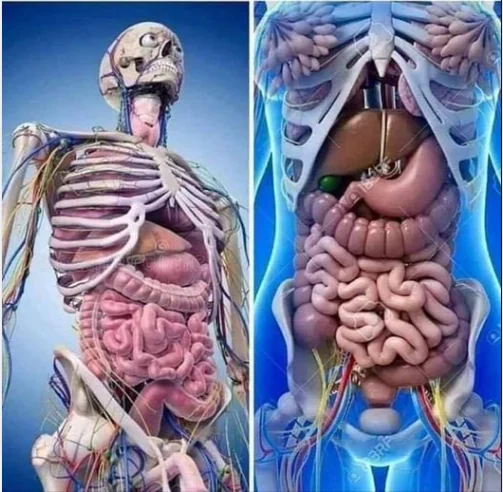
All of these are crystal-clear (muḥkamāt) signs that strengthen the believer’s certainty in Allāh. Thus, when the believer encounters the mutashābih among the witnessed signs (i.e., the world of sensible experience—the visible realm), especially those related to human beings, such as illnesses, chromosomal or congenital anomalies, trials and tribulations, his faith remains unshaken. He refers these mutashābih witnessed signs to the muḥkam verses of the Qurʾān, through which he attains clarity and guidance to the truth. He reflects: the Majestic Creator who brings forth a complete, living human being from a mere drop of sperm with such perfect design must undoubtedly possess far-reaching wisdom in the afflictions, hardships, and upheavals that occur in human life. The believer recognizes that Allāh’s wisdom surpasses his own understanding, and that the inability to perceive this wisdom does not imply its absence. Thus, through the clarity of the unequivocal verses of the Qurʾān, the believer fully grasps that Allāh’s specific providence over us—whether genetically before birth, or environmentally after birth—is a test for us, as Allāh says He tests with both prosperity and adversity: {And We test you ˹O humanity˺ with good and evil as a trial} (Qurʾān 21:35). We either grow in faith through gratitude to Allāh and patience, or we allow doubts and rejection to plant resentment in our hearts. In stark contrast to the believers, the atheists cling only to the mutashābih verses, continually citing the existence of evil, pain, and suffering in the world as grounds to question Allāh’s existence and justify their atheism. They argue that if so much suffering exists—suffering that Allāh could have easily prevented—then Allāh must not exist. They present the world’s pains and tragedies as if they were the rule, not the exception, disregarding the fact that Allāh has caused goodness, vitality, and well-being to predominate. Afflictions and illnesses do exist, but they are far outweighed by the blessings and good health that people enjoy. Ibn al-Qayyim [may Allāh have mercy on him] said:15

At times, ailments and afflictions befall a person, and there is far-reaching wisdom and many benefits in this—whether or not one perceives them. The essential difference between the stance of the believer and that of the atheist lies in the believer’s understanding of suffering and evil through the lens of Allāh’s Wisdom, Knowledge, Benevolence, Will, and Power. The mind which embraces revelation fully has no difficulty seeing Divine Wisdom as weaving the threads of pain and suffering into a brilliant story, a story that harmonizes mercy and justice; a story that derives happy endings from pain; a story that sees that “immovable boulder”16 as a building block for one’s spiritual ascent, as shaykh Mohammad Elshinawy describes it.17 The atheist, however, sees himself as the master of the universe, insisting that whatever his eyes cannot see does not exist, and whatever his mind cannot grasp as wise must be deemed foolish. He repeatedly questions the existence of evil—yet this very question exposes numerous cracks in the foundations of the atheistic worldview.18

The atheistic mindset—one that views life as purposeless and devoid of meaning—renders every affliction, as Mohammad Elshinawy puts it, nothing more than a random, unexplainable event, reducible to mere energy and matter, marked only by chaos, disruption, and tragedy. In contrast, believers hold that Allāh is the All-Wise, and that His Wisdom necessitates wisdom behind everything that exists. They therefore affirm that profound wisdom lies behind every instance of what appears to be ‘evil’ in the universe, even if, as finite beings, we can only grasp such wisdom on a general level. Thus, they do not dismiss these apparent evils as irrational, but rather as suprarational—beyond the limits of human understanding. Allāh has revealed some of the main purposes behind the existence of evil to help strengthen and prepare people as they face life’s hardships. Yet His Wisdom also necessitates that, for life to truly be a test, the reasons behind every hardship are not always made immediately clear to those being tested. In short, Allāh’s Wisdom requires the existence of some evils for profound reasons. And though He has endowed humanity with the faculties of reflection and reasoning, some people fail to use them properly—and as a result of their own neglect, end up in the Hellfire: {They have hearts they do not understand with, eyes they do not see with, and ears they do not hear with. They are like cattle. In fact, they are even less guided! Such ˹people˺ are ˹entirely˺ heedless} (Qurʾān 7:179). The believers’ perspective on the phenomenon of evil is far wiser and more comprehensive than that of the atheists. In fact, pure evil does not exist—as Ibn al-Qayyim [may Allāh have mercy on him] explained:19

This holds true for both naturally occurring evils and those committed by willful agents—whether human or jinn. Allāh permits their existence because the good that results from their existence outweighs the good that would result from their nonexistence.20
Creating opposites—such as good and evil, sickness and health, death and life—reflects Allāh’s Greatness and the perfection of His Wisdom. Were it not for the existence of those who do evil, it would be difficult to fully recognize His Attributes of Forbearance, Pardon, Justice, and Dominance. Allāh’s beautiful Names and Attributes must be made manifest, and that can only occur through the existence of opposites and counterparts. Wisdom demands the presence of such opposites; without them, the manifestation of Allāh’s Attributes would not be possible—an inconceivable notion. Indeed, the entire universe points to Allāh’s Greatness and Wisdom, yet a finite creature such as Man can never fully comprehend the extent of either. Ibn al-Qayyim [may Allāh have mercy on him] said: “You might ask: What is the wisdom behind the scattered plants in deserts, wilderness, and mountains where no people dwell? You may think they are an unnecessary abundance with no benefit or purpose! But this only reflects the limits of your mind and the boundaries of your knowledge. The Creator and Originator of these plants has countless wisdoms and signs in them—they are food for wild beasts, birds, and crawling creatures whose homes you neither see above nor below the earth. These plants are like a banquet set by Allāh for these creatures: they eat their fill, and what remains is like the surplus left after a generous host has satisfied his guests—evidence of his affluence, ample provision, and boundless generosity.”21 Analogously, Ibn al-Jawzī [may Allāh have mercy on him] said: “I know with certainty—based on evidence—that He is Wise. Yet I am incapable of grasping the reasons behind what He decrees. Thus, I must submit to Him, acknowledging my own helplessness.”22 Humans often fail to grasp the ultimate wisdom behind apparent evils. If the veil were lifted from these seemingly purposeless hardships, the intricate threads of hidden wisdom woven into the Divine tapestry would be revealed. Ibn al-Jawzī [may Allāh have mercy on him] said: “The mind has come to recognize the Creator’s Wisdom—and that it is free from flaw or defect. This recognition obligates it [mind] to forgo [objecting to] whatever of this [wisdom] is hidden from it. So, whenever a particular matter is unclear to it, it would be incorrect to then declare that the principle itself is invalid.”23 Indeed, part of the wisdom behind the presence of ambiguous verses in the Qurʾān—and the concealment of certain aspects of the wisdom behind worldly evils—is to underscore the limits of the human intellect, so that people may submit to their Creator and acknowledge their own deficiency. In his Fourth Meditation, Descartes explored the issue of truth and error, offering an account that preserves the perfection of God despite the existence of human mistakes. He begins by affirming that God, as a perfect being, cannot be deceptive. Descartes then notes that he possesses a faculty for distinguishing truth from error—one that must have been granted by God. Since God is not deceitful, this faculty cannot itself be faulty. Yet, Descartes admits to having made many errors and continues to do so. To explain this, he reflects that contemplating God’s supreme perfection naturally brings to mind the contrast—his own imperfection and finiteness. Thus, it is not surprising that he falls into error. Such error, he argues, is not a real “thing” created by God, but rather a deficiency arising from human limitation. God, Descartes asserts, always wills what is best for him, but as a finite creature, he cannot expect to fully grasp the designs and reasons of an infinite being. “If when I don’t perceive the truth vividly and clearly enough I simply suspend judgment, it is clear that I am behaving correctly and avoiding error. It is a misuse of my free will to have an opinion in such cases: if I choose the wrong side I shall be in error; and even if I choose the right side, I shall be at fault because I’ll have come to the truth by sheer chance and not through a perception of my intellect. The latter, as the natural light shows me clearly, should be what influences my will when I affirm things. I have said that error is essentially a privation—a lack of something that I should have—and now I know what this privation consists in. It doesn’t lie in the will that God has given me, or even in the mode of operation that God has built into it; rather it consists in my misuse of my will. Specifically, it consists in my lack of restraint in the exercise of my will, when I form opinions on matters that I don’t clearly understand. I can’t complain that God did not give me a greater power of understanding than He did: created intellects are naturally finite, and so they naturally lack understanding of many things. God has never owed me anything, so I should thank Him for his great generosity to me, rather than feeling cheated because He did not give me everything.’’24
To conclude, the existence of evil can indeed be rationally reconciled with the existence of an All-Knowing, All-Powerful, and Most-Compassionate God. In the section titled “The Wisdom behind Evil” from his article “Why Do People Suffer? God’s Existence & the Problem of Evil,” Mohammad Elshinawy explores several dimensions of the “greater good” and “Divine Wisdom” underlying the presence of evil, pain, and suffering in the world.25 Instead of hair-splitting and probing into the mutashābihāt, reflect on the muḥkamāt and Allāh’s infinite bounties. Allāh never owed you anything, so be grateful for His immense generosity. Imagine if you were required to repay Him for every undeserved favor He has granted you! Imagine if you had to compensate Him for the muḥkamāt verses He revealed—verses that constitute the greatest treasure ever bestowed upon humankind. By Allāh, if you spent your entire life in a single prostration, you would not come close to repaying even one of His blessings. In short, the Qurʾān contains verses that are muḥkamāt (entirely clear and plain) and others that are mutashābihāt (equivocal). Some persist in asking: Why would Allāh decree that some verses be muḥkam while others remain mutashābih? Would it not have been better if all of the verses were muḥkam, thereby leaving no room for the deviants to exploit ambiguity? The answer is a clear no, for this arrangement carries profound wisdom. It serves as a test from Allāh—the means by which He distinguishes between people—because tests reveal faith and expose hypocrisy. Allāh, the All-Wise, does not disclose every wisdom behind what He decrees in this world or reveals in His Book. If He did, life would no longer serve its function as a test. The inclusion of equivocal verses is itself a trial, one that exposes the true nature of people. As Allāh stated in the aforementioned verse, the believers submit to the entire Qurʾān, whereas those with deviant hearts pursue the equivocal to serve their own desires. Such individuals bring harm to the Muslim community, and their voices are misleading. Thus, the presence of both muḥkam and mutashābih verses unveils their inner corruption and insincere motives. Had every verse of the Qurʾān been equally unambiguous, these wisdoms would not have been fully realized. The successful ones are those who use the clear evidence of the muḥkam to interpret what is subtle and obscure in the mutashābih. The losers are those who turn the mutashābih into a veil that blocks them from the light of reasoning by clear proofs. Every single thing in this universe is a manifest sign of Allāh’s Power and Might. Likewise, the entire Qurʾān is clear in its essence, though some of its verses may be unclear to certain individuals due to their limited knowledge. Indeed, part of the wisdom behind the presence of some ambiguous (mutashābih) verses is to highlight the superiority of scholars over others. These verses—which allow for contemplation, unlike those whose definitive meaning is known only to Allāh—serve to motivate scholars to delve deeper, uncovering the subtle details and discerning their precise meanings. The concluding part of the aforementioned verse (3:7), {But none will be mindful ˹of this˺ except people of reason}, praises those firmly grounded in knowledge, implying that those who follow their vain desires are not among the rational. Whoever is confused by any unclear verse should turn to the scholars, as the Prophet (PBUH) instructed when he heard people disputing over the Qurʾān: they were to act upon whatever they had knowledge of, and refer whatever they did not understand to those who possess knowledge.26 Each field has its specialists, and Islamic scholarship is no exception. Just as we would not entrust our physical health to someone merely because of their online presence or popularity, we should not entrust our eternal fate to those lacking proper training and recognized scholarship. Dedication and perseverance in the pursuit of knowledge enable a Muslim to see through the distortions of hypocrites and deviants with clarity and discernment.
Let us return to the initial question of how a Muslim should deal with the mutashābihāt as well as with the deviants who seek out such verses to stir confusion and doubt. In addition to using the muḥkamāt as their guide and consulting the scholars, they must also refrain from engaging with such individuals. That is, they should distance themselves from the pursuers of the mutashābihāt. This is the advice of the Prophet (PBUH): “If you see those who follow the mutashābihāt, they are the ones Allāh has named [i.e., those with deviant hearts], so avoid them.”27 Moreover, the Muslim should keep their whims in check, for following one’s desires lies at the core of the cynical fixation on the mutashābihāt. All human beings fall prey to this tendency in one form or another. However, while having personal whims is one thing, allowing them to evolve into an ideological stance by seeking an Islamic loophole is something else entirely. As shaykh Ali Ihsan Hammuda put it: meeting Allāh with a lingering sin that you struggled with but always regretted is far better than meeting Him after having lost every trace of guilt—numbed by a “text” that some imposter used to soothe your conscience. In addition, the Muslim should beseech Allāh for clarity and steadfastness. After describing the approach of those firmly grounded in knowledge—{As for those well-grounded in knowledge, they say, “We believe in this ˹Qurʾān˺—it is all from our Lord.” But none will be mindful ˹of this˺ except people of reason} (Qurʾān 3:7)—Allāh then recounts their supplication in the following verse: {˹They say,˺ “Our Lord! Do not let our hearts deviate after You have guided us. Grant us Your mercy. You are indeed the Giver ˹of all bounties˺”} (Qurʾān 3:8).
Notes and References
- 1
Ali Ihsan Hammuda, “How Some People Misinterpret the Qurʾān,” Islam 21C.com, 11 March 2022, https://www.islam21c.com/islamic-thought/how-some-people-misinterpret-the-quran/.
- 2
Abū al-Ḥasan ʿAlī ibn Ismāʿīl al-Ashʿarī, al-Ibānah, (Bayrūt, Lebanon: al-Maṭbaʿath as-Salafiyyah wa-Maktabatihā, 1965), vol. 2, p. 501 and vol. 3, p. 560.
- 3
Abū Bakr Aḥmad ibn Ḥusayn al-Bayhaqī, al-Madkhal ilá as-Sunan al-Kubrá, (Bayrūt, Lebanon: Dār al-Kutub al-ʿIlmiyyah, 2010).
- 4
Al-Qāḍī ʿIyāḍ ibn Mūsá, Tartīb al-Madārik wa-Taqrīb al-Masālik li-Maʿrifat ʾAʿlām Maḏhab Mālik, (Rabat, Morocco: Ministry of Endowments and Islamic Affairs, 1983).
- 5
Muḥammad at-Tirmiḏī, Jāmiʿ at-Tirmiḏī, (Cairo, Egypt: Dār at-Taʾṣīl, 2016), book: 47, ḥadīth: 305, available at: https://sunnah.com/tirmidhi:3253.
- 6
Abū Nuʿaym al-ʾAṣbahānī, Ḥilyat al-Awliyāʾ wa-Ṭabaqāt al-Aṣfiyāʾ, (Bayrūt, Lebanon: Dār al-Kutub al-ʿIlmīyyah, 2010).
- 7
Abū Bakr Muḥammad ibn ʿAbd Allāh ibn al-ʿArabī, al-ʿAwāṣim mina al-Qawāṣim, (Bayrūt, Lebanon: Dār al-Kutub al-ʿIlmiyyah, 2002), vol. 1, p. 214.
- 8
Edward William Lane, Arabic-English Lexicon, (Charleston, U.S.: Nabu Press, 2010), p. 2924.
- 9
NASA Content Administrator, “Sunset on Mars,” The National Aeronautics and Space Administration (NASA), 23 March 2008, https://www.nasa.gov/image-article/sunset-mars/.
- 10
“Tafsīr Ibn Kathīr, interpretation of verse (Qurʾān 18:86),” available at: http://quran.ksu.edu.sa/tafseer/katheer/sura18-aya86.html.
- 11
“Tafsīr al-Qurṭubī, interpretation of verse (Qurʾān 18:86),” The Electronic Quran Project at King Saud University, available at: http://quran.ksu.edu.sa/tafseer/qortobi/sura18-aya86.html.
- 12
“Tafsīr as-Saʿdī, interpretation of verse (Qurʾān 18:86),” The Electronic Quran Project at King Saud University, available at: http://quran.ksu.edu.sa/tafseer/saadi/sura18-aya86.html.
- 13
“At-Tafsīr al-Muyassar, interpretation of verse (Qurʾān 18:86),” Quranpedia.net, available at: https://quranpedia.net/surah/1/18/book/32.
- 14
“Tafsīr al-Jalālayn, interpretation of verse (Qurʾān 18:86),” IslamOnline, available at: https://quran.islamonline.net/t-18-1-86.
- 15
Ibn Qayyim al-Jawziyyah, Shifāʾ al-ʿAlīl fī Masāʾ il al-Qaḍāʾ wa-l-Qadar wa-l-Ḥikmah wa-t-taʾlīl, (Cairo, Egypt: Dār at-Turāth, 1978), p.184.
- 16
Randy Alcorn, If God is Good: Faith in the Midst of Suffering and Evil, (Colorado Springs, U.S.: Multnomah Books, 2009), p. 11.
George Bΰchner, a German atheist and poet, calls the problem of evil the “immovable boulder of atheism.”
- 17
Mohammad Elshinawy, “Why Do People Suffer? God’s Existence & the Problem of Evil,” Yaqeen Institute, 2 Jul. 2018, https://yaqeeninstitute.org/read/paper/why-do-people-suffer-gods-existence-the-problem-of-evil#ftnt2.
- 18
Ibid.
- 19
Ibn Qayyim al-Jawziyyah, Shifāʾ al-ʿAlīl fī Masāʾil al-Qaḍāʾ wa-l-Qadar wa-l-Ḥikmah wa-t-taʾlīl, (Cairo: Dār at-Turāth, 1978), pp. 380–413.
- 20
Mohammad Elshinawy, “Why Do People Suffer? God’s Existence & the Problem of Evil,” Yaqeen Institute, 2 Jul. 2018, https://yaqeeninstitute.org/read/paper/why-do-people-suffer-gods-existence-the-problem-of-evil.
- 21
Ibn Qayyim al-Jawziyyah, Miftāḥ Dār as-Saʿādah (Bayrūt, Lebanon: Dār al-Jīl, 1994), vol. 2, p. 649.
- 22
Abū al-Faraj ʿAbd ar-Raḥmān ibn ʿAlī ibn Muḥammad ibn al-Jawzī, Ṣayd al-Khāṭir, (Damascus, Syria: Dār al-Qalam, 2004), p. 79.
- 23
---., Talbīs Iblīs, (Bayrūt, Lebanon: Dār al-Kitāb al-ʿArabī, 1985), p. 85.
- 24
Mohammad Elshinawy, “Why Do People Suffer? God’s Existence & the Problem of Evil,” Yaqeen Institute, 2 Jul. 2018, https://yaqeeninstitute.org/read/paper/why-do-people-suffer-gods-existence-the-problem-of-evil.
- 25
Ibid.
- 26
Aḥmad ibn Ḥanbal, al-Musnad, (Cairo, Egypt: Dār al-Ḥadīth, 1990), ḥadīth: 6702.
ʾAmrū ibn Shuʿayb narrated from his father who narrated from his grandfather, who said: Me and my brother were sitting in a reunion that was more beloved to me than red camels. As me and my brother arrived, we found a group of dignified Companions of the Holy Prophet (PBUH) sitting by one of the doors of his home. We disliked separating them. So, we sat at the side. They mentioned a verse of the Holy Qur’ān and argued about it until their voices became elevated. The Holy Prophet (PBUH) then came out in a state of such anger that his face was red. He threw dust upon them and said to them, “patience my people. This type of difference with Prophets destroyed the people before you and for judging as contradictory some of their books against others. Surely, the Holy Qur’ān was not revealed so that certain parts of it reject others. In fact, its various parts support each other. So, follow that which you understand from it, and ask a knowledgeable person concerning that which you do not understand.”
- 27
Muḥammad al-Bukhārī, Ṣaḥīḥ al-Bukhārī, (Cairo, Egypt: Dār as-Salām. 1999), book: 65, ḥadīth: 70, available at: https://sunnah.com/bukhari:4547.