Is it possible to establish a system of morality without religion?
The question of whether morality requires religion has long been hotly debated. Secular humanists strongly maintain that morality does not depend on religious tenets, asserting that human beings are capable of ethical behavior without religion or God. Unsurprisingly, atheists explicitly disavow any connection between religion and morality. Oddly enough, however, they claim that when people judge acts, they are not invoking ethical principles consciously; rather, they make moral distinctions automatically because the brain supposedly knows right from wrong and governs moral judgment. The brain, of course, is composed of neurons that communicate with one another through electrical and chemical signals. In essence, the function of the nervous system consists of neurons exchanging signals via charged neural membranes that respond to neurotransmitter molecules released by other neurons and to environmental stimuli. Clearly, moral principles are not the product of this brain activity. Instead, they are derived from an innate disposition that aligns with religious accountability; that is, moral inclinations cannot emerge independently of religious intuitions. Accordingly, religion is a precondition for morality. It is therefore mistaken to view humans as purely physical beings or to explain their reality exclusively in materialistic terms. If we analyze cerebral activity purely physically, it is reduced to nothing more than the exchange of ions and electrical charges at the atomic level. Importantly, such a materialistic perspective can provide a rationale even for the most appalling crimes against humanity, such as totalitarian genocide against so-called “lower races.” For instance, Adolf Hitler regarded mass murder as the only “rational” solution. In fact, he admired America’s rapid industrialization and growth, which he attributed to the expulsion of Indigenous peoples—to seize large tracts of productive land—and to the institution of slavery, which provided the food necessary to support industrialization and militarization. Consequently, between 275,000 and 300,000 people were killed in the Aktion T4 operations.1

Assuredly, Hitler and his Nazi government invoked the evolutionary notion that “civilized” races would inevitably exterminate and replace “savage” races around the world to justify racism, militarism, and even genocide. In other words, they believed that genocide was an unavoidable consequence of contact between peoples at different stages of civilizational development, and therefore morally excusable, since the victims supposedly obstructed natural selection and the survival of the fittest. Moreover, atheists openly support abortion without the slightest twinge of conscience. “My Body, My Choice” is a feminist slogan used in several Western countries to advocate for bodily autonomy and abortion rights.

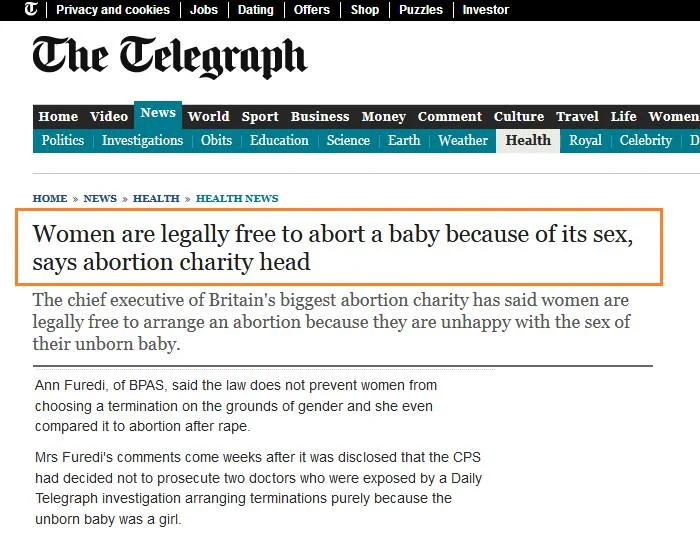
In countries such as Britain, women are legally permitted to abort a baby even on the grounds of its sex.2
Atheists support the abortion of fetuses based on a purely materialistic analysis. Their rationale for permitting the killing of innocent unborn babiesis grounded in the claim that “ontogeny recapitulates phylogeny,” a principle that was accepted as a natural law for many decades. In its strict sense, this phrase means that during development, an organism passes through the stages of the life forms from which it has evolved—that is, embryos go through stages of their evolutionary history. According to the theory of recapitulation, the fetus represents the common general embryonic form, corresponding in its early stages to those of other animals, such as fish and reptiles. On this basis, atheists argue that there is nothing morally wrong in aborting fetuses. By the same logic, from a materialistic and atheistic perspective, it is theoretically possible to rationalize the annihilation of the entire human race, since it would be seen as no different from the destruction of bacterial colonies.
In short, humans need religion to curb vices, and it is simply impossible for them to be moral without God. The atheistic claim that the brain alone knows right from wrong and is responsible for moral judgment is ludicrous. The fact is that, without God, it is impossible to justify moral behavior on metaphysical grounds or to make a coherent case for abiding by moral standards. Interestingly, even atheist Richard Dawkins concedes that “it is pretty hard to defend absolute morals on grounds other than religious ones.”3 To sum up, human knowledge acquired through science and philosophy is inherently deficient. While it can provide solutions to practical problems—such as those related to food, travel, medicine, and comfort—it cannot resolve existential crises. In contrast, religion, through divine revelation, answers questions concerning ultimate purpose and meaning, the unseen, and human values. Unfortunately, those dazzled by secular philosophy and science often arrogantly exalt worldly knowledge, regarding it as the sole form of true knowledge. Conversely, they dismiss the knowledge conveyed by Allāh’s Prophets as worthless and pay it no heed. Historically, Allāh has caused such people to be destroyed despite all their worldly knowledge and progress: {When their messengers came to them with clear proofs, they were prideful in whatever ˹worldly˺ knowledge they had, and were ˹ultimately˺ overwhelmed by what they used to ridicule} (Qurʾān 40:83). Indeed, the secret of lasting success lies in the knowledge of the Hereafter, not in worldly knowledge.
Notes and References
- 1
Wikipedia Contributors, “Aktion T4,” Wikipedia: The Free Encyclopedia, last edited 14 Feb. 2021, https://en.wikipedia.org/w/index.php?title=Aktion_T4&oldid=1006690422.
- 2
Alice Philipson, “Women Are Legally Free to Abort a Baby Because of its Sex, Says Abortion Charity Head,” The Telegraph, 18 Sep. 2013, https://www.telegraph.co.uk/news/health/news/10316715/Women-are-legally-free-to-abort-a-baby-because-of-its-sex-says-abortion-charity-head.html.
- 3
Richard Dawkins, The God Delusion, (Boston, U.S.: Houghton Mifflin Co., 2006), p. 232.