What about the end-time events prophesied by the Prophet (PBUH)?
The Prophet (PBUH) mentioned that there would be signs forewarning the approach of the Last Day (the Day of Judgment), which, in Islam, is the time when the universe will be destroyed and all human beings will be resurrected by Allāh for judgment. Atheists do not believe in this concept and even mock it, whereas Prophet Muḥammad (PBUH) described minor and major signs that would occur as indications of its nearness. Some of these signs are currently taking place:
•The Prophet (PBUH) foretold that the lowest among people would become their leaders, and that wealth would become abundant among them to such an extent that they would boastfully compete in constructing buildings. ʿAbd Allāh ibn ʿUmar reported that ʿUmar ibn al-Khaṭṭāb said: “…He (Jibrīl) came and said, ‘Inform me about the Hour.’ The Prophet (PBUH) said, ‘The one asked about it knows no more than the questioner.’ He then said, ‘Inform me about its signs.’ The Prophet (PBUH) said: ‘That you will see barefoot, naked, destitute shepherds competing in constructing tall buildings.’”1 Prophet Muḥammad (PBUH) informed us that, as the end of times approaches, the barefoot, naked Bedouins who tend their sheep will compete with one another in constructing tall buildings.2 The Companions asked him (PBUH), “Messenger of Allāh, who are these [people] you are describing?” He replied, “They are the Arabs.”3 These ḥadīths (Prophetic traditions) are striking, as the Arabs were not historically known for constructing tall buildings. In earlier periods, they did not possess the same architectural development as ancient peoples such as the Egyptians, Persians, and Romans. However, in the present day, some of the world’s tallest buildings are located in the Arab world, particularly in the Gulf countries. At over 828 meters (2,716.5 feet) and more than 160 stories, the Burj Khalīfah in the United Arab Emirates (Dubai) is currently the tallest building in the world.

The following picture shows what is expected to become the world’s next tallest building rising from the desert. When the 1,000-meter (3,280-foot) Jaddah Tower—also known as the Kingdom Tower—in Saudi Arabia opens in 2028, it will surpass Dubai’s iconic Burj Khalīfah and become the tallest skyscraper in the world, exceeding it by 236 feet (72 meters).
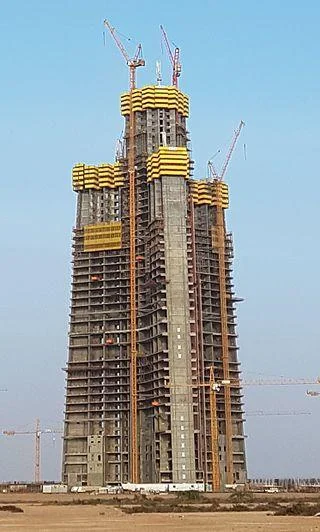
Hence, the title of the two tallest buildings in the world will soon be held by Arab countries. This is a striking and almost literal fulfillment of the statement of Prophet Muḥammad (PBUH). In the present day, competition among the leaders of Gulf countries to construct the tallest buildings in the world is evident. Only a few decades ago, Gulf countries such as Saudi Arabia and the United Arab Emirates were largely desert regions, and much of their population was traditionally engaged in pastoral life. However, the discovery of oil and subsequent economic development transformed these regions into highly urbanized societies, and their population is now among the wealthiest in the world.
•The Prophet (PBUH) foretold that the decline of religious knowledge and the spread of wine consumption and ziná (fornication/adultery) are among the portents of the Hour. Anas ibn Mālik reported that he (PBUH) said: “Among the portents of the Hour are that knowledge will be taken away, ignorance will prevail, wine will be drunk, and ziná will become widespread.”4 There has been a decline in the number of scholars and students of Islamic knowledge. Indeed, there is an unprecedented ignorance of uṣūl ad-dīn (the fundamentals of religion) among contemporary generations of Muslims. In other words, although the Prophet (PBUH) left the ummah (Muslim nation) with complete guidance, he foretold that a time would come when knowledge would be taken away and ignorance would prevail. Today, there are relatively fewer sincere, deeply grounded scholars, and—unlike earlier periods of Islamic history when many Muslims were engaged in studying the Qurʾān and Sunnah—when a scholar dies, there is often no one of comparable knowledge to take his place. The aforementioned ḥadīth also mentions that intoxicants would become widespread and ziná prevalent. Clearly, moral corruption is the result of a decline in religious knowledge. Today, those with the least knowledge are the quickest to issue religious rulings without sound understanding. As a result, the hearts of many people have become devoid of taqwá (God-consciousness and piety), leading them to increasingly indulge in sin. Moreover, the Prophet (PBUH) foretold that the most severe horrors of the Day of Judgment will be experienced by the wicked, who “will commit ziná like donkeys.”5 That is, they will engage in ziná in public places. Historically, ziná has been regarded as objectionable on religious, social, moral, and legal grounds across many cultures. However, in many Western countries, ziná was decriminalized during the 20th century. In recent years, sexual immorality has become widespread in a manner that is unprecedented in human history, particularly with the rise of pornography, which is now pervasive in modern culture.
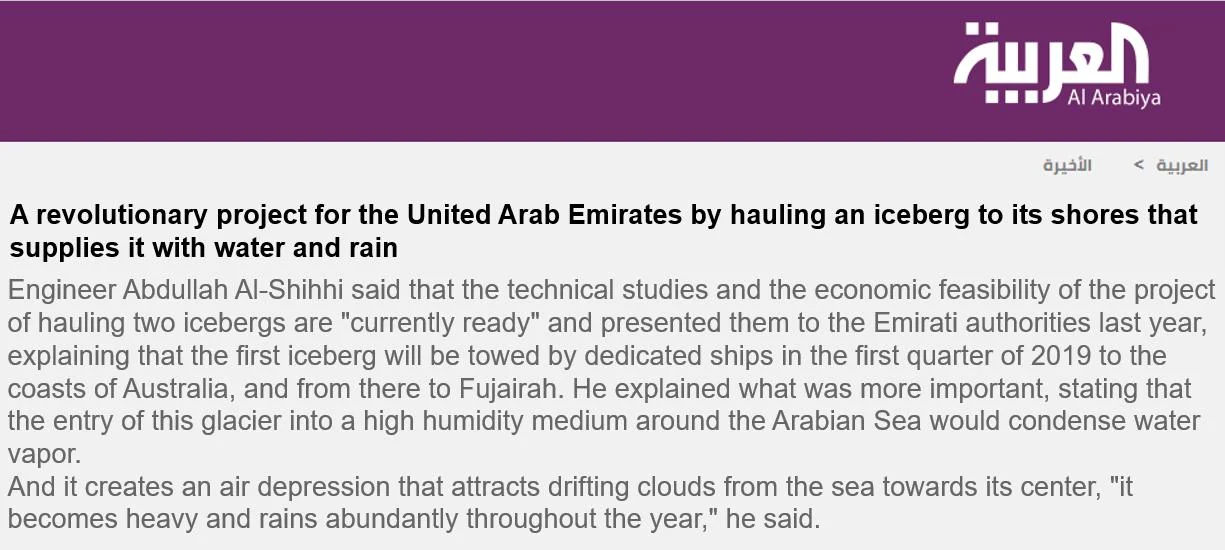
•Abū Hurayrah reported that the Messenger of Allāh (PBUH) said: “The Last Hour will not come… until the land of the Arabs reverts to meadows and rivers.”6 This is a prophecy indicating that certain climatic changes will lead to the re-emergence of meadows and rivers in the Arabian Desert. Interestingly, an Emirati (UAE) company is planning to tow icebergs from Antarctica to al-Fujayrah at a cost of up to $80 million. These icebergs are expected to create a unique climatic phenomenon, as they are said to attract clouds over the Arabian Sea toward the centre of the icebergs, thereby forming a vortex that would bring rainfall throughout the year in the otherwise arid landscape.7
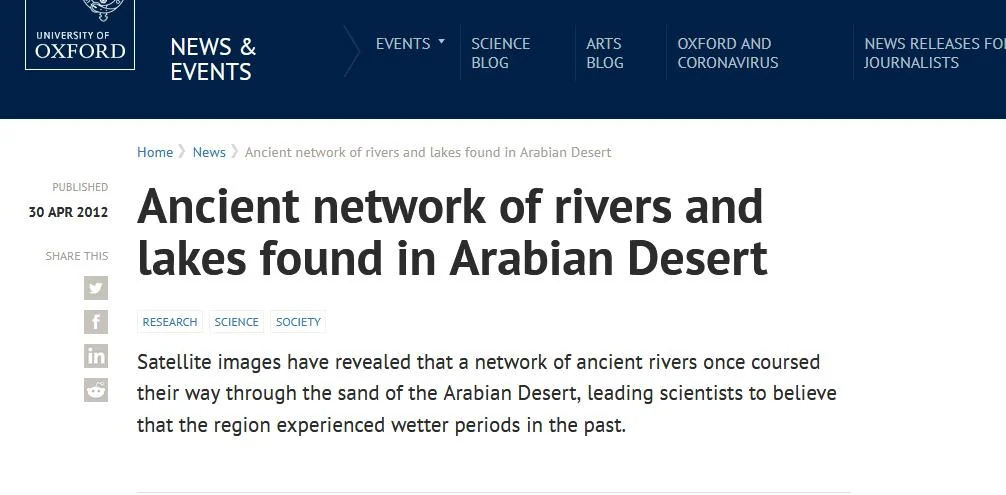
Prophet Muḥammad (PBUH) said that the Hour will not be established until the Arab lands become lush and green as they once were, and contemporary research suggests that the Arabian Desert was indeed greener and wetter in the past. The Palaeodeserts Project, a five-year programme running from March 2012 to 2016, was conducted by a team of specialists in archaeology, environmental studies, remote sensing, palaeontology, animal genetics, and rock art studies. This project was carried out by the University of Oxford in collaboration with the Saudi Commission for Tourism and Antiquities (SCTA). As an initial step in the research, the team analyzed satellite images that revealed a network of ancient rivers and lakebeds across the Arabian Peninsula. The University of Oxford published an article in which it stated that a network of ancient rivers once coursed their way through the sand of the Arabian Desert, leading scientists to believe that the region experienced wetter periods in the past.8
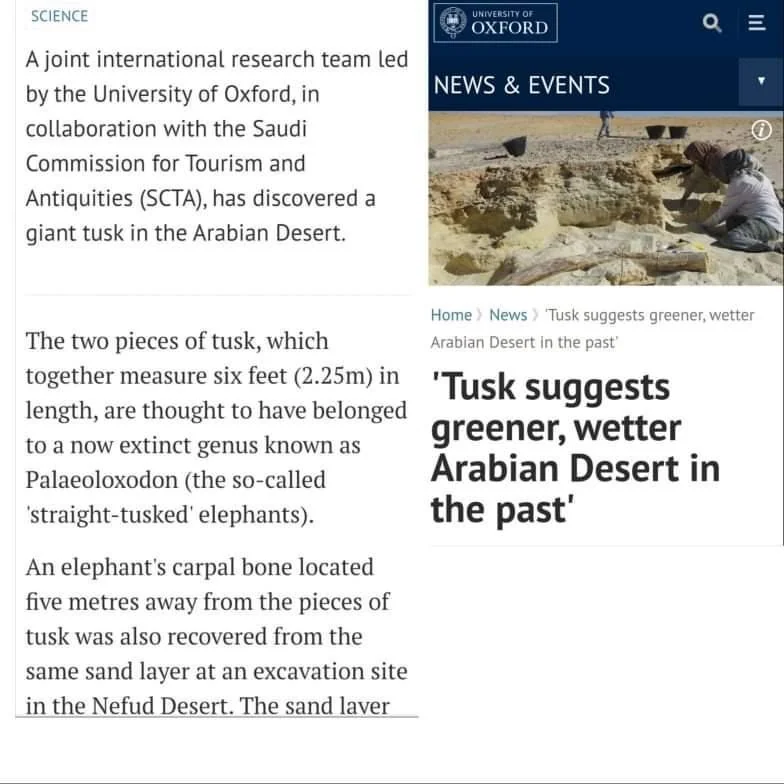
Using this photographic evidence, the joint international research team selected sites near ancient water sources for its excavation work, as these locations are where animals and early humans were likely to have gathered. The project has uncovered a giant tusk in the Arabian Desert. The project leader, Professor Mike Petraglia from the School of Archaeology at the University of Oxford, stated: “The discovery of the elephant tusk is significant in demonstrating just how much the climate could have changed in the Arabian Desert. Elephants would need huge quantities of roots, grasses, fruit and bark to survive and they would have consumed plenty of water too.”9 The researchers asserted that the findings are hugely significant, as they suggest that, in order to support the life of large animals, today’s arid terrain (the Arabian Desert) was much wetter and greener in the past.10
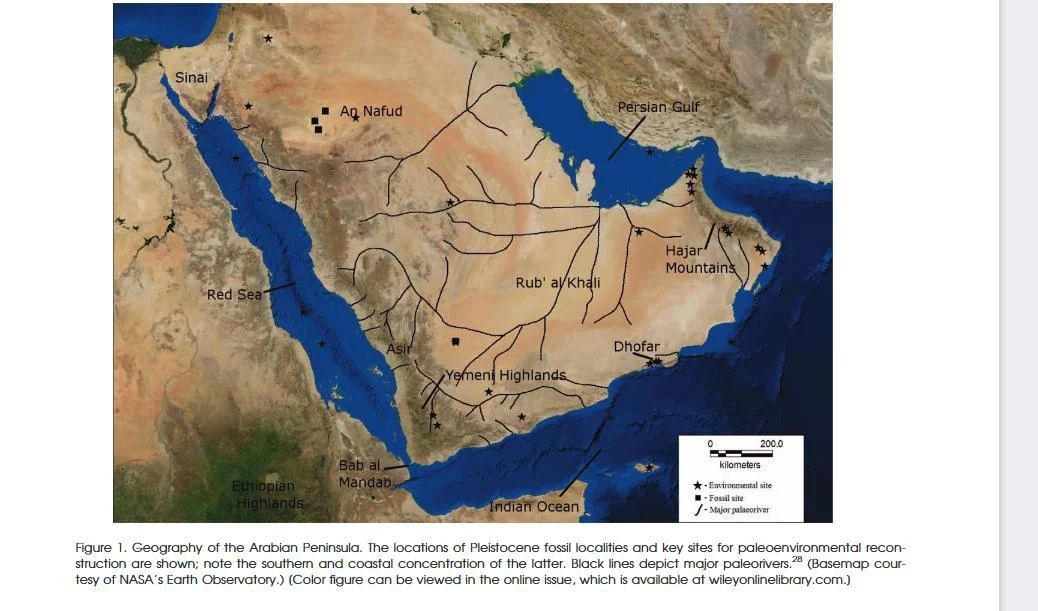
How could Prophet Muḥammad (PBUH) know that the sand dunes and barren mountains of Arabia were once verdant thousands of years ago?! Indeed, he (PBUH) spoke the truth, and the land of the Arabs will, without doubt, return to its original state of lush pastures and abundant rivers.
•The Prophet (PBUH) foretold that new means of transport would emerge before the Day of Judgment. Allāh says: {And when the ten-month pregnant camels shall be abandoned} (Qurʾān 81:5). Before modern buses and trucks, nothing was more valuable to the Arabs than she-camels, particularly those about to give birth, and they took great care to ensure that they were not lost, stolen, or harmed in any way. However, when the events of the Day of Judgment begin, people will become heedless of she-camels—their most precious possessions—as they will be utterly stunned. The Prophet (PBUH) said: “I swear by Allāh, the son of Mary will surely descend as a just ruler… and she-camels will be left untended...”11 That is, one of the signs of the latter days is that she-camels will become obsolete, and people will no longer travel on them. Again, at the time of the Prophet (PBUH)’s mission, camels were among the Arabs’ most valuable possessions because of their many benefits: they drank their milk, ate their meat, and used their wool to make tents and clothing. They also loaded their belongings onto camels and travelled long distances. Allāh says: {And they carry your loads to ˹distant˺ lands which you could not otherwise reach without great hardship} (Qurʾān 16:7). Surely, the Arabs at the time of the Prophet (PBUH)’s mission could never have imagined, nor accepted, that she-camels, which were of immense value in their eyes, would one day become largely obsolete and lose much of their practical importance. Clearly, the prophecy that ten-month pregnant she-camels would be abandoned indicates that they would be replaced by other means of transport, such as cars, trains, ships, and aeroplanes. Who informed the Prophet (PBUH) that, before the Day of Judgment, people would cease to ride animals for travel? This ḥadīth may appear confusing to some readers, as it states that camels will be abandoned during the great tribulations of the latter days, when the second coming of the Messiah (PBUH) will take place. However, there is nothing problematic about one prophecy being fulfilled before others mentioned in the same ḥadīth. This is particularly so because the Prophet (PBUH) foretold in another ḥadīth the emergence of advanced means of transportation and indicated that the Hour would not be established until great distances could be traversed in short periods of time. He (PBUH) said: “There will be, at the end of my ummah (nation), men riding on saddles resembling those of camels, alighting at the doors of mosques; their women will be clothed yet naked, with their hair arranged on the tops of their heads like the humps of camels.”12 This ḥadīth refers to men driving cars, and it implies that they are affluent, since the description of their women would not apply to people travelling on animals such as camels. According to the ḥadīth, these women will wear thin, transparent clothing that reveals the shape of their bodies, such that although they are clothed, they are in effect naked. In addition, they will adopt what is now commonly known as the camel-hump ḥijāb style, using hair buns, oversized scrunchies, or clips resembling flowers to create volume at the back of the head, giving it the appearance of a camel’s hump. This style is regarded as highly fashionable and is widely adopted as a fashion statement.

•ʿAbd Allāh ibn Masʿūd narrated that the Prophet (PBUH) said: “Verily, before the Hour (the Day of Judgment), there will be greeting only of those whom one knows, widespread trade to the extent that even a wife will assist her husband in it, the severing of family ties, the giving of false testimony, the concealment of truthful testimony, and the emergence of the pen (i.e., the widespread recording of knowledge).”13 This ḥadīth lists several signs of the Hour that are clearly evident today:
1)People indeed extend greetings only to those whom they know, even though the Sunnah is to greet everyone, whether one knows them or not.
2)Trade has become extraordinarily widespread: shops and shopping malls are found on nearly every street throughout the world, and women increasingly assist their husbands in business by working in shops as sales assistants, accountants, and in other roles. Over the past two centuries, the volume of global trade has grown dramatically, transforming the world economy. Moreover, remarkable advances in communication technology have enabled individuals to engage in mobile trading, allowing them to buy and sell in markets around the world from the comfort of their homes with nothing more than an Internet connection; for example, someone sitting in New York can trade in Tokyo.
3)Unfortunately, as the Prophet (PBUH) foretold, the ties of kinship are increasingly being severed, and enmity among relatives has become widespread.
4)People frequently give false testimony and conceal truthful testimony.
5)Literacy has become widespread, yet religious knowledge has declined and ignorance has become prevalent. Today, more than ever, it is necessary to record knowledge in writing because fewer and fewer people possess the ability and skill to memorize it.
•Prophet Muḥammad (PBUH) said: “The Day of Resurrection will not come until tribulations appear and lying becomes widespread...”14 Indeed, disinformation has become widespread in recent years, particularly through social media, as individuals who encounter false information on these platforms often go on to spread it further by sharing or otherwise engaging with it. In fact, fake news has become so common that it is difficult to fully trust all information available online. Abū Hurayrah narrated that Prophet Muḥammad (PBUH) said: “There will come upon the people years of deception, in which the liar will be believed and the truthful will be regarded as a liar; the treacherous will be trusted and the trustworthy will be regarded as treacherous; and the ruwaybiḍah will speak. It was said: ‘Who is the ruwaybiḍah?’ He said: ‘The insignificant, foolish person who speaks about public affairs.’”15 Just like the Prophet (PBUH) foretold, we are living in an era of widespread deception, in which evil is presented as virtue and virtue as evil; the deceitful are trusted while the trustworthy are regarded as untrustworthy; the liars are believed and the truthful are considered liars; and the ruwaybiḍah—insignificant, foolish people—speak freely on public affairs. It is evident from contemporary public discourse on various matters that the world is already living through the years of deception foretold by the Prophet (PBUH). The negative influence of the ruwaybiḍah in modern societies is the result of persistently declining standards for assessing the worth of individuals. Indeed, these standards have been severely compromised at the expense of moral values, allowing the ruwaybiḍah not only to gain relevance but also to shape public opinion. Unfortunately, Muslim societies are particularly affected by their proliferation. The present-day Muslim ruwaybiḍah have been brainwashed with largely distorted information and biased Orientalist portrayals of Islam, which they have absorbed from unreliable sources claiming to offer alternative interpretations of Islamic faith, jurisprudence, and ethics. As a result, they have become instruments through which anti-Muslim actors advance their anti-Islam agenda in both intellectual discourse and the media. Indeed, some of the signs of the Hour have already appeared, as Allāh says: {Are they only waiting for the Hour to take them by surprise? Yet ˹some of˺ its signs have already come} (Qurʾān 47:18).
•Thawbān narrated that the Prophet (PBUH) said: “The nations will soon summon one another against you, just as eaters invite each other to their dish. It was said: ‘Will that be because we are few in number at that time?’ He said: ‘No, rather you will be many, but you will be like foam carried by a flood. Allāh will remove fear of you from the hearts of your enemies and cast wahan into your hearts.’ It was said: ‘What is wahan, O Messenger of Allāh?’ He said: ‘Love of this worldly life and aversion to death.’”16 In this striking ḥadīth, the Prophet (PBUH) described the current condition of the Muslims with remarkable clarity and accuracy. What is particularly striking is the vivid imagery it evokes in the mind of the listener. He likened the ummah (Muslim nation) to some tasty food surrounded by a group of hungry eaters. In this imagery, the food must be shared and divided into portions among those who gather around it. Indeed, shortly after the fall of the Ottoman Caliphate, the Muslim world was divided into multiple states, many of which were later colonized by European powers drawn to the resources with which Allāh had blessed the Muslim lands. Moreover, the seeds of tyrannical regimes were planted in Muslim countries after so-called independence. Now, with the ummah divided and each government primarily concerned with its own interests, the enemies of Islam are free to attack each region like wild animals attacking their prey. This ḥadīth also highlights that sheer numbers alone are not a measure of strength in Islam. Although the Muslim population now exceeds a billion and continues to rapidly grow, such phenomenal numbers carry little weight when large segments of the Muslim population are essentially slaves to the West and are herded mindlessly like cattle according to their masters’ whims. Without a doubt, we are witnessing in our current times the fulfilment of every prediction delivered by the Prophet (PBUH) in this ḥadīth.
•Abū Hurayrah narrated that the Prophet (PBUH) said: “The Hour will not be established until wealth increases among you and becomes abundant, to the point that the owner of wealth will be concerned about who will accept his charity, and he will offer it, but the one to whom it is offered will say: ‘I am not in need of it.’”17 This ḥadīth conveys a prophecy that wealth will become abundant in the world. It includes three references. First, it refers to what occurred in the time of the Companions, namely the conquests and their division of the wealth of the Persians and the Byzantines. Second, it refers to what occurred in the time of ʿUmar ibn ʿAbd al-ʿAzīz, when there was a surplus of zakāt (obligatory alms) funds during his reign, to the extent that eligible zakāt recipients could not be found locally. Third, it refers to what will occur in the time of Jesus, son of Mary (PBUH), or shortly before it. And Allāh knows best. Undoubtedly, there have been earlier manifestations of this prophecy concerning unprecedented affluence. However, present-day lifestyles in many countries illustrate that people now live in greater material comfort than 99.9% of recorded human history. Indeed, even people who are financially struggling often have recliners at home that are more comfortable than the thrones of ancient kings. They also enjoy cooling and heating systems in their homes, as well as access to modes of transport that have transformed journeys that once took months into trips of only a few hours. Capitalist economists highlight the vast scale of global wealth today, and some Muslim countries have indeed become among the richest in the world, with rising global income (GDP per capita) contributing to a higher standard of living. Abū Hurayrah reported that the Prophet (PBUH) said: “The earth will disgorge its most precious treasures like columns of gold and silver. Then the murderer will come and say: ‘It was for this that I killed.’ The one who severed ties of kinship will come and say: ‘It was for this that I severed my ties of kinship.’ And the thief will come and say: ‘It was for this that my hand was cut off.’ Then they will leave it and take nothing from it.”18 Incidentally, there are ongoing advancements in the mining and extraction of precious metals. It is likely that, at some point in the future, highly advanced technologies and equipment will make these processes extremely easy, to the extent that precious metals may become so abundant that they lose their value in people’s estimation. In other words, when the supply of precious metals is high, demand will decrease, and people may become indifferent to them, even regretting having committed sins in order to obtain them. Interestingly, while I was writing this book, the price of “black gold” (oil or petroleum) turned negative for the first time in history. Ironically, oil producers had to pay buyers to take the commodity off their hands due to fears that storage capacity could be exhausted. The price of West Texas Intermediate (WTI), the benchmark for US oil, fell to as low as minus $37.63 per barrel.19
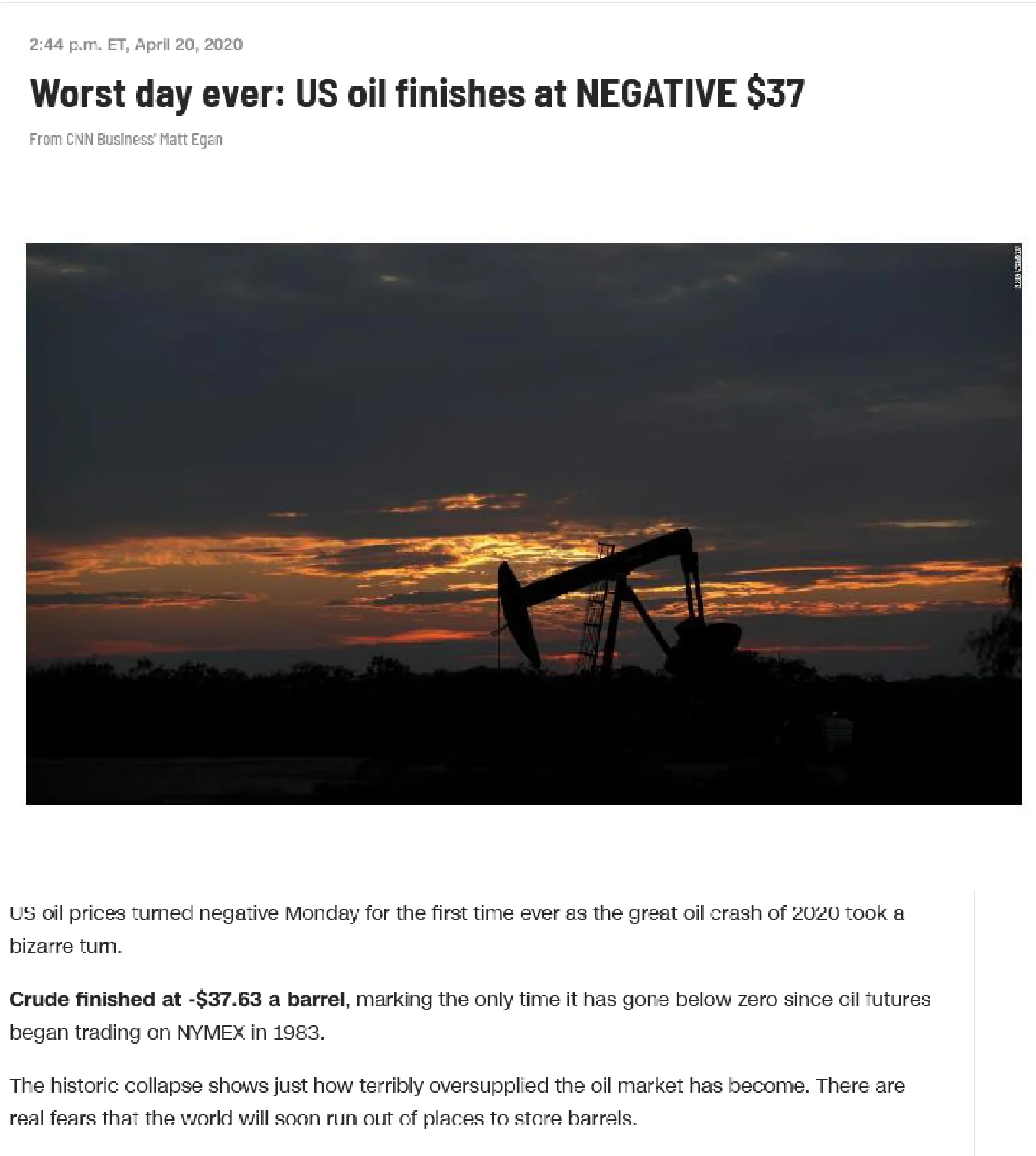
In short, the demand for oil has all but dried up as lockdowns across the world have kept people indoors. Consequently, oil companies have resorted to renting storage tankers to hold the surplus supply, which has forced the price of US oil into negative territory.
To sum up, the prophecies of Prophet Muḥammad (PBUH) are persuasive evidence of his truthfulness, as he foretold future events with remarkable accuracy. I have listed some of the ḥadīths (Prophetic traditions) describing end-time events, and we have seen that many have already occurred, while others are currently unfolding. It is worth mentioning, however, that I have limited myself to this selection for the sake of brevity; otherwise, his prophecies are, in fact, innumerable.
Notes and References
- 1
Muslim ibn al-Ḥajjāj, Ṣaḥīḥ Muslim, (Bayrūt, Lebanon: Dār al-Kutub al-ʿIlmiyyah, 2020), ḥadīth: 8a, available at: https://sunnah.com/muslim:8a.
- 2
Al-Mullā ʿAlī al-Qārī, Mirqāt al-Mafātīḥ Sharḥ Mishkāt Al-Maṣābiḥ, (Bayrūt, Lebanon: Dār al-Fikr, 2001), vol. 1, p. 50.
- 3
Aḥmad ibn Ḥanbal, al-Musnad, (Cairo, Egypt: Dār al-Ḥadīth, 1990), ḥadīth: 2926, grade of ḥadīth: authentic.
- 4
Muḥammad al-Bukhārī, Ṣaḥīḥ al-Bukhārī, (Cairo, Egypt: Dār as-Salām. 1999), ḥadīth: 80, available at: https://sunnah.com/bukhari:80.
- 5
Muslim ibn al-Ḥajjāj, Ṣaḥīḥ Muslim, (Bayrūt, Lebanon: Dār al-Kutub al-ʿIlmiyyah, 2020), ḥadīth: 2937a, available at: https://sunnah.com/muslim:2937a.
- 6
---., ḥadīth: 157c, available at: https://sunnah.com/muslim:157c.
- 7
“Why a Dubai Firm Dreamed of Harvesting Icebergs for Water,” AlArabiya, 17 May, 2017, https://english.alarabiya.net/business/energy/2017/05/17/Dubai-firm-dreams-of-harvesting-icebergs-for-water.
- 8
“Ancient Network of Rivers and Lakes Found in Arabian Desert,” University of Oxford, 30 Apr. 2012. https://www.ox.ac.uk/news/2012-04-30-ancient-network-rivers-and-lakes-found-arabian-desert.
- 9
Huw Groucutt and Michael Petraglia, “The Prehistory of the Arabian Peninsula: Deserts, Dispersals, and Demography,” Evolutionary Anthropology, vol. 21, issue 3, 2012, pp. 113-25. DOI: https://doi.org/10.1002/evan.21308.
- 10
“Tusk Suggests Greener, Wetter Arabian Desert in the Past,” University of Oxford, 3 Apr. 2014, https://www.ox.ac.uk/news/2014-04-03-tusk-suggests-greener-wetter-arabian-desert-past-0.
- 11
Muslim ibn al-Ḥajjāj, Ṣaḥīḥ Muslim, (Bayrūt, Lebanon: Dār al-Kutub al-ʿIlmiyyah, 2020), ḥadīth: 155c, available at: https://sunnah.com/muslim:155c.
- 12
Muḥammad ibn Ḥibbān, Ṣaḥīḥ ibn Ḥibbān, (Cairo, Egypt: Dār al-Maʿārif, 1952), ḥadīth: 5753.
- 13
Muḥammad Nāṣir ad-Dīn al-ʾAlbānī, Silsilat al-Aḥādīth aṣ-Ṣaḥīḥah, (ar-Riyāḍ, Saudi Arabia: Maktabat al-Maʿārif, 2002), vol. 6, p. ḥadīth: 647.
- 14
Aḥmad ibn Ḥanbal, al-Musnad, (Cairo, Egypt: Dār al-Ḥadīth, 1990), ḥadīth: 10346, grade of ḥadīth: authentic.
- 15
Muḥammad Nāṣir ad-Dīn al-ʾAlbānī, Ṣaḥīḥ al- Jāmiʿ aṣ-Ṣaġīr, (Bayrūt, Lebanon: al-Maktab al-Islāmī, 1988), ḥadīth: 3650.
- 16
Ibid, ḥadīth: 8183.
- 17
Muḥammad al-Bukhārī, Ṣaḥīḥ al-Bukhārī, (Cairo, Egypt: Dār as-Salām. 1999), ḥadīth: 1412, available at: https://sunnah.com/bukhari:1412.
- 18
Muslim ibn al-Ḥajjāj, Ṣaḥīḥ Muslim, (Bayrūt, Lebanon: Dār al-Kutub al-ʿIlmiyyah, 2020), ḥadīth: 1013, available at: https://sunnah.com/muslim:1013.
- 19
Matt Egan, “Worst day ever: US oil finishes at NEGATIVE $37,” CNN Business, 20 Apr. 2020, https://edition.cnn.com/business/live-news/stock-market-news-042020/index.html.