Which truly honors women: Islam or atheism?
There is no denying that Charles Darwin held sexist views. He wrote in The Descent of Man: “The chief distinction in the intellectual powers of the two sexes is [shown] by man attaining to a higher eminence, in whatever he takes up, than woman can attain--whether requiring deep thought, reason or imagination, or merely the use of the senses and hands.”1 He added: “Thus man has ultimately become superior to woman.”2 Darwin’s views on women—which stemmed from his evolutionary theory—nourished several generations of scientific sexism. However, it is not widely known that many evolutionists, including Darwin himself, claimed that women are biologically and intellectually inferior to men. Some might ask: Why blame atheists for Darwin’s belief in women’s inferiority? In fact, Darwin was not the only misogynist among atheists; misogyny continues to be widespread even within today’s atheist movement. Leaders of the New Atheism movement—Richard Dawkins, Christopher Hitchens, Daniel Dennett, and Victor Stenger—are particularly notorious for their sexism. From the perspective of atheistic evolution, humans—both men and women—are simply animals, evolved through the same mechanisms as all other life. Can any atheist deny this? Darwin and many other atheists relied on animal comparisons to support the conclusion that evolutionary forces rendered men superior to women. Steven Jay Gould—who, through his popular books and frequent television appearances, became the public face of evolutionary theory—wrote an essay titled “Women’s Brains,” in which he addressed misconceptions about women’s intelligence based on widely cited but misleading scientific data—specifically, the claim that women have smaller brains than men and are therefore incapable of matching men’s intelligence.3 Gould cited leading scientific thinkers from the late nineteenth century to illustrate the extreme prejudice against women’s intelligence. For example, he referred to the work of Gustave Le Bon—a prominent French polymath whose interests spanned anthropology, psychology, sociology, medicine, physics, and invention—who claimed that women’s brains are more similar to a gorilla’s than to a man’s: “In the most intelligent races, as among the Parisians, there are a large number of women whose brains are closer in size to those of gorillas than to the most developed male brains. This inferiority is so obvious that no one can contest it for a moment; only its degree is worth discussion.”4Is there anything more insulting to women than such a statement? This is but one example of the vicious attacks on women found in modern scientific literature. According to evolutionists, female inferiority is a logical consequence of natural selection. They argue that whereas men were subjected to intense selective pressures—such as warfare and competition for mates, food, and clothing—women were shielded from evolutionary selection by social norms that required men to provide for and protect them and their children. As a result, they claim, males evolved more than females, since natural selection operated far more strongly on them, thereby producing male superiority across all areas of skill. They further maintain that the intelligence gap between males and females is substantial, a belief that led some of them to classify the sexes as two distinct psychological species, designating males as homo frontalis and females as homo parietalis.”5 Darwin himself believed that the differences between male and female humans are so enormous that he expressed astonishment that “such different beings belong to the same species.”6
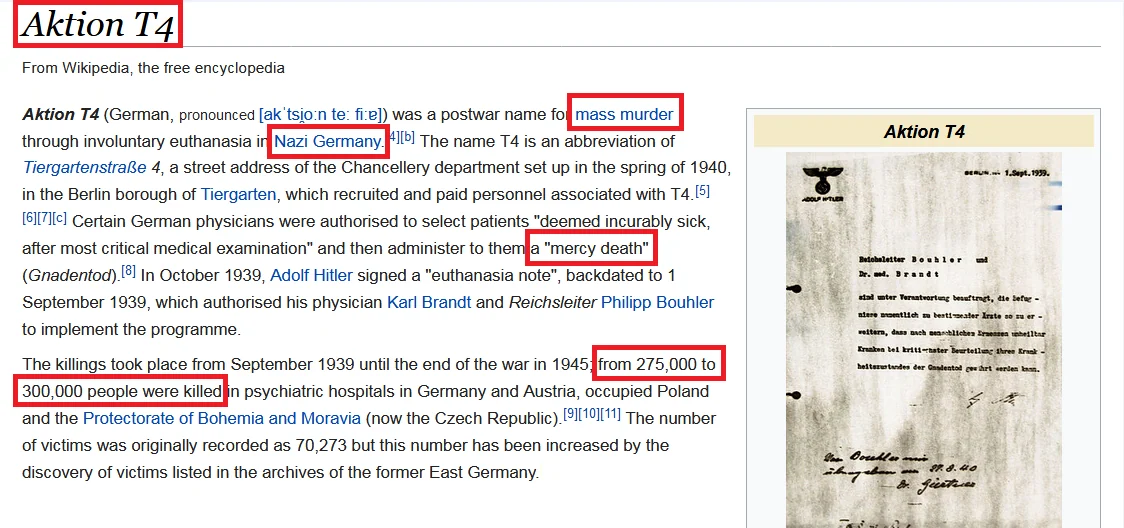
In the atheistic worldview, women are not regarded as uniquely dignified human beings, but rather as mere—albeit beautiful—animals.7 According to the theory of eugenics, which was rooted in the social Darwinism of the late nineteenth century, women, once they grow old, are deemed “unfit,” “useless eaters,” and “lives unworthy of life,” and on this basis there is nothing wrong with killing them, just as there is nothing wrong with murdering the sick and the disabled. Indeed, eighty years ago the Nazi regime, through the Aktion T4 Euthanasia Program, killed as many as 300,000 incurably ill, physically or mentally disabled, and elderly people—segments of the population that were considered to “have no right to live.”8


The application of Darwin’s theory of evolution and natural selection to human society entailed that physical and mental disabilities were traits that should be eliminated from the gene pool. In other words, so-called “unfit” individuals had to be removed in order to build a superior Germany. Consequently, it was deemed necessary to eradicate the “useless eaters” who were portrayed as “a burden on the German worker.” This image, taken from a German high-school biology textbook, illustrates Nazi propaganda promoting the prevention of births among those labeled “unfit.”

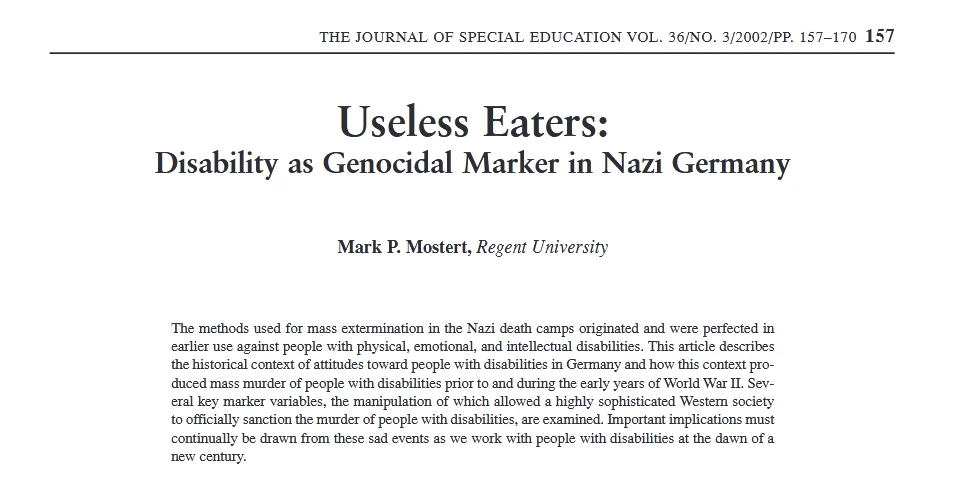
This article described historical attitudes toward people with disabilities in Germany and how these attitudes contributed to the mass murder of disabled individuals before and during World War II. The author analyzed key factors, including the rise of Darwinism and eugenics, and discussed resistance to disability as an indicator of genocidal intent.9
Atheists who embraced Darwinian evolution established extermination camps to purge societies of individuals they regarded as biological threats to national health. This outcome reflects the logical consequence of applying atheistic Darwinian concepts of evolution to the problems of human society. Even today, euthanasia (mercy killing)—generally defined as the intentional ending of a person’s life, often by family members or friends, with the stated purpose of relieving suffering—is practiced in some Western societies. It most often involves older men killing their ailing wives, though there have also been cases of serial killer nurses who murder patients while portraying their actions as acts of mercy.10As long as the light of Prophethood remains extinguished in the West and no trace of it survives, the atheistic, materialistic practice of killing the seriously ill under the guise of compassion will continue unabated.
In stark contrast to atheism, Islam regards women as the spiritual and intellectual equals of men, granting them respect, dignity, and honour. Reverence for mothers occupies a particularly high place in Islam, which teaches that Paradise lies beneath their feet. The Prophet (PBUH) even instructed a believer to forego participating in the war against the Quraysh in defense of Islam in order to care for his mother, emphasizing that such service to her would earn him salvation. On the authority of Muʿāwiyah ibn Jāhimah as-Sulamī, he said: “I came to the Messenger of Allah (PBUH) and said, “O Messenger of Allah, I intended to participate in jihād (i.e., fighting in the cause of Allah) with you, seeking thereby the Face (i.e., pleasure) of Allāh and the [reward of the] Hereafter.” He said, “Woe to you! Is your mother still alive?” I said, “Yes.” He said, “Return to her and be dutiful to her.” Then I approached him from the other side and said, “O Messenger of Allah, I intended to participate in jihād with you, seeking thereby the Face of Allah and the Hereafter.” He said, “Woe to you! Is your mother still alive?” I said, “Yes, O Messenger of Allah.” He said, “Return to her and be dutiful to her.” Then I approached him from the front and said, “O Messenger of Allah, I intended to participate in jihād with you, seeking thereby the Face of Allah and the Hereafter.” He said, “Woe to you! Is your mother still alive?” I said, “Yes, O Messenger of Allah.” He said, “Woe to you! Stick to her feet (i.e., serve her, obey her, and show her dutiful care), for there lies Paradise.”11This ḥadīth underscores Islam’s profound reverence for mothers and motherhood. The Prophet (PBUH) emphasized that a mother’s rights are paramount and that her position is more exalted, even preceding that of the father. On the authority of abū Hurayrah [may Allah be pleased with him], he said: A man came to the Messenger of Allah (PBUH) and asked, “O Messenger of Allah, who is most entitled to my good companionship?” He said, “Your mother.” He said, “Then who?” He said, “Your mother.” He said, “Then who?” He said, “Your mother.” He said, “Then who?” He said, “Then your father.”12 Moreover, the Qurʾān regards marriage as a solemn and binding covenant between a man and a woman, one that imposes serious moral obligations upon the husband, who is required to honor the marriage contract, fulfill his duties toward his wife, and will be held accountable by Allah on the Day of Judgment if he neglects them: {…and they have taken from you a solemn covenant} (Qurʾān 4:21). Allah emphasizes that women must be treated kindly: {And live with them in kindness} (Qurʾān 4:19). According to the Qurʾān, the foundation of the relationship between husband and wife from the husband’s side is maʿrūf, which encompasses kindness, good manners, respect, and honor. Interacting with a wife in accordance with maʿrūf includes speaking to her kindly, treating her with care, and refraining from abusing or harming her in any way. It also entails the responsibility to provide for her needs, such as food, clothing, and similar necessities.13 If, for any reason, a husband comes to dislike his wife, the Qurʾān instructs him not to rush into breaking the marital bond. Rather, he should exercise patience and forbearance, for if the wife is given the opportunity to display her virtues, they may outweigh her shortcomings, and the very husband who initially felt aversion toward her may come to be captivated by her admirable character and conduct. Allāh says: {if you happen to dislike them, you may hate something which Allāh turns into a great blessing} (Qurʾān 4:19). Ibn Kathīr explained that a husband’s patience, shown by remaining with a wife he dislikes, brings him rewards both in this life and in the Hereafter. Ibn ʿAbbās commented on this verse, stating that the husband may develop compassion for his wife, and Allāh may bless them with a child whose existence carries immense goodness.14 As-Saʿdī similarly noted that the husband’s dislike may fade, giving way to love, and that he may be blessed with a righteous child from her, who would bring benefit to his parents both in this world and in the Hereafter.15 The point is that Islam instructs a husband to be patient with his wife and to treat her with respect. The general purpose of marriage is for husband and wife to provide companionship to one another and to live together in love, peace, and tranquility. Furthermore, the Sharīʿah commands a divorced woman to observe ʿiddah—a waiting period after divorce during which she remains in her marital home and is not permitted to marry another man—so that, by Allāh’s will, hearts may be softened and reconciliation may occur: {Divorced women must wait three monthly cycles ˹before they can re-marry˺} (Qurʾān 2:228). The ʿiddah ensures that a woman does not rush into a new marriage while she may feel insecure or unsupported, and it provides her with a fair period to grieve and reflect until she regains her balance and strength. The Prophet (PBUH) emphasized kindness toward women, stating: “The best of you is the one who is best to his family—especially his wife—and I am the best of you to my family.”16 This ḥadīth specifically commands kindness toward one’s wife, as she is most deserving of good companionship, while also extending to other women in the family, such as daughters, sisters, and the like. Islam ultimately emphasizes the fundamental equality and complementarity of men and women, as reflected in the Prophet (PBUH)’s statement: “Women are the twin halves of men.”17
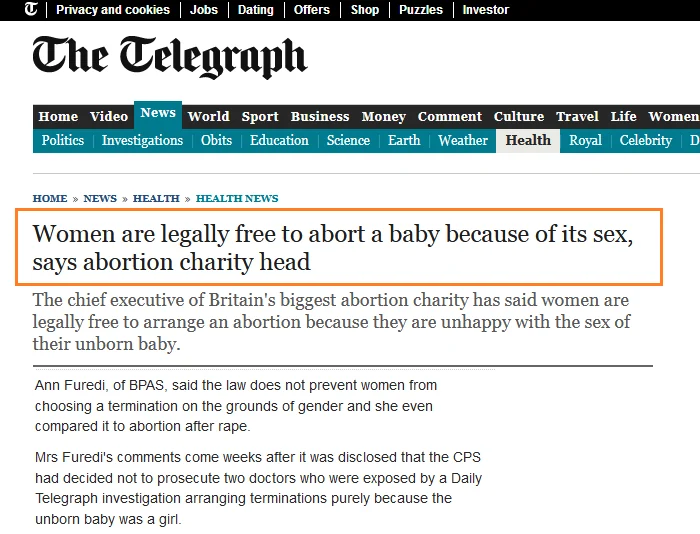
Indeed, Arab atheists had been unfortunate enough to clash with Islam, for in this perfect religion they can find nothing that would cause women to turn away from it. Consequently, they have resorted to fabricating lies and misconceptions about Islam, often citing instances in which women are abused or ill-treated to falsely claim that Islam subjugates, degrades, or oppresses women. This is a spurious argument intended to mislead only those women already inclined toward disbelief. However, any woman who refers matters of dispute to the texts of the Sharīʿah will find nothing but absolute justice and mercy. Before the advent of Islam—a religion devoted to affirming, uplifting, and preserving the honor and dignity of all human beings—pagan Arabs treated women as mere property and objects of sexual gratification, with no rights or status. ʿUrwah ibn az-Zubayr reported that ʿĀʾishah, the wife of the Prophet (PBUH), told him: “Marriage in the Jāhiliyyah (pre-Islamic period of ignorance) was of four types… Another type of marriage involved a group of fewer than ten men who would gather and enter upon a woman, and all of them would have intercourse with her...”18 Pre-Islamic Arab society not only denied women their rightful share of inheritance but also regarded them as property to be inherited by men. In other words, women were treated not as persons but as objects, divisible like property upon a man’s death. This society also reserved certain foods for males while forbidding them to females. For example, when a female sheep gave birth to a male lamb, it was slaughtered and eaten only by the males, whereas if it was stillborn, it could be shared with the females: {They ˹also˺ say, “The offspring of this cattle is reserved for our males and forbidden to our females} (Qurʾān 6:139). ʿUmar ibn al-Khaṭṭāb described the status of women in pre-Islamic Arabia, saying: “By Allāh, during the Jāhiliyyah (pre-Islamic period of ignorance) we had no regard for women until Allāh revealed concerning them what He revealed and assigned to them what He assigned.”19 That is, in the pre-Islamic period, women occupied a very lowly status and were regarded as worthless in Arabia. Moreover, an irrational prejudice was held against female children. The gravest calamity for a father was to learn of the birth of a daughter. He would be filled with extreme distress, torn between keeping her despite the fear of social disgrace or resorting to the horrific practice of burying her alive. Allāh describes this in the Qurʾān: {whenever one of them is given the good news of a baby girl, his face grows gloomy, as he suppresses his rage. He hides himself from the people because of the bad news he has received. Should he keep her in disgrace, or bury her ˹alive˺ in the ground? Evil indeed is their judgment!} (Qurʾān 16:58–59). Islam strongly opposed all prejudice against female children. The Prophet (PBUH) taught that supporting one’s female children serves as a ḥijāb (protective barrier or shield) from the fire of Hell. ʿĀʾishah, the wife of the Prophet (PBUH), narrated: “A poor woman came to me with her daughters. I gave her three dates. She gave a date to each of one of the two, and lifted a date to her mouth intending to eat it, but her daughters expressed a desire for it, whereupon she divided the date she had meant for herself between the two. I was impressed by her behaviour and reported her action to Allāh’s Messenger (PBUH). He said: ‘Verily, Allāh has assured her Paradise because of it (that date), or He has saved her from the Hellfire by it.’”20 Ṣaʿṣaʿah ibn Nājiyah, one of the nobles of Tamīm, used to buy female infants in order to save them from being buried alive by their fathers. He stated: “Islam came, and I had saved three hundred female infants from being buried alive.”21 Female infanticide remains a widespread practice in what are often described as sophisticated Western societies, which are, in reality, in a state of jāhiliyyah comparable to the pre-Islamic ignorance and barbarism of seventh-century Arabia. Several Western societies do not prohibit sex-selective abortion—the deliberate termination of pregnancy based on the anticipated sex of the child—which means that it is legally permissible for a woman to choose abortion solely or primarily because she does not prefer the sex of the unborn child, most often when the child is female.22
As noted earlier, hundreds of millions of fetuses have been killed in recent years, since the beginning of the third millennium alone.23 The light of Islam has come to this pitch-black world, past and present, bringing with it transformative teachings. Allāh sent down His Book to put an end to corruption, injustice, and immorality, and to stop the harm inflicted on females whose lives are taken when they are unwanted infants and whose bodies are exploited once they are grown up. As earlier stated, before the advent of Islam, women in Arabia were viewed and treated solely as objects of physical desire. Accordingly, the aforementioned form of marriage, namely nikāḥ al-istibḍāʿ—in which a group of fewer than ten men would gather, enter upon a woman, and have intercourse with her—was a common practice. Today, the extent to which females are demeaned in the contemporary world far exceeds even the worst practices of the first Jāhiliyyah (the pre-Islamic period of ignorance) in Arabia. The sexual exploitation and objectification of girls and women in television, films, and advertising as decorative and sexual objects to enhance the appeal of media or products, is widespread in the West. Advertisements routinely use the bodies of girls and women to sell virtually all types of products, depicting them in demeaning and humiliating ways, and reducing them to mere objects employed to market commodities, whether a shaving machine, a packet of tea, or a car. Such depictions often sexualize women in ways entirely unrelated to the product itself and present them as fragmented body parts rather than as whole persons with emotions, personalities, and lives beyond sexual appeal. This constitutes a clear form of dehumanization, as women are treated purely as instruments.
Islam came to protect females at every stage of their lives—as fetuses, as children, as orphans, as adults, as wives, as mothers, and as old ladies. Allāh forbade causing any pain or harm to any woman, even by speaking ill of her. Allāh says: {As for those who abuse believing men and women unjustifiably, they will definitely bear the guilt of slander and blatant sin} (Qurʾān 33:58). Allah also says: {do not force your ˹slave˺ girls into prostitution for your own worldly gains} (Qurʾān 24:33). The Prophet (PBUH) said: “The worst earning is the earning of a prostitute.”24 That is, the worst form of earning is that which comes from trading in women’s bodies. Allāh commands women to observe the ḥijāb (veil) as a means of protecting themselves from sexualization and objectification: {Let them (the believing women) draw their veils over their chests, and not reveal their ˹hidden˺ adornments...} (Qurʾān 24:31). The ḥijāb enables a woman to be recognized for her character, personality, and intellect, rather than her physical appearance. In other words, it protects her from being judged by the attractiveness of her body, and ensures that she is respected and honored for who she truly is. Islam enjoins duties upon the husband toward his wife and vice versa. The Qurʾān declares unequivocally that the rights of women are incumbent upon men in the same way that the rights of men are incumbent upon women: {Women have rights similar to those of men equitably} (Qurʾān 2:228). In Islam, a woman is a fully independent individual with financial rights equal to those of a man. She has the right—just as a man does—to own all types of wealth, whether in the form of assets, real estate, or cash, and to use it in any way permitted by the Sharīʿah. Accordingly, she can—without the consent of any male, whether her father, husband, or brother—buy, sell, provide grants or loans, incur debts, and exchange assets. The point is that Islam established women’s financial rights and independence over 1,400 years ago, whereas it was only about sixty years ago that women in the West gained the right to open their own bank accounts. For instance, it was not until 1848 that the Married Women’s Property Act was passed in New York, allowing American women to be sole property owners regardless of whether they were married or unmarried.25 Moreover, it was not until the 1960s that women in the United States gained the right to open a bank account.26 Likewise, it was not until 1881 that unmarried women in France were granted the right to own bank accounts; five years later, this right was extended to married women, allowing them to open accounts without their husbands’ permission. The United Kingdom lagged behind until 1975.27 As noted earlier, before the advent of Islam, women were completely denied the right to inherit from their deceased relatives. Islam was the first religion to grant women this right, allowing them to inherit as daughters, sisters, wives, and mothers: {For men there is a share in what their parents and close relatives leave, and for women there is a share in what their parents and close relatives leave—whether it is little or much. ˹These are˺ obligatory shares} (Qurʾān 4:7). Indeed, this was a revolutionary step at a time when women were treated as part of a deceased relative’s property and denied even the most basic human rights. Islam safeguarded the rights of orphaned women: {If you fear you might fail to give orphan women their ˹due˺ rights ˹if you were to marry them˺ then marry other women of your choice—two, three, or four} (Qurʾān 4:3). Al-Bukhārī recorded that ʿUrwah ibn az-Zubayr asked ʿĀʾishah about the meaning of this verse. She explained that it refers to men who sought to marry orphan girls under their guardianship—without providing them a proper dowry that other suitors might have offered—motivated either by the girls’ property, their beauty, or the belief that they could treat them according to their own whims, since the girls had no one to protect them. Such guardians were therefore forbidden to marry orphan girls unless they treated them fairly and provided them an appropriate dowry; otherwise, they should marry other girls of their choosing. The Qurʾān frequently uses the expression “believing men and women” when addressing the believers, emphasizing the equality of men and women in their duties, rights, virtues, and merits. It says: {Surely ˹for˺ Muslim men and women, believing men and women, devout men and women, truthful men and women, patient men and women, humble men and women, charitable men and women, fasting men and women, men and women who guard their chastity, and men and women who remember Allāh often—for ˹all of˺ them Allāh has prepared forgiveness and a great reward} (Qurʾān 33:35). Allāh clearly states that men and women have the same responsibilities and will receive the same rewards: {I will never deny any of you—male or female—the reward of your deeds. Both are equal in reward} (Qurʾān 3:195).
Again, the atheistic, capitalist culture of the West has separated a woman’s body from her personhood, making it the primary measure of her value. In this way, women are dehumanized and denied their full humanity. Islam, by contrast, protects women from the commodification and objectification inherent in such a culture, restoring their personhood by recognizing them as individuals with rights equal to those of men, not as sex objects created for the pleasure of men. The sexualization and objectification of women in Western media contribute to the creation of a rape culture, as they perpetuate the notion that men have a claim over women’s bodies and justify violence against them. Consequently, the most atheistic countries—where women are routinely marketed as commodities and sexual objects—tend to have the highest rates of rape.28

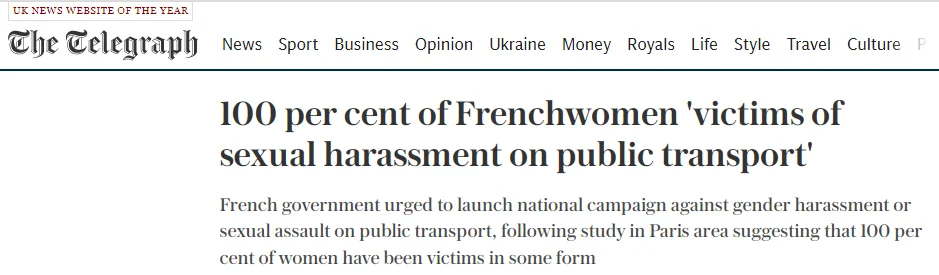
According to a troubling French survey, 100 percent of women reported experiencing some form of sexual harassment on public transport in Paris, the capital of one of the world’s least religious countries.29
In short, in today’s atheistic, materialistic Western world, women are reduced from full human beings to mere toys and trophies. Sadly, many Western women are drawn into self-objectification, supposedly using their bodies to their advantage and increasingly treating them as commodities. They justify this by claiming that their bodies are theirs and that they have the right to put them on the market and “serve” clients as they choose. If atheists succeed in convincing Muslim women that only Western culture can liberate them, Muslim societies will be profoundly harmed, for the importance of women in society is beyond question. Indeed, women are the cornerstones of social life, making up half of society and carrying the responsibility of nurturing, guiding, and shaping the other half—that is, subsequent generations of men and women. Unquestionably, faith and moral values are instilled within the Muslim ummah (nation) by virtuous women, who are indeed fortresses against Satan and serve as safeguards against both spiritual and moral corruption. For this reason, proponents of atheism have persistently sought to influence Muslim women. Viewing women through a materialistic and misogynistic lens, they assume that women are weak-willed and easily persuaded by the slogans of “freedom” and “equality.” However, these assumptions are belied by reality, for women, on average, are more religious than men and less likely to identify as nonreligious. Accordingly, the lowest rates of atheism in the Islamic world are found among women. This tendency to be religious can be attributed, in part, to women’s greater inclination toward caution and security. Religion provides them with a framework of meaning, protection, and guaranteed rights—elements that are absent within the nihilism and moral uncertainty of the atheistic worldview. Consequently, only a small number of women openly identify as committed atheists, even when they may share certain attitudes with atheists. This is because atheism exacts a cost that many women are unwilling to pay: the loss of existential purpose, moral grounding, and inner security, along with the erosion of their inborn fiṭrah—the innate human disposition, which reminds us that Allāh created us for a purpose, that we are accountable for our actions, and that our ultimate return is to Him, either to Paradise or to Hell, and which urges us to seek His protection and support, Glory be to Him. Is there any religion, culture, or philosophy that regards women as fully independent human beings; that guarantees them dignity, rights, and status; that encourages them to seek knowledge and to enjoin what is right and forbid what is wrong; that protects them from deviant men who reduce them to sexual objects for their own gratification; and that safeguards them at every stage of life—as fetuses, as children, as orphans, as wives, as mothers, and as elderly women? By Allāh, there is not.In Islam, it is incumbent upon men to treat women with the utmost kindness and respect. For instance, because Allāh knows that the dissolution of a marital contract can cause harm to the woman, He has ordained that a husband must give a gift of a reasonable amount, according to his means, to a wife he divorces before the marriage is consummated, as compensation for her loss: {there is no blame if you divorce women before the marriage is consummated or the dowry is settled. But give them a ˹suitable˺ compensation—the rich according to his means and the poor according to his. A reasonable compensation is an obligation on the good-doers} (Qurʾān 2:236). The divine revelation honors and protects women, safeguarding their rights in every aspect of life, down to the smallest detail. For example, in Islam, male and female children are to be loved, cherished, and treated equally. Favoritism—preferring a son over a daughter—is forbidden and considered a major sin. Notably, Shaykh Ibn ʿUthaymīn stated that it is even impermissible to congratulate someone on their wedding by saying bi-ar-rafāh wa-l-banīn (lit. “wishing you abundance of wealth and sons”) because this expression originated in the pre-Islamic period, when Arabs favored boys over girls. Can you imagine that? Indeed, the Islamic Sharīʿah embodies absolute justice, mercy, benefit, and wisdom in its entirety; yet, sadly, some Muslims who stray from its teachings and fail to implement its guidance in every aspect of private and public life give it a bad name.
Notes and References
- 1
Charles Darwin, The Descent of Man, (Amherst, U.S.: Prometheus Books, 1871), vol. 2, p. 327.
- 2
Ibid., vol. 2, pp. 328–329.
- 3
Stephen Jay Gould, “Women’s Brains,” Natural History, vol. 87, 1978, pp. 44–50, https://faculty.washington.edu/lynnhank/wbgould.pdf.
- 4
---., The Mismeasure of Man, (New York, U.S.: W. W. Norton & Company, 1981), p. 104–105.
- 5
Rosaleen Love, Darwinism and Feminism: The ‘Women Question’ in the Life and Work of Olive Schreiner and Charlotte Perkins Gilman as cited in D. R. Oldroyd and K. Langham, The Wider Domain of Evolutionary Thought, (Dordrecht, the Netherlands: D. Reidel Publishing Company, 1983), pp. 113–131.
- 6
Sue V. Rosser, Biology and Feminism: A Dynamic Interaction, (New York, U.S.: Twayne Publishers, 1992), p. 59.
- 7
Alija Ali Izetbegovic, Islam between East and West, (Chicago, U.S.: American Trust Publications, 1985).
- 8
“Aktion T4,” Wikipedia: The Free Encyclopedia, last edited 2 Dec. 2019, https://en.wikipedia.org/wiki/Aktion_T4.
- 9
Mark P. Mostert, “Useless Eaters: Disability as Genocidal Marker in Nazi Germany,” The Journal of Special Education, vol. 36, issue 3, Nov. 2002, pp. 157–170. DOI: https://doi.org/10.1177/00224669020360030601.
- 10
“Swiss Nurse Confesses to 27 Mercy Killings,” Swissinfo, 11 Sep. 2001, https://www.swissinfo.ch/eng/swiss-nurse-confesses-to-27-mercy-killings/2240088.
- 11
Abū ʿAbd Allāh ibn Mājah, Sunan Ibn Mājah, (Cairo, Egypt: Dār at-Taʾṣīl. 2014), book: 24, ḥadīth: 29, available at: https://sunnah.com/ibnmajah:2781.
- 12
Agreed upon ḥadīth, Muḥammad al-Bukhārī, Ṣaḥīḥ al-Bukhārī, (Cairo, Egypt: Dār as-Salām. 1999), book: 78, ḥadīth: 2, available at: https://sunnah.com/bukhari:5971; Muslim ibn al-Ḥajjāj, Ṣaḥīḥ Muslim, (Bayrūt, Lebanon: Dār al-Kutub ʿIlmiyyah, 2020), book: 45, ḥadīth: 2, available at: https://sunnah.com/muslim:2548b.
- 13
ʿAbd ar-Raḥmān ibn Nāṣir as-Saʿdī, Tafsīr as-Saʿdī, (Bayrūt, Lebanon: Muʾassassat ar-Risālah, 2000), interpretation of verse 4:19.
- 14
ʿImād ad-Dīn abū al-Fidāʾ Ismāʿīl ibn ʿUmar ibn Kathīr, Tafsīr al-Qurʾān al-ʿAẓīm,(ar-Riyāḍ, Saudi Arabia: Dār Ṭaybah, 1997), interpretation of verse 4:19.
- 15
ʿAbd ar-Raḥmān ibn Nāṣir as-Saʿdī, Tafsīr as-Saʿdī, (Bayrūt, Lebanon: Muʾassassat ar-Risālah, 2000), interpretation of verse 4:19.
- 16
Muḥammad at-Tirmiḏī, Jāmiʿ at-Tirmiḏī, (Cairo, Egypt: Dār at-Taʾṣīl, 2016), book: 49, ḥadīth: 295, available at: https://sunnah.com/tirmidhi:3895.
- 17
Abū Dāwūd as-Sijistānī, Ṣaḥīḥ Sunan Abī Dāwūd, (Cairo, Egypt: Maktabat al-Maʿārif, 1998), book: 1, ḥadīth: 236, available at: https://sunnah.com/abudawud:236.
- 18
Muḥammad al-Bukhārī, Ṣaḥīḥ al-Bukhārī, (Cairo, Egypt: Dār as-Salām. 1999), book: 67, ḥadīth: 63, available at: https://sunnah.com/bukhari:5127.
- 19
Ibid., book 65, ḥadīth: 433, available at: https://sunnah.com/bukhari:4913.
- 20
Muslim ibn al-Ḥajjāj, Ṣaḥīḥ Muslim, (Bayrūt, Lebanon: Dār al-Kutub ʿIlmiyyah, 2020), book: 45, ḥadīth: 191, available at: https://sunnah.com/muslim:2630.
- 21
Aḥmad ibn Ḥajar al-ʿAsqalānī, al-Iṣābah fī Tamyīz aṣ-Ṣaḥābah, (Bayrūt, Lebanon: Dār Iḥyāʾ at-Turāth al-ʿArabī, 1980), vol. 3, p. 347.
- 22
Alice Philipson, “Women are Legally Free to Abort a Baby Because of its Sex, Says Abortion Charity Head,” The Telegraph, 18 Sep. 2013, https://www.telegraph.co.uk/news/health/news/10316715/Women-are-legally-free-to-abort-a-baby-because-of-its-sex-says-abortion-charity-head.html.
- 23
“Abortions Worldwide this Year,” Worldometer, accessed 13 March 2024, https://www.worldometers.info/abortions/.
- 24
Muslim ibn al-Ḥajjāj, Ṣaḥīḥ Muslim, (Bayrūt, Lebanon: Dār al-Kutub ʿIlmiyyah, 2020), book: 22, ḥadīth: 50, available at: https://sunnah.com/muslim:1568a.
- 25
“Women’s History Month: Homeownership and Financial Independence,” Radius Financial Group, accessed 22 Aug. 2023, https://www.radiusgrp.com/blog/womens-history-month-homeownership-financial-independence.
- 26
Ron Sanders, “The History of Women and Money in the United States in Honor of Women’s History Month,” One Advisory Partners, 7 March 2023, https://www.oneadvisorypartners.com/blog/the-history-of-women-and-money-in-the-united-states-in-honor-of-womens-history-month.
- 27
Suzanne McGee and Heidi Moore, “Women’s Rights and their Money: A Timeline from Cleopatra to Lilly Ledbetter,” The Guardian, 11 Aug. 2014, https://www.theguardian.com/money/us-money-blog/2014/aug/11/women-rights-money-timeline-history#:~:text=France%2C%201881%3A%20France%20grants%20women,the%20UK%20lags%20until%201975.
- 28
Ejaz Khan, “Top 10 Countries with the Highest Rape Crime in the World,” Wonders List, accessed 19 June 2023, https://www.wonderslist.com/10-countries-highest-rape-crime/.
- 29
Henry Samuel, “100 per cent of Frenchwomen ‘Victims of Sexual Harassment on Public Transport,’” The Telegraph, 17 Apr. 2015, https://www.telegraph.co.uk/news/worldnews/europe/france/11545643/100-per-cent-of-Frenchwomen-victims-of-sexual-harassment-on-public-transport.html.