What are some of the scientific myths and misconceptions that were prevalent at the time of the Qurʾān’s revelation?
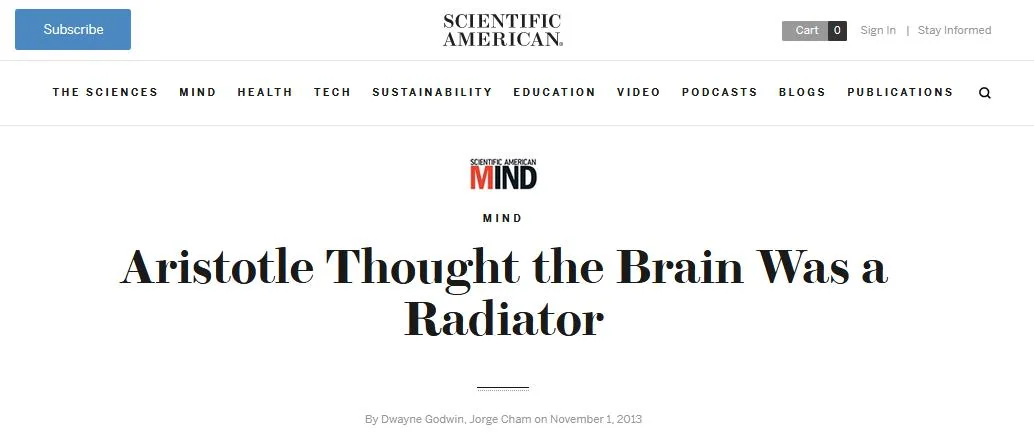
To begin with, it is universally recognized today that the brain is the “seat of human consciousness” and the organ that governs the rest of the body. However, it took humanity a long time to reach this understanding. Many ancient scholars underestimated the importance of the brain. A notable example comes from Ancient Greece: Aristotle—one of the greatest intellectual figures of Western history, both philosopher and scientist—considered the heart to be the seat of consciousness, regarding the brain merely as a kind of radiator whose function was to “cool the passions of the heart.”1
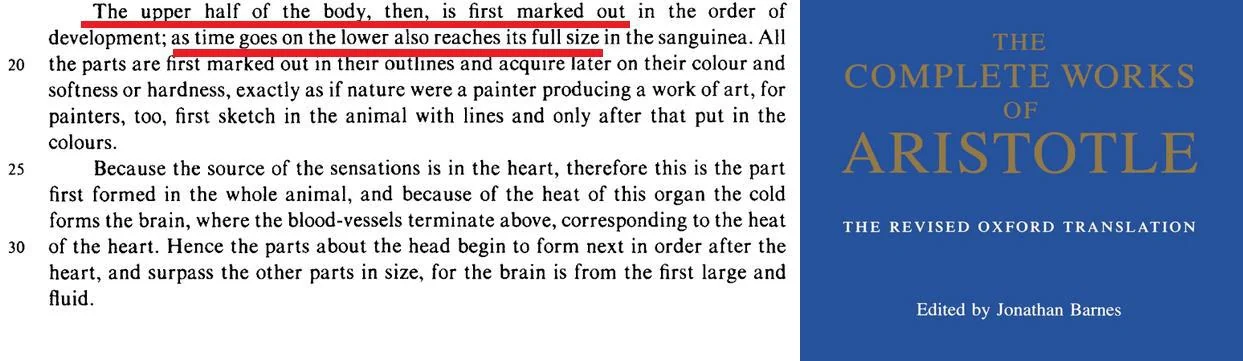
Aristotle had no knowledge of the nerves or the sensory regions of the brain. He also asserted that women have fewer teeth than men.2 Moreover, he subscribed to the widespread pre-scientific belief in medieval Europe that worms could transform into serpents. Additionally, he maintained that during the early stages of pregnancy, the upper half of the body develops first, while the lower parts form in later stages.3
Despite his brilliance, Aristotle held such erroneous theories. Nonetheless, his writings shaped Western philosophy and natural science for more than two thousand years, until the sixteenth century C.E.4 Aristotelian ideas were also prevalent in the Arabian Peninsula during the Prophetic era. Yet, despite their prevalence, they were neither adopted by Prophet Muḥammad (PBUH) nor incorporated into the Qurʾān and the Sunnah. Medical thought was likewise heavily influenced by Hippocrates—a Greek physician and philosopher of the classical period, widely regarded as the father of medicine. Hippocrates, who provided the first anatomical and physiological understanding of the human body, believed that human generation was the result of the four elements: water, air, earth, and fire.5

Hippocrates, regarded as the “first true embryologist,” believed that the embryo begins its development by drawing moisture and breath from the mother. He described a process involving a series of “fires” and condensations responsible for the formation of the bones, abdomen, and circulatory system during embryonic and fetal development.6
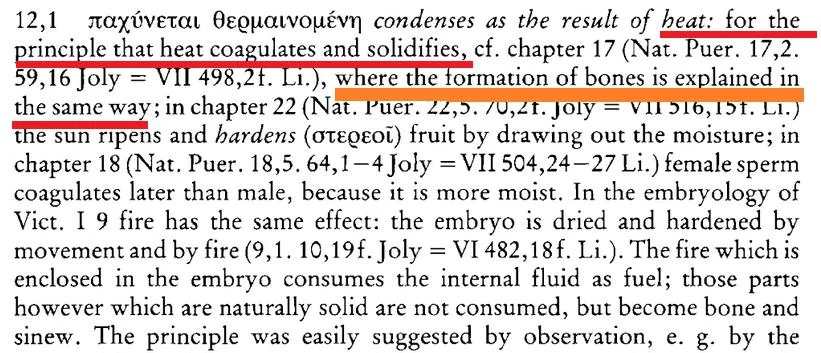
Hence, according to Hippocrates, the bones—each protrusion of which performs a specific task with remarkable precision, as anyone who has studied anatomy knows—form according to the degree of heating.
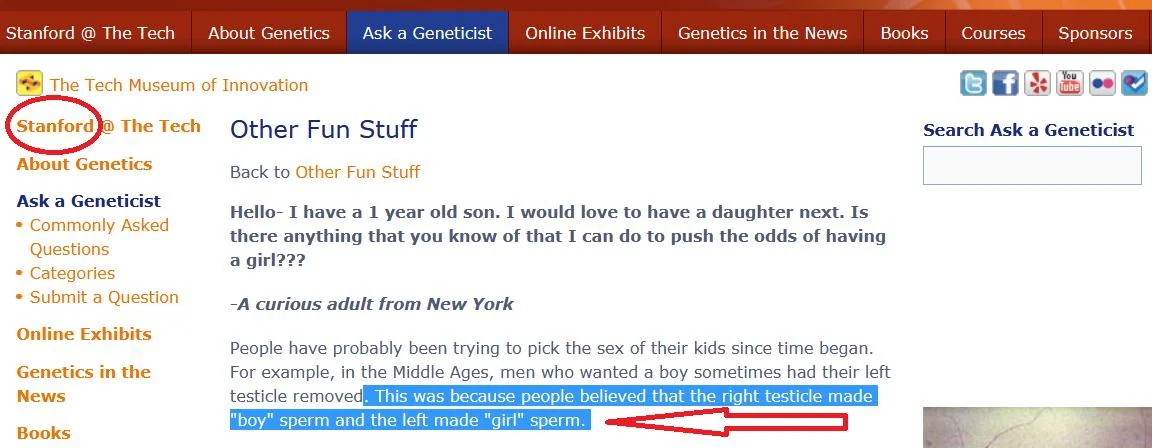
Furthermore, Hippocrates’ student, Galen—a Greek physician and philosopher—exercised a dominant influence on medical theory and practice in Europe from the Middle Ages until the mid-seventeenth century. Galen built on Hippocrates’ ideas and formulated the claim that the membranous parts of the fetus (i.e., bones, veins, arteries, and nerves) originate from male semen, whereas the soft, fleshy parts arise from menstrual blood. He held that the fetus is formed from both male and female contributions—often described as “two semens”—with menstrual blood serving as the nutritive or formative substance. Thus, according to Galen, the fetal substance is not merely menstrual blood, as Aristotle had maintained, but a combination of menstrual blood and the two semens. He articulated this theory of human reproduction in his work On Semen.7 Galen also believed that menstrual blood ceases during pregnancy because it forms the fetus and subsequently nourishes it in the womb. Moreover, in his attempt to explain sexual generation, Galen adopted Hippocrates’ view that the right testicle produces male offspring and the left female.8 It became commonly believed that if the right testicle was tied during intercourse, the result would be a female child, and if the left was tied, a male child. Consequently, some Greeks reportedly tied the left testicle, while certain Persians went so far as to remove it entirely in the belief that this would ensure male offspring. This view remained prevalent in various parts of the world until only a few centuries ago.9
Galen believed that as blood travels to the testicles, it turns white, giving rise to semen.10 Regarding fetal sex determination, Galen agreed with Aristotle that the location of the developing placenta can reveal the fetus’ sex: if the placenta forms on the right side of the uterus, the fetus is male; if it forms on the left side, the fetus is female.11 Interestingly, some concepts about fetal development in the Jewish tradition, such as those in the Babylonian Talmud (Niddah 31a), bear a striking resemblance to Galen’s theories.12 Galen’s ideas were widely accepted in the West to such an extent that later interpretations of rabbinic and medieval Jewish literature show views about parental contributions to the fetus that resemble ideas attributed to him and Aristotle.13 Conversely, although Galen’s ideas were prevalent in Arabia during the Prophetic era, they are nowhere to be found in the Qurʾān or the Sunnah. In short, the Aristotelian, Hippocratic, and Galenic traditions contained myths that persisted for centuries, until they were challenged by the scientific revolution of the seventeenth century. Imagine the outcry that would ensue from the enemies of Islam if such myths were found in the Holy Qurʾān!
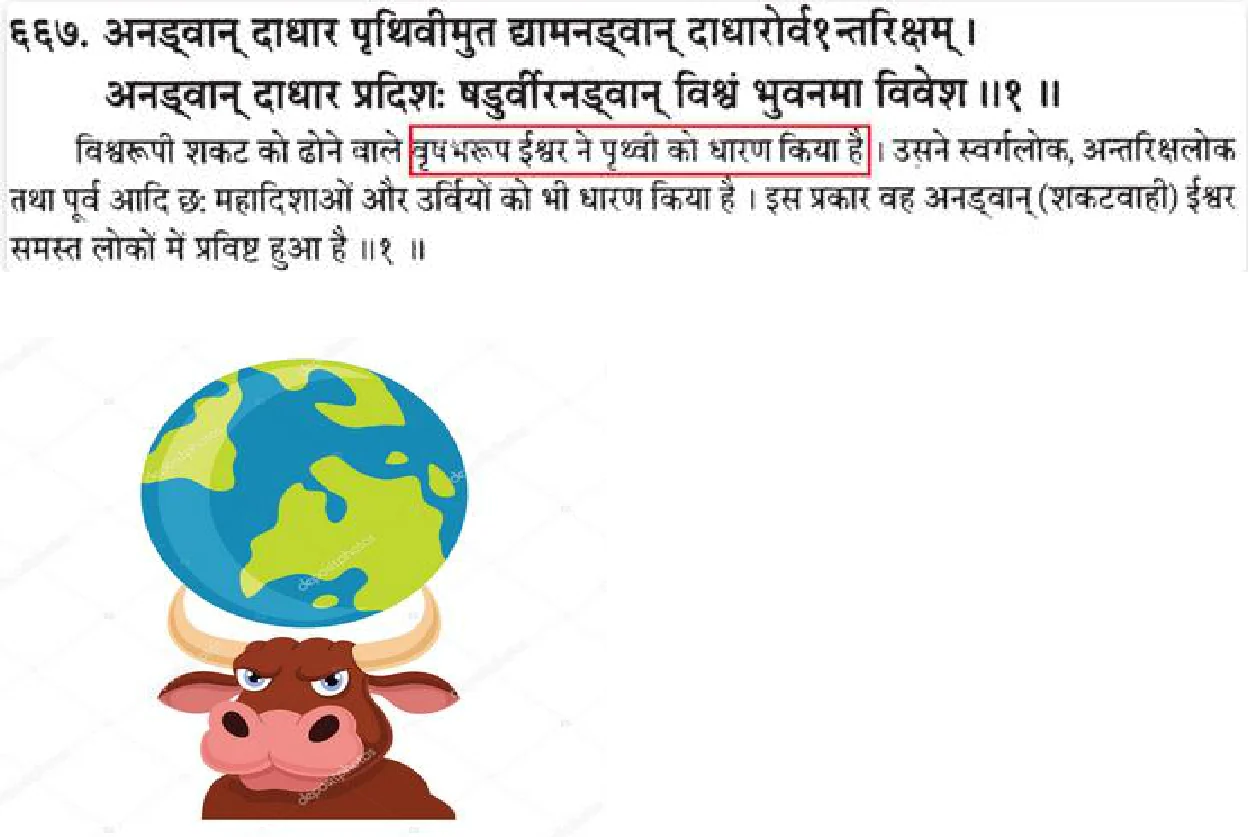
Scientific errors are not limited to Greek traditions; they also appear in Asian traditions. For example, the Vedas—the sacred Hindu scriptures—describe the Earth as being held by a bull: “The Bull supports the wide-spread earth and heaven” (Atharva Veda 4.11.1).
In Hinduism, Sūrya—the sun and the sun god—is commonly depicted in a chariot drawn by seven horses: “O, Bright sun, a chariot named harit with seven horses takes you to sky” (Rig Veda 1.50.8, 1.50.10).

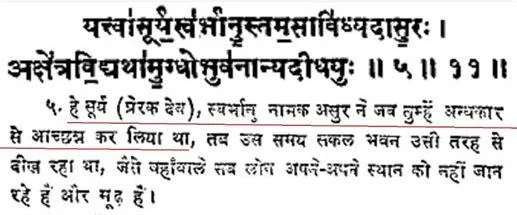
The Rig Veda attributes solar eclipses to the overshadowing effect of certain impure planetary deities. More specifically, eclipses are ascribed to a demon named Svarbhanu, who strikes the sun with darkness: “O Sūrya, when the Asura’s descendant Svarbhanu, pierced thee through and through with darkness” (Rig Veda 5.40.5-6)
The above reflect the perceptions of the ancient world. Indeed, any book written in that era—or even as recently as three centuries ago—would inevitably contain what we would now regard as peculiar scientific myths. For example, Charles Darwin—a naturalist, geologist, and biologist best known for his theory of evolution by natural selection—is celebrated as one of the greatest British scientists in history. His classic theory was first presented in his book On the Origin of Species in 1859, that is, 150 years ago.However, after more than a century of scientific and technological progress and discovery, Darwin’s explanations of how life on Earth evolved are no longer considered entirely accurate. In fact, his writings included some gross errors. For instance, in his hypothetical mechanism of heredity, he proposed that the body’s organs emit invisible “seeds,” likened to miniature building components, which are transmitted during sexual intercourse and reassemble in the mother’s womb to form a baby. In other words, he suggested that each part of the body continually releases its own type of small organic particles, called gemmules, which accumulate in the gonads and contribute heritable information to the gametes.14

Darwin’s theory of pangenesis lacked an adequate account of inheritance, rendering it logically incomplete, largely because he possessed no knowledge of the human genome. In stark contrast, the Qurʾān, revealed fourteen centuries ago, is a Book so noble and perfect that no one can succeed in proving anything within it to be wrong or false. This remains true for all times, for it was sent down by the Lord—Glory be to Him—Who says: {It cannot be proven false from any angle. ˹It is˺ a revelation from the ˹One Who is˺ All-Wise, Praiseworthy} (Qurʾān 41:42). That is, nothing will ever be discovered, until the end of time, that may contradict the truths presented in the Qurʾān. In other words, no new scientific discovery or emerging discipline will ever contradict the knowledge contained in the Qurʾān, and no observation or experiment will ever demonstrate that its guidance to humankind is erroneous. In short, whatever the Qurʾān has declared to be true can never be proven false, and whatever it has declared to be false can never be proven true. Hence, despite all the open and secret schemes of its opponents, the message of the Qurʾān will continue to spread, and none shall be able to thwart or defeat it.
Notes and References
- 1
Dwayne Godwin, and Jorge Cham, “Aristotle Thought the Brain Was a Radiator,” Scientific American. (This article was originally published with the title “Mind in Pictures” in Scientific American Mind, vol. 24, issue 5, p. 76. Nov. 2013. DOI: https://doi.org/10.1038/scientificamericanmind1113-76.
- 2
Aristotle, The History of Animals, book IV, trans. D’Arcy Wentworth Thompson, (Oxford, U.K.: Clarendon Press, 1910). DOI: https://doi.org/10.5962/bhl.title.147382.
“Males have more teeth than females.”
- 3
Barnes Jonathan, Complete Works of Aristotle, Volume 1: The Revised Oxford Translation, (Princeton, U.S.: Princeton University Press, 2014), available at: Project MUSE, https://muse.jhu.edu/book/64882.
- 4
Ibid.
- 5
Lain M. Lonie et al., The Hippocratic Treatises, “On Generation,” “On the Nature of the Child,” “Diseases IV”: A Commentary, (Boston, U.S.: De Gruyter, 1981), https://doi.org/10.1515/9783110863963.
- 6
Ibid.
- 7
Galen, On Semen, ed. Philipp De Lacy, (Berlin, Germany: Akademie Verlag, 1995), p. 99 and p.103.
“But (the fetus) has first of all the vegetative power, which creates not from blood but from the semen itself artery and vein and nerve, bone and membrane.” (p. 99).
“For all the parts that are fleshy [σαρκώδη] in form were generated from blood [αίματος]; but all that were membranous were drawn out from semen.” (p. 103).
- 8
Hippocrates, Epidemics, vol. VI, trans. Potter Paul, (Cambridge, U.S.: Harvard University Press, 1988), comm. VI. 27.
- 9
“Hello-I Have a 1 Year Old Son. I Would Love to Have a Daughter Next. Is there anything that you Know of that I Can Do to Push the Odds of Having a Girl?” Stanford @The Tech--Ask a Geneticist, https://genetics.thetech.org/ask/ask76
- 10
Journal of the History of Biology, vol. 14, p. 109 as cited in Sāmī ʿĀmirī, al-ʿIlm wa-Ḥaqāʾiquhu (Science and its Facts), (Kuwait, Kuwait: Markaz Rawāsikh, 2020), p. 470.
- 11
Ibid., p. 302.
- 12
“Our Rabbis taught: There are three partners in man, the Holy One, blessed be He, his father and his mother. His father supplies the semen of the white substance out of which are formed the child’s bones, sinews, nails, the brain in his head and the white in his eye; his mother supplies the semen of the red substance out of which is formed his skin, flesh, hair, blood and the black of his eye; and the Holy One, blessed be He, gives him the spirit and the breath, beauty of features, eyesight, the power of hearing and the ability to speak and to walk, understanding and discernment” (the Babylonian Talmud, tractate Niddah, page 31a).
- 13
Keith L. Moore et al., The Developing Human, (Amsterdam, Netherlands: Elsevier Publishers, 2019).
- 14
Wikipedia Contributors, “Pangenesis,” Wikipedia: The Free Encyclopedia, last edited 2 March 2021, https://en.wikipedia.org/w/index.php?title=Pangenesis&oldid=1009826954.