What is the problem with astrophysics? Is it a science, or is it charlatanism and nonsense?
Understanding the universe and how it operates is no easy task. In their attempt to do so, scientists rely on inductive reasoning, a method of developing theories or generalizations from specific observations or data. In other words, researchers begin by collecting data and identifying patterns from which they formulate new theories or hypotheses. The principle underlying induction is that the evidence for a claim must be external to the claim itself. However, since our senses limit our perception of the universe, scientific interpretation depends on instruments and devices that allow observation and measurement beyond direct sensory experience. On this basis, when scientists seek to demonstrate that something has occurred in a particular way, they maintain that their observations were gathered inductively and are therefore impartial. As a result, over the past century, scientific knowledge of the universe has expanded at an astonishing rate. This is because scientists have access to powerful telescopes and space probes equipped with cutting-edge measuring instruments and imaging systems, enabling them to peer deep into the universe and investigate cosmic phenomena with unprecedented precision. They also have access to supercomputers that allow them to analyze the vast quantities of data produced. Hence, they have acquired an increasingly sophisticated understanding of the universe’s origins and development. Sometimes, however, even the most powerful telescopes are incapable of observing extremely distant or highly unusual astronomical objects, such as black holes. Consequently, the lack of sufficiently advanced and highly precise scientific instruments and devices hampers efforts to gain deeper insights into previously unexplored aspects of the universe, such as dark matter and dark energy, especially since each new insight gives rise to new questions. The point is that much of astrophysics is concerned with observing the invisible, studying the most extreme events in the universe, and understanding distant phenomena. That is, modern astrophysicists investigate phenomena that lie beyond the range of human vision—not only beyond the furthest reach of optical telescopes, which are constrained by the diameter of their mirrors and the sensitivity of their detectors, but also beyond the relatively narrow range of the electromagnetic spectrum occupied by visible light. Consequently, the limitations of astrophysical hypotheses and theories should come as no surprise.
Have you ever heard someone argue that we cannot really know anything at all by making one of those grandiose, unsupportable, evidence-free assertions that are meant to make us doubt our knowledge of the world, such as “we are all brains in a vat”?1 A similar form of skepticism can be found in the work of Bertrand Russell, a British mathematician, logician, philosopher, and self-described agnostic, who is known for his views on memory as discussed in The Analysis of Mind. Russell’s views on memory are part of his broader epistemological concerns about how we know the past. He argued that memory does not provide infallible access to what actually happened, suggesting that what we call memory may sometimes be unreliable or misinterpreted, since our present mental states cannot independently guarantee the truth of the past events they appear to represent. As he put it, our belief that we “remember” something is not automatically proof that it happened. In this same skeptical spirit, Russell also put forward the five-minute hypothesis, a more radical thought experiment, which proposes that the entire universe could have come into existence only five minutes ago. According to this scenario, the universe would include all apparent traces of history—such as human memories, documents, and physical evidence—already fully formed at the moment of creation. This challenges not only the reliability of memory, but also the very existence of a real past, since everything that appears historically real may in fact be an illusion. I quote his well-known passage at some length: 2

The five-minute hypothesis is a thought experiment and not a scientific or philosophical theory. Russell knew that it was not a hypothesis worthy of serious consideration, but he introduced it only to clarify a point in his discussion of memory and the past. He did not intend to provide definitive answers, but rather to encourage reflection about the nature of knowledge and the limits of human perception. He acknowledged that what we ordinarily call “knowledge” spans a broad spectrum of degrees of uncertainty, and that very little, if anything, is absolutely certain. His five-minute hypothesis thus suggests that we could be wrong about everything. In The Scientific Outlook, Russell asserted that knowledge, as opposed to fantasies of wish-fulfillment—imaginary beliefs or comforting ideas people believe because they want them to be true, rather than because they are supported by evidence—is difficult to obtain, and that even a small contact with real knowledge makes fantasies less acceptable. He observed:3

Russel further observed:4

Galileo was opposed by the Church because he supported and popularized Copernicus’s heliocentric model, which held that the Earth moves around the Sun, and because he challenged traditional interpretations of biblical passages such as Joshua 10:12–13.5 The method of arriving at truth used by the Church at the time was deduction from Scripture. That is why Church authorities became hostile toward Galileo when he questioned the authority of their interpretation of Scripture, since it was from Scripture that they derived their premises, and deductive reasoning as a means of obtaining knowledge breaks down when doubt is cast on its premises. Moreover, Galileo was also a threat to Aristotle’s followers—scholars who based their scientific understanding on Aristotle’s teachings, especially his ideas in physics, astronomy, and what was then called natural philosophy. They regarded him as an unquestionable authority and strictly upheld every word attributed to him. As a result, they were resistant to rejecting propositions put forward by Aristotle, even when Galileo knew them to be clearly false. For instance, Aristotle held that celestial bodies are perfect, smooth spheres, whereas Galileo—using his improved version of the spyglass (an early form of the telescope that makes distant objects appear closer)—observed that the Moon has mountains, craters, pits, and other features similar to those of the Earth. However, Aristotle’s followers attempted to persuade Galileo that what they were doing was genuinely philosophical and that Aristotle himself would have approved of it. Russell stated that the scientific method, as we understand it today, came into the world fully developed with Galileo, who, together with Kepler, established that the Earth and the other planets revolve around the Sun. This fact had previously been asserted by Copernicus and by certain Greek thinkers, but they had no compelling arguments in support of this view. Kepler, however, and Galileo even more so, possessed the scientific method in its complete form. In other words, although much more is known today than was known in their time, nothing essential has been added to the method itself. They proceeded from the observation of particular facts to the formulation of precise quantitative laws, by means of which future facts could be predicted. Nevertheless, their contemporaries were profoundly shocked by their work:6

Aristotelian science offered a comprehensive view of nature. Aristotle and his followers held that nature could be explained through intuitive assumptions combined with the use of logic. Essentially, they would make observations, proceed inductively to universal principles, and then use logic to derive conclusions from those principles. Critics argue that combining scientific data with logic in this way can lead to dogma. Examples of Aristotle’s intuitive assumptions include the belief that the universe is finite and centered on the Earth, that all heavenly bodies revolve around the Earth, and that the terrestrial realm is corruptible whereas the celestial realm is incorruptible. By questioning both Aristotle and the Scriptures, Galileo undermined the entire edifice of medieval knowledge.7

Russell pointed out that, in the process of acquiring knowledge that is both secure and general, Galileo took the first great step and is therefore regarded as the father of modern science. Nevertheless, he observed that knowledge is in fact even harder to obtain than Galileo supposed, and that much of what he believed was only approximate.8 As we now know, those who argued against Galileo were wrong, but this does not mean that Galileo was ultimately “proved right” in any final sense. What gives the Galileo story its lasting significance is that it is often framed as a struggle between “science” and “facts” on the one hand, and powerful authorities attacking “truth” on the other. However, no one today views the universe in the way Galileo did. The Earth is not the center of the universe, but neither is the Sun. The Sun is just one star in a galaxy of stars, which itself is one among a vast universe of galaxies. Our current understanding of the universe is barely 100 years old and still contains major mysteries, such as dark matter and dark energy. Who knows how science will describe the universe 100 or 500 years from now? The point is that any Galileo story that ends with a sense of triumphant finality misunderstands the nature of science itself. That is, treating the Galileo story as a narrative of the Church rejecting science implies that science is a single, monolithic worldview based on unchanging facts that can be objectively proven. However, a scientist may admire another scientist’s work while still arguing against it on sound scientific grounds. Such is the nature of science. Tycho Brahe (1546–1601), a Danish astronomer, admired Copernicus’s work, particularly its mathematical elegance, yet he argued against it. Brahe did so not on the basis of the Bible, but on what we now recognize as compelling scientific grounds. He believed that the elegance of the heliocentric model came at too high a price, as it required abandoning the idea of an immovable Earth. In a word, science is neither monolithic nor always infallible.
The scientific method—the framework within which all scientific research is conducted—is based on inductive reasoning. Scientific progress depends on inductive reasoning because, without it, researchers could not formulate hypotheses from their observations, and hypotheses are essential for guiding future research and developing new theories. Inductive reasoning is a form of logical thinking that draws general conclusions from related observations. It is widely used in descriptive science. Life scientists, such as biologists, make observations and record them. These observations may be qualitative or quantitative and can be supplemented with illustrations, photographs, or videos. From a large number of observations, scientists can infer conclusions based on the available evidence. However, inductive reasoning does not guarantee the truth of a conclusion. Rather, it allows for the possibility that a conclusion may be false even when all the premises are true. In other words, in an inductive argument, the conclusion does not necessarily follow with certainty from true premises. At best, it is probable, and its probability depends on the strength of the inference drawn from those premises. This is because, unlike deductive reasoning, which begins with premises established through observation, inductive reasoning derives a likely but not certain generalization from specific and limited observations. Consequently, the reliability of a conclusion reached through inductive reasoning depends on the completeness and quality of the observations on which it is based. Consider the following example: Suppose someone has a bag of pens. They take three pens from the bag, and each one is blue. Using inductive reasoning, they might then conclude that all the pens in the bag are blue. However, even though all the initial observations—that each pen taken from the bag was blue—are correct, inductive reasoning does not guarantee that the conclusion is true. Consequently, inductive arguments are those whose conclusions are merely probable. Consider another example. Suppose you have never met your neighbor but know a few things about him. You notice a car in the driveway with a university staff parking permit displayed on the car. You occasionally receive his mail by mistake and notice that he is addressed as “Doctor.” You sometimes find old medical journals among the items in his trash. On one occasion, you even saw a life-size human skeleton model being delivered to his house. While you do not know with certainty that your neighbor is a medical lecturer at a university, you have enough evidence to regard that conclusion as probable. This is an example of inductive reasoning because you are drawing a conclusion from several pieces of evidence. However, the premises of an inductive argument do not logically entail its conclusion. Consider a final example: Most Algerians eat couscous. Fāṭimah is Algerian. Therefore, Fāṭimah eats couscous. Assuming the premises are true, it is likely that Fāṭimah eats couscous, but it is not guaranteed.
Hence, inductive reasoning has certain limitations. To begin with, it may lead one to formulate a theory based on the limited evidence or knowledge available, which can sometimes result in an incorrect conclusion. Moreover, it requires data and evidence to support one’s claim or judgment, yet there is always the possibility that new data and evidence may emerge and disprove the theory. Furthermore, causal reasoning, a form of inductive reasoning that involves drawing a logical connection between a cause and a likely effect, is susceptible to false correlation—a logical fallacy that occurs when someone assumes that two events occurring at the same time or in the same place are necessarily causally connected. For instance, suppose Aḥmad became sick after eating a certain herb. He had not been sick before eating it. It may then be concluded that eating the herb caused his illness. This example shows how weak induction can be. In reality, many other factors may have contributed to Aḥmad’s sickness, and thus it is not justified to establish a direct link between the herb and the illness. Aḥmad could reflect on the situation and suggest several possible explanations for his condition: (1) the herb may have been sprayed with chemicals; (2) something may have occurred in conjunction with its consumption; (3) he may have eaten something toxic the night before; or (4) he may not have slept at all the night before. Which of these causes is strong enough to explain Aḥmad’s illness? All of them may have had some influence on his physical condition. The problem with inductive reasoning is that it does not take into account potential confounding variables—external factors that may have a hidden effect on both the supposed cause and the supposed effect being studied—which is why it does not guarantee valid conclusions. In other words, it fails to account for confounding variables, and therefore the conclusions may not accurately reflect the true relationship between the variables under investigation. For instance, a researcher may infer a cause-and-effect relationship that does not actually exist because the effect observed is due to a confounding variable rather than the independent variable. Hence, inductive reasoning can be overly simplistic and may rest on nothing more than a false correlation. The correlation between psychiatric symptoms and the type and location of brain tumors is a good example of how induction can lead to flawed conclusions. Various psychiatric symptoms—such as abulia, apathy, anxiety, depression, psychosis, mania, and personality and cognitive changes—have been attributed to brain tumors since the 1930s. Older studies described the effects of tumor type and location on the nature of psychiatric symptoms. That is, a link was reported between certain psychiatric symptoms and the type and location of brain tumors, mainly because, in several cases, the resolution of psychiatric symptoms was observed after surgical treatment of these tumors. However, more recent studies have shown that neither tumor type nor tumor location is associated with specific psychiatric symptoms.9

Currently, researchers acknowledge that studies of psychiatric symptoms and their association with brain tumors remain ambiguous, as it is not always clear whether the symptoms are tumor-induced or a secondary psychological response to the stress caused by diagnosis or treatment. More recent studies have shown that brain tumors as the primary cause of psychiatric symptoms are relatively rare. Neurosurgeons also recognize that, contrary to expectations, psychiatric symptoms associated with tumors may not fully or even partially resolve after tumor removal. Moreover, many factors can contribute to sudden behavioral changes and psychiatric symptoms. Hence, failing to account for confounding variables can distort results and undermine the internal validity of research. The point is that human beings are complex organisms, and human behavior is inherently complex; it cannot be fully explained through a simplistic inductive method. In a nutshell, an inductive argument’s premises can never guarantee the truth of its conclusion. Therefore, inductive arguments can never be valid or sound in the deductive sense where conclusions follow necessarily from true premises. A strong inductive argument is one in which the conclusion is probably true, given that the premises are true. If an inductive argument is strong and its premises are true, it may be described as probable, plausible, likely, reasonable, or justified, but never certain or necessary. To conclude, no one can deny that scientists have advanced human knowledge and fostered innovation through inductive reasoning. However, inductive reasoning is inherently uncertain. As counterintuitive as it may seem, there is no such thing as final proof in science; there are only inductive conclusions, which are not logical necessities but rather probable inferences drawn from the available facts and observations.
Induction by itself is inadequate for constructing a compelling argument. For example, some critics of Islam object to the description in verse 67:5 of the Qurʾān, which refers to meteors as missiles used against devils who attempt to eavesdrop on heaven. They ask how meteors could function in this way, given what is known about the physical laws governing their behavior. They also question why God would use material objects such as meteors against immaterial beings. This line of criticism relies on an observational-inductive approach that focuses only on one set of variables—the physical laws governing meteors—while disregarding other possible variables, which may be numerous in the physical realm and virtually countless in the unseen realm. The point is that the inductive method, on its own, is inadequate for studying the physical world, and even more so for the metaphysical one. Obviously, from a secular perspective, belief in unseen spiritual forces and beings is seen as primitive and unscientific, based on the assumption that only what can be seen or measured in the natural world actually exists. Nonetheless, the unseen world—the world of angels and demons—is not a myth. Thus, any view of reality based on the Qurʾān would acknowledge the existence of the unseen world and its influence on the physical world in which we live. Incidentally, scientists have recently discovered facts about meteors, commonly known as shooting stars, which are also mentioned in the Qurʾān.10 But back to the main point: no matter how many confirming instances there are for a theory, there will always be hidden variables, and it only takes one counter-observation to falsify it. It is true that scientists repeatedly conduct experiments to reduce errors and account for potential hidden variables, but it is impossible to account for all such variables. Therefore, no scientific theory can ever be proven beyond all doubt. That is exactly why Karl Popper—one of the most influential philosophers of science of the twentieth century—emerged as a major critic of inductivism (the view that scientific knowledge is built through inductive reasoning, that is, by generalizing from repeated observations), which he regarded as an essentially outdated approach. Popper rejected the classical inductivist view of science in favour of empirical falsification (the view that scientific theories should be tested by attempts to refute them through observation and experiment). He held that all inductive evidence is limited because scientists do not observe the universe at all times and in all places. Therefore, they are not justified in deriving universal laws from limited observations of particular cases.11

According to Popper, a scientific theory should make predictions that can be tested and should be rejected if those predictions are shown to be false. He argued that science progresses best through deductive reasoning—known as critical rationalism—as its primary approach. He proposed an alternative account of the scientific method based on falsification. That is, he replaced induction with the principle of falsifiability. He illustrated this principle through the now-celebrated parable of the black swan. He wrote: “No matter how many instances of white swans we may have observed, this does not justify the conclusion that all swans are white.”12 That is, suppose a theory proposes that all swans are white. The obvious way to test this theory is to check whether every swan is indeed white, but there is a problem: no matter how many white swans we find, we can never be certain that there is not a black swan somewhere. Thus, we can never prove the theory to be true. In contrast, finding a single black swan is sufficient to show that the theory is false. This, according to Popper, is the unique power of falsification—the ability to refute a universal statement with a single counterexample. Popper pointed out that this ability follows directly from the principles of deductive logic. His point is that induction cannot yield certainty because no matter how many confirming observations are made, there is always the possibility that a future observation could contradict the theory. That is why he promoted falsification as the essence of the scientific process, with the search for falsifiable predictions being the feature that distinguishes science from pseudoscience. In other words, his falsification principle serves as a criterion of demarcation between science and non-science. Put simply, for a theory to be considered scientific, it must be testable and capable of being proven false in principle. In fact, Popper even argued that scientists should attempt to disprove their theories rather than continually try to confirm them because science progresses when a theory is shown to be false and replaced by a new theory that better explains the phenomena. In short, Popper was convinced that looking for falsifiable theories is the essence of doing science. According to him, science can help us progressively approach the truth, but we can never be certain that we have arrived at the final explanation. This is not to say that induction has no place in science, for despite its limitations, it does play a role in the formulation of general hypotheses from initial observations, which are then tested through experiments and developed into full-fledged theories. Nevertheless, as Popper maintained, scientific knowledge is always provisional—the best understanding scientists have at a given time—because no amount of favorable observational evidence, however extensive and consistent, is logically sufficient to establish the truth of an unrestricted generalization.
David Hume—the Scottish philosopher—contended that meaningful statements about the universe are always subject to some degree of doubt. Hume asserted that the fallibility of human beings prevents them from attaining absolute certainty, except in cases where a statement is true by definition. Hence, scientists cannot conclusively prove that a hypothesis is true because it is impossible to examine all possible cases for exceptions that might disprove it. There will always be room for doubt, for science, by its very nature, requires leaps into the unknown, with scientists formulating hypotheses and searching for evidence to support them. After all, healthy skepticism is what drives science forward. The challenge for astrophysics, however, is that it investigates phenomena that are extraordinarily complex and often far more difficult to observe and test directly than those studied in the biological sciences.13
Clearly, the scientific study of extraterrestrial objects and phenomena is considerably more difficult than the study of living organisms, such as microorganisms, plants, animals, and human beings. Allāh says: {The creation of the heavens and the earth is certainly greater than the re-creation of humankind, but most people do not know} (Qurʾān 40:57). Astronomical objects and phenomena are highly complex and lie beyond the limits of our senses and imagination. Nevertheless, scientists generally consider that all scientific problems are temporary in nature. Modern science, however, is in an unusual position because on the one hand scientists are using the most advanced technologies, such as the Large Hadron Collider,14 while on the other hand they are confronted with a range of insurmountable obstacles, such as the Planck Wall. Although its name suggests a spatial phenomenon, it in fact relates to time. In science and philosophy, the Planck Wall refers to a boundary or limit of human knowledge about the universe. Scientists will never figure out what was before the Big Bang, as the story of the Big Bang begins only after the Planck Era. Nothing is known about the period preceding the Planck Era (approximately 10⁻⁴³ seconds after the Big Bang), when it is believed that the four fundamental forces of nature—gravity, the strong nuclear force, the weak nuclear force, and the electromagnetic force—were unified into a single “super” force. This instant, 10⁻⁴³ seconds after the Big Bang, is almost impossible to conceive, and nothing prior to it can be known scientifically. Events before this instant remain beyond the reach of current science. In particular, scientists have no firm understanding of the origin of the universe, that is, what triggered or caused the Big Bang. At best, their current efforts can be described as probing the “edges” of their understanding to define what they do not understand, much like a blind person tracing the edge of a deep hole to infer its diameter without ever being able to know its depth. In other words, while most scientists use the Big Bang theory to explain how the universe began, what preceded this event will always remain a mystery. In short, the Planck Wall represents a boundary of knowledge that cannot be overcome, no matter how advanced scientific technology becomes.
Scientists employ analogical reasoning, which involves drawing inferences about what is not yet known on the basis of its similarities to what is already known. Through such reasoning, they infer the properties and predict the behaviour of unknown entities from their resemblance to known ones. But was anyone ever present when the universe came into being? Or has anyone ever witnessed a universe identical to ours coming into being so as to gain insights into our own universe from a comparable case they directly witnessed? Allāh says: {Did they witness their creation? Their statement will be recorded, and they will be questioned!} (Qurʾān 43:19). How can scientists apply qiyās al-ġāʾib ʿalá ash-shāhid (analogical reasoning by comparing the unwitnessed to the witnessed) to the origin of the universe? Hence, the question of the origin of the universe—or, in Qurʾānic terms, the creation of the heavens and the earth—lends itself to neither induction nor deduction, since there is no direct access to that event, nor to anything comparable that could provide the imagination with a mental image of it. Consequently, the necessary precondition for understanding the origin of the universe is absent. Moreover, science is founded upon the observation of nature, the formulation of hypotheses based on those observations, and the testing of those hypotheses through experimentation and further observation. How, then, can this method be applied to the origin of the universe? In brief, early-universe physics lies at the boundary between astronomy and philosophy. Although scientists rely on mathematical models and physical laws, they do not currently possess a complete theory capable of explaining the universe at its earliest stages, when the fundamental forces of nature are thought to have been united. Because direct observation and experimental testing are no longer possible at such extremes, scientific inquiry increasingly encounters questions that cannot be empirically verified. As a result, the study of the very early universe is no longer a purely observational branch of astronomy, but a domain in which empirical science and philosophical inquiry overlap. While astronomy and physics are generally grounded in observation, measurement, and testable predictions about accessible phenomena, philosophy addresses questions that extend beyond direct observation, including ultimate origins and the limits of human knowledge. Consequently, as investigation approaches the earliest moments of the universe, scientific explanation increasingly gives way to more abstract reasoning about origins, causation, and epistemic limits. This does not mean that early-universe physics ceases to be science; rather, it operates at a frontier where scientific inquiry reaches its methodological limits and philosophical questions naturally arise. Accordingly, theories of the early universe are assessed not through direct empirical verification, but primarily on the basis of simplicity, aesthetic coherence—that is, mathematical elegance, internal consistency, and conceptual unity—and their ability to predict the later evolution of the universe. Indeed, this represents a markedly different mode of scientific inquiry from that of previous centuries.
Today’s sciences are essentially hypothetico-deductive in nature. The hypothetico-deductive method allows scientists to propose theoretical models to explain observed phenomena, which are then indirectly tested through their empirical consequences (i.e., effects that can be observed in reality). However, this method is only applicable to phenomena that can be observed, measured, and tested. Astrophysics resembles the historical sciences, such as geology and evolutionary biology, which aim to reconstruct sequences of events that were unwitnessed and cannot be reproduced in experiments. Likewise, in attempting to understand the causal history of singular phenomena, astrophysicists generally lack the possibility of direct interaction with most of their objects of study. In this sense, astrophysics faces distinctive challenges because it deals with past and distant phenomena that can only be studied through indirect observation of the signals they have left behind—such as light that has traveled for billions of years, radiation (e.g., the cosmic microwave background), gravitational effects, and other measurable traces—rather than through controlled experimentation. It is therefore largely an observational rather than an experimental science.15 Essentially, astrophysicists’ methodological challenges stem from two main sources.
1. Lack of experimental access to objects and systems of interest: Astrophysics is a predominantly observational science, as astrophysicists study objects that are too large and too distant to be manipulated in laboratories, such as stars, planets, galaxies, quasars, and black holes. As a result, they cannot perform controlled experiments on these systems and must rely on observing them in their natural environment. This places astrophysics at a disadvantage, since experimentation plays a central role in scientific inference and theory construction. To compensate, astrophysicists sometimes conduct what are called “cosmic experiments,” in which they combine observations of different objects assumed to represent different stages of the same process in order to reconstruct its evolution.16 However, this approach does not fully overcome the limitation, since it does not track the same object over time.
2. Limited temporal access to change in individual objects: In most cases, astrophysicists cannot observe meaningful change in the same object over relevant timescales, since many astrophysical processes unfold over millions or even billions of years. While a few phenomena—such as black hole mergers and supernova explosions—can be observed as they evolve, these are exceptions. For the majority of cases, the available data consist of essentially static “snapshots” of objects at single moments in time. This leads to a scarcity-of-data problem, where inference must be drawn from limited temporal information.
Given these constraints—no experimental intervention and highly limited temporal data—astrophysicists rely heavily on the interpretation of observational snapshots, often supplemented by computer simulations. Simulations allow scientists to explore how systems might evolve by combining theoretical models with available observational data, thereby extracting more information than static observation alone would permit. However, there is significant philosophical debate about whether simulations genuinely generate new knowledge. Unlike experiments, simulations do not provide direct access to real-world systems, and some argue that they are not ampliative, since they are constructed from information already available to the simulator, that is, from astrophysicists’ existing knowledge of systems, whether theoretical or observational. On this view, it remains unclear what new information simulations can provide, or what justifies inferences drawn from them. In short, astrophysics is a field in which experimentation is largely impossible, and observation is constrained to indirect and often static data. As a result, computer simulations play a central role in contemporary astrophysical inquiry, even though their epistemic status remains a matter of philosophical debate regarding how observational data and simulated models jointly support knowledge claims about the universe.
Many philosophers hold that simulations cannot be a legitimate route to knowledge because they do not meet the epistemic standards they endorse. Ian Hacking, a Canadian philosopher of science, is among the most influential critics of realist interpretations of science—that is, the view that scientific theories describe reality as it actually is—in large-scale sciences such as astrophysics. Hacking has questioned the extent to which such sciences can support strong realist commitments—that is, strong belief that scientific theories describe reality as it actually is—given the absence of experimental intervention. To illustrate his position, he discussed the case of gravitational lensing—a phenomenon in which the gravity of a massive object bends light from more distant objects. He argued that astrophysicists, like theoretical realists (i.e., those who believe that scientific theories describe reality as it actually is), are “locked in a world of representations,” that is, they work primarily with models and indirect observations rather than direct access to the objects themselves.17 The core of his concern is that, since astrophysicists cannot directly manipulate their objects of study, they can only construct models of them. This limitation weakens the strength of conclusions that can be drawn about the reality of the entities involved, especially because such models may sometimes be mutually inconsistent (i.e., they give conflicting or incompatible explanations of the same phenomenon).18

In the concluding section of his book Representing and Intervening, Hacking defended a distinctive view about how science connects to reality. His central idea is that scientific knowledge should not rest only on theories or mathematical descriptions of the world, but also—more importantly—on what scientists can actually do in practice. He argued that while scientific theories can change, be revised, or even turn out to be partly wrong, there is a stronger basis for belief when scientists are able to directly intervene in the world and reliably produce effects using the entities they study. For example, if scientists can manipulate something in experiments and consistently bring about predictable results, this gives them strong reason to believe that the entity involved is real, even if their theoretical understanding of it is incomplete. This leads to his well-known idea that we should be “realists” about entities we can successfully manipulate, rather than about theories themselves. In other words, experimental practice—our ability to manipulate and control aspects of nature—provides a more secure foundation for believing in what exists than theoretical descriptions alone. In a nutshell, Hacking’s entity realism links belief in scientific entities to the possibility of experimental manipulation, holding that when scientists can successfully manipulate an entity, this provides strong evidence that it is real. This condition is largely absent in astrophysics.
Fundamentally, astrophysicists make inferences about things they did not witness, such the origin of the universe, and about entities that they cannot directly access or actively manipulate, such as dark matter and dark energy, whose existence is inferred from indirect evidence rather than directly observed. Hence, they rely heavily on mathematical modelling—the process of constructing mathematical representations of real-world systems and phenomena. These models are used to better understand, analyze, and predict the behaviour of those systems and phenomena. However, a mathematical model is never a completely accurate representation of a physical situation. Rather, it is an idealization, especially when scientists formulate hypotheses and draw inferences about past phenomena. Thus, a common aphorism states: “All models are wrong, but some are useful.” That is, no matter how sophisticated, all models are approximations of reality rather than reality itself. In this sense, they are “wrong,” yet they remain useful insofar as they enable us to understand phenomena and make predictions about the universe. The idea that a model must be meaningful simply because it is complex is a mere illusion, for there are many examples of highly complex models leading to absurd results or producing absurd “answers” to questions. Most importantly, as stated earlier, Karl Popper rejected the classical inductive account of the scientific method, according to which scientific theories are built by generalizing from observations. Popper instead proposed the principle of falsification, according to which the defining characteristic of a scientific theory or hypothesis is that it be testable and falsifiable. In other words, the task of the scientist is to propose hypotheses or theories and subject them to systematic attempts at refutation; failure to falsify a theory does not prove it true, but it does count as support for it.
Mathematical models are not sufficient, by themselves, to test a scientific theory. As already noted, for a model to be scientifically valuable, it must do more than merely agree with what is already known. In other words, it must generate new insights or predictions that can be tested through observation or experiment, for only observation and experimentation can ultimately test a scientific theory. Mathematical modelling may be an important stepping stone, but scientists must eventually test their ideas against reality. Put simply, a mathematical model describes how the universe ought to behave if the model is correct. However, the model must then be tested against the physical universe. Albert Einstein’s theory of general relativity is often cited as a classic example. When Einstein published his theory in 1905, its mathematical structure was internally coherent and intellectually compelling. Nevertheless, broad scientific acceptance depended on observational confirmation of its predictions. One such prediction was that gravity would bend the path of light. In particular, Einstein predicted that light from distant stars would follow a curved path as it passed near the Sun on its way to Earth. Subsequent observations during the solar eclipse of 1919 provided evidence consistent with this prediction, greatly increasing confidence in the theory. Hence, the construction of mathematical models necessarily involves assumptions. However, unless those assumptions are independently supported and the model’s predictions correspond closely to observational data, the model remains a hypothesis rather than an empirically confirmed description of reality.
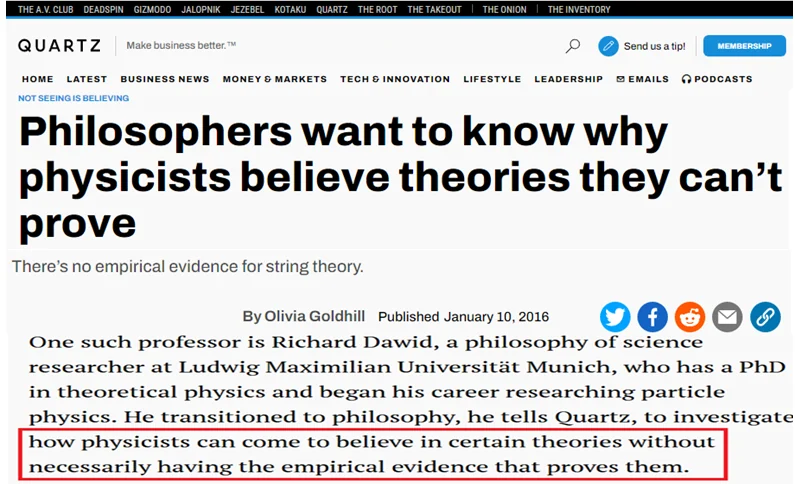
According to Alder’s razor (also known as Newton’s Flaming Laser Sword), if something cannot be settled by experiment or observation, then it is not worthy of debate. It is therefore arguably absurd that some atheist scientists believe in and advocate theories that they cannot prove. Professor Richard Dawid—a theoretical physicist who later became a researcher in the philosophy of science—focuses on the philosophical questions raised by contemporary theoretical physics, particularly string theory. Much of Dawid’s work examines the fact that string theory has not been empirically tested and is unlikely to be tested in the foreseeable future. He told Quartz that he transitioned to philosophy in order to investigate how physicists can come to believe in certain theories without necessarily having the empirical evidence that proves them.19
The fact of the matter is that fundamental physics (the branch of physics that studies the most basic laws of nature) is entering a phase in which empirical testing is becoming increasingly difficult. This is something that many physicists acknowledge. While some physicists place considerable confidence in theories that have not yet been empirically tested, others argue that such theories are no better than theology. Funnily enough, some atheists place a high degree of trust in theories that physicists cannot empirically verify, yet they reject the realm of the unseen and divine revelation on the basis of such theories. Indeed, the following verse applies to those who rejoice in claims that lack empirical support: {…Then woe on that Day to the deniers—those who amuse themselves with falsehood} (Qurʾān 52:11–12). Those who live in falsehood and make religion the subject of mockery and jest shall come to know the outcome of their vain discourse, and they shall taste the evil consequences of their denial, disbelief, and obstinance: {So let them indulge ˹in falsehood˺ and amuse ˹themselves˺ until they face their Day, which they have been threatened with} (Qurʾān 70:42).
Consider, for example, superstring theory (also known as string theory), a term used to describe a family of closely related mathematical models that seek to explain the fundamental constituents of matter and the forces governing their interactions. According to this theory, everything in the universe—the particles that make up all matter and the forces through which matter interacts—is ultimately composed of tiny vibrating strings of energy. These strings are thought to be extraordinarily small, approximately a billion billion times smaller than a proton within an atomic nucleus. Over the past several decades, string theory has captured the imagination of many physicists. Hundreds of researchers around the world have devoted their careers to developing the theory and attempting to reconcile its various components within a coherent mathematical framework. String theorists have hoped that it might provide a unified description of the universe through a relatively small set of fundamental equations. However, despite decades of effort and substantial investment of intellectual and institutional resources, the theory has yet to receive direct empirical confirmation. Consequently, critics have dismissed it as a theoretical cul-de-sac—a scientific dead end.
One of the challenges facing string theory is that the energy required to probe the scales at which strings are hypothesized to exist is so immense that it lies far beyond the reach of current experimental technology. Another issue is that certain developments within string theory have led to a prediction that there may be an enormous number of different universes, some resembling our own and others radically different. Frustrated critics, including several Nobel Prize winners, have argued that, far from providing answers to the mysteries of the cosmos, this untested theory—with its unobservable parallel universes and higher-dimensional space—amounts to an “intellectual dead end,” “quasi-theology,” “bogus,” or “nonsense.” According to these critics, its proponents have not produced any empirically testable predictions that have been confirmed by observation, nor have they provided a single piece of direct observational evidence in support of the theory. Instead, critics argue, string theory rests largely on mathematical structures that admit multiple interpretations. In their view, it lacks clearly established physical principles that can be independently verified, that is, there are no physically interpretable principles that form its basis. Rather, it is based upon a highly abstract, non-physical, and artificial mathematical framework. In other words, according to its critics, it is not a theory at all, but rather a labyrinthine structure of mathematical procedures and theoretical intuitions.
String theorists have been overselling highly speculative ideas, yet string theory has produced little of empirical significance. Nonetheless, even after thirty-five years of failing to live up to their promise to unite gravity and quantum mechanics, critics argue that string theorists bury their heads in the sand and refuse to face the facts. One of the most troubling developments associated with the theory is that, instead of producing a single unique theory of everything, it appears to permit an enormous number of possible versions of the theory—or, more precisely, an enormous number of possible solutions to its equations. Estimates suggest there may be as many as 10^500 (that is, a 1 followed by 500 zeros) different solutions, a number that has triggered a crisis within string theory. Stephen Hawking wrote in The Grand Design: “In addition to the question of dimensions, string theory suffered from another awkward issue: There appeared to be at least five different theories and millions of ways the extra dimensions could be curled up, which was quite an embarrassment of possibilities for those advocating that string theory was the unique theory of everything.”20 That is why critics of string theory argue that it is ill-defined and based on highly speculative assumptions, for rather than describing a single universe, it appears to permit as many as 10^500 possible solutions, each corresponding to a universe with different constants of nature or even different laws of physics. Skeptics often acknowledge the elegance of its mathematics, yet have long dismissed string theory as an untestable fantasy because each of its solutions represents an entire possible universe. Consequently, fully testing the theory would require experimental conditions far beyond anything achievable in a laboratory—indeed, even the creation of a “baby universe.” Needless to say, state-of-the-art technology barely allows us to leave the planet, let alone recreate another universe. Since string theory permits an enormous number of possible solutions, critics have argued that it risks becoming a “theory of nothing” rather than a “theory of everything.” Indeed, those who promote such a theory amuse themselves with vain argumentation, as the Qurʾān says. To reiterate, advocates of string theory maintain that tiny vibrating strings of energy underlie every particle and every force in the universe, yet no one has been able to demonstrate this empirically, since the scales at which such strings are hypothesized to exist lie far beyond the reach of present-day observational and experimental technology. Hawking stated in the conclusion of his book A Brief History of Time:21


Hence, it is impossible to experiment directly with the strings that supposedly make up reality, making it impossible to test string theory. This is one reason why many critics regard it as a failed theory. In a word, string theory is removed from empirical reality—there is no direct empirical evidence that strongly confirms that it actually describes reality. Notwithstanding this, many scientists are attracted to string theory because of its mathematical beauty, describing its equations as exceptionally elegant. Critics, however, argue that it does not provide a true description of reality because, rather than describing reality as it is observed, string theorists propose a different picture of what makes up reality. Instead of treating subatomic particles as the fundamental building blocks of matter, they maintain that everything is composed of unimaginably tiny strings whose vibrations give rise to what we perceive as atoms, electrons, and quarks. For this picture to work, however, they must make a further radical assumption: that the universe contains additional spatial dimensions beyond the three dimensions of space and one dimension of time that we ordinarily experience. String theorists argue that these extra dimensions are curled up so tightly that they remain unobservable—much as a silken thread may appear one-dimensional from a distance until its width becomes visible upon closer inspection. Funnily enough, they do not seem concerned that, when we observe the universe, we encounter only the familiar three spatial dimensions and one dimension of time. Yet again, why should anyone take string theory seriously when it appears to require a landscape of as many as 10^500 possible universes, many fundamentally different from our own, in order to explain our universe? Indeed, critics argue that, far from providing the final answer to the questions of physics, string theory represents an overhyped dead end. Its proponents often emphasize its elegance, uniqueness, and predictive potential, but while the vision they hope to be true may be beautiful, critics maintain that reality tells a different story. In their view, there is no unique version of string theory capable of reproducing the real world; the hope that such a version exists remains just that—a hope.
Unfortunately, laypeople are often unaware that string theory is a purely theoretical speculation that has not been confirmed by any direct empirical evidence. They are also unaware that astrophysics has become a hotbed of pseudoscience. The scientific method involves making an observation, forming a hypothesis, making a prediction, conducting an experiment, and finally analyzing the findings. If the findings confirm the prediction, the hypothesis is considered likely to be correct. Furthermore, reproducibility—the ability to repeat an experiment and confirm its findings—is a crucial aspect of science for building evidence in support of a hypothesis. Once a researcher has reproduced their findings, they can publish them. However, this is not the methodology of astrophysics, an observation-based science concerned with reconstructing plausible explanations and “evolutionary” scenarios of particular observable objects and processes. Astrophysics goes beyond the understanding of singular events and objects, aiming instead to make general statements about classes of objects such as O-type stars, the interstellar medium of galaxies, black holes, or clusters of galaxies. As noted earlier, astrophysicists must acquire knowledge of their objects of study without directly interacting with, manipulating, or constraining them; that is, they are unable to conduct controlled experiments. This poses a challenge for establishing causal claims that may derive from but must go beyond mere correlations. Hence, they seek to partially compensate for this by statistically sampling, analyzing, and modeling the diversity they observe in the universe, which they regard as a cosmic laboratory filled with phenomena and ongoing processes at different evolutionary stages, each constrained by different initial conditions and contemporary environments. The central issue is that direct interaction with the object of study, which allows experimental disciplines to systematically test possible sources of error, is not possible in astrophysics. Consequently, all astrophysicists do is observe objects or phenomena beyond the Earth, develop computer models to simulate physical processes, attempt to align those models with the observations, and then announce a “discovery.” This is not science but a process through which theoretical models are presented to the public as established facts. As previously explained, the modeling approach is inherently limited, particularly because cosmic phenomena may be described by multiple models that are equally adequate yet mutually contradictory. If realism is understood as the convergence of scientific descriptions toward truth, then astrophysics cannot be regarded as realist. The transition to a natural science is marked by the application of experimental methods, and astrophysics has not made that transition. Accordingly, it is not a realist scientific discipline. Although astrophysical technology has advanced dramatically since the field’s historical beginnings, its underlying methodology has remained unchanged: observing celestial bodies, constructing models of the universe to support observations in light of limited access to data, and attempting to bring observations and models into agreement. Astrophysicists may present interesting and compelling models, but these models rest on theory and speculation alone. Because such models cannot be directly tested and are unfalsifiable, they belong not to science but to pseudoscience and should be recognized as such. Hence, the hundreds of millions of dollars in taxpayer money in Western countries spent on astrophysical research constitute a misuse of public funds carried out in the name of scientific research and human progress.
One of the most fundamental questions in cosmology is whether the universe had a beginning. Atheist scientists have long portrayed the universe as eternal and self-existent and, therefore, as having no need for an external creator. To support this view, they have proposed cosmological models that posit a universe eternal into the past—that is, a universe without a beginning. The following are a few examples:
Eternal inflation: a variation of the Big Bang theory, according to which the inflationary phase of the universe’s expansion continues indefinitely throughout most of its regions. As these regions expand exponentially, most of the universe’s volume at any given time remains in a state of inflation. Consequently, eternal inflation gives rise to a hypothetically infinite multiverse in which only an insignificant fractal portion ceases to inflate, such as the region that eventually becomes our observable universe.
Cyclic evolution: a model according to which the universe undergoes an infinite or indefinite series of self-sustaining cycles of expansion and contraction.
The static seed (or emergent universe): a model according to which the universe emerged from a small, nearly static state containing the seeds of its later development.In this model, the universe has no initial spacetime singularity, has always existed, and remains almost unchanged throughout the infinite past.
Alexander Vilenkin, a theoretical physicist specializing in early-universe cosmology, along with Arvind Borde, a professor of mathematics and physics at Long Island University, and Alan Guth, a theoretical physicist and cosmologist best known for proposing the theory of cosmic inflation, developed the Borde–Guth–Vilenkin theorem. The theorem states that any universe that has, on average, been expanding throughout its history cannot be infinite in the past but must have a past spacetime boundary.22 In this video, Vilenkin refutes three models that allow for the possibility of an eternal universe with no initial singularity: eternal inflation, cyclic evolution, and the static seed (emergent universe). He then presents his rationale for a beginning based on the Borde–Guth–Vilenkin theorem. He clearly states:23

The cosmological models for an eternal universe are the pinnacle of pseudoscience, wasting time and funds and producing nothing. Their proponents indulge in speculations concerning matters of the unseen world—that dimension which lies beyond the threshold of human perception—without any experimental backing. They are merely engaging in conjecture without any empirical evidence whatsoever. Allāh says: {Ask ˹them, O Prophet˺, “Do you have any knowledge that you can produce for us? Surely you follow nothing but ˹false˺ assumptions and you do nothing but lie”} (Qurʾān 6:148). Allāh also says: {In fact, the wrongdoers merely follow their desires with no knowledge} (Qurʾān 30:29).
The wildly speculative nature of modern physics theories stems from sheer human arrogance and reflects a dangerous departure from the scientific method. Many of today’s theorists—especially proponents of string theory and the multiverse hypothesis—appear convinced of their ideas because they are mathematically beautiful or logically compelling, despite their impossibility of being tested. In an incendiary opinion piece in Nature, George Ellis—a South African theoretical physicist regarded as a leading figure in relativity and cosmology—and Joe Silk—a British-American astrophysicist and Homewood Professor of Physics and Astronomy at Johns Hopkins University in Baltimore, affiliated with the Institut d’Astrophysique de Paris—accused these theorists of “moving the goalposts” of science and blurring the line between physics and pseudoscience. Ellis and Silk called on physicists and philosophers of science to wage a “battle for the heart and soul of physics.”24
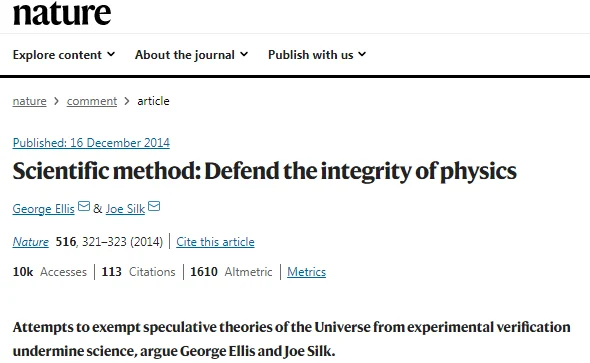
Ellis and Silk argued that the consequences of overstating the significance of certain theories are profound:25

They made it clear that they disagree with researchers—particularly string theorists—who argue that the elegance of a theory is sufficient and makes experimental verification unnecessary:26

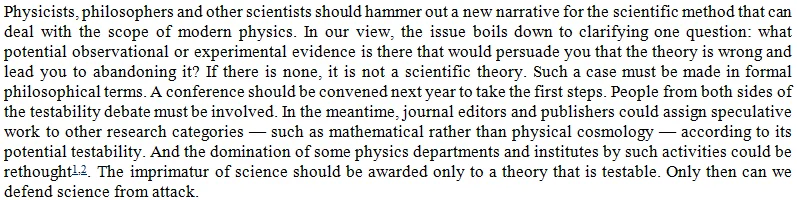
Ptolemy’s geocentric theory of the cosmos, Lord Kelvin’s vortex theory of the atom, and Fred Hoyle’s steady-state universe are historical examples that illustrate how, in the absence of adequate data, elegant and compelling ideas can lead researchers in the wrong direction. Ellis and Silk wrote that the imprimatur (official approval or recognition) of science should be granted only to a theory that is testable—thereby disqualifying many of the leading theories of the past 40 years—since only then can science be defended from attack:27
David Gross—a supporter of string theory who won the 2004 Nobel Prize in Physics for his work on the force that binds atomic nuclei—opened a three-day workshop held at Ludwig Maximilian University of Munich, one year after Ellis and Silk called for such a workshop, by telling a roomful of philosophers, historians, and physicists that fundamental physics is facing a sufficiently serious problem. Gross argued that the problem does not lie with physicists but with a “fact of nature” that scientists have inevitably been approaching for the past four centuries. He explained that the ongoing pursuit of a fundamental theory unifying all the forces of nature requires physicists to probe the universe at increasingly smaller scales. For example, they must examine the atoms within matter, the protons and neutrons within those atoms, and the quarks within those protons and neutrons. However, this process of “zooming in” demands ever-increasing energy, while the difficulty and cost of building new machines grow exponentially with the energy required. Gross observed:28

As physicists approach the practical limits of their ability to probe nature’s underlying principles, the minds of theorists have drifted far beyond the smallest observable distances and the highest attainable energies. They believe that the truly fundamental constituents of the universe exist at scales 10 million billion times smaller than anything that can be probed by the Large Hadron Collider (the world’s largest particle accelerator, located in Switzerland).29 Funnily enough, this is the domain of nature that string theory—the leading candidate for a “theory of everything”—attempts to describe, yet it is a domain that no physicist has the faintest idea how to access. String theory also complicates physicists’ efforts to understand the universe on the largest scales, as one of its most intriguing implications is the possibility of a multiverse—the idea that our universe is merely one of many. However, no telescope will ever be able to peer beyond our universe’s cosmic horizon to observe these other universes. As the critics put it, the fact of the matter is that, whether the fault lies with nature for “burying its best secrets” or with theorists for getting carried away, the conclusion remains the same: modern cosmological theories, particularly string theory and the multiverse hypothesis, are detached from experiment.
Scientists’ objects of theoretical speculation are now too far away, too small, too energetic, or too distant in the past to be reached or ruled out by scientific instruments. Indeed, those who do not have sound faith in Allāh have no means of knowing matters of the unseen, such as the origin of the universe. Their attempts to access the realm of the unseen through their physical faculties and scientific instruments are destined to fail, for divine revelation is the only reliable, authoritative source of knowledge concerning the unseen. In a nutshell, scientists are at a loss when it comes to the origin of the universe, yet they propose theories that ostensibly explain it. These theories are presented as science, even though they amount to little more than speculative constructs entirely detached from physical reality—an immaterial heap of garbage. They lack testable predictions and show no prospect of yielding such predictions in the foreseeable future. Consequently, they cannot properly be regarded as science, as the scientific method does not apply to untestable theories. Proponents of such theories often rely on the most absurd forms of induction and the weakest forms of deduction in their attempts to access aspects of reality that lie beyond the limits of human perception and the five senses.30 However, as Muslims, we believe that Man has no means of acquiring certain knowledge of the unseen realm, which is inaccessible to empirical investigation, except through the medium of divine revelation.
Cosmology, the branch of astrophysics that studies the physical origin and evolution of the universe, faces significant problems. This field of scientific research relies on a conceptual framework that has difficulty accounting for new observations.31
Cosmologists say that our universe was born out of a cosmic explosion 13.8 billion years ago, that it underwent a brief period of rapid inflation and has been cooling as it has expanded ever since, that it is still expanding at an increasing rate, and that it is mostly composed of unknown dark matter and dark energy. Despite the limited empirical evidence and a steady stream of discrepancies arising from observations of the distant universe, cosmologists often treat this widely known account as a self-evident scientific fact. Bjørn Ekeberg, a philosopher of science and author of Metaphysical Experiments, has pointed out some of these discrepancies and their implications:32

Cosmologists hypothesize dark matter to be present throughout the universe due to a peculiar feature of cosmological physics that is not often remarked upon. Namely, a crucial function of theories such as dark matter, dark energy, and inflation—all of which are tied to the Big Bang paradigm in their own way—is not to describe known empirical phenomena but to maintain the mathematical coherence of the framework itself while accounting for discrepant observations. In this sense, “dark matter,” “dark energy,” and “inflation” are names for entities that must exist insofar as the framework is assumed to be universally valid. Of course, cosmologists may regard each new discrepancy between observation and theory, in and of itself, as an exciting opportunity for further research and for a progressive refinement toward the truth. However, when such discrepancies accumulate, they may also point to a more confounding problem that cannot be resolved simply by tweaking parameters or introducing new variables. This issue stems from the fact that cosmological physics is a mathematically driven science, which is usually considered to be highly accurate. Yet the universe is unlike any other scientific subject matter on Earth. Cosmologists’ attempt to formulate a theory of the entire universe, based on a tiny neighborhood as the only known sample of it, requires them to make numerous simplifying assumptions. But when these assumptions are multiplied and extended across vast distances, the potential for error increases, a problem further compounded by the very limited means of testing available. Ekeberg explained:33
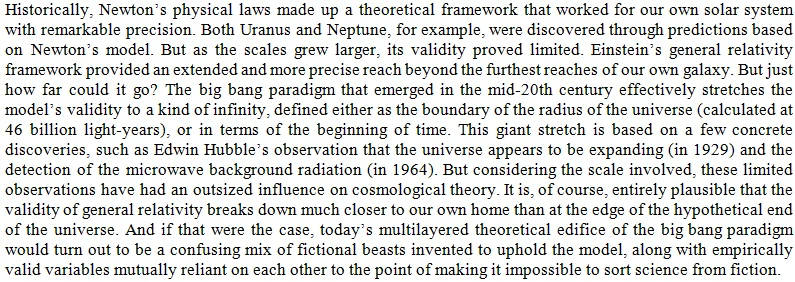
As Ekeberg put it, this problem is compounded by the fact that most observations of the universe are inherently indirect:34

Ekeberg asserted that after spending many years researching the foundations of cosmological physics from a philosophy of science perspective, he has not been surprised to hear some scientists openly speak of a crisis in cosmology.35 In 2011, Paul J. Steinhardt—Albert Einstein Professor of Science at Princeton University, where he is also on the faculty of both the Department of Physics and the Department of Astrophysical Sciences, and Director of the Princeton Center for Theoretical Science—was one of the original proponents of inflation theory, a key piece of the Big Bang paradigm. Steinhardt later criticized the theory for having become indefensible as a scientific theory.36
Steinhardt wrote:37
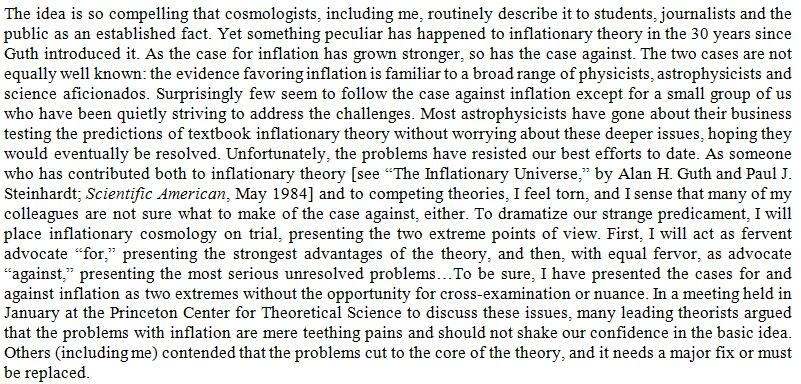
In 2014, Steinhardt disowned the theory he had helped create.38
Hence, even some of the creators of inflation theory have begun to have second thoughts about it because it relies on ad hoc contrivances to accommodate almost any data and because its proposed physical field is not grounded in anything with empirical justification. This “standard” theory of cosmology does not achieve correspondence with the facts in the preferred way, namely through prior prediction—that is, by correctly predicting facts before their discovery, without, and this is crucial, any adjustments to the original theory. Instead, it achieves correspondence with the facts in the “bad” way, through post hoc accommodation—that is, by adjusting or augmenting the theory to bring it into line with each new piece of data as it becomes available. It is safe to say that no theory gets everything exactly right on the first attempt. However, philosophers of science are nearly unanimous in arguing that the successful prior prediction of a fact provides stronger grounds for belief in the predicting theory than the post hoc accommodation of that fact. For instance, Peter Lipton wrote:39

Some philosophers go so far as to argue that the only data capable of lending support to a theory are data that were predicted in advance of experimental confirmation. As Imre Lakatos put it, “The only relevant evidence is the evidence anticipated by a theory.”40 Hence, inflation theory is not science but rather a convenient invention. Its crucial function is to bridge the gap between an unknowable Big Bang and the physics that scientists understand today. The Big Bang paradigm has been criticized for its lack of certain observations by a number of astrophysicists, including Michael J. Disney—Emeritus Professor in the School of Physics and Astronomy at Cardiff University. In his analysis, the theoretical framework of the Big Bang paradigm contains far fewer certain observations than free parameters available to adjust it—a condition he describes as “negative significance,” which would be an alarming sign in any scientific discipline. As Disney put it:41

Ekeberg pointed out that there is a deeper history behind the current problems:42
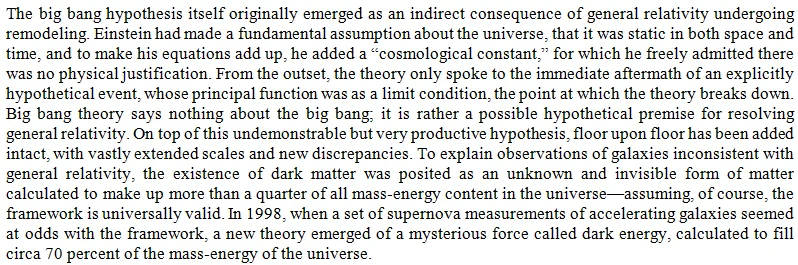
The crux of the matter is that, in order to maintain a mathematically unified theory valid for the entire universe, cosmologists must accept that 95 percent of the universe is composed of completely mysterious elements and forces for which there is no direct empirical evidence. Indeed, to be confident in this picture, any scientist must have exceptional faith in the power of mathematical unification. Summarizing the present state of cosmology, Joe Silk—a British-American astrophysicist—asserted:43

In the end, the difficult problem for cosmologists is their reliance on the Big Bang framework as a necessary presupposition for conducting research. They are, in a sense, constrained by this paradigm due to the lack of a clear alternative. It often appears more pragmatic to add new theoretical layers than to rethink the fundamentals of the framework. In a word, rather than progressively getting closer to the truth, which is the scientific ideal, cosmology has become path-dependent—overdetermined by the implications of its past assumptions.
Other subfields of astrophysics also face a range of challenges. For instance, one of the principal difficulties in stellar astrophysics—the subfield concerned with the life cycles and structures of stars, both individually and as populations—is the scarcity of data and the challenge of measurement. Determining distances across the universe is fundamental to astrophysics. This is because, without accurate distance measurements, it is virtually impossible to study the physical properties of celestial objects, including their size, motion, mass, temperature, radius (distance from the center), luminosity, spectra (the distribution of light by wavelength), and chemical composition. However, astrophysicists seeking to investigate stars—their physical properties, age, classification, and evolutionary history—face a major obstacle: stars are too distant to be visited or examined directly. Geologists who wish to analyze a new mineral can travel to an outcrop, extract a sample, and bring it back to a laboratory. Similarly, biologists can study living organisms firsthand. Astrophysicists, however, do not have this option. They cannot travel to a star, collect a sample, and analyze it under controlled laboratory conditions—direct access to stellar material is impossible. All they can do is observe. Yet even observing celestial objects is difficult because numerous obstacles can interfere with astronomical observation, making data collection a constant challenge. One such obstacle is the presence of vast clouds of gas and dust in some regions of space, which can completely block optical light. Earth’s atmosphere presents another obstacle, preventing most electromagnetic radiation from reaching the surface, while the small fraction that does penetrate the atmosphere is often obstructed by clouds or rain. Moreover, sunlight renders observation impossible for much of the day, leaving only nighttime hours for many forms of observation. Consequently, astronomical observation is inherently difficult due to these obstacles. As a result, determining the physical properties of stars is not straightforward, since astrophysicists cannot examine them directly.
In fact, ninety-nine percent of what astrophysicists know about stars comes from analyzing stellar spectra (the light emitted by stars across different wavelengths). In a sense, astrophysics is like fishing: just as fishers sit and wait, hoping the fish will bite their bait, astrophysicists sit passively and gather light that was emitted by stars in a galaxy millions of years ago. Hence, studying starlight is the most fundamental way astrophysicists learn anything about stars. For instance, they determine a star’s temperature by looking at the colour of the light it emits. Hot stars are described as blue, while cooler stars are described as red. Similarly, astrophysicists infer a star’s age from its colour. They state that as stars age, they run out of hydrogen to burn, reducing the energy they emit. Thus, younger stars appear bluer, while older ones appear redder. However, although the associated colours of stellar spectra are useful in interpreting stellar appearances, they do not tell the entire story. This is because the outer layers of a star absorb parts of the light emitted from its centre, and human eyes respond differently to different wavelengths of light. Therefore, the analysis of stellar spectra to measure stars’ properties is not entirely accurate because distance and our eyes distort the true colours of stars. Steven R. Cranmer—an astrophysicist and associate professor in the Department of Astrophysical and Planetary Sciences at the University of Colorado, whose research interests include solar and stellar astrophysics—has calculated the colours of stars based on their actual energy distributions and the response of the human eye. Cranmer found that researchers have been missing the true colours of stars.44 The hottest stars appear blue, as researchers have thought, but stars like the Sun appear off-white. Smaller stars, such as K- and M-type stars (cool, low-mass stars), appear beige rather than red. Most surprisingly, brown dwarfs are not even brown. These cool sub-stellar objects appear purple because absorption of light by molecules in their atmospheres removes a significant portion of their visible light, leaving only red and blue light for us to see. There are a few further complexities that can affect the colour a star appears to us. For instance, clouds on brown dwarfs may alter how their atmospheres absorb light, and this is something researchers are still trying to understand. Earth’s atmosphere also reddens light. Thus, all these colours would appear different if we were observing them from the Earth’s surface.45
The point is that astrophysicists learn about stars by analyzing their spectra. That is, they rely on indirect methods of measurement based on the observable properties of stars. However, although they have ways of collecting data, the data they obtain remains limited and of poor quality compared to the complexity of stars and stellar systems. Nevertheless, they formulate generalizations, along with piles of hypotheses, measurements, and interpretations, based on such observational data. They overlook the magnitude and complexity of hidden (i.e., metaphysical) factors—in the realm of the unseen, which cannot be perceived by human senses and cannot be known through even the most sophisticated scientific instruments and devices—through which Allāh established the physical laws governing everything in the universe, including stars. How can astrophysicists decide that the light emitted by a star they observe today—light that may have travelled, for example, for three million years before reaching Earth—has not been affected by hidden (i.e., metaphysical) factors that could influence the measurements used to determine the age of the star or even the age of the universe? As stated earlier, the British philosopher and logician Bertrand Russell once pointed out: “There is no logical impossibility in the hypothesis that the world sprang into being five minutes ago, exactly as it then was, with a population that “remembered” a wholly unreal past.”46 The problem of explaining why the normally accepted hypothesis about the age of the universe is rationally preferable to Russell’s hypothesis seems entirely irresolvable by empirical means. This is because it is widely accepted that there can be no evidence for or against Russell’s hypothesis, according to which any memories or records of events more than five minutes ago could equally be mere “memories” and “records” that came into being with the universe five minutes ago.47 On the other hand, most philosophical attempts to resolve this problem commit a fatal petitio principii (a logical fallacy in which a premise is assumed to be true without justification, or in which what is to be proved is implicitly taken for granted) against Russell’s hypothesis.48 Hence, there is no logical impossibility in the hypothesis that the light we see from a star today was emitted just five minutes ago, but that hidden (i.e., metaphysical) factors make it appear to be 3 million years old. In short, the use of the hypothetico-deductive method, the failure to consider and account for hidden factors, and the reliance on indirect methods of measurement based on the observable properties of stars undermine the accuracy and reliability of measurements in astrophysics. In fact, according to the findings of recent studies, a single number—the Hubble constant, a cornerstone of our modern understanding of the size, age, and structure of the universe—suggests that something is fundamentally wrong with scientists’ conception of the universe and that they have mismeasured it.49
Current scientific research can be divided into four categories:
1.Research into the unseen realm: This category of research involves producing conjectures about phenomena beyond the physical realm, such as the origin of life. Studies concerning the origin of life are pseudoscience. The best efforts of naturalists over the past 150 years have produced no evidence-based knowledge. Instead, they have produced piles of mutually contradictory and weakly supported theses that are unscientific in nature. Thus, the most reasonable conclusion is that there is no convincing or believable scientific evidence for a purely natural origin of life. The origin of life is an unknowable mystery. Why, then, do astrophysicists concern themselves with a matter that lies outside the scope of conventional science? Science is strictly limited to solving problems concerning the natural world. If we restrict the definition of what is scientific to questions that can be answered through the application of the scientific method to natural processes, then the origin of life is not a scientific question. Indeed, every attempt to explain the origin of life contradicts science, as Dr. Danny R. Faulkner—Distinguished Emeritus Professor in the Physics and Astronomy Department at the University of South Carolina Lancaster for more than 26 years—stated:50
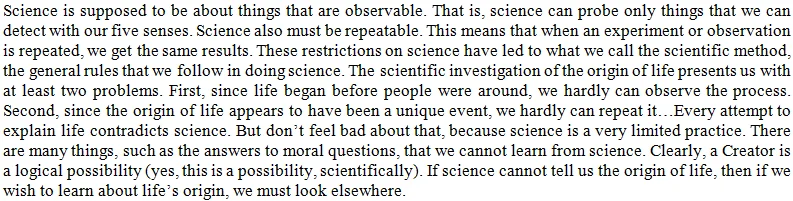
The question of the origin of life is, by definition, a metaphysical question. Astrophysicists have become carried away, and their theories are detached from the realities of experimental science. They have invested a great deal of time, energy, and resources without producing any discernible results. All of their theories have one thing in common: they are fallacious and amount to little more than nonsense.
2.The study of the stars: it is based on assumptions formulated from scarce, poor-quality data.
3.The study of physical phenomena using the inductive method: This category of science is reliable and beneficial when funding is available, when research is deep and rigorous, and when experiments are replicated to reproduce findings. Research funding influences the volume of research activity as well as the productivity of researchers within the field. When research is conducted with rigor—following procedures designed to increase the likelihood of obtaining an accurate representation of the object or phenomenon under study, as well as documenting and communicating those procedures so they can be replicated accurately—it becomes a uniquely powerful way of learning more about the world and how it works. Confidence in reported findings increases when those findings are replicable. In other words, other scientists using the same procedures should be able to reach findings similar to those reported by researchers investigating the same scientific question. This category of scientific research is reliable but not infallible; that is, its findings are never 100% certain.
4.The study of physical phenomena using direct observation: Direct observation is essential in science. It is the oldest method and remains the most common instrument of scientific research. It has historically formed the foundation of the research method used by Muslim scholars in the early centuries. Scientists use observation to collect and record data, which enables them to construct and then test hypotheses and theories. They observe using their own senses or tools that allow for more precise and accurate observations. They also use equipment to measure things such as radiation or pH—phenomena that are not directly observable. Direct observational research, which involves the careful direct observation and in-depth analysis of a sample to draw conclusions based on that sample and on what is similar to it, is the best way to obtain reliable knowledge. This category of science is largely useful.
All of the useful sciences that currently benefit humanity fall within the third and fourth categories of scientific research. In essence, for a science to be worthwhile, it must have tangible real-world implications. Astrophysics, however, has no direct bearing on the practical affairs of everyday life and is therefore essentially useless. Decades of work in this field have been wasted, amounting to little more than a mathematical exercise with no meaningful physical relevance. In other words, all those hardworking astrophysicists have learned nothing physically significant about the universe we inhabit. As stated earlier, they have not produced a single testable prediction. Many Western scientists implicitly acknowledge the absurdity of astrophysics in their writings, as openly questioning it would likely result in accusations of being “anti-science.” The fanatical advocates of astrophysical theories and models foster a herd mentality: either align with them or be treated as an outcast. Unfortunately, campaigns of ridicule are often directed at those in the West who criticize this “science.” Such critics are denounced as “enemies of science,” “ignorant,” “stupid,” and “insane.” This is the whip that fanatical astrophysicists wield against anyone who challenges their hypotheses, questions their assumptions, or raises concerns about the resources squandered on their futile endeavor.

Paul Feyerabend—one of the twentieth century’s most famous philosophers of science and once a disciple of Karl Popper—authored Against Method. In this book, Feyerabend advanced the idea that there is no scientific method. He argued this partly because the greatest scientists have been agile, opportunistic thinkers who, despite appearing to follow the methodological rules laid out by philosophers and science textbooks, were always ready to cast them aside when they became an obstacle.

As a result, Feyerabend was famously dubbed “the worst enemy of science” by Science, and even today philosophers of science associate his name with anti-science polemics.51 However, although Feyerabend is often reputed to be a critic of science, he is not. In fact, he is critical not of science itself, but of false and misleading conceptions of science. Back in the 1960s and early 1970s, he urged philosophers of science to take seriously both the history of science and scientific practice. As a trained physicist himself, he warned his peers that mere abstract reflection on science—by which he meant overly abstract methodological accounts and rational reconstructions that detach from actual scientific practice—would produce only idealized fantasies of science, rather than workable models of it.52 Nevertheless, there is a whip to be raised against anyone who is skeptical of this pseudoscience: astrophysics. Hence, my advice to every Muslim man and Muslim woman is to adhere to the sharʿī (Islamic) texts, which provide proper guidance on matters of the unseen, for human knowledge, however extensive it may be, remains limited in comparison to the vast domain of what is unknown and unknowable. As earlier stated, the realm of the unseen cannot be known except through divine revelation. Indeed, those who hold firm belief in the unseen and in the authenticity of the message of Islam will not be troubled by astrophysicists’ fantasies, interpretations, speculations, mathematical models, or hypothetical deductions.
Now, let us take a closer look at astrophysics to see how this so-called science operates. Astrophysics is based on a set of fundamental assumptions; that is, these assumptions function as first principles in astrophysical research:
1.Uniformitarianism (also called the doctrine of uniformity or the uniformitarian principle).
2.Whatever mathematical equations permit corresponds to ontological reality—that is, to what actually exists.
3.Simplicity or parsimony (economy of explanation): the conviction that correct theories of nature are always the simplest and most elegant ones.
The first assumption is uniformitarianism. If the question is asked as to what precisely uniformitarianism is, a variety of answers such as the following are likely to be given:53
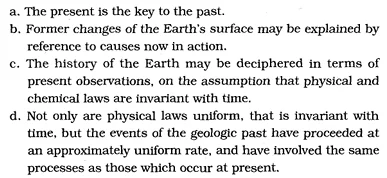
The doctrine of uniformity is the scientific assumption that the same natural laws and processes observed in the present have always operated in the universe and continue to apply everywhere in it.54
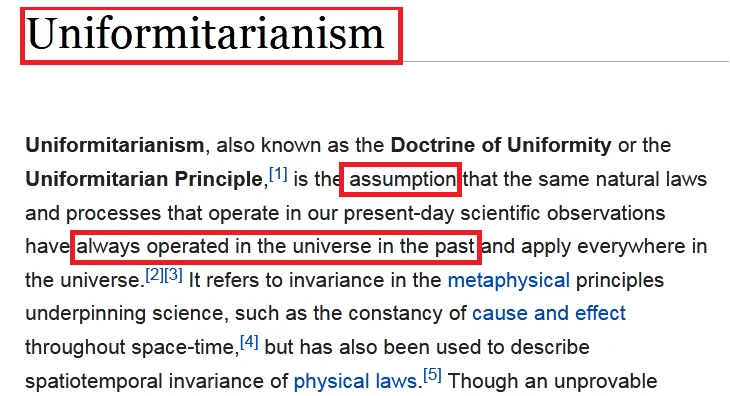
Scientists assume that the laws of nature do not change over time or across space. In other words, the past history of the Earth is taken to be uniform with the present with respect to the physical laws governing the natural order, the physical processes occurring both within the Earth and on its surface, and the general scale and intensity of these processes. It is therefore assumed that the only means of interpreting the history of the Earth is through analogy with present-day events and processes. Hence, the idea that natural processes behave in the same way today as they have throughout the past is a basic assumption underlying scientific inquiry. For instance, astrophysicists make uniformitarian assumptions when interpreting light received through telescopes. A telescope on Earth receives light and the astrophysicist assumes that it has been travelling at a constant speed (approximately 300,000 km/s) for millions or billions of years to reach Earth, without relativistic time-dilation effects. Only after making this assumption can the further inference be made—not known for certain—that what is being observed originates from a past epoch millions or billions of years earlier. But how could such an assumption be tested? It cannot. For this reason, this aspect of astrophysics is not directly verifiable by empirical testing.55 Uniformitarianism is also a fundamental assumption in evolutionary geology, which—like astrophysics—relies on reconstructing the distant past from present observations. Much of the so-called evidence for deep time—that is, geological or cosmic time spanning billions of years—is based on the uniformitarian principle. However, it is not necessarily reasonable to assume that all, or even most, events in the geological past can be explained by phenomena observable today. How could scientists possibly justify such an assumption? How could they know whether something catastrophic may have occurred, perhaps only once in history, that might, for example, have completely altered geological strata (i.e., the Earth’s rock layers)?56 The concept of catastrophism, to which creationists subscribe, allows for such phenomena and provides a far more reasonable framework for interpreting geological evidence.
Recent scientific discoveries concerning rapid petrification offer an example of the effects that catastrophic events can have on geological phenomena. For many years, scientists assumed that petrification—the natural process by which organic matter exposed to minerals over a long period is transformed into a stony substance—was a uniformitarian process requiring millions of years to complete. However, in 2004, five Japanese scientists published research that cast doubt on this assumption. The team studied mineral-rich, acidic water from the explosion crater of the Tateyama volcano in central Japan, water that flows over the edge of the volcano as a waterfall. Wood had fallen into the path of the flowing water. The surprising discovery was that the wood had become petrified through silica (a common mineral found in rocks and sand, composed of silicon and oxygen) after only thirty-six years of being exposed to the flowing water.57 To investigate the phenomenon further, the scientists attached pieces of wood to wire and placed them in the water flow. After only seven years, the wood had become petrified through silica. Wood petrification was also found to occur as a result of nearby volcanic activity. Using a scanning electron microscope, the researchers determined that petrification through silica occurred in the same way in both cases: in wood exposed to flowing mineral-rich, acidic water and in wood exposed to volcanic ash near the volcano.58 This single discovery completely contradicts the assumption of uniformitarianism, and many other examples could likewise be cited. Hence, catastrophism is a far more reasonable framework, as it allows for catastrophic events such as floods, volcanic eruptions, and meteor impacts.
Uniformitarianism is an assumption that cannot be verified using the scientific method.59 Notwithstanding this, some consider it a necessary first principle in scientific research.60 Astrophysicists are effectively compelled to accept the validity of this assumption, since their theories would otherwise become mere fantasies. This is because they construct equations to describe what the universe was like billions of years ago, assuming that the processes currently observed in the universe are the same as those that have operated throughout its history and are sufficient to account for all geological phenomena. In other words, they extend their models back to the Big Bang, approximately 13.8 billion years in the past, simply by observing and measuring the universe today, on the assumption that natural laws have remained constant over time. However, there is no logical impossibility in the assumption that natural laws were different in the past and may change over time, that there may be undiscovered evidence for such change, or that something existed or exists that caused such change. That is, the universe may once have operated under different natural laws as a result of changes due to hidden (i.e., metaphysical) causes. If so, all astrophysicists’ equations would be invalid and meaningless. In fact, even the slightest change in the numerical value of any cosmological constant in a mathematical model designed to describe the origin of the universe would mean that the model no longer describes our universe. That is, it would not be a workable theory of how our universe came to be because it relies on present measurements, whereas measurements may not have been uniform throughout the history of the universe.
Recent studies suggest that physical constants may be subject to change over time. For example, an analysis conducted by researchers at the University of Portsmouth and the National Astronomical Observatories of China indicates that the cosmological constant—an essential component of the complex equations used to describe an expanding universe—may not be truly constant. More specifically, dark energy—an unknown force that is regarded as the manifestation of the cosmological constant in models of the expanding universe—may actually be dynamic, exhibiting different energy states over time.61
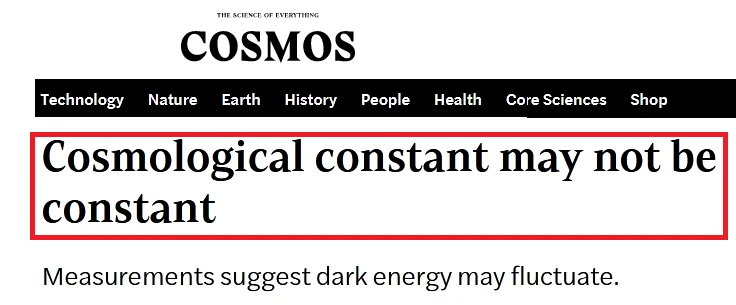
The possible detection of dynamic properties in dark energy is reported in a paper published by a research team led by Gong-Bo Zhao, a world expert in research frontiers, including dark energy. Zhao received the prestigious Royal Society Newton Advanced Fellowship in 2016 in recognition of his excellence in cosmological research.62
The research by Zhao and his team may well represent a significant challenge to the Lambda Cold Dark Matter model (ΛCDM or LCDM), the current standard model of the universe. Dark energy is a key component of this model, represented by the “lambda (Λ)” term. In the model, dark energy is described by a value of w = –1, meaning it behaves as a constant form of energy filling space that drives the expansion of the universe. The implications for cosmology would be profound if, as the results suggest, dark energy or the cosmological constant is not constant but instead a dynamical quantity. In that case, any model describing the origin of the universe would face a serious challenge.
In fact, the cosmological constant (Λ), or “dark energy” as it is also called in cosmology, is often described as one of physics’ most embarrassing problems. It is thought to be an enigmatic form of energy that acts in opposition to gravity. It is associated with “vacuum energy” or “zero-point energy,” meaning the energy density of empty space. However, its exact nature is still unknown, even though it is required in cosmological equations in order to reconcile theory with observations of the universe. It has been a thorn in the side of physicists for decades and continues to pose a challenge for models designed to explain the expansion of the universe. The main issue arises from the fact that the theoretical value of Λ, derived from quantum field theory (QFT)—which predicts that empty space has a non-zero energy arising from the zero-point fluctuations of quantum fields—is vastly different from the value inferred from observations of Type Ia supernovae (exploding stars) and the cosmic microwave background radiation (CMB i.e., the afterglow of the Big Bang). In fact, the difference is as large as 10¹²¹. It is therefore not surprising that cosmologists are eager to resolve this discrepancy. Lucas Lombriser, a professor in the Theoretical Physics Department at the University of Geneva’s Faculty of Sciences, said:63

The famous physicist Albert Einstein introduced the cosmological constant, which he referred to as the “universal constant,” in 1917. Einstein first proposed it as a way to balance certain calculations in his theory of general relativity (GR). At the time, the consensus among physicists was that the universe was static—neither expanding nor contracting. However, to Einstein’s surprise, his work suggested that gravity would cause it to do one or the other. Einstein was unwilling to challenge the scientific consensus, and thus his desire to preserve a static universe led him to modify his theory’s equations. He introduced what is sometimes described as a “fudge factor,” denoted by the Greek letter lambda (Λ), into his equations, which kept the universe static.

However, a little over a decade later, Einstein would famously describe this as his “biggest blunder,” after astronomer Edwin Hubble provided evidence that galaxies are moving away from us, consistent with an expanding universe. Peter Garnavich—a professor of physics at the University of Notre Dame whose research interests span a wide range of topics in observational astrophysics—explains:64

Therefore, the initial role of the cosmological constant was to counterbalance the effects of gravity and help ensure a static universe that is neither expanding nor contracting. However, following Hubble’s discovery in 1929 that the universe is expanding, this role became obsolete. When Einstein was finally convinced of this, the cosmological constant was effectively abandoned. However, it would resurface in a different form decades later. In other words, Hubble’s observations removed the need for a cosmological constant for decades, but that changed when astronomers studying distant supernovae in the late 1990s discovered that the universe was not only expanding, but that its expansion was accelerating. They named the mysterious anti-gravity forcerequired to account for this phenomenon “dark energy.” In the 1920s, Alexander Friedmann—a Russian physicist and mathematician—developed the pioneering theory that the universe was expanding, governed by a set of equations he derived, now known as the Friedmann equations. These equations describe the entire history of the universe, providing an account of cosmic evolution from the Big Bang to the present within the framework of an expanding universe. Researchers were able to model the universe more accurately—with an accelerating expansion rate—by reviving Einstein’s cosmological constant and reintroducing it into the Friedmann equations. Simply put, one way proposed by scientists to resolve the mismatch between theoretical predictions and observations is to reintroduce the cosmological constant. However, rather than using it to counteract the expansion of the universe, they reverse its role—effectively flipping its sign in the equations so that it becomes positive rather than negative—and use it to drive the accelerated expansion of the universe. This version of the Friedmann equations now forms the backbone of the contemporary cosmological model known as Lambda Cold Dark Matter (ΛCDM), which accounts for the known components of the universe.
Again, no one truly understands what this “magical number” lambda (i.e., the cosmological constant) actually is. Most physicists treat it as interchangeable with the concept of dark energy, but that does not make things any clearer because dark energy is simply a placeholder term describing an unknown form of energy with anti-gravity-like effects. Hence, cosmologists have essentially reverted to using Einstein’s cosmological constant, once introduced as a kind of “fudge factor.” One potential explanation for the cosmological constant lies in the realm of modern particle physics. Physicists have confirmed through experiments that empty space is permeated by countless virtual particles constantly popping in and out of existence. According to this view, this ceaseless activity gives rise to what is known as “vacuum energy”—an energy associated with empty space, inherent in the fabric of spacetime, which could drive the expansion of the universe. Connecting vacuum energy to the cosmological constant is not straightforward because, based on observations of supernovae, astronomers estimate that dark energy has a small but steady energy density, just enough to drive the expansion of the universe over billions of years. More specifically, when astronomers attempt to measure the density of dark energy in space, they arrive at roughly 10^−9 joules per cubic meter—a tiny but dynamically significant amount. However, when scientists attempt to calculate the energy density arising from virtual particle fluctuations, they obtain a result that is 120 orders of magnitude larger than what the supernova data suggest. In other words, the observed energy density associated with the cosmological constant is not remotely close to that predicted by well-established quantum field theory. As detailed in this textbook:65

Either some physical mechanism exists that makes the cosmological constant extremely small, or physicists’ understanding of quantum fields—and, by extension, the entire universe—is fundamentally flawed. However, this seems unlikely, given the overwhelming body of observational evidence supporting current theories.66 The mismatch between the measured and theoretical values of vacuum energy—or the cosmological constant—is one of the greatest unsolved problems in physics. Indeed, quantum physicists are in a difficult position. Making small adjustments to theoretical calculations can reduce the enormous gap considerably, but even the best quantum theories still overestimate the energy density of dark energy by about sixty orders of magnitude (a difference of 10^60).67 Astrophysicist Neil deGrasse Tyson admitted in his recent book:68

To add to the conundrum, some researchers have, as earlier stated, proposed that the cosmological constant might not be constant at all, but rather changes or fluctuates over time—a dynamical cosmological “constant”!69 This theory is called quintessence, and projects, such as the Dark Energy Survey, are currently making precise observations to determine whether it has any observational support.70 In the meantime, scientists may not know what the cosmological constant is, but they will continue to use it because they need it to make sense of the universe. To recapitulate, in modern cosmology the cosmological constant is no longer used to balance the universe against expansion. Rather, it represents vacuum energy—the inherent energy density of empty space—that drives the accelerated expansion of the universe. This does not mean that it has become any less problematic. Professor Peter Garnavich, who took part in research on Type Ia supernovae to study the expansion of the universe, said: “In 1998 the High-Z Supernova Search team discovered that the expansion rate was accelerating instead of decelerating.”71 This requires some form of additional energy throughout the universe, or some more exotic explanation. Physicists refer to this driving force as “dark energy,” and the term itself has become a placeholder for various theoretical entities that could account for the accelerating expansion of the universe. The cosmological constant serves as the simplest possible explanation for the dark energy that drives this accelerated expansion, and its theoretical value should therefore match observations. Unfortunately, as elaborated above, the theoretical prediction for the cosmological constant exceeds the observed value by about 120 orders of magnitude. In other words, the vacuum energy in the universe is extremely small—about 120 orders of magnitude smaller than what quantum theory predicts. That is like saying that something weighing five pounds should really weigh five with 120 additional zeros after it pounds. The enormous discrepancy between the predicted amount of vacuum energy and the measured amount—often called the cosmological constant problem—has prompted some scientists to call vacuum energy “the worst theoretical prediction in the history of physics.”72 Other physicists have described this state of affairs as “the largest discrepancy between theory and experiment in all of science.”73 Antonio Padilla—a leading theoretical physicist and cosmologist at the University of Nottingham in England who has spent 15 years trying to figure out the cosmological constant problem—said:74

In brief, the problem with vacuum energy is that there is not enough of it. When astrophysicists first began considering this concept, they calculated that this energy should be enormous, yet the vacuum energy in the universe is extremely small—about 120 orders of magnitude smaller than predicted. Indeed, astrophysicists’ work on the universe’s origin is based on pure guesswork: {They follow nothing but assumptions} (Qurʾān 6:116). They have had to resort to all sorts of fudge factors to reconcile theoretical models with observational data from the universe. The crux of the matter is that dark energy—a mysterious form of energy with unknown properties, for which the cosmological constant (Λ) is the simplest explanation—is a kind of “god of the gaps.” Modern astrophysicists propose it mainly to rescue the standard Big Bang model when discrepancies are found between theoretical predictions and observational data. They generally regard the Big Bang framework, along with its associated models, as a robust description of cosmic evolution. Therefore, when observations of gravitational effects do not match theoretical predictions, they must postulate an invisible component to account for the mismatch. This component is dark energy, an unknown form of energy thought to permeate space and drive the accelerated expansion of the universe. Rather than being an explanation in itself, it is an inferred component introduced to account for the observed accelerated expansion of the universe that cannot yet be explained by known physics alone. Finally, it is worth mentioning that the cosmological constant is determined from measurements of the Cosmic Microwave Background (CMB) anisotropies (minute fluctuations in its temperature across different directions in the sky). The CMB—a faint background of radiation filling all space—is the radiation left over from the early universe. It is astrophysicists’ key to understanding the universe: its origins, age, composition, rate of expansion, and even its future. It is an important source of information about the early universe, as it is the oldest electromagnetic radiation we can observe. However, it does not date back to the very first instants after the Big Bang. The universe began about 13.8 billion years ago with the Big Bang, and the CMB dates back to roughly 400,000 years after the Big Bang. Thus, it does not provide information about the physical processes at work in the very first instants of the universe.
What further challenges the uniformitarian assumption is that new findings suggest that the fundamental constants underlying the laws of nature may not be as constant as previously thought. That is, the constants, which are a cornerstone of our physical laws, may actually vary not only with time but also across space. This makes matters even more difficult for astrophysicists and cosmologists. In other words, those who are looking forward to science’s “Grand Unifying Theory of Everything”—a hypothetical framework that would explain all known physical phenomena and has been sought since the development of quantum mechanics and Albert Einstein’s theory of relativity in the early 20th century—will have to wait indefinitely because hints that physical constants are not truly constant are confirmed. Scientists from the University of New South Wales (UNSW Sydney) have reported that four new measurements of light emitted from a quasar 13 billion light-years away are consistent with previous studies suggesting tiny variations in the fine-structure constant (also known as the Sommerfeld constant), commonly denoted by α, the Greek letter alpha.75
According to John Webb—professor of astrophysics and director of the Big Questions Institute at UNSW Sydney, who has spent the last few years investigating whether the laws of nature vary in space or time—the fine-structure constant is a measure of electromagnetism, one of the four fundamental forces in nature (the others are gravity, the weak nuclear force, and the strong nuclear force):76

The electromagnetic force keeps electrons whizzing around a nucleus in every atom of the universe. That is, without it, all matter would fly apart. Up until recently, it was believed to be an unchanging force throughout time and space, but over the last two decades, Professor Webb has noticed anomalies in the fine-structure constant, which measures the strength of electromagnetism, whereby its value measured from light coming from one particular direction in the universe seems ever so slightly different:77

When Professor Webb first came across these early signs of slightly weaker and stronger measurements of the electromagnetic force, he thought it could be a fault of the equipment, or of his calculations, or some other error that had led to the unusual readings. These anomalies were first observed while studying some of the most distant quasars—massive celestial objects emitting exceptionally high energy—at the edges of the observable universe, using the world’s most powerful telescopes. Professor Webb said:78

Professor Webb explained that in the current study, the team of researchers looked at one such quasar that enabled them to probe back to when the universe was only a billion years old, which had never been done before. The team made four measurements of the fine-structure constant, which measures the strength of the electromagnetic force, along a single line of sight to this quasar. Individually, the four measurements did not provide any conclusive answer as to whether there were perceptible changes in the electromagnetic force. However, when combined with many other measurements between us and distant quasars made by other scientists and unrelated to this study, the differences in the fine-structure constant became evident. Professor Webb observed:79

He further observed:80

Put another way, in what was thought to be an arbitrarily random spread of galaxies, quasars, black holes, stars, gas clouds, and planets—with life flourishing in at least one small region of it—the universe suddenly appears to have the equivalent of a north and a south. Professor Webb is still open to the idea that, somehow, these measurements—made at different stages of observation, using different observational technologies, and from different locations on Earth—are actually a massive coincidence:81

But these findings are more than just coincidence, as a team in the US—working completely independently and unknown to Professor Webb’s team—made observations about X-rays that seemed to align with the idea that the universe has some sort of directionality:82

Professor Webb still wants to see more rigorous testing of the idea that the fine-structure constant, which measures the strength of the electromagnetic force, may fluctuate in certain regions of the universe, giving it a form of directionality, but he said that if these findings continue to be confirmed, they may help explain why our universe is the way it is and why there is life in it at all:83

Professor Webb argued that if there is directionality in the universe, and if the fine-structure constant is shown to vary slightly across different regions of the universe, then some of the most fundamental concepts underpinning modern physics will need to be revised:84

In short, Professor Webb and his team at the University of New South Wales (UNSW Sydney) set out to determine whether the fundamental constants measured on Earth—and the laws of nature that depend on them—are the same everywhere in the universe, and whether they have remained constant throughout time. Using a large amount of data from the world’s leading observatories, the team examined light from one of the most distant quasars in the universe. They were astonished to find that the data suggest that the fine-structure constant, which measures the strength of the electromagnetic force—one of the four fundamental forces of nature—might not be constant. Rather, it appears to vary smoothly with position in the sky, and the data fit a dipole model—in one direction the fine-structure constant increases, and in the opposite direction it decreases. Now, as the first hints have emerged that the fine-structure constant may vary slightly across the universe, existing theories may require a radical overhaul. To conclude, new studies suggest that certain physical constants may not be constant everywhere throughout space and time. Hence, uniformitarianism—the assumption that the laws of nature are constant throughout space and time—is increasingly called into question.
The second assumption underlying astrophysics is that whatever mathematical equations allow corresponds to an ontological reality (i.e., something that actually exists in the universe). Since the Scientific Revolution, Galileo Galilei’s assertion that “the book of nature is written in the language of mathematics” has served as a guiding principle of science. Astrophysicists are convinced that mathematical physics will ultimately provide the definitive account of every aspect of the universe we inhabit. They advocate the pursuit of a theory that unifies the two pillars of contemporary physics (i.e., relativity and quantum mechanics), often described as a “Theory of Everything.” They also frequently associate their ideas and theories with aesthetic qualities, arguing that certain theories or equations are exceptionally beautiful and, for that reason, are supposedly fundamental to our understanding of nature, revealing profound truths about it. The currently most popular ideas in astrophysics and theoretical physics share one key feature: they begin with a mathematical framework that aims to explain more phenomena than currently prevailing theories do. General relativity is widely praised by scientists for its extraordinary beauty, to the extent that some regard it as the most beautiful theory in physics. Likewise, quantum field theory is also considered one of the most elegant theories in physics. However, the current frameworks of general relativity and quantum field theory are incomplete, as they cannot adequately explain several major puzzles, including dark matter, dark energy, and the reason why our universe contains matter rather than antimatter, among other issues. In fact, they are fundamentally incompatible with one another. General relativity is a valid theory in the sense that its mathematics is internally consistent and many—though not all—observations agree with it. Quantum mechanics is also a valid theory. However, they conflict because their underlying mathematical assumptions differ. Scientists can tolerate this conflict, since general relativity deals with large-scale objects such as planets, while quantum mechanics deals with small-scale objects such as atoms. At present, it is impossible to measure the gravitational force between two atoms, and thus scientists cannot perform an experiment that would decisively determine which framework is correct at that scale. Nevertheless, astrophysicists believe that mathematics is the most reliable path to truth about the universe, as they assume that reality is, at its core, mathematical. This implies that everything expressed through mathematics is correct. This view, which tends to treat mathematics as yielding infallible conclusions, is both problematic and deeply troubling, especially given the growing divergence between the world as astrophysicists describe it and the world as we experience it.
Undeniably, mathematics is an incredibly useful tool when applied properly to the quantitative description of the universe. However, this does not mean that the universe naturally follows the rules of mathematics, as it is not purely mathematical in nature. That is, mathematics is not at the root of the physical laws governing nature, but rather a tool that describes how these laws manifest themselves. The universe is a physical, not a mathematical, entity, and there is a significant difference between the two. Hence, mathematics alone will always be insufficient to arrive at a fundamental theory of everything. In fact, a mathematical model can be elegant, compelling, and brilliant, yet still fail observationally. Ethan Siegel—an astrophysicist, author, and science communicator who teaches physics and astronomy at various colleges—explained:85

Siegel observed that what followed was a stroke of genius that would define Kepler’s legacy:86

Without testing ideas against reality, we do not have physics at all. This idea has recurred throughout history, as new mathematical inventions and discoveries have provided scientists with new tools to attempt to describe physical systems. But each time, it was not simply that new mathematics told them how the universe worked. Instead, new observations showed that something beyond their then-current understanding of physics was required, and that pure mathematics alone was insufficient to get them there. For instance, developing a mathematical framework to describe spacetime and gravitation required not pure mathematics, but the application of mathematics in a specific, carefully adjusted way that would agree with observations of the universe. Siegel wrote:87
A very similar situation arose again just a few years later in the context of quantum physics.88

Today, theoretical physicists and astrophysicists increasingly appeal to mathematics as a potential path toward a more fundamental theory of reality. Over the years, they have explored a range of mathematically based approaches that involve extending existing theories by adding new mathematical structures or principles in an attempt to unify or deepen them.89 These mathematical explorations are interesting and may be relevant to physics. That is, they may provide clues about what secrets the universe might hold beyond what is currently known. However, mathematics alone cannot teach scientists how the universe works, and they will not obtain definitive answers without testing its predictions against the physical universe itself. In short, mathematics can take scientists very far, but it cannot take them everywhere. Without testing their theories against the physical universe, they cannot hope to understand it. In fact, this is a lesson that every physics student learns the first time they calculate the trajectory of an object thrown into the air.90

Mathematics does not necessarily reflect what is real. In fact, it can be quite disconnected from reality and can be misapplied to produce misleading—or even absurd—results. After all, mathematics is a product of the human imagination—a mental construct—designed to describe reality. It is only an approximation of reality, with its own limitations, and it may eventually break down, since perfect mathematical forms do not exist in the physical universe. A fundamental limitation of mathematics is that it is entirely possible for a mathematical model to be internally correct yet fail to describe physical reality. This makes mathematics potentially deceptive. The point is that mathematical predictions must make sense when confronted with the physical universe itself. That is, science should be based on the collection of empirical evidence. On this point, Albert Einstein said:91

Einstein also said:92

Today, many theories in astrophysics and theoretical physics are utterly absurd because they are based on mathematics rather than experimental evidence. As Nikola Tesla, the brilliant electrical engineer and inventor, once said:93

Astrophysicists often formulate odd mathematical equations and then attempt to make the universe conform to them. But it should be the other way around. That is, they should first develop a sound understanding of what is actually happening in the universe and then formulate mathematical equations to see whether those equations are consistent with their observations of the universe. The point is that even if a theory can be supported by mathematics, that alone proves nothing because it is possible to make almost anything appear mathematically correct. The many competing theories in physics illustrate this point. Each relies on intricate mathematical equations to describe the physical phenomenon or process being studied, yet the fact that at most one of these theories can be correct means that all the others are wrong, and the mathematics used in them describes nothing more than a fantasy. A striking example of how mathematics can be used to make almost anything seem plausible is the concave hollow-earth theory. This theory was first conceived by the Baptist fundamentalist Cyrus Reed Teed, who reported receiving a “divine revelation” in 1869 that the Earth was hollow. Teed genuinely believed that we are literally living inside a sphere. In his unusual cosmology, the stars (including the Sun), the planets, and the galaxies all occupy the Earth’s interior, while the Earth’s crust is an infinitely thick layer of rock enclosing the entire universe. Thus, the concave hollow-earth theory—the epitome of pseudoscientific fantasy—reduces billions of light-years of mostly empty space, containing 100 billion galaxies and an estimated one million billion billion stars, to a tiny point at the center of the hollow-earth universe. While this theory may seem utterly indefensible, a quixotic mathematician from Alexandria, Mostafa A. Abdelkader, took up the challenge. In the 1980s, Abdelkader described the mathematical gymnastics required to conceive a hollow-earth universe.94 Among other assumptions, this geometric inversion swaps the center of the Earth with infinity, meaning that what is normally considered the center is treated as infinitely distant, with infinity effectively taking its place. Joel Frohlich—a postdoctoral researcher at the University of California, Los Angeles—provided a verbal analogy for the mathematical framework developed by Abdelkader for the concave hollow-earth theory:95

While Frohlich’s verbal analogy is imprecise, the abstract mathematics presented in Abdelkader’s paper accomplishes this transformation accurately.96
To embrace the concave hollow-earth theory, all one has to do is convince oneself that “inside” and “outside” are as arbitrary as left and right, or up and down. As a consequence of Abdelkader’s framework, most of the universe is mapped onto a tiny point at the center of the hollow Earth. In 2012, Duane Griffin—an associate professor of geography at Bucknell University—described this seemingly unthinkable transformation, saying:97

Martin Gardner, the late American science writer, brilliantly interpreted Abdelkader’s mathematics in his skeptical survey of fringe science, On the Wild Side.98 In the strange new physics of Abdelkader’s world, light rays do not travel in straight lines but instead move along curved paths. Like a pinwheel grazing the inside of a hollow globe, arcs of sunlight illuminate the near inner surface of the Earth, but then bend away and miss the distant side, which remains in darkness. For this reason, the Sun appears to set, even though the Earth’s curvature is concave.99 Yet a fair question remains: If other planets are closer to us than Spain is to New Zealand, why does it take so much longer to reach them? The answer is quite simple: in the mathematics of this cosmology, the speeds and sizes of moving objects approach zero as one nears the center of the universe, located at the center of the Earth.100 According to Gardner, Abdelkader’s mental acrobatics create “a consistent physics that cannot be falsified by any conceivable observation or experiment!”101 Some might ask: how can something so absurd not be falsifiable? Those who raise such a question treat unfalsifiability as an alibi rather than a liability—seeing it as an excuse for why a claim or theory need not be testable or subject to being proven wrong, rather than as a weakness. They assume, somewhat naively, that models are innocent until proven wrong. Yet many models are, in fact, unfalsifiable.102

As discussed earlier, it was the late philosopher of science Karl Popper who proposed the notion that scientific models can be taken seriously only if they are falsifiable. A model is built not on a concrete foundation but on stilts that can be quickly cast aside should new information emerge. As Popper wrote:103

To borrow Frohlich’s words, a good model creeps toward certainty—it chases the horizon of proof, yet never reaches it.104 The benchmark for a scientific model is never absolute certainty. Rather, to be considered scientific, a model must make predictions that can be tested by experiments, and for it to be successful, those experiments must confirm the predictions. Only then do scientists trust the model, though never completely. Popper wrote in this regard:105

Popper held that only testable models are scientific. That is, if no testable claim can be made, the model is not falsifiable and therefore not scientific. The late British philosopher Bertrand Russell illustrated this idea with his teapot analogy, which shows that the burden of proof lies with the person making empirically unfalsifiable claims, rather than being shifted onto others to disprove them.106 Russell humorously described a china teapot orbiting the Sun in an elliptical path between the Earth and Mars. He argued that, because it would be too small to be detected by telescopes, neither its existence nor its non-existence could be tested by any reasonable experiment. He added that if someone were to claim that this assertion cannot be disproved and that it is therefore unreasonable to doubt it, they would rightly be regarded as speaking nonsense. As Russell’s teapot analogy shows, unfalsifiable claims or models cannot be taken seriously; they are not science. Otherwise, anything goes—teapots, inside-out Earths, wormholes, parallel universes, bubble-like baby universes, or any of the imaginative entities with which contemporary physics is populated, whose existence cannot be established or falsified through standard experimental methods. As far as the concave hollow-Earth model is concerned, although it cannot be disproven, most serious thinkers reject it for the following reasons:
1.It is needlessly complicated: According to Occam’s razor, the most parsimonious (least complicated) model is preferred as a criterion for assessing truth. Simpler models are easier to falsify because they require less data to test, while more complicated models require more. Therefore, simpler models are more amenable to scientific evaluation. Hence, Abdelkader’s model is considered a poor one because simpler alternatives explain the data equally well.
2.It lacks evidence: According to Hitchens’s razor, what can be asserted without evidence can also be dismissed without evidence.
3.It is unfalsifiable: Abdelkader made no testable predictions and offered no opportunity for his model to be proven wrong.
Hence, Martin Gardner rejected the concave hollow-Earth theory not because it was disproven, but entirely on the basis of Occam’s razor. He noted:107

The point is that the beauty of mathematics glows in Abdelkader’s concave hollow-Earth model, yet the light of science does not shine upon it.
Again, mathematics does not always correspond to reality. In fact, only a small subset of it is applicable to our universe, while most of it describes structures that do not exist physically. For instance, it has been used to describe hypothetical universes very different from our own. We can thus distinguish two types of mathematical truths: mathematical truths in themselves and mathematical truths that also correspond to physical reality. The confusion between these two types of truth is allowing all sorts of nonsense to be published in modern physics. It should be understood that scientists are not immune to flights of fancy when they formulate equations that supposedly describe how our universe came into being. However, a correct understanding of physical reality is essential, and it is an error to attempt to reduce the complex, dynamic workings of nature to static, orderly, and purely quantitative mathematical formulae. As previously stated, although most scientists use the Big Bang theory to explain how the universe began, what caused the Big Bang in the first place remains a mystery—a matter of the unseen. Allah says: {I never called them to witness the creation of the heavens and the earth} (Qurʾān 18:51). It is noteworthy that there are two types of physicists: experimental physicists, who carry out experiments in laboratories, and astrophysicists, who use the universe as their laboratory. Both construct mathematical models to explain their observations and test those models against the available evidence. However, unlike experimental physicists, astrophysicists can only observe and cannot manipulate or directly interact with the objects they investigate, which may include the universe as a whole. What makes matters even more difficult for them is that the same observations can often be explained in multiple ways. Consequently, astrophysics may look like a science, but it is not. James Gunn—a professor of astronomy at Princeton University—made the following observation about cosmology, a subfield of astrophysics:108

Mathematical equations are an abstract symbolic language that, in most cases, do not directly reflect reality. Hence, a mathematical theory consists of internally consistent yet arbitrary statements (that is, statements not dictated by the physical world but defined within the mathematical system itself). Well-known examples of mathematical theories that do not describe the real world, although they were intended to, include early frameworks such as pre-relativistic mechanics and the aether theory, as well as more modern proposals such as SU(5), Kaluza–Klein theory, Nordström’s theory of gravity, supersymmetry, and string theory.
M-theory is another theory that illustrates how the illusions of mathematical beauty have beguiled theorists. According to M-theory, gravitons, electrons, photons, and other fundamental particles are not point particles but instead are made of imperceptibly tiny strings of energy that vibrate in different ways. It brings together, within a single mathematical framework, all five superstring theories and eleven-dimensional supergravity. M-theory is not complete, but the mathematics of the approach has nevertheless been explored in considerable detail. However, so far, science has produced no experimental evidence supporting the idea that M-theory is a description of the real universe.109 Some physicists remain skeptical that this approach will ever lead to a physical theory that accurately describes our universe, due to fundamental issues.110 Nevertheless, some scientists are drawn to M-theory because of its mathematical elegance and relative simplicity, hoping that these qualities may be signs that it accurately describes our universe. However, expressing a theory through mathematical symbols does not necessarily mean that it will significantly deepen scientists’ understanding of the universe. Consider quantum theory, one of the major transformations that physics underwent at the turn of the twentieth century. It proposed that energy exists in discrete packets, each called a “quantum.” This enabled scientists to describe how energy and matter interact at the subatomic level. However, Einstein doubted that quantum theory could provide a satisfactory foundation for all of physics because he believed that describing reality required firm predictions confirmed by direct observation. Yet individual quantum interactions cannot be observed directly, leaving quantum physicists no choice but to predict the probability that events will occur. There was, in Einstein’s view, too much indeterminacy at the heart of quantum physics, and he famously declared that God does not play dice with the universe. In other words, he did not believe that the laws of nature could resemble a throw of the dice, governed by inherent randomness or probability. Although Einstein regarded quantum theory as an impressive achievement, he felt that it did not fully explain the nature of reality or the secrets of the universe. He believed that something deeper and more fundamental remained to be discovered. The equations of quantum mechanics predict the outcomes of experiments involving atomic and subatomic particles with extraordinary accuracy, yet Einstein described quantum mechanics in a 1925 letter as “real black magic calculus.”111 By this, Einstein meant that quantum mechanics was extraordinarily successful as a mathematical theory, yet its underlying meaning and implications remained deeply puzzling.
It is important not to be seduced by a theory simply because it is mathematically beautiful, for mathematical beauty is a fallible guide. As discussed earlier, string theory is immensely appealing to many scientists, largely because of its mathematical elegance, yet there is still no experimental evidence that it accurately describes or explains any aspect of reality. One of its major flaws is that it predicts the existence of a potentially vast number of distinct universes—possibly as many as 10^500 (that is, the number 1 followed by 500 zeros). This multiverse “landscape” appeared to offer so many possibilities that, by exploring them, researchers might eventually find one corresponding to our own universe. However, in 2018, two papers posted on the arXiv preprint server took aim at the so-called “landscape” of string theory.112 This refers to the enormous number of possible universes arising from the many different solutions to string theory’s equations, which are assumed to reproduce key features of our universe, including dark energy. The authors argued that not a single one of these numerous hypothetical universes resembled our own; specifically, none contained a description of dark energy consistent with current scientific understanding. The authors further argued that many of the solutions that had previously been thought to belong to the string theory “landscape” may in fact be incompatible with the requirements of a fully consistent theory of quantum gravity—that is, a framework that would unify quantum physics and gravity, of which string theory is one of the leading candidates. They suggested that such solutions should be placed not within the “landscape” but within the so-called “swampland,” a class of solutions that cannot correspond to physically real universes. Scientists have known for years that many solutions must fall within this “swampland,” but the suggestion that most, or perhaps even all, of the “landscape” solutions might belong there would represent a major shift. Critics argue that it may in fact be theoretically impossible to find a valid solution to string theory that includes stable dark energy.
Sabine Hossenfelder—a physicist at the Frankfurt Institute for Advanced Studies in Germany, known for her critical stance toward string theory—said: “This is a math-fiction that has zero experimental evidence speaking for it.”113 Hossenfelder also said: “String theorists propose a seemingly endless amount of mathematical constructions that have no known relationship to observation.”114 She is highly critical of what she regards as an excessive reliance on aesthetic criteria in fundamental physics, along with a broader tendency toward speculative theorizing and overconfident pronouncements unsupported by empirical evidence.115 She argues that the modern obsession with beauty in physics has produced impressive mathematics but poor science. She maintains that physicists often assume the best theories must be beautiful, and that this assumption separates popular theories from those that are set aside. In her view, this explains why there has been no major breakthrough in the foundations of physics for more than four decades. Hossenfelder believes that the reliance on beauty (i.e., aesthetic judgment) in physics has become so dogmatic that it now conflicts with scientific objectivity. She notes that observation has failed to confirm highly speculative, mind-boggling theories such as supersymmetry or grand unification, which were invented by physicists based on aesthetic considerations. She further notes that these “too good to not be true” theories are effectively untestable, leaving the field in a theoretical cul-de-sac. To escape this theoretical impasse, she urges physicists to rethink their approach and focus on empirical reality rather than mathematical elegance, arguing that only by doing so can science progress toward truth. Indeed, through her exploration of the world of theoretical physics, Hossenfelder explicitly raises the question of whether the activities of thousands of physicists today should actually count as science. In a nutshell, mathematics is extremely useful for describing the physical world and for developing models with predictive power. However, it is equally capable of describing purely imaginary worlds. Physicists have used mathematics to formulate some remarkable descriptions of reality, yet every failed scientific theory has also been expressed through valid mathematics. The fundamental point is that mathematics is a human invention, and although aspects of reality may closely fit abstract mathematical models, mathematics can exist independently of reality. In other words, entities can exist in mathematics that cannot exist in the real world. As physicist Sabine Hossenfelder put it: “Mathematics is full of amazing and beautiful things, and most of them do not describe the world.”116 Therefore, mathematics does not hold a magical key capable of unlocking all the mysteries of the universe, and the pursuit of beauty alone is not a reliable path to discovering the correct theory of the universe.
The natural world is the domain of science, while metaphysical questions lie beyond its scope. Without divine knowledge, guidance, and an enlightening scripture, anyone can put forward radical or absurd assumptions. As stated earlier, the efforts of astrophysicists to map the origin of the universe are based on pure conjecture: {They follow nothing but assumptions and do nothing but lie} (Qurʾān 6:116). Nature is under no obligation to conform to human mathematical ideas—even the most brilliant ones. Therefore, people should be aware of so-called “theories of everything,” which have become fashionable in theoretical physics, as the world is far more complex than can be explained by science alone. It is only through the supernatural that the mystery of existence can be understood. That is, even if scientists succeed in providing physical or natural explanations of the universe, such explanations will fail to answer a more fundamental question: “Why is there anything at all?” or “Why is there something rather than nothing?” If they attempt to answer this question by appealing to physical laws, no ultimate answer is reached because one can still ask: “Why do these laws exist?” The point is that the universe requires an explanation beyond itself, not solely in terms of physical laws. In other words, God is the ultimate explanation of the universe. Hence, the attempt to discover a “theory of everything,” which would explain the origin of the universe solely through physical laws, is an attempt to exclude God by arguing that there is nothing left for a Creator to do. That is, atheist astrophysicists want the compelling elegance and orderly structure of scientific theories and mathematics to replace the need for God and divine revelation. It is no exaggeration to say that there is a conspiracy on the part of such scientists to replace religion with science. They believe that M-theory will provide the ultimate key to understanding everything, including even the origin of the universe; therefore, religion would become unnecessary. This is the truth of the matter. Of course, I appreciate the honest, hardworking scientists active in this field of scientific research—the study of the origin of the universe—who are firm believers in God and in the authenticity of divine revelation. These scientists use science to support the account of creation as it appears in the scriptures of the monotheistic religions—Judaism, Christianity, and Islam—which hold that God is the sole creator and sustainer of the universe. They believe that science provides evidence that the universe began to exist and therefore has a First Cause because anything that begins to exist has a cause. According to them, the evidence comes in two main pieces: (1) the redshift and the Doppler effect, and (2) the cosmic microwave background radiation.
In 1927, Georges Lemaître—the Belgian Catholic priest, theoretical physicist, mathematician, astronomer, and professor of physics at the Catholic University of Louvain—proposed that the universe began with a single explosion from a densely compacted state. This explosion eventually came to be known as the Big Bang.117

Two years after Lemaître introduced his theory, the astronomer Edwin Hubble published a study supporting it. Hubble’s study indicated that all galaxies are receding from one another and that the universe is, in fact, expanding. He made this discovery using the redshift phenomenon:118

Final confirmation of the Big Bang model came with the discovery of the precisely predicted cosmic microwave background radiation, left over from this massive explosive event:119
The Cosmic Background Explorer (COBE), a NASA satellite launched in 1989, was a pioneering mission that revolutionized modern cosmology by precisely measuring the cosmic microwave background (CMB) radiation. Its discoveries provided strong empirical evidence for the Big Bang theory and cosmic inflation, as the measurements from it indicated that matter in the early universe originated from a densely compacted state, leading scientists to conclude that the universe had a beginning. Astrophysicist Neil F. Comins said:120

Hence, there is very strong evidence that the universe had a beginning, and if the universe had a beginning, then it had a first cause necessary to explain its origin—one that must be outside the universe, capable of generating all the matter and energy in the universe, and capable of generating all the order that scientists observe as inherent within the universe. This is a task that no known material cause or set of material causes can accomplish. The need for such a powerful and intelligent first cause strongly suggests a purposeful design behind the origin of the universe. The Big Bang was not the kind of explosion that destroys any existing order rather than creating or preserving it—a highly chaotic, random event. Instead, it was a finely tuned expansion event in which all the matter and energy in the universe were expanding from an unimaginably high-energy state. That is, matter and energy were accompanied by a framework of control, structure, and guidance through natural laws designed to produce a habitable universe—a home for life:121
The finely tuned constants and laws of the universe are an example of specified complexity in nature. As geologist Casey Luskin explained, they are complex in that their values and settings are highly improbable, and they are specified in that they correspond to the specific requirements necessary for life. The following facts provide a sense of the degree of fine-tuning required for these values to produce a life-friendly universe:122
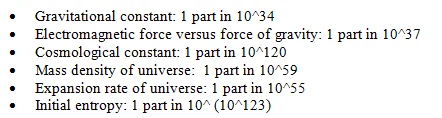
The initial entropy of the universe—the last item in the above list—exhibits an astounding degree of fine-tuning. Indeed, extraordinary, astronomically precise, and purposeful care and planning went into the crafting of the constants and laws of the universe, pointing unmistakably to intelligent design. As Nobel Prize–winning physicist Charles Townes stated:123

Some scientists have proposed that there must be an enormous number of universes, each with different laws of physics, and that ours simply happened to turn out right. This is a rather fantastic—and highly speculative—postulate. One would like to get a look at the universe-generating machine responsible for the 10^500 versions of spacetime predicted by string theory. But, as discussed earlier, this theory may in fact generate far fewer universes than previously thought. In fact, some theorists suggest that most—if not all—of those universes are actually forbidden (i.e., not allowed by the theory), at least if we require them to have stable dark energy, the supposed force driving the accelerated expansion of the universe. That is, string theory may not accommodate stable dark energy. As we have said, this theory currently lacks any experimental evidence—and, even more seriously, any realistic prospect of obtaining such evidence.
The only possibility that makes perfect sense is that our universe has come out so specially because it was planned. The efforts that led to the evidence that the universe began to exist are greatly appreciated, but they will not make us blind to the fact that astrophysics is largely based on assumptions. After all, scientists can only make speculations about the manner in which God carried out the creation. Presbyter Juan Bautista Berni, professor of philosophy at the University of Valencia, Spain, stated: “since no man was witness to the sight of the Creation of the Universe, the most that one can do in this matter is guess, because God did not reveal it.”124 Modern astrophysicists, such as Stephen Hawking, think that they can explain away God’s creation of the universe by redefining it not as the totality of physical reality, but as one of many self-contained, physical, spatiotemporal entities. That is, they treat our universe as a chance instance within an enormous range of possible universes. But all such scientists do is defer the difficult questions: Where did the multiverse (populated by 10^500 different universes) come from? Why do so many different universes exist? And how did the physical realm arise from nothing? Their scenarios for the spontaneous, self-creation of the universe, and their claim that our universe is an inevitable consequence of physics and chemistry, are cosmogenic myths used to replace divine revelation. In the end, we have to accept on faith that Allāh created the universe because no human witness was present at the beginning and scientists cannot reproduce the creation scenario in their laboratories. However, it takes more faith to accept, against reason and evidence, the idea that the universe created itself.
The fact that astrophysics supports certain religious truths does not mean that I, as a Muslim, should or will embrace theories driven purely by mathematics and impossible to test experimentally—practically speaking, pseudoscience. Assumptions will remain assumptions; they do not become unequivocally certain truths simply because they support my position. A Muslim should practice justice in all matters, even when dealing with evidence that supports their own position. Moreover, religious instinct is part of human nature and does not require any assumptions to support it. As sociologist Talcott Parsons pointed out: “There is no known human society without something which modern social scientists would classify as religion.”125 Religion comes naturally, even instinctively, to human beings. In Islam, this is called the fiṭrah—the innate and divinely originated disposition toward the recognition of and submission to God, whose existence is a self-evident truth that does not require so-called scientific hypotheses to support it. Astrophysics is almost entirely speculative. This is not an attempt to dismiss this area of research, but rather to suggest that people should be honest and recognize the extent to which it is built on assumptions presented as confirmed facts, and on the hope that those assumptions are correct. After all, science can never claim absolute truth; it is, at best, the pursuit of today’s best guess. However, astrophysics faces a more difficult challenge than any other scientific discipline. Most of astrophysicists’ ideas about the development of the universe depend on the application of general relativity to rather crude models of what the universe is like. To make these models work, they introduce huge assumptions that cannot be directly tested. Since this speculative element has become a dominant part of astrophysics, it should be treated quite differently in terms of the degree of confidence in it compared to other scientific disciplines. In short, with so many assumptions and unknowns involved in astrophysics, its theories should not be given too much weight.
Science is increasingly viewed not as a methodology and an epistemological ideal, but as a failed ideology. The failure of scientists to be genuinely scientific is not a new phenomenon. Thomas S. Kuhn—the Harvard-trained physicist who became a historian and philosopher of science, and one of the most influential philosophers of science of the twentieth century—warned against placing blind trust in science. In his work, The Structure of Scientific Revolutions, Kuhn explained why scientists should not be conflated with science itself.126 He addressed directly the tendency of scientists to reject evidence that contradicts the prevailing theory or paradigm. He argued that scientists will not abandon a disproven theory until a new theory is presented that they are convinced explains the evidence better than the old one. Thus, science is subjective because it contains many competing paradigms and differences of opinion. In Kuhn’s view, scientists do not discover the nature of reality but rather create it, with each paradigm giving rise to a different world. Hence, science can never be fully objective because all theories are shaped by subjective perspectives. Paul Feyerabend—one of the most thought-provoking philosophers of science of the twentieth century—held that science is a “religion” because it rests on certain dogmas that cannot be rationally justified. Therefore, accepting it requires a leap of faith.127 According to Feyerabend, the rationality of science does not really exist, and the prestige of scientists is based on their own claims to objective truth.128 He described scientists as essentially anarchistic (i.e., lacking a single fixed methodological framework), obsessed with their own mythology, and making claims to truth that go well beyond their actual capacity. He once said: 129

Feyerabend even proclaimed that:130

Feyerabend challenged the long-accepted notion that science is rational and progressive, insisting that if there is progress in science, it is because scientists break every methodological principle in the rationalists’ rulebook and adopt the motto “anything goes.”131 He held that individual theories are not always consistent with one another and that, since there is no single “scientific method,” scientific success results not only from rational arguments but also from a mixture of deception, rhetoric (i.e., persuasive or potentially manipulative language), conjecture, politics, and propaganda.132
Let us now shed some light on the third assumption underlying astrophysics, namely ontological parsimony—a principle of intellectual elegance that suggests simpler explanations are more likely to be accurate than complex ones. According to Occam’s razor, when given two competing theories or models with equal explanatory and predictive power, scientists should prefer the simpler one. For instance, it was only on the basis of Occam’s razor that Martin Gardner, the prominent physicist and the undisputed dean of pseudoscience critics, rejected the concave hollow Earth theory. This theory posits that the Earth is hollow and that we live along its interior surface, with all celestial bodies contained within its roughly 8,000-mile diameter. As stated earlier, this theory may seem utterly deranged, but it can be given a mathematical formulation. That is, there is a mathematical method for transforming the entire universe into a sphere the size of the Earth. Living in this “nutshell Earth”—a term coined by Gardner when examining and ultimately rejecting the theory—is in fact indistinguishable from our current understanding of the structure of the universe (the Copernican model). In other words, although the two models differ conceptually, they would produce the same observable universe from our perspective as observers. As Gardner said in his book On the Wild Side, the mainstream ideas of modern physics do not necessarily correspond to reality, but are accepted on the view that simplicity is a virtue in scientific theories.133 That is, accepted theories are not necessarily true in the sense of being directly consistent with observable facts. Rather, they simply meet the criterion of Occam’s razor (also known as the principle of parsimony), which suggests that, all things being equal, scientists should prefer the simplest possible explanation for a phenomenon. However, Occam’s razor is not a perfect tool. When the number or level of detail of a model’s assumptions is unclear, Occam’s razor can feel subjective. One scientist’s simplicity may be another scientist’s Gordian knot.134 Case in point, Mostafa A. Abdelkader—the Egyptian quixotic mathematician who developed a detailed mapping of the concave hollow-Earth model—might himself have found simplicity in the concave hollow-Earth theory. By eliminating billions of light-years of lifeless intergalactic void, Abdelkader’s model avoids the difficulty of accepting the immense vastness of the universe and the resulting reduction of Earth to an infinitesimal point. Critics of Occam’s razor in physics believe that the pursuit of the simplest possible explanation for a phenomenon is misguided, arguing that there is no empirical evidence that the world is simple and therefore no basis for assuming that simpler solutions are more likely to be correct. They point to the impossibility of fully systematizing and simplifying all natural phenomena. They also highlight the risk of sacrificing accuracy when simplicity is prioritized. The “spherical cow” is a humorous metaphor referring to physicists’ tendency to reduce a problem to the simplest imaginable form in order to make calculations more feasible, even when such simplification limits the model’s applicability to reality.135
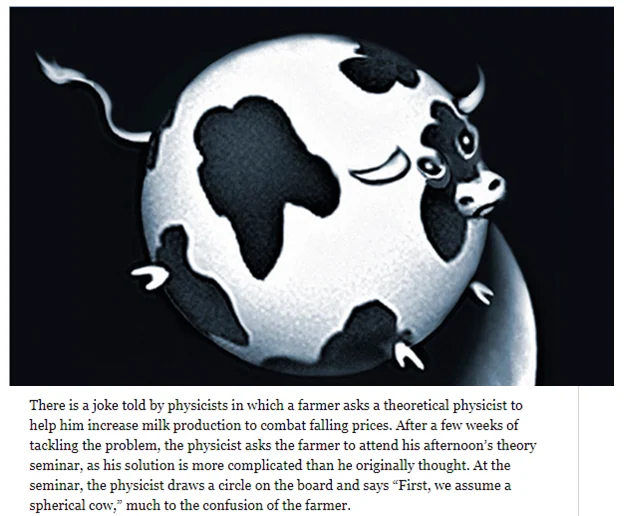
Philip Ball—a writer whose articles have appeared in Nature, The New York Times, and Chemistry World—asserted: “The history of science has been distorted by a longstanding conviction that correct theories about nature are always the most elegant ones.’”136 Ball explained that, as a tool for distinguishing between competing theories, Occam’s razor is only relevant when two theories yield identical predictions but one is simpler than the other (i.e., makes fewer assumptions)—a situation rarely, if ever, encountered in science. More often, theories are distinguished not by making fewer assumptions but by making different ones. There is absolutely no reason to believe that the simplest theory is more convenient, that it more accurately describes how nature works, or that it is more likely to be correct.
Incidentally, some criticize Muslim scholars who hold that the earth does not orbit the sun but is instead stationary, with the sun revolving around it. Of course, Islam encourages wise consultation—seeking the counsel of experts in their respective fields. Accordingly, we should accept the heliocentric model of the universe, which currently represents the consensus view among specialists in the study of celestial bodies. Nevertheless, those who ridicule the belief that the earth is stationary and that the sun orbits it often overlook the nature of astrophysics, where fictional models are frequently employed to explain real phenomena. Moreover, following Einstein’s theory of general relativity, the entire Copernican question—whether the solar system is geocentric (centered on the earth) or heliocentric (centered on the sun)—is largely a red herring (a distraction that seems relevant but is actually not important to the real issue), since general relativity permits the use of any coordinate system (a way of describing positions and motion using a chosen set of reference points). One may choose a coordinate system in which the center of the earth remains fixed, or even one in which the earth does not rotate on its axis. From within such a coordinate system, it is possible to derive all the equations of motion so that the sun is moving rather than the earth. Naturally, this is an extremely cumbersome approach, and although the equations would still work in principle, they would be highly unwieldy and hard to handle. For that reason, scientists do not use them. As theoretical physicist Matt Strassler explains:137

The point is that scientists use a coordinate system in which the sun is at rest (or in uniform motion) because in that case the equations are simple, intuitive, and relatively easy to solve. Richard Muller, a professor in the Department of Physics at the University of California, Berkeley, asserts that this is often the key trick in physics: physicists choose a coordinate system in which the equations of motion are so simple that they can often guess the correct answer. As Muller observes, there is an irony here:138

Therefore, it is not wrong to say that the sun orbits the earth. It simply leads to much more complicated equations that provide scientists with little intuitive understanding of how gravity behaves.139 The point is that scientists often assume that parsimonious theories, hypotheses, and models are more plausible or reliable than complex ones, yet there is no empirical evidence linking parsimony to credibility. In other words, applying the principle of parsimony to judge the plausibility of models that represent the processes through which planets, stars, galaxies, and the universe form and change over time entails an unsupported belief that nature is simple. However, using simplicity and beauty as guides in scientific research is highly rash and potentially dangerous. Nonetheless, many scientists are motivated in their research by a desire to construct theories that are simple and conceptually beautiful. Paul Dirac, an English theoretical physicist widely regarded as one of the founders of quantum mechanics and quantum electrodynamics, was particularly fond of saying that “it is more important to have beauty in one’s equations than to have them fit experiment.”140 He was once invited to Harvard University to deliver a lecture on his pioneering work in quantum electrodynamics. At the conclusion of the lecture, he advised young graduates and researchers “to be concerned only with the beauty of their equations, not with what the equations mean.” This is certainly not a sound piece of advice from a scientist, yet the notion of beauty was a recurring theme throughout Dirac’s work. In other words, the principle of mathematical beauty was “almost a religion” to him.141 In fact, Dirac was not alone in this. The great German mathematician Hermann Weyl once said: “My work always tries to unite the true with the beautiful; but when I had to choose one or the other, I usually chose the beautiful.”142 While there is nothing inherently wrong with scientists striving for mathematical beauty, it makes no sense to pursue the most elegant and simple solution when trying to solve real-world problems, since more elegant and simpler explanations are not necessarily correct. It is no surprise to find that most astrophysical theories today possess great beauty but few real-world applications. In fact, the history of science abounds with examples of theories and models that were simple yet wrong, or complicated yet correct.
Indeed, the more one delves into astrophysics, the more one realizes how frail and limited it is. It abounds with imaginative ideas that may sound appealing, but none are reasonably testable, rendering them useless at the present time. There is still much that astrophysicists have yet to uncover, and some things they may never know. Ethan Siegel, an American theoretical astrophysicist and science writer, wrote:143
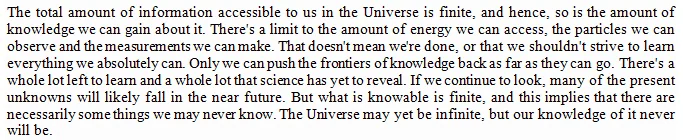
Astrophysicists will never know for certain how everything began. Allāh says: {and you ˹O humanity˺ have been given but little knowledge”} (Qurʾān 17:85). Who are we in comparison to Allāh? Who are we in comparison to the vastness of the universe? Allāh has blessed human beings with the gift of knowledge, but no matter how much human knowledge progresses, it remains like a drop in the ocean compared to divine knowledge. Scientists’ longstanding quest to uncover our ultimate origins is pointless, perhaps merely a selfish side effect of the innate human need for a coherent narrative of existence. Although the study of the origin of life is a very active field of research, scientists have not yet succeeded in constructing a single cosmological model that resolves all current uncertainties. The consensus among them is that none of the current hypotheses has thus far been definitively confirmed. Philip James Edwin Peebles, one of the world’s most distinguished astronomers, astrophysicists, and theoretical cosmologists, describes the latest ideas in cosmology, saying:144

The goldfish analogy concerning perspectives and reality in chapter three of The Grand Design is particularly interesting.145 It is an answer to the question of whether we perceive things as they really are or merely our interpretations of them. Stephen Hawking and his co-author Leonard Mlodinow argue that “reality” is a construct of our minds, implying that there is no such thing as objective reality. They suggest that we are somewhat like a goldfish in a fishbowl: our perceptions are limited and distorted by the lenses through which we see the world.

Hawking and Mlodinow recount this story:146

The authors criticize the measure’s sponsor for assuming that our own view of reality is undistorted:147

According to Hawking and Mlodinow, it makes no practical difference to the goldfish whether the bowl is curved or straight, since in either case they adapt their responses to appearances. What truly matters is whether their responses are effective, and in order for them to be effective, they do not need a true, undistorted representation of reality. Rather, all they need is a reliably consistent representation of reality:148

Hawking and Mlodinow use this goldfish analogy to help readers understand relativity, M-theory, eleven-dimensional spacetime, and other scientific concepts. To illustrate this more simply, imagine you are sitting on the floor directly in front of a goldfish bowl, and a ball rolls along a straight horizontal line between you and the goldfish. As humans, we formulate scientific laws and theories describing the motion of the ball that work perfectly for us. However, for the goldfish living inside a bowl, the motion of the ball appears distorted, as though it is moving along a curved path. It is therefore hypothetically possible that the goldfish could develop an alternative set of laws and theories that also work perfectly, describing the ball as moving along a curved path. We might assume that the goldfish’s perception is distorted by the glass and water surrounding it, but the goldfish could just as well argue that our perception is distorted by air and other features of the atmosphere. The central point is that, just as the goldfish is confined within its bowl, we are also confined within our own perspective, constructing theories about our imperfect perceptions with our limited minds. Hawking and Mlodinow conclude that “there is no picture- or theory-independent concept of reality.”149 That is, we can never access reality directly, exactly as it is, without using some kind of mental model, theory, or conceptual picture. In other words, we never observe “pure reality” in a completely raw, unmediated, or interpretation-free way. Hawking and Mlodinow propose what they call “model-dependent realism” as a “framework for interpreting modern science.”150 They argue that since the mental models we construct are the only reality we can know, it follows that a well-constructed model effectively creates its own form of reality.151

Of course, the problem with this approach is that it undermines the very concept of reality. An atheist’s “reality” excludes God, while a believer’s “reality” centers on God. These two “realities” are mutually exclusive, yet both are, according to Hawking and Mlodinow, equally “real.” This position is wholly incompatible with science, which depends on the existence of a single, objective reality to investigate.
Someone might ask why I am describing astrophysics as pseudoscience or charlatanism, and whether it would not be more appropriate to say that its theories are merely hypotheses. Quite simply, this is due to the lack of testable hypotheses in this field. A scientific hypothesis is an idea or proposition about the natural world that can be tested through observation or experiment. In other words, to be considered scientific, a hypothesis must be falsifiable. In short, to rise to the level of a scientific theory, one must make testable—and therefore falsifiable—hypotheses that yield predictions which can be verified experimentally. Astrophysicists, however, are unable to produce falsifiable hypotheses, which means that their theories are not testable in any conventional scientific sense of the term. When astrophysicists propose a “theory of everything,” we expect it to account for all known phenomena and to generate new predictions within the domains they investigate. Astrophysicists regard string theory as a “theory of everything,” combining quantum mechanics and general relativity into a unified framework intended to explain the fundamental laws of the universe. However, many physicists argue that this theory does not qualify as science, as its hypotheses and conclusions are neither testable nor falsifiable. As stated earlier, a proper scientific theory is grounded in testable hypotheses and is ultimately evaluated in terms of its predictive power. Indeed, there comes a point at which theory departs from the realm of testable hypotheses and begins to resemble aesthetic speculation, or even theology. Wolfgang Pauli, the renowned physicist, described such ideas as “not even wrong.”152 In other words, they are so vague, poorly formulated, or disconnected from rigorous scientific reasoning that they cannot be meaningfully evaluated as either correct or incorrect, thereby failing to meet the minimum standard required for scientific assessment. Peter Woit, an American theoretical physicist, argues that superstring theory is such an idea, contending that what many astrophysicists call superstring “theory” is not a theory at all, since it makes no predictions—not even wrong ones. According to Woit, it is precisely this lack of falsifiability that has enabled the subject to survive and flourish.153 Woit explained that the mathematical conditions necessary for progress in physics are entirely absent from superstring theory today. He also argued that judgments about scientific claims, which ought to be based on the logical consistency of arguments and experimental evidence, are instead often influenced by the authority and prestige of those claiming to possess the truth. Consequently, although scientific journals contain thousands upon thousands of pages devoted to mathematical investigations of string theory, they all lack one crucial element: predictions that can be tested experimentally. Indeed, unless something changes radically in the mathematics of string theory, experimental verification will remain permanently out of reach.
In the absence of testable hypotheses and predictions, a theory risks becoming purely mathematical and speculative rather than empirical science. Untestable hypotheses and predictions lie outside the realm of science, even if all people claim otherwise. Those who champion astrophysics, especially enthusiasts of string theory, are influenced by a kind of crowd mentality. Indeed, they would do well to remember George Bernard Shaw’s warning that “the minority is sometimes right; the majority is always wrong.” Shaw was referring to the dynamics of majority and minority in politics, but the idea is also relevant to science. As Muslims, we believe that wrong remains wrong even if everyone follows it. Hence, we adhere to what is right and evidence-based rather than following the crowd. If we were mere followers of the crowd, we would have yielded to the people of false creeds due to their large numbers. However, anyone who makes a claim should provide the evidence supporting it if they are truthful: {Reply, ˹O Prophet,˺ “Show ˹me˺ your proof if what you say is true”} (Qurʾān 2:111). The wealthy members of every community have, in every age, resisted the Prophets and clung to the imitation of their forefathers. They have often been at the forefront of opposing the truth and preserving established falsehood: {Similarly, whenever We sent a warner to a society before you ˹O Prophet˺, its ˹spoiled˺ elite would say, “We found our forefathers following a ˹particular˺ way, and we are walking in their footsteps”} (Qurʾān 43:23). They had no basis for their belief in idolatry except the fact that they were imitating their fathers and forefathers: {Indeed, they found their forefathers astray, so they rushed in their footsteps!} (Qurʾān 37:70). One should not simply follow the majority, as most people tend to follow their own fancies rather than sound knowledge: {˹O Prophet!˺ If you were to obey most of those on earth, they would lead you away from Allāh’s Way. They follow nothing but assumptions and do nothing but lie} (Qurʾān 6:116). The majority of people’s beliefs, their philosophies of life, and the guiding principles of their conduct are all founded on conjecture. In contrast, the way of life that pleases Allāh was revealed by Him and is therefore based on true knowledge. Thus, instead of following the majority, the truth seeker should persevere upon the path prescribed by Allāh, even if they find themselves a solitary traveler.
We do have respect for other branches of physics in which theories are well supported by observations and/or experimental evidence. Fashion, Faith, and Fantasy in the New Physics of the Universe is an important critique of some of the most significant developments in contemporary physics by one of the field’s most eminent figures, Roger Penrose—an English physicist, mathematician, and philosopher, as well as the recipient of the 2020 Nobel Prize in Physics.154

Penrose argued that researchers working at the frontiers of physics are just as susceptible to trends, dogmatic beliefs, and flights of fancy as anyone else. He contended that fashionable ideas, blind faith, and pure fantasy are leading researchers astray in three of physics’ most important fields—string theory, quantum mechanics, and cosmology. According to Penrose, string theory has drifted away from physical reality by positing six extra hidden dimensions. He cautioned that the fashionable status of a theory can cloud scientists’ judgment regarding its plausibility. He also proposed possible modifications to quantum mechanics, arguing that its remarkable success in explaining the atomic world has led many physicists to place uncritical faith in its applicability to reasonably massive objects as well. Furthermore, he maintained that many of the prevailing fantastical theories concerning the origins of the universe cannot be correct. Penrose discussed these issues in an interview with award-winning science journalist Ira Flatow, the host of the radio program Science Friday. During the interview, Penrose characterized string theory as “fashion,” quantum mechanics as “faith,” and cosmic inflation as “fantasy.”155 He even went so far as to say that we need new physics.156 Such remarks cannot be lightly dismissed, given that they come from one of the world’s most distinguished physicists, who co-authored a seminal paper on black holes with Stephen Hawking.157
Unfortunately, some Muslims today are divided into two groups. On the one hand, there are those who hold an anti-science attitude, promote conspiracy theories, and reject all scientific research, including well-established empirical science. On the other hand, there are those who idealize science and place blind trust in scientists as though they were saints holding the truth. Such people fail to realize that scientists are human beings and, like anyone else, are capable of deception. They treat the statement “published in a peer-reviewed journal” as the gold standard in science. However, any professional scientist will tell you that the fact an article has undergone peer review is a long way from being an ironclad guarantee of quality. Peer review is not infallible, as errors and sloppiness are common. Moreover, although relatively rare, deliberate data fabrication does occur from time to time, and there is no denying the existence of scientific misconduct. The point is that peer review can be flawed, and therefore this criterion is not unequivocal evidence of validity. Many scholars agree that one of the main reasons for the spread of flawed or misleading findings in scientific journals is the tremendous pressure within academic institutions to publish in high-impact journals. “Publish or perish” is indeed a problem in modern science. This practice puts researchers under pressure to produce publications in order to retain their positions or be deemed successful. Therefore, we cannot fully equate publication in academic journals with scientific truth, as journals do not select research based on scientific rigor alone.
Certainly, there has never been a schism between Islam and science. However, as Muslims, we should adopt a critical thinking mindset. That is, we should be able to engage in reflective and independent thinking rather than being passive recipients of information. We should be aware of the inherent limitations of modern science, and we should not be afraid or ashamed to expose its problems. The religion of Islam places great emphasis on upholding truth and justice under all circumstances, even against oneself or one’s loved ones: {O believers! Stand firm for justice as witnesses for Allah even if it is against yourselves, your parents, or close relatives. Be they rich or poor, Allah is best to ensure their interests. So do not let your desires cause you to deviate ˹from justice˺} (Qurʾān 4:135). It should be understood that even discoveries based on research conducted by highly qualified scientists can turn out to be incorrect. For example, NASA’s New Horizons mission provided enough data for scientists to determine that there are likely fewer galaxies in the observable universe than they previously thought.158
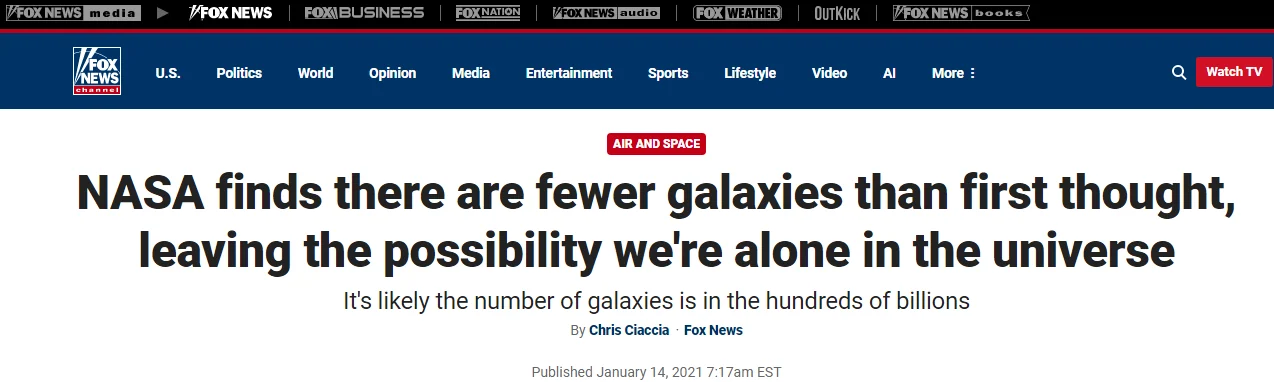
The earlier estimate of around two trillion galaxies was extrapolated from very deep-sky observations made by NASA’s Hubble Space Telescope. Researchers relied on mathematical models to estimate how many galaxies were too small and faint for Hubble to observe. They concluded that 90% of the galaxies in the universe were beyond Hubble’s ability to detect in visible light.159 The new findings, which relied on measurements from NASA’s distant New Horizons mission, suggest a much more modest number—hundreds of billions. People need to stop being blinded by science because it is often flawed, and it is time we acknowledged that. The claim that most published research findings are false is something you might reasonably expect to come from the mouth of the most deluded conspiracy theorist. It is, however, a concept that is becoming increasingly well understood among objective scientists. “Why Most Published Research Findings Are False” is the title of a paper published in 2005 by John P. A. Ioannidis—the renowned physician-scientist, writer, and Stanford University professor who has made significant contributions to evidence-based medicine, epidemiology, and clinical research. In his paper—which, as of 2020, was the most accessed (with more than three million views) and the most widely cited article in the history of the Public Library of Science (PLOS)—Ioannidis examined how issues currently ingrained in the scientific process, combined with the way scientists currently interpret statistical significance, mean that, at present, most published research findings are likely to be incorrect.160 The scientific research process is far from perfect—from the inadequacies of peer review to the fact that many published findings simply cannot be replicated. The crisis has become so severe that Richard Horton, the editor of The Lancet—a weekly, peer-reviewed, independent, international general medical journal and one of the world’s highest-impact academic journals—echoing Ioannidis’ reasoning, recently lamented:161

Unfortunately, the public often fails to recognize the fact that science is sometimes wrong. Many fail to realize that, although scientific theories capture significant aspects of reality, they are not perfect representations of it. Undeniably, scientists have developed an extraordinary understanding of the universe and its laws in the 21st century. However, modern cosmology—a subfield of astrophysics—is in crisis, as there has been an accumulation of evidence and inconsistencies that call current cosmological models into question. Deep and fundamental problems with the existing theories remain unresolved, and years of research into new ideas have led nowhere. That is why a growing number of scientific researchers and writers, exasperated with the current state of affairs and frustrated by the lack of progress in cosmology, are calling for a radical overhaul. Others consider modern cosmological research to be little more than a rather expensive and time-wasting journey down a scientific dead end. From superstrings and black holes to dark matter and multiverses, modern theoretical physics revels in the bizarre. According to Jim Baggott—a former practicing physicist and an award-winning British popular-science author with more than 25 years of experience writing on topics in science, philosophy, and history—it has wandered into the realm of “fairy-tale.” In his book Farewell to Reality: How Fairy-Tale Physics Has Betrayed the Search for Scientific Truth, Baggott discussed the growing gap between modern cosmology and what would typically be called “science.” He and many others believe that current cosmological research has increasingly become purely theoretical in nature, based entirely on the beauty and internal consistency of mathematical descriptions, with little recourse to actual evidence or observation. According to Baggott, such theories, dreamt up in the offices of highly respected universities and institutes, are nothing more than “fairy-tale physics,” theories that have long ceased to play any role in actually improving our understanding of the objective reality of the universe. He bemoaned:162
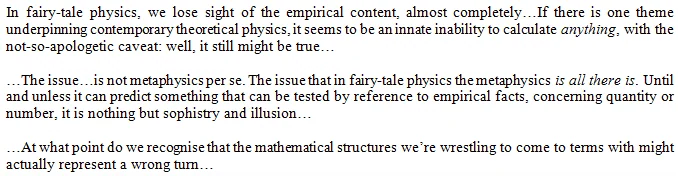
Current cosmological research is a colossal waste of scientific resources which, far from being harmless, is actually damaging the wider credibility of science by dressing up nonsense as important theoretical research. Baggott commented:163

It is no wonder that science’s stock has fallen so precipitously in recent years. In a nutshell, while pseudoscience masquerades as science, it must be debunked at every opportunity. Now more than ever, helping people distinguish genuine empirically based scientific findings from spurious ones is vital. Fighting pseudoscience is not about pedantry or self-righteousness, but about progress and justice. Pseudoscientists typically demonstrate hostility toward scientific criticism, but remaining silent about pseudoscience for fear of being labeled “an enemy of science” is detrimental to the progress of science.
Notes and References
- 1
The “brain in a vat” is a classic philosophical thought experiment. It is a scenario in which a human being is nothing more than a disembodied brain kept alive in a jar of nutrient-rich fluid and artificially stimulated by a computer or other external system in such a way that all of their experiences, perceptions, and memories are indistinguishable from those of a normally embodied person living in a physical world. The purpose of this thought experiment is not to propose a literal scientific possibility, but to raise skeptical questions about knowledge—namely, whether we can ever be certain that our perceptions correspond to an external, objective reality rather than being the product of systematic illusion or simulation. More specifically, it asks whether, if all our sensory experiences could be artificially generated or faked, we can have any assurance that the physical world exists at all.
- 2
Bertrand Russell, The Analysis of Mind, (London, U.K.: George Allen & Unwin, 1921), Lecture IX: Memory, pp. 159–160.
- 3
Bertrand Russell, The Scientific Outlook, (London, U.K.: George Allen & Unwin, 1931), p. 34.
- 4
Ibid., p. 33.
- 5
“Joshua 10:12–13, New International Version,” Bible Gateway, accessed 10 March 2024, https://www.biblegateway.com/passage/?search=Joshua%2010%3A12-13&version=NIV.
12 On the day the Lord gave the Amorites over to Israel, Joshua said to the Lord in the presence of Israel: “Sun, stand still over Gibeon, and you, moon, over the Valley of Aijalon.” 13 So the sun stood still, and the moon stopped, till the nation avenged itself on its enemies, as it is written in the Book of Jashar. The sun stopped in the middle of the sky and delayed going down about a full day.
- 6
Ibid., p. 24.
- 7
Ibid., pp. 33–34.
- 8
Ibid., p. 34.
- 9
Subramoniam Madhusoodanan et al., “Psychiatric Manifestations of Brain Tumors: Diagnostic Implications,” Expert Review of Neurotherapeutics, vol. 7, issue 4, 2007, pp. 343–9. DOI: https://doi.org/10.1586/14737175.7.4.343.
- 10
“The Shooting Stars Quran Miracle is Confirmed by Science!” Answering Christianity, accessed 18 Sep. 2023, https://www.answering-christianity.com/shooting_stars_miracle.htm.
- 11
Karl Popper, The Logic of Scientific Discovery, (London, U.K.: Hutchinson & Co, 1959), pp. 3–4, available at: https://archive.org/details/karlpopperlogicofscientificdiscovery_61_r.
- 12
Ibid., p. 4.
- 13
“MPA Research,” Max Planck Institute for Astrophysics, accessed 18 Sep. 2023, https://www.mpa-garching.mpg.de/27882/Areas_of_Research.
- 14
“The Large Hadron Collider,” CERN Accelerating science, accessed 18 Sep. 2023, https://public-archive.web.cern.ch/en/lhc/lhc-en.html.
The Large Hadron Collider (LHC) is a gigantic scientific instrument near Geneva, where it spans the border between Switzerland and France about 100m underground. It is a particle accelerator used by physicists to study the smallest known particles—the fundamental building blocks of all things. It will revolutionize our understanding, from the minuscule world deep within atoms to the vastness of the Universe. Two beams of subatomic particles called “hadrons”—either protons or lead ions—travel in opposite directions inside the circular accelerator, gaining energy with every lap. Physicists use the LHC to recreate the conditions just after the Big Bang, by colliding the two beams head-on at very high energy. Teams of physicists from around the world then analyze the particles created in the collisions using special detectors in a number of experiments dedicated to the LHC. There are many theories as to what will result from these collisions. For decades, the Standard Model of particle physics has served physicists well as a means of understanding the fundamental laws of Nature, but it does not tell the whole story. Only experimental data using the high energies reached by the LHC can push knowledge forward, challenging those who seek confirmation of established knowledge, and those who dare to dream beyond the paradigm.
- 15
Michael Weisberg et al., “The Dark Galaxy Hypothesis,” Philosophy of Science, vol. 85, no. 5, 2018, pp. 1204–1215.
- 16
The idea behind so-called “cosmic experiments” is not that astrophysicists observe different stages of the same object, but rather that they observe different objects believed to represent different stages of the same process and arrange them into an evolutionary sequence. For example: stars at different stages of stellar evolution, galaxies at different stages of galaxy formation, and protostellar systems at different stages of planet formation.
- 17
Ian Hacking, Representing and Intervening: Introductory Topics in the Philosophy of Natural Science, (Cambridge, U.K.: Cambridge University Press, 1983), p. 274.
- 18
---., “Extragalactic Reality: The Case of Gravitational Lensing,” Philosophy of Science, vol. 56, no. 4, Dec. 1989, pp. 555–581, available at: JSTOR, http://www.jstor.org/stable/187781, [p. 576].
- 19
Olivia Goldhill, “Philosophers Want to Know why Physicists Believe Theories they can’t Prove,” Quartz, 10 Jan. 2016, https://qz.com/590406/philosophers-want-to-know-why-physicists-believe-theories-they-cant-prove.
- 20
Stephen Hawking and Leonard Mlodinow, The Grand Design, (New York, U.S.: Bantam Books, 2012), p. 174.
- 21
Stephen Hawking, A Brief History of Time: From Big Bang to Black Holes, (New York, U.S.: Bantam Books, 1998), chapter 12.
- 22
Delia Perlov and Alexander Vilenkin, Cosmology for the Curious, (Cham, Switzerland: Springer International Publishing, 2017), pp. 330–31.
- 23
Ibid., [2:13–3:17].
- 24
George Ellis and Joe Silk, “Scientific Method: Defend the Integrity of Physics,” Nature, vol. 516, Dec. 2014, pp. 321–323. DOI: https://doi.org/10.1038/516321a.
- 25
Ibid.
- 26
Ibid.
- 27
Ibid.
- 28
Natalie Wolchover, “A Fight for the Soul of Science,” Quanta Magazine, 16 Dec. 2015, https://www.quantamagazine.org/a-fight-for-the-soul-of-science-20151216/.
- 29
A particle accelerator is a large scientific machine that uses electromagnetic forces to speed up tiny particles such as protons or electrons to extremely high velocities. These particles are then often made to collide with one another at very high energies. In such collisions, particles may break apart, transform, or give rise to new particles. This allows physicists to investigate the fundamental building blocks of matter and the forces that govern them.
- 30
Abū al-Fidāʾ ibn Masʿūd, Miʿyār an-Naẓar ʿInda Ahl as-Sunnah wa-l-ʾAthar, (Al-Jīzah, Egypt: Sharikat ar-Rawḍah li-n-Nashr wa-t-Tawzīʿ, 2020), vol. 2, p.119.
- 31
Bjørn Ekeberg, “Cosmology Has Some Big Problems,” Scientific American, 30 Apr. 2019, https://blogs.scientificamerican.com/observations/cosmology-has-some-big-problems/.
- 32
Ibid.
- 33
Ibid.
- 34
Ibid.
- 35
Ibid.
- 36
Paul J. Steinhardt, “The Inflation Debate: Is the Theory at the Heart of Modern Cosmology Deeply Flawed?” Scientific American, 1 Apr. 2011, https://www.scientificamerican.com/article/the-inflation-summer/.
- 37
Ibid.
- 38
Paul J. Steinhardt, “Paul Steinhardt Disowns Inflation, the Theory he Helped Create: Is the Theory at the Heart of Modern Cosmology Deeply Flawed?” Scientific American, 1 Aug. 2014, https://www.scientificamerican.com/article/paul-steinhardt-disowns-inflation-the-theory-he-helped-create/.
- 39
Peter Lipton, Inference to the Best Explanation, (London, U.K.: Routledge, 2004).
- 40
Imre Lakatos, “Falsification and the Methodology of Scientific Research Programmes” in Imre Lakatos and Alan Musgrave, Criticism and the Growth of Knowledge: Proceedings of the International Colloquium in the Philosophy of Science, London, 1965: Volume 4, (Cambridge, U.K.: Cambridge University Press, 1970), pp. 91–196.
- 41
Michael John Disney, “Modern Cosmology: Science or Folktale?” American Scientist, vol. 95, no. 5, Sep.–Oct. 2007. DOI: https://doi.org/10.1511/2007.67.383.
- 42
Bjørn Ekeberg, “Cosmology Has Some Big Problems,” Scientific American, 30 Apr. 2019, https://blogs.scientificamerican.com/observations/cosmology-has-some-big-problems/.
- 43
Joe Silk, “Towards the Limits of Cosmology,” Foundations of Physics, vol. 48, Oct. 2018, pp. 1305–1332. DOI: https://doi.org/10.1007/s10701-018-0183-y.
- 44
Steven R. Cranmer, “Brown Dwarfs are Violet: A New Calculation of Human-Eye Colors of Main-Sequence Stars and Substellar Objects,” Research Notes of the American Astronomical Society, vol. 5, no. 9, Sep. 2021. DOI: https://doi.org/10.3847/2515-5172/ac225c.
- 45
Ibid.
- 46
Bertrand Russell, Analysis of the Mind, (London, U.K.: George Allen & Unwin, 1921), Lecture IX: Memory, pp. 159–160.
- 47
A. J. Ayer, “Statements about the Past: The Presidential Address,” Proceedings of the Aristotelian Society, vol. 52, issue 1, 1 June 1952, p. iii; Ronald J. Butler, “Other Dates,” Mind, vol. 68, 1959, pp. 17–18; Don Locke, Memory, (London, U.K.: The Macmillan Press, 1971), pp. 120 and 128.
- 48
Joseph Wayne Smith and Sharyn Ward, “Are We Only Five Minutes Old? Acock on the Age of the Universe,” Philosophy of Science, vol. 51, no. 3, 1984, pp. 511–13. JSTOR, http://www.jstor.org/stable/187498.
- 49
Adam Mann, “One Number Shows Something Is Fundamentally Wrong with Our Conception of the Universe,” Live Science, 26 Aug. 2019, https://www.livescience.com/hubble-constant-discrepancy-explained.html; Corey S. Powell, “Have We Mismeasured the Universe?” Scientific American, 6 Feb. 2019, https://www.scientificamerican.com/article/have-we-mismeasured-the-universe/.
- 50
Danny R. Faulkner, “Is the Origin of Life a Scientific Question?” Answers in Genesis, 20 May 2016, https://answersingenesis.org/origin-of-life/scientific-question/.
- 51
John Preston et al., The Worst Enemy of Science: Essays in Memory of Paul Feyerabend, (Oxford, U.K.: Oxford University Press, 2000).
- 52
Ian James Kidd, “Rethinking Feyerabend: The “Worst Enemy of Science”?” PLOS Biology, vol. 9, issue 10, e1001166, 4 Oct. 2011. DOI: https://doi.org/10.1371/journal.pbio.1001166.
- 53
Reijer Hooykaas, Natural Law and Divine Miracle: A Historical-Critical Study of the Principle of Uniformity in Geology, Biology, and Theology, (Leiden, the Netherlands: E, J. Brill, 1959), p. 327 as cited in Ho Jang Song and Hui Soo An, “The Critique of the Principle of Uniformitarianism and the Analysis of High School Earth Science Textbooks,” The SNU Journal of Education Research, vol. 6, 1996, pp. 117–136, [p. 76].
- 54
Wikipedia Contributors, “Uniformitarianism,” Wikipedia: The Free Encyclopedia, 6 Oct. 2022, https://en.wikipedia.org/wiki/Uniformitarianism.
- 55
John G. Hartnett, “There’s Cosmology and then there’s Real Science!” Creation, vol. 38, issue 1, Jan. 2016, pp. 20–21, https://creation.com/cosmology-isnt-real-science.
- 56
Jeff Miller, “Don’t Assume Too Much: Not All Assumptions in Science Are Bad,” R&R Journal, June 2013, https://apologeticspress.org/dont-assume-too-much-not-all-assumptions-in-science-are-bad-4666/.
- 57
Hisatada Akahane et al., “Rapid Wood Silicification in Hot Spring Water: An Explanation of Silicification of Wood during the Earth’s History,” Sedimentary Geology, vol.169, issue 3–4, 15 Jul. 2004, pp. 219–228. DOI: https://doi.org/10.1016/j.sedgeo.2004.06.003.
- 58
Ibid.
- 59
Alex Rosenberg and Lee McIntyre, Philosophy of Science: A Contemporary Introduction, (Abingdon, U.K.: Routledge, 2019), p. 173.
- 60
George Gaylord Simpson, “Historical science” in Claude C. Albritton, Jr, Fabric of Geology, (Stanford, U.S.: Freeman, Cooper, and Company, 1963), pp. 24–48: “Uniformity is an unprovable postulate justified, or indeed required, on two grounds. First, nothing in our incomplete but extensive knowledge of history disagrees with it. Second, only with this postulate is a rational interpretation of history possible, and we are justified in seeking—as scientists we must seek—such a rational interpretation.”
- 61
Andrew Masterson, “Cosmological Constant may not be Constant,” Cosmos, 5 October 2017, https://cosmosmagazine.com/science/physics/the-cosmological-constant-may-not-be-constant-after-all/.
- 62
Gong-Bo Zhao et al., “Dynamical Dark Energy in Light of the Latest Observations,” Nature Astronomy, vol. 1, 2017, pp. 627–632. DOI: https://doi.org/10.1038/s41550-017-0216-z.
- 63
“A New Generation Takes on the Cosmological Constant,” Physics World, 03 March 2021, https://physicsworld.com/a/a-new-generation-takes-on-the-cosmological-constant/.
- 64
Ibid.
- 65
M. P. Hobson et al., General Relativity: An Introduction for Physicists, (Cambridge, U.K.: Cambridge University Press, 2006), p. 187.
- 66
“Zero-Point Energy Demystified,” YouTube, uploaded by PBS Space Time, 8 Nov. 2017, https://youtu.be/Rh898Yr5YZ8?feature=shared.
- 67
Jérôme Martin, “Everything You Always Wanted to Know about the Cosmological Constant Problem (but Were Afraid to Ask),” Comptes Rendus Physique, vol. 13, issues 6–7, Jul.–Sep. 2012, pp. 566–665. DOI: https://doi.org/10.1016/j.crhy.2012.04.008.
- 68
Neil deGrasse Tyson, Astrophysics for People in a Hurry,(New York, U.S.: W. W. Norton & Company, 2017).
- 69
Gong-Bo Zhao et al., “Dynamical Dark Energy in Light of the Latest Observations,” Nature Astronomy, vol. 1, 2017, pp. 627–632. DOI: https://doi.org/10.1038/s41550-017-0216-z; Andrew Masterson, “Cosmological Constant may not be Constant,” Cosmos, 5 Oct. 2017, https://cosmosmagazine.com/science/physics/the-cosmological-constant-may-not-be-constant-after-all/.
- 70
The Dark Energy Survey (DES) is an international collaborative effort to map hundreds of millions of galaxies, detect thousands of supernovae, and identify patterns in cosmic structure that may help reveal the nature of dark energy, the mysterious force accelerating the expansion of the universe.
- 71
“A New Generation Takes on the Cosmological Constant,” Physics World, 03 March 2021, https://physicsworld.com/a/a-new-generation-takes-on-the-cosmological-constant/.
- 72
M. P. Hobson et al., General Relativity: An Introduction for Physicists, (Cambridge, U.K.: Cambridge University Press, 2006), p. 187.
- 73
Ronald J. Adler et al., “Vacuum Catastrophe: An Elementary Exposition of the Cosmological Constant Problem,” American Journal of Physics, vol. 63 issue 7, Jul. 1995, pp. 620–626. DOI: https://doi.org/10.1119/1.17850.
- 74
As quoted in Clara Moskowitz, “The Cosmological Constant Is Physics’ Most Embarrassing Problem,” Scientific American, 1 Feb. 2021, https://www.scientificamerican.com/article/the-cosmological-constant-is-physics-most-embarrassing-problem/.
- 75
Michael R. Wilczynska et al., “Four Direct Measurements of the Fine-Structure Constant 13 Billion Years Ago,” Science Advances, vol. 6, issue 17, 24 Apr. 2020. DOI: https://doi.org/10.1126/sciadv.aay9672.
- 76
University of New South Wales, “New Findings Suggest Laws of Nature not as Constant as Previously Thought,” Science Daily, 27 Apr. 2020, https://www.sciencedaily.com/releases/2020/04/200427102544.htm.
- 77
Ibid.
- 78
Ibid.
- 79
Ibid.
- 80
Ibid.
- 81
Ibid.
- 82
Ibid.
- 83
Ibid.
- 84
Ibid.
- 85
Ethan Siegel, “No, the Universe Is Not Purely Mathematical in Nature,” Forbes, 20 May 2020, https://www.forbes.com/sites/startswithabang/2020/05/20/no-the-universe-is-probably-not-mathematical-in-nature/?sh=4b78c4541165.
- 86
Ibid.
- 87
Ibid.
- 88
Ibid.
- 89
Examples include imposing additional symmetries, introducing extra dimensions, adding new fields to general relativity and quantum theory, and using larger groups from mathematical group theory to extend the Standard Model (the current theory describing the fundamental particles and forces, except gravity).
- 90
Ethan Siegel, “No, the Universe Is Not Purely Mathematical in Nature,” Forbes, 20 May 2020, https://www.forbes.com/sites/startswithabang/2020/05/20/no-the-universe-is-probably-not-mathematical-in-nature/?sh=4b78c4541165.
- 91
Albert Einstein, Ideas and Opinions, trans. Songa Bargmann, (New York, U.S.: Crown publishers, 1954), p. 355.
- 92
Ibid., p. 271.
- 93
Nikola Tesla, “Radio Power Will Revolutionize the World,” Modern Mechanics and Inventions, Jul. 1934, pp. 117–118.
- 94
Quixotic mathematician: a mathematician who pursues highly ambitious or unconventional ideas with great idealism, often despite their seeming impracticality or improbability.
- 95
Joel Frohlich, “Life in Hollow Earth,” Aeon, 31 Jan. 2018, https://aeon.co/essays/how-the-hollow-earth-hypothesis-illuminates-falsifiable-science.
- 96
Mostafa A. Abdelkader, “A Geocosmos: Mapping Outer Space into a Hollow Earth,” Speculations in Science and Technology, vol. 6, issue 1, 1983, pp. 81–89, available at: https://inis.iaea.org/search/search.aspx?orig_q=RN:14770298.
- 97
Duane Griffin, “What Curiosity in the Structure: The Hollow Earth Theory in Science” in Hanjo Berressem et al., Between Science and Fiction: The Hollow Earth as Concept and Conceit, (Berlin, Germany: Lit Verlag Münster, 2012), pp. 24–25, available at: https://books.google.dz/books?id=miryZGheCbEC&printsec=frontcover&hl=fr#v=onepage&q&f=false.
- 98
Martin Gardner, On the Wild Side, (Amherst, U.S.: Prometheus Books, 1992).
- 99
Joel Frohlich, “Life in Hollow Earth,” Aeon, 31 Jan. 2018, https://aeon.co/essays/how-the-hollow-earth-hypothesis-illuminates-falsifiable-science.
- 100
Ibid.
- 101
Martin Gardner, On the Wild Side, (Amherst, U.S.: Prometheus Books, 1992), p. 18.
- 102
Joel Frohlich, “Life in Hollow Earth,” Aeon, 31 Jan. 2018, https://aeon.co/essays/how-the-hollow-earth-hypothesis-illuminates-falsifiable-science.
- 103
Karl Popper, The Logic of Scientific Discovery, (London, U.K.: Hutchinson & Co, 1959), p. 4, available at: https://archive.org/details/karlpopperlogicofscientificdiscovery_61_r.
- 104
Joel Frohlich, “Life in Hollow Earth,” Aeon, 31 Jan. 2018, https://aeon.co/essays/how-the-hollow-earth-hypothesis-illuminates-falsifiable-science.
- 105
Karl Popper, The Logic of Scientific Discovery, (London, U.K.: Hutchinson & Co, 1959), p. 32, available at: https://archive.org/details/karlpopperlogicofscientificdiscovery_61_r.
- 106
Bertrand Russell, “Is There a God? [1952]” in John G. Slater, The Collected Papers of Bertrand Russell, Vol. 11: Last Philosophical Testament, 1943–68, (London, U.K.: Routledge, 1997), pp. 542–548.
Many orthodox people speak as though it were the business of sceptics to disprove received dogmas rather than of dogmatists to prove them. This is, of course, a mistake. If I were to suggest that between the Earth and Mars there is a china teapot revolving about the sun in an elliptical orbit, nobody would be able to disprove my assertion provided I were careful to add that the teapot is too small to be revealed even by our most powerful telescopes. But if I were to go on to say that, since my assertion cannot be disproved, it is intolerable presumption on the part of human reason to doubt it, I should rightly be thought to be talking nonsense. If, however, the existence of such a teapot were affirmed in ancient books, taught as the sacred truth every Sunday, and instilled into the minds of children at school, hesitation to believe in its existence would become a mark of eccentricity and entitle the doubter to the attentions of the psychiatrist in an enlightened age or of the Inquisitor in an earlier time.
- 107
Martin Gardner, On the Wild Side, (Amherst, U.S.: Prometheus Books, 1992), p. 19.
- 108
Adrian Cho, “A Singular Conundrum: How Odd is our Universe?” Science, vol. 317, issue 5846, 28 Sep. 2007, pp. 1848–1850. DOI: https://doi.org/10.1126/science.317.5846.1848.
- 109
Natalie Wolchover, “The Best Explanation for Everything in the Universe,” The Atlantic, 22 Dec. 2017, https://www.theatlantic.com/science/archive/2017/12/string-theory-everything/548774/.
- 110
Lee Smolin, “Response to Review of The Trouble with Physics by Joe Polchinski,” UC Santa Barbara, Kavli Institute for Theoretical Physics, Apr. 2007, https://www.kitp.ucsb.edu/joep/links/some-criticisms-string-theory/lee-smolins-response.
- 111
L. I. Ponomarev, The Quantum Dice, (Moscow, Russia: Mir Publishers, 1988).
- 112
Georges Obied et al., “De Sitter Space and the Swampland,” arXiv, 17 Jul. 2018,
https://doi.org/10.48550/arXiv.1806.08362; Prateek Agrawal et al., “On the Cosmological Implications of the String Swampland,” arXiv, 19 Jul. 2018,
https://doi.org/10.48550/arXiv.1806.09718. - 113
Adam Mann, “Our Universe Could Be an Expanding Bubble in an Extra Dimension,” Live Science, 4 Jan. 2019, https://www.livescience.com/64417-universe-sits-on-extradimensional-bubble.html.
- 114
Ibid.
- 115
Sabine Hossenfelder, Lost in Math: How Beauty Leads Physics Astray, (New York, U.S.: Basic Books, 2018).
- 116
Ibid.
- 117
Casey Luskin, “The Top Six Lines of Evidence for Intelligent Design,” Intelligent Design, 25 Feb. 2021, https://www.discovery.org/a/sixfold-evidence-for-intelligent-design/.
- 118
Ibid.
- 119
Ibid.
- 120
Ibid.
- 121
Ibid.
- 122
Ibid.
- 123
Bonnie Azab Powell, “‘Explore as Much as We Can’: Nobel Prize Winner Charles Townes on Evolution, Intelligent Design, and the Meaning of Life,” NewsCenter, 17 June 2005, https://newsarchive.berkeley.edu/news/media/releases/2005/06/17_townes.shtml.
- 124
Juan Bautista Berni, Filosofia Racional, Natural, Metafisica I Moral, (Valencia, Spain: Antonio Bordazar de Artazú, 1736) as quoted in Horacio Capel, “Religious beliefs, philosophy and scientific theory in the origins of Spanish Geomorphology. XVII-XVIII centuries,” Organon, vol. 20–21, 1984–1985, p. 221, available at: https://bazhum.muzhp.pl/media/files/Organon/Organon-r1984_1985-t20_21/Organon-r1984_1985-t20_21-s219-229/Organon-r1984_1985-t20_21-s219-229.pdf.
- 125
Max Weber, The Sociology of Religion, (London, U.K.: Methuen Publishing, 1971), p. 27.
- 126
Thomas S. Kuhn, The Structure of Scientific Revolutions, (Chicago, U.S.: The University of Chicago Press), 1996.
- 127
Theodore Schick Jr., “The End of Science?” Skeptical Inquirer, vol. 21, no. 2, March/April 1997, https://skepticalinquirer.org/1997/03/the-end-of-science/.
- 128
Wolfgang Saxon, “Paul K. Feyerabend, 70, Anti-Science Philosopher,” The New York Times, 8 March 1994, https://www.nytimes.com/1994/03/08/us/paul-k-feyerabend-70-anti-science-philosopher.html.
- 129
Paul Feyerabend, Science in a Free Society, (London, U.K.: Verso Books, 1982).
- 130
---., Against Method, (London, U.K.: Verso Books, 1975), p. 304.
- 131
Wolfgang Saxon, “Paul K. Feyerabend, 70, Anti-Science Philosopher,” The New York Times, 8 March 1994, https://www.nytimes.com/1994/03/08/us/paul-k-feyerabend-70-anti-science-philosopher.html.
- 132
Ibid.
- 133
Martin Gardner, On the Wild Side, (Amherst, U.S.: Prometheus Books, 1992).
- 134
The Gordian knot refers to an ancient Greek legend about a famously intricate knot that tied a chariot and was said to be so complex that it could not be untied. According to the legend, Alexander the Great resolved it by cutting through it with his sword. It has since become a widely used metaphor for an extremely difficult or unsolvable problem.
- 135
“Spherical Cows and Generalization in the Sciences,” Oxford Academic, 26 Aug. 2017, https://oupacademic.tumblr.com/post/164629735027/spherical-cows-generalization.
- 136
Philip Ball, “The Tyranny of Simple Explanations,” The Atlantic, 11 Aug. 2016, https://www.theatlantic.com/science/archive/2016/08/occams-razor/495332/.
- 137
Matt Strassler, “Sun around the Earth, or Earth around the Sun? Did Einstein Say “It’s all the same”?” Of Particular Significance, 4 May 2022, https://profmattstrassler.com/2022/05/04/sun-around-the-earth-or-earth-around-the-sun-did-einstein-say-its-all-the-same/.
- 138
Richard Muller, “How General Relativity Complicates what we Know about Earth’s Orbit,” Forbes, 12 Mar. 2018, https://www.forbes.com/sites/quora/2018/03/12/how-general-relativity-complicates-what-we-know-about-earths-orbit/?sh=5c559ba54951.
- 139
Intuitive understanding refers to a clear and natural conceptual grasp of how something works, beyond merely being able to perform the necessary calculations. For example, a physicist may have equations that accurately predict planetary motion, yet if those equations are extremely complex, it can be difficult to form a mental picture of what is happening and why. A more intuitive model helps scientists recognize patterns, make informed predictions, and understand the underlying behavior of a system without having to rely on lengthy calculations at every step.
- 140
Paul Dirac, “The Evolution of the Physicist’s Picture of Nature,” Scientific American, issue May 1963, republished on 25 June 2010, https://blogs.scientificamerican.com/guest-blog/the-evolution-of-the-physicists-picture-of-nature/.
- 141
Areeba Merriam, “Aesthetics in Mathematics: There is no Permanent Place for Ugly Mathematics,” Cantor’s Paradise, 4 Nov. 2021, https://www.cantorsparadise.com/aesthetics-in-mathematics-234bcc082a16.
- 142
Freeman J. Dyson, “Prof. Hermann Weyl, For.Mem.R.S.,” Nature, vol. 177, no. 4506, 10 March 1956, pp. 457–458. DOI: https://doi.org/10.1038/177457a0.
- 143
Ethan Siegel, “This Is Why We Will Never Know Everything about Our Universe,” Forbes, 21 May 2019, https://www.forbes.com/sites/startswithabang/2019/05/21/this-is-why-we-will-never-know-everything-about-our-universe/?sh=52b8b5746296.
- 144
P. James E. Peebles, “Making Sense of Modern Cosmology,” Scientific American, 1 Jan. 2001, https://www.scientificamerican.com/article/making-sense-of-modern-co/.
- 145
Stephen Hawking and Leonard Mlodinow, The Grand Design, (New York, U.S.: Bantam Books, 2010), available at: https://archive.org/details/The_Grand_Design/page/n61/mode/2up.
- 146
Ibid., p. 62.
- 147
Ibid.
- 148
Ibid., pp. 62–63.
- 149
Ibid., p. 68.
“…These examples bring us to a conclusion that will be important in this book: There is no picture or theory -independent concept of reality. Instead, we will adopt a view that we will call model-dependent realism: the idea that a physical theory or world picture is a model (generally of a mathematical nature) and a set of rules that connect the elements of the model to observations. This provides a framework with which to interpret modern science.”
- 150
Ibid.
- 151
Ibid., p. 266.
- 152
Rudolf Peierls, “Wolfgang Ernst Pauli, 1900–1958,” Biographical Memoirs of Fellows of the Royal Society, vol. 5, 1960, pp. 175–192.
- 153
Peter Woit, Not Even Wrong: The Failure of String Theory and the Search for Unity in Physical Law, (New York, U.S.: Basic Books, 2007).
- 154
Roger Penrose, Fashion, Faith, and Fantasy in the New Physics of the Universe, (Princeton, U.S.: Princeton University Press, 2016).
- 155
“Roger Penrose: Cosmic Inflation Is ‘Fantasy,’” Science Friday, 04 Apr. 2014, https://www.sciencefriday.com/segments/sir-roger-penrose-cosmic-inflation-is-fantasy/.
- 156
Ibid., [12:11–12:19].
- 157
Stephen William Hawking and Roger Penrose, “The Singularities of Gravitational Collapse and Cosmology,” Proceedings of the Royal Society of London, vol. 314, issue 1519, 27 Jan. 1970, pp. 529–548. DOI: https://doi.org/10.1098/rspa.1970.0021.
- 158
Chris Ciaccia, “NASA Finds there are Fewer Galaxies than First Thought, Leaving the Possibility we’re Alone in the Universe,” Fox News, 14 Jan. 2021, https://www.foxnews.com/science/nasa-finds-fewer-galaxies-than-first-thought.
- 159
Tricia Talbert, “New Horizons Spacecraft Answers Question: How Dark Is Space?” NASA, 13 Jan. 2021, https://www.nasa.gov/missions/hubble/new-horizons-spacecraft-answers-question-how-dark-is-space/.
- 160
John P. A. Ioannidis, “Why Most Published Research Findings are False,” PLOS Medicine, vol. 2 issue 8: e124, 30 Aug. 2005. DOI: https://doi.org/10.1371/journal.pmed.0020124.
- 161
Richard Horton, “Offline: What is Medicine’s 5 Sigma?” The Lancet, vol. 385, issue 9976, 11 Apr. 2015. DOI: https://doi.org/10.1016/S0140-6736(15)60696-1.
- 162
Jim Baggott, Farewell to Reality: How Fairy-Tale Physics Betrays the Search for Scientific Truth, (London, U.K.: Constable & Robinson, 2013), pp.286–88, (emphasis in the original) as quoted in Adam Booth, “The Crisis of Cosmology – Part Three,” The Communist, 12 Dec. 2014, https://communist.red/the-crisis-of-cosmology-part-three/.
- 163
Ibid., p. 291 as cited in Adam Booth, “The Crisis of Cosmology – Part Three,” The Communist, 12 Dec. 2014, https://communist.red/the-crisis-of-cosmology-part-three/.