Does the qawāmah mentioned in verse 4:34 signify oppressive control and domination of women by men, as atheists claim?
Allāh says: {Men are qawwāmūn over women} (Qurʾān 4:34). Atheists misuse this verse to encourage women to rebel, claiming that Islam grants men a higher status than women and that qawāmah—the innate and divinely sanctioned authority or guardianship granted to men over women in their households—constitutes oppression, domination, and tyranny. In reality, however, qawāmah is a role of love, care, provision, protection, and guidance. In Arabic, a qawwām or qayyim is someone responsible for administering and supervising the affairs of an individual or organization attending to their needs and safeguarding them. Accordingly, qawāmah is intended to manage the affairs of the Muslim family, since the family, like any institution, requires organization and supervision. It is therefore a duty ordained by Allāh for the woman’s benefit, not a privilege, and the husband will be held accountable for it on the Day of Judgment.1 Atheists are indeed peculiar in that they misuse the concept of qawāmah—which places men in a position of service and accountability and guarantees women their rights to maintenance, security, and protection—to fabricate a shubhah (doubt or misconception) about Islam. Contrary to their claims, qawāmah does not imply that women are inferior or that men possess greater rights; rather, it indicates that men bear responsibility for women. In fact, men are, in a sense, instructed to act as caretakers or servants to women. Thus, if anything, this teaching can be seen as placing men at a disadvantage—a far cry from implying that women are being mistreated.
Atheists often highlight cases in which Muslim men misuse their God-given authority over women—husbands oppressing their wives under the pretext of qawāmah, fathers abusing their wilāyah (guardianship) over daughters, or brothers usurping their sisters’ inheritance—and falsely attribute these abuses to the qawāmah that Allāh has granted men over women. They overlook that in Islam, when someone abuses a sharʿī (Islamic legal) right and uses it contrary to what Allāh has authorized, the right is revoked and the person is held accountable. For instance, a father’s oppression, irreligiousness, or prolonged absence renders him unfit to serve as a waliyy (guardian), and a recognized judge may appoint another relative—such as a paternal or maternal uncle—to assume guardianship over his daughters. In a nutshell, in Islam, true manliness and magnanimity are reflected in a man’s role as a qawwām: a real Muslim man is measured by how well he cares for the women under his protection. Such a man may even fight and sacrifice his life to defend the honor of his wife or other maḥrams (female family members with whom marriage is ḥarām in Islam). As the Prophet (PBUH) said, “…whoever fights to protect his family is a martyr.”2Hence, qawāmah is not a pretext for abuse; rather, it is primarily an obligation—ordained by Allāh, in His wisdom, knowledge, and mercy—upon the man toward his wife and entire family. It does not in any way imply that men are granted unrestricted power or license to privileges without accountability or obligations toward others. The general principle is that men and women are equal. However, Allāh, the All-Knowing and the All-Aware, Who knows His creation best, has assigned distinct roles to men and women, and He has granted men guardianship and authority over women for women’s own benefit.
Atheists portray wilāyah in nikāḥ (guardianship in marriage) as oppressive to women, whereas the latter is in fact a sharʿī (Islamic legal) authority vested in a man who is fully qualified to safeguard a woman’s rights and interests in marriage. In Islam, the consent of the waliyy (male guardian) is a condition for the validity of a marriage, meaning that a woman is not permitted to contract marriage on her own. Rather, she requires a guardian—such as her father, brother, adult son, and the like—to give her in marriage. However, it is impermissible for a guardian to mistreat the woman under his guardianship by denying her the right to marry or compelling her to marry someone she does not wish to marry. On the contrary, her free consent must be sought. Islam places great emphasis on guardianship in marriage in order to provide security for the woman and to protect her rights and interests, stressing that the guardian should guide her—given that she is often inexperienced and vulnerable—in making a sound decision. This is because a young woman in love may easily be manipulated to the point of relinquishing her right to a dowry or other rights merely to ensure that the marriage takes place. She may also fall prey to unscrupulous men who pursue secret or temporary marriages, a phenomenon that is widespread today. Hence, Islam underscores the importance of safeguarding the woman’s interests and ensuring that the prospective husband is genuinely suitable for her, rather than someone seeking to deceive her. An objective examination of guardianship in marriage in Islam would show that it does not restrict a woman’s freedom. In fact, if it imposes any restrictions, they fall on the man rather than the woman. Islam recognizes the woman as independent, yet she may be vulnerable to the schemes of ill-intentioned or opportunistic men. Therefore, Allāh ordained male guardianship to safeguard her rights and protect her from men with harmful intentions. In other words, Islam’s requirement of a male guardian’s involvement in the marriage process ensures that the woman exercises her choice wisely. Fundamentally, the guardian’s responsibility is to assist the woman in selecting and vetting her prospective husband, particularly because women may find it difficult to obtain essential information about a suitor. The guardian is thus obligated to act in the woman’s best interests according to the principles established by Islam, aiming to secure the most suitable match possible. This is a serious responsibility, and he must perform it diligently to avoid causing harm. Furthermore, in Islam, a marriage cannot proceed without the woman’s consent, and any marriage conducted by force is considered invalid. The Prophet (PBUH) said, “A virgin is not to be married off except after her permission is sought.”3 Islam guarantees women the right to accept or refuse any marriage proposal. The role of a woman’s guardian is solely to protect her interests by accompanying and supporting her in making decisions, thereby ensuring her rights in the marriage. In essence, guardianship in marriage carries no element of coercion or abuse of power. Indeed, if a marriage contract is conducted by the guardian without the woman’s consent, it will be void. A young woman came to the Prophet (PBUH) and said, ‘My father has married me off to his nephew in order to elevate his own status through me.’ The Prophet (PBUH) gave her the authority to decide. She then said, ‘I approve of what my father has done, but I wanted women to know that fathers have no say in the matter.’”4
One might ask: what about male guardianship over a woman’s wealth? In Islam, no male—whether father, brother, or husband—has guardianship over a woman’s wealth. She is fully entitled to manage it and make financial decisions independently, without requiring anyone’s permission. In other words, a sensible adult woman has the right to manage her wealth and dispose of it as she wishes, and no one has the authority to prevent her from doing so. Male guardianship is limited solely to matters in which the woman requires a man’s guidance, stemming from Allāh’s mercy and care for women: {How could He not know His Own creation? For He ˹alone˺ is the Most Subtle, All-Aware} (Qurʾān 67:14). Therefore, Muslim women should be vigilant not to fall prey to the tactics of those who spread shubuhāt (doubts or specious arguments), falsely claiming that women in Islam are discriminated against, intimidated, oppressed, or tyrannized. They should be careful not to accept such falsehoods and thereby reject what Allāh has ordained, for doing so would nullify all their good deeds: {that is because they detest what Allāh has revealed, so He has rendered their deeds void} (Qurʾān 47:9). We are Allāh’s servants, and we should submit to His Law and commands. In other words, it is not befitting for believers to have any other choice in what Allāh and His Prophet (PBUH) have ordained: {it is not for a believing man or woman—when Allāh and His Messenger decree a matter—to have any other choice in that matter} (Qurʾān 33:36). When Allāh and His Messenger (PBUH) have decreed a matter, no one has the right to oppose it, nor do they have any choice or room for personal opinion. True believers are those who, when asked to follow the guidance that Allāh has revealed to His Messenger (PBUH), respond, “We hear and we obey.” Allah says: {The only response of the ˹true˺ believers, when they are called to Allāh and His Messenger so he may judge between them, is to say, “We hear and obey.” It is they who will ˹truly˺ succeed} (Qurʾān 24:51). No one attains true faith until they submit inwardly and outwardly to whatever the Prophet (PBUH) commands: {But no! By your Lord, they will never be ˹true˺ believers until they accept you ˹O Prophet˺ as the judge in their disputes, and find no resistance within themselves against your decision and submit wholeheartedly} (Qurʾān 4:65). Allāh is the One Who is Absolutely Just and Perfectly Wise Who legislates nothing in vain. All His rulings are decreed for your own good, O woman, not to impose hardship upon you in life, for He is the One Who created you and therefore knows best what benefits your heart, your soul, your home, and both your worldly life and your Hereafter.
The fact of the matter is that a man’s guardianship and authority over a woman do not suppress her rights, honor, dignity, or status. Rather, qawāmah is a role of leadership and guidance entrusted to men in matters that may exceed a woman’s capacity due to her nature—women, on average, are physically weaker than men and possess a greater sense of modesty and sensitivity. One such matter is travel: the wisdom behind a woman traveling with her husband or a maḥram (an unmarriageable kin) lies in safeguarding her reputation and dignity as well as protecting her from potential dangers encountered during journeys, such as harassment by immoral men or theft. Moreover, nafaqah (financial maintenance) constitutes a fundamental aspect of guardianship. It is a responsibility that the guardian—whether a father, husband, and the like—is obligated to bear toward the women under his care, and a means by which a woman is ensured a dignified standard of living without being compelled to struggle for her livelihood. Allāh says: {Men are qawwāmūn over women because Allāh has made one of them excel over the other, and because they spend out of their possessions [to support them financially]} (Qurʾān 4:34). This does not imply that men are invested with superior honor or dignity. Rather, it signifies that Allāh has endowed males with certain qualities that He has not granted to females—or at least not to the same extent. Consequently, the male is qualified to serve as the head of the family, while the female is naturally constituted to live under his leadership, care, and protection. Accordingly, the husband is enjoined to bear all his wife’s expenses, even if she possesses greater wealth than him, whereas the wife has no financial obligations toward her husband, her children, or the household. Under Sharīʿah, if a husband fails to maintain his wife, she may choose to leave him or remain with him while fearing Allāh in him—that is, continuing to fulfill her duties toward him even if he is failing to fulfill his toward her—in the hope that he will change and begin fulfilling his responsibilities.5 Thus, marital guardianship is a power or authority through which the husband takes necessary actions to safeguard his wife’s interests and ensure her protection and security.
It is clear from the above that the function of the guardianship entrusted to men over women is in the best interest of women. As explained, guardianship is not an exercise of absolute power, oppression, or discrimination against women. It does not negate their rights or infringe upon their dignity as full members of society, for the Sharīʿah is wholly just toward women. Indeed, men’s guardianship over women reflects the perfection of Allāh’s favor upon both men and women because the concept of guardianship aligns with the physiological and psychological characteristics with which Allāh has endowed each of them. From an Islamic perspective, men and women are twin halves of each other, as they were created from a single source. Their relationship is reciprocal and interdependent, founded upon mutual love and compassion. In other words, their roles are complementary and cooperative rather than competitive. Unfortunately, however, perverted Western cultural norms have distorted the relationship between men and women, framing it as one of conflict. Today, feminists’ chief mission in the West is rebelling against what they perceive as a hegemonic patriarchal order and pursuing women’s “liberation.” This rebellion is often framed as a struggle to prove women’s societal role and to claim equality with men, as if women’s success and gains inherently come at the expense of men. Such a perspective reflects a backward and primitive understanding of the relationship between the sexes. In reality, a woman’s success—so long as it remains within the boundaries set by Allāh—is also a source of success, joy, and benefit for the sensible man and for society at large. Allāh, in His perfect wisdom, has created humanity in two sexes, identical in dignity and essence, yet differing in physical, mental, and psychological characteristics. Nevertheless, He has fashioned a remarkable harmony between them, such that each serves as a perfect counterpart to the other: {And one of His signs is that He created for you spouses from among yourselves so that you may find comfort in them. And He has placed between you compassion and mercy} (Qurʾān 30:21). Islam enjoins both spouses to treat each other with affection, respect, understanding, and compassion. It also assigns specific duties to each spouse. The husband is designated as the maintainer and protector of his wife and children and is entrusted with the responsibility of leading the household. Likewise, the wife has duties to nurture the family, with her foremost duty toward her husband being obedience in all that is lawful, for he is the head and guardian of the family. Righteous women obey their Lord as well as their husband and protect their husband’s honor and wealth in his absence: {and righteous women are devoutly obedient and, when alone, protective of what Allāh has entrusted them with} (Qurʾān 4:34). A husband’s right to obedience is affirmed in the Prophetic tradition stating: “If a woman performs her five [daily prayers], fasts her month [Ramaḍān], safeguards her chastity, and obeys her husband, she will be told: Enter Paradise through whichever of its gates you wish.”6 The Sharīʿah emphasizes that a wife is obliged to obey her husband—an obligation that remains in force so long as he does not command her to disobey Allāh. It describes the husband as a woman’s Heaven or Hell, meaning that his satisfaction is a cause for her admission into Paradise, while his displeasure is a cause for her entry into Hellfire. In this regard, Ḥuṣayn ibn Miḥṣan reported that his aunt came to the Prophet (PBUH) to seek help with a matter, and when she had finished, the Prophet (PBUH) asked her, “Do you have a husband?” She replied, “Yes.” He (PBUH) then asked, “How do you treat him?” She said, “I strive to fulfill all his rights over me, except when I am unable to do so.” Thereupon, he (PBUH) said, “Consider how you are with respect to him, for he is your Heaven or Hell.”7 There is no doubt that a joyful, harmonious, and peaceful household—and consequently a more productive one—cannot be achieved unless each spouse fulfills the duties that are specific to them.
Indeed, Islam does not render women secondary in any respect. Rather, it affirms that Allāh created men and women from a single soul and made them allies to one another in a relationship founded on cooperation rather than domination. Their roles are neither competitive nor inherently conflicting, as they are often portrayed in Western discourse, but instead complementary. In stark contrast to Islam, gender inequality is deeply rooted in Western secular culture, where proponents of numerous theories of gender inequality contend that biology is destiny, arguing that the social roles of men and women, along with the privileges attached to them, are fundamentally determined by genetic factors shaped by natural selection. On this view, male aggression and dominance—necessarily accompanied by female passivity and dependence—are seen as are part of humans’ so-called genetic primate heritage. Hence, according to conflict theory—a sociological perspective that views society as an arena of inequality where groups with competing interests struggle for limited resources such as power, money, and status—men, as the dominant gender, subordinate women in order to maintain power and privilege in society. Consequently, women are compelled to revolt against male hegemony to demand their rights and restore a lost equality.
Women’s issues in the Muslim world are largely the result of many of them having been influenced and deceived by Western culture, whose proponents often deliberately misrepresent the meaning of Islamic guardianship and its associated legal functions. They are also the result of some Muslim men’s self-indulgence,as yielding to their own whims and desires weakens their character and undermines their authority. Consequently, the so-called Islamic feminism—a movement claiming to liberate Muslim women by challenging qawāmah and wilāyah (male guardianship and authority over women)—emerged and began to attract a broad following. This movement arose primarily due to the weak character of certain men, which compromises their leadership. When a woman perceives that a man is enslaved to his desires and unable to control them, she holds a low opinion of himand, if weak in faith, may even rebel against him. This is a reality that many men fail to comprehend. Simply put, when a man is self-indulgent, greedy, selfish, and neglectful of his duties toward women, a woman who is weak in faith may not only demand her compromised rights but may rebel against men in general, against nature, and against Allāh, giving rise to fitnah (social chaos and turmoil) on Earth and widespread corruption. It is important to understand that feminism is not merely a movement aimed at achieving full gender equality by ending sexism and oppression. Rather, it represents a full-fledged rebellion against societal and natural structures, as well as against Allāh. When men fail to lead with strength, mercy, and compassion, and when they remain entrenched in sin, women may be incited to rebel, resulting in the corruption of society. Fundamentally, such rebellion stems from both men’s weak leadership and women’s weak faith. Men and women should remember that each person is entrusted with the care and protection of those under their responsibility. In this regard, ʿAbd Allāh ibn ʿUmar reported that the Messenger of Allāh (PBUH) said: “Indeed, every one of you is a shepherd and will be held accountable for his flock. … a man is a shepherd over the people of his household and he will be held accountable for his flock; and a woman is a shepherd over her husband’s household and his children, and she will be held accountable for them…”8 Men and women should remember that everyone will be held accountable for those under their care. The Prophet (PBUH) said: “Indeed, Allāh will question every shepherd (i.e., anyone who is responsible for others) about his flock (i.e., those under his charge) whether he fulfilled his duties toward them or neglected them. A man will even be questioned regarding the people of his household (family).”9 If men and women return to the divine design and fulfill the roles Allāh has assigned to them—the man’s role as the leader who provides for and protects the family, and the woman’s role as the nurturer of the family who obeys her husband and raises the children in the best home environment—the Muslim nation will be reformed. Men will embody their true masculine nature and women will be able to express their true feminine nature. A woman’s perfect femininity lies in a man taking full care of her—providing for her, protecting her, and leading her—as well as in her obeying him, which is intrinsic to her fiṭrah (innate disposition). Hence, what many perceive as gender inequality in Islam is, in fact, equality in its best form, for Islam recognizes the distinct capacities of men and women and assigns them roles best suited to their nature. Indeed, if men and women fulfill the obligations enjoined upon them toward each other, their lives will be filled with tranquility, and all will sleep peacefully at night.
Unfortunately, many Muslim households lack beautiful mannerism, which encompasses affection, compassion, understanding, forbearance, and the ability to accept one another’s flaws and imperfections with an open heart. This is what is referred to as al-muʿāsharah bi-al-maʿrūf, meaning interaction in a manner recognized as good according to the cultural, rational, and legal norms of society. The report of Umm Zarʿ highlights some of the finest manners and etiquettes that men should embody. ʿĀʾishah [may Allāh be pleased with her] reported that one day eleven women sat together and made an explicit promise among themselves to conceal nothing about their spouses. The fifth woman said: “My husband is a leopard when he enters [the house] and a lion when he goes out, and he does not ask about that which he leaves behind.”10 In likening her husband to a leopard, she praised him for his intelligence and for the fact that, like leopards, he sometimes appears heedless—he does not nitpick or attend to every small detail in the house, overlooks her negative traits, and intentionally ignores minor mistakes and shortcomings. Intentionally overlooking faults to maintain good relations is indeed a praiseworthy and essential trait that all men should learn and practice. Moreover, leopards are generally gentle animals, reflecting her husband’s gentle, kind, patient, and forgiving nature. The leopard’s strength and hunting ability also signify that he takes care of her and provides for her. By likening her husband to a lion when he is outside the house, she emphasized his strength, courage, protectiveness, and assertiveness. Finally, by saying that he “does not ask about that which he leaves behind,” she indicated his generosity: he does not question her about what he leaves behind in the house—whether food, money, or other matters—and does not scrutinize every small occurrence in the home, for a man who does so would be very difficult to live with.
It is not in the character of Muslim men to allow every minor disagreement or mishap to escalate into a quarrel, an occasion for name-calling, swearing, or cursing at their spouses. What is truly needed is genuine manliness, which lies in strength of character, the exercise of willpower, the proper guardianship of women, and the virtue of lowering the gaze—that is, refraining from looking at the beauty of non-maḥram (marriageable) women—both in public and in private, including online. The manliness inherent in lowering the gaze is one of the hallmarks of true qawāmah (guardianship). In other words, by controlling his gaze and refraining from sin, a man becomes a true qawwām (leader). Indeed, the man holds the key to a woman’s heart: if he fails to fulfill his duties toward her, she will never be truly pleased with him. At the same time, the woman must exercise patience with her husband, recognizing that men today face many temptations and shoulder numerous heavy responsibilities due to the pressures of modern life. Accordingly, she should forgive her husband’s flaws and mistakes, be forbearing, offer sound advice, remind him of Allāh, and pray for him. She should also strive to draw closer to Allāh through good deeds so that, by His grace, her household may be reformed and her family guided. Further, the man must be careful not to be a dayyūth—lacking protective jealousy over the women of his household, a key aspect of true masculinity—because when a man fails to exercise magnanimity, manliness, and protective care and jealousy over the women of his household, they may adopt mannish behaviors and fall into temptation if weak in faith. If the women of the ummah (the Muslim nation) become mannish and fall into temptation, then one may say Allāhu ʾAkbar four times over it—the allusion being to the four takbīrs of the Islamic funeral prayer— signifying that the ummah itself will be spiritually dead.
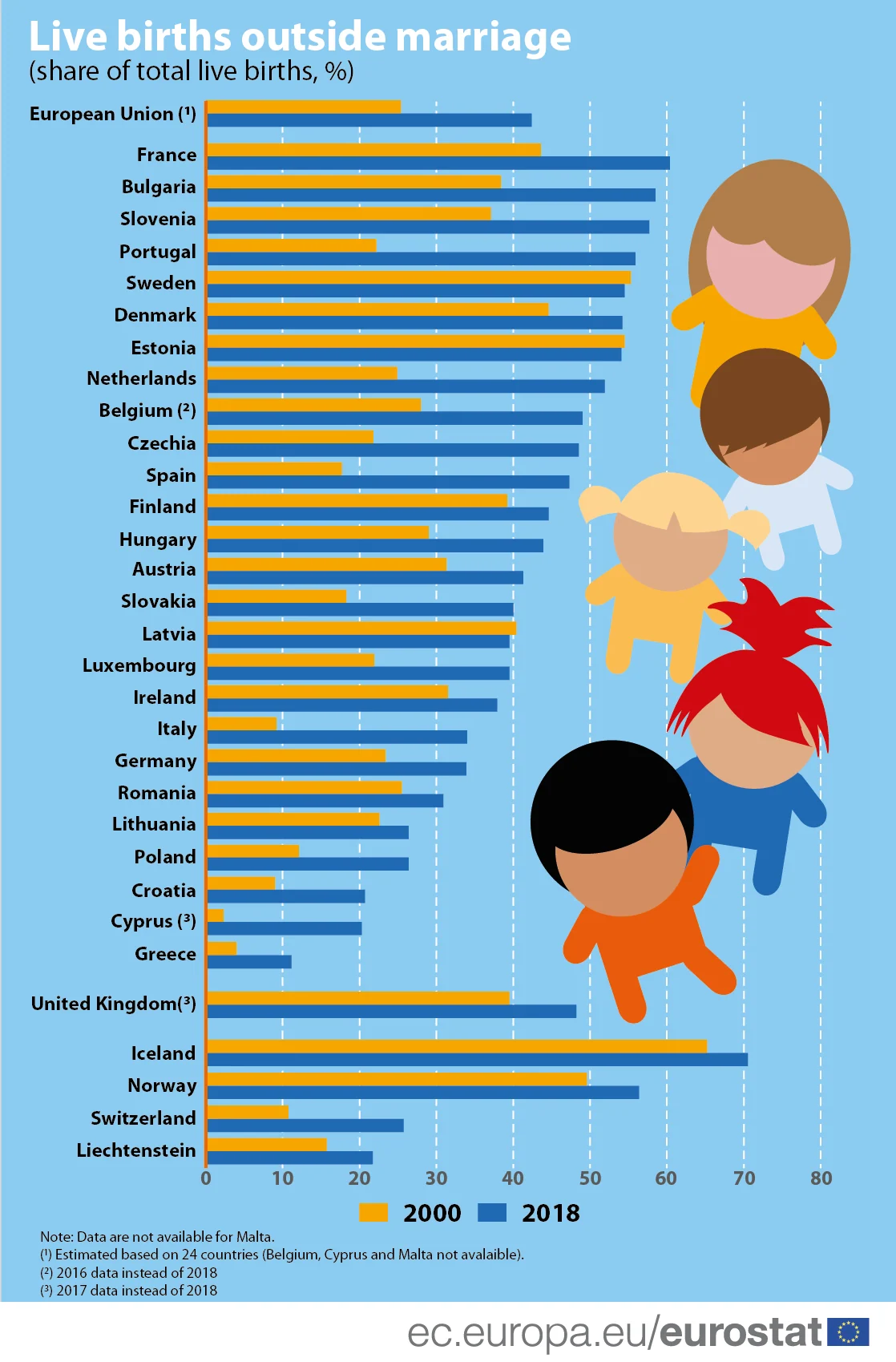
Indeed, despite their fervent desire and relentless efforts, atheists and feminists have been unable to find a loophole to cast Islam in a negative light or to destroy the Muslim family in order to spread corruption, sedition, and rebellion against Allāh’s Law—except when Muslim men ceased to be true guardians and Muslim women neglected their duties toward men. In other words, the only avenue they found was through men’s failure to exercise genuine guardianship and to fulfill their responsibilities toward women. They did not prevail over us except because of our distance from our religion and the attachment of some of us to Western cultural values, which have nothing to do with the religion of our Lord. The proponents of atheism, feminism, and moral misguidance claim that their primary goal is to protect and respect women, yet in reality, they are the ones who degrade women and jeopardize their rights as respected and honored members of society. While they assert that they seek to liberate women—freeing them from male dominance and oppression—their true objective is female sexual liberation, that is, the promotion of female promiscuity: {but those who follow their desires wish to see you deviate entirely ˹from Allāh’s Way˺} (Qurʾān 4:27). Atheism and feminism have destroyed the family institution in the West. Consequently, Western society as a whole is in a deep social and moral crisis due to the devastating cancer of family breakdown and fatherlessness. According to Eurostat—the statistical office of the European Union, responsible for producing high-quality statistical information about Europe and harmonizing data across EU member states—the proportion of live births outside marriage in the EU stood at 42 % in 2018, meaning that a substantial share of children were born to parents who were not married. In that year, births outside marriage outnumbered births within marriage in eight EU Member States: France at about 60 %, Bulgaria 59 %, Slovenia 58 %, Portugal 56 %, Sweden 55 %, Denmark and Estonia both 54 %, and the Netherlands 52 %.11
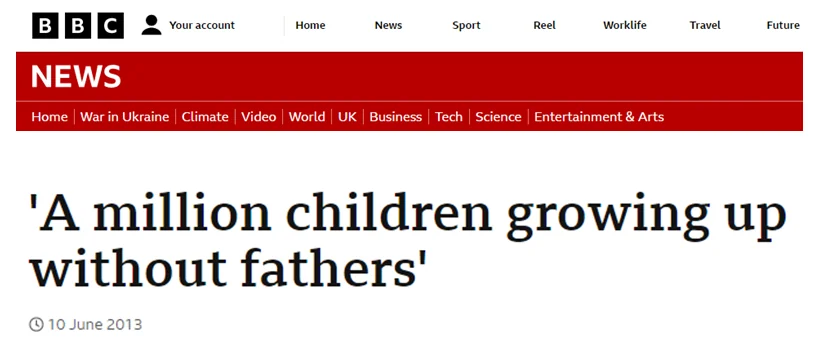
Fatherlessness is a growing problem—a crisis—in the West. For instance, a recent report on family breakdown states that one million children in the United Kingdom are growing up without a father in their lives.12
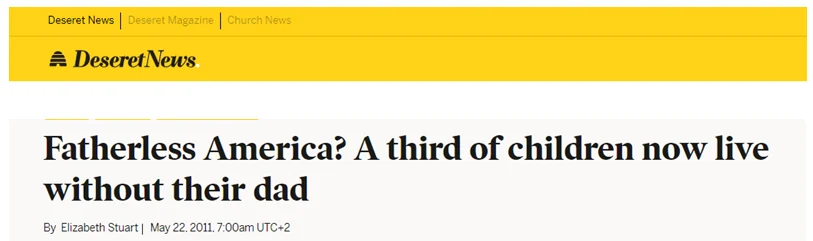
Likewise, according to the U.S. Census Bureau, one-third of American children are growing up without their biological father.13
Similarly, fatherlessness is one of the grave social problems in Canada.14
Many advocates of responsible fatherhood assert that nearly every social ill faced by Western children is linked to fatherlessness. Data support this claim: children from fatherless homes are more likely to experience poverty, engage in drug and alcohol abuse, drop out of school, and suffer from physical, emotional, and psychological problems. Another alarming reality in today’s West is that nearly half of all pregnancies are unintended, and unintended pregnancies are closely associated with induced abortion. Shockingly, according to the World Health Organization, six out of ten (60 percent) of unintended pregnancies end in abortion—especially given that Western constitutions protect women’s right to terminate a pregnancy, making the killing of fetuses legal. Atheists and feminists are actively waging a relentless, fierce attack on Islam with the aim of undermining the Muslim family institution, for the strength or weakness of a society is rooted in the strength or weakness of its families. When the family institution is weak, nothing else can compensate for this weakness. Therefore, despite its current economic, industrial, and technological achievements, the West is heading toward a disastrous end due to the influence of materialism and feminism, both atheistic worldviews. Indeed, people cannot turn away from any of Allāh’s commands without facing severe consequences, and the only way forward—to guidance and progress—is by returning to Allāh and His Law.
Notes and References
- 1
Shihāb ad-Dīn al-Qarāfī, aḏ-Ḏakhīrah, (Bayrūt, Lebanon: Dār al-Ġarb al-Islāmi, 1994), vol. 4, p. 341.
- 2
Abū ʿAbd ar-Raḥmān an-Nasāʾī, Sunan an-Nasāʾī, (Aleppo, Syria: Maktab al-Maṭbūʿāt al-Islāmiyyah, 1986), book: 37, ḥadīth: 129, available at: https://sunnah.com/nasai:4094.
- 3
Muḥammad al-Bukhārī, Ṣaḥīḥ al-Bukhārī, (Cairo, Egypt: Dār as-Salām. 1999), book: 67, ḥadīth: 72, available at: https://sunnah.com/bukhari:5136.
- 4
Abū ʿAbd Allāh ibn Mājah, Sunan Ibn Mājah, (Cairo, Egypt: Dār at-Taʾṣīl. 2014), book: 9, ḥadīth: 30, available at: https://sunnah.com/ibnmajah:1874.
- 5
Abū Isḥāq Ibrāhīm ibn ʿAlī ash-Shīrāzī, al-Muhaḏḏab fī Fiqh al-Imām ash-Shāfiʿī, (Bayrūt, Lebanon: al-Kutub al-ʿIlmiyyah, 1995), vol. 3, p. 155; Manṣūr ibn Yūnus al-Buhūtī, Kashshāf al-Qināʿ ʿ an Matn al-Iqnāʿ, (Bayrūt, Lebanon: Dār ʿĀlam al-Kutub, 1983).
- 6
Muḥammad Nāṣir ad-Dīn al-ʾAlbānī, Ṣaḥīḥ al-Jāmiʿ aṣ-Ṣaġīr, (Bayrūt, Lebanon: al-Maktab al-Islāmī, 1988), ḥadīth: 660.
- 7
Ibid., ḥadīth: 1509.
- 8
Agreed upon ḥadīth, Muḥammad al-Bukhārī, Ṣaḥīḥ al-Bukhārī, (Cairo, Egypt: Dār as-Salām. 1999), book: 93, ḥadīth: 2, available at: https://sunnah.com/bukhari:7138; Muslim ibn al-Ḥajjāj, Ṣaḥīḥ Muslim, (Bayrūt, Lebanon: Dār al-Kutub ʿIlmiyyah, 2020), book: 33, ḥadīth: 24, available at: https://sunnah.com/muslim:1829a.
- 9
Muḥammad Nāṣir ad-Dīn al-ʾAlbānī, as-Silsilah aṣ-Ṣaḥīḥah, (ar-Riyāḍ, Saudi Arabia: Maktabat al-Maʿārif, 1995), ḥadīth: 1636.
- 10
Muḥammad al-Bukhārī, Ṣaḥīḥ al-Bukhārī, (Cairo, Egypt: Dār as-Salām. 1999), book: 67, ḥadīth: 123, available at: https://sunnah.com/bukhari:5189.
- 11
“42% of Births in the EU are Outside Marriage,” Eurostat, 17 Jul. 2020, https://ec.europa.eu/eurostat/web/products-eurostat-news/-/ddn-20200717-1.
- 12
Hannah Richardson, “A Million Children Growing up Without Fathers,” BBC News, 10 June 2013, https://www.bbc.com/news/education-22820829.
- 13
Elizabeth Stuart, “Fatherless America? A Third of Children now Live Without their Dad,” Desert News, 22 May 2011, https://www.deseret.com/2011/5/22/20193341/fatherless-america-a-third-of-children-now-live-without-their-dad.
- 14
“Fatherless Children in Canada,” Canadian Children’s Rights Council, accessed 22 Aug. 2023, https://canadiancrc.com/Fatherlessness/Fatherlessness_in_Canada.aspx.