Is human body hair a vestigial trait left over from our evolutionary past?
Body hair is often cited as one of the so-called vestigial features—traits considered remnants of our evolutionary past—which Charles Darwin referred to as “rudimentary” in his book The Descent of Man.1 Evolutionists have long claimed that human body hair is a useless vestige inherited from our hairy ancestors. However, human hair is just as functional as that of any other mammal. Like most mammals, the human body is covered with hair, except for the palms and soles. What sets humans apart is that most of this hair consists of fine, colorless strands known as vellus hairs, which cover areas that appear “hairless.” This gives the impression that humans lack body hair—aside from more visibly hairy regions such as the scalp, armpits, chest, and genital area. In reality, when vellus hairs are included, humans have roughly the same number of hairs per square inch on their nose and forehead as they do on the scalp. In fact, overall hair density per square inch in humans is approximately equal to that of most primates.2 David Menton explains:
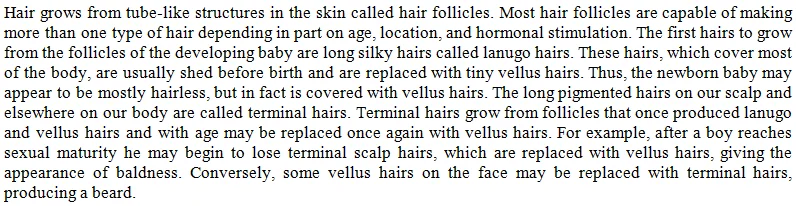
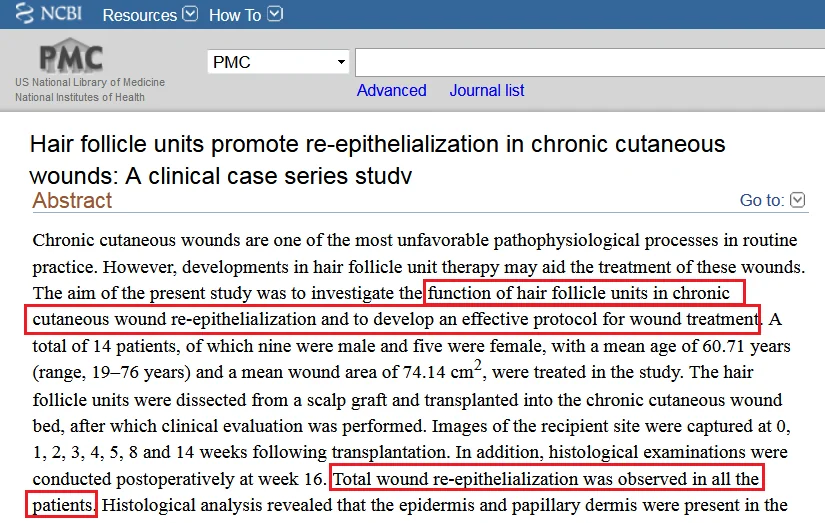
Evolutionists claim that human body hair is vestigial—or functionless—because humans have relatively few long terminal hairs compared to the abundance of tiny vellus hairs. In most mammals, the primary role of hair is insulation: it conserves body heat in cold environments. This is crucial because most mammals cannot regulate their body temperature through sweating. Humans, by contrast, sweat profusely and are capable of maintaining a stable core body temperature across a much wider range of ambient conditions than nearly any other mammal. Long body hair, such as that found in most animals, would interfere with the evaporative cooling process essential to human thermoregulation. In other mammals, hair also serves as a protective barrier against ultraviolet (UV) radiation from the sun. Similarly, scalp hair in humans protects the top of the head, which is often exposed to sunlight. However, in humans, the primary defense against UV damage is through skin tanning and the use of clothing. Beyond its aesthetic role, human hair also has important sensory functions. All hair follicles—whether producing fine vellus hairs or longer terminal hairs—are innervated by sensory nerves, making them mechanoreceptors that relay tactile information to the nervous system. These receptors can detect the slightest movement of hair, whether caused by a breeze or physical contact. In this way, hairs function as miniature levers that send signals to the brain when stimulated. This sensory capability applies equally to both vellus and terminal hairs.3 Indeed, such a sensory function of hair can hardly be considered vestigial. Hair receptors may also contribute to detecting the presence of parasites on the skin, enhancing our sensory awareness of external threats. Some hairs serve protective functions—for example, eyelashes, which grow along the edge of the eyelids, are highly sensitive to nearby particles such as dust or dirt. When they detect potential harm, the eye reflexively closes as a defense mechanism. Eyebrows also help shield the eyes from sweat, rain, and debris, while playing a crucial role in nonverbal communication by expressing emotions such as sadness, anger, surprise, and excitement. Additionally, hair follicles serve another vital function: they aid in restoring the epidermal surface of the skin following cuts or deep abrasions. Regardless of their size, human hair follicles are an important source of epidermal cells that contribute to reepithelialization—the regeneration of skin tissue—when large portions of the epidermis are lost. Without the regenerative capacity provided by abundant hair follicles and sweat ducts, even minor abrasions might require skin grafts.4
In short, while human hair may no longer hold the same survival value it once did, especially when viewed through a Darwinian lens, it nonetheless serves several important functions and cannot rightly be considered completely vestigial.
Notes and References
- 1
Charles Darwin, The Descent of Man, and Selection in Relation to Sex, (London, U.K.: John Murray, 1871), p. 13.
- 2
David Menton, “Chapter 24: Vestigial Organs—Evidence for Evolution?” in Ken Ham, The New Answers Book Vol. 3: Over 35 Questions on Evolution/Creation and the Bible, (Green Forest, U.S.: Master Books, 2010), available at: https://answersingenesis.org/human-body/vestigial-organs/vestigial-organs-evidence-for-evolution/.
- 3
Ibid.
- 4
Jia-Qi Liu et al., “Hair Follicle Units Promote Re-Epithelialization in Chronic Cutaneous Wounds: A clinical Case Series Study,” Experimental and Therapeutic Medicine, vol. 10, issue 1, 30 Apr. 2015, pp. 25–30. DOI: https://doi.org/10.3892/etm.2015.2465, available from the National Library of Medicine (NLM): https://pmc.ncbi.nlm.nih.gov/articles/PMC4486903/.