Is it true that our universe is merely one lucky draw from a vast number of universes, each with different physical properties?
In response to the theistic explanation for the fine-tuning of the cosmos, many atheists have proposed the multiverse hypothesis as an alternative. According to this atheistic many-universes theory, there exists a vast—possibly infinite—number of universes, each with different fundamental physical parameters. They argue that while most of these universes would not possess life-permitting conditions, a small fraction would—and we happen to find ourselves in one of those rare, finely tuned universes. Thus, they claim, the existence of a life-permitting universe like ours is no longer improbable. However, the fact that Earth is the only known planet to support life among countless others does not in any way weaken the argument from its perfection, because that perfection is not simply a matter of having the right raw materials. To clarify this principle before applying it to the case of cosmic fine-tuning, consider this: a bowl of delicious, cooked food will not suddenly appear before me just because I happen to be in a forest filled with vegetables, fruits, and animals.

Likewise, we do not find digital processors and electronic chips—despite being made from sand—scattered throughout the deserts of the world simply because sand is abundant.

Unquestionably, creation is not merely a matter of the availability of raw materials. Rather, the inherent perfection of Earth is the result of Divine know-how. In response to the atheists’ objection, the existence of an infinite number of planets can never explain the emergence of one with such extraordinary perfection—especially its most remarkable feature: life. Allāh says: {˹That is˺ the design of Allāh, Who has perfected everything} (Qurʾān 27:88). Moreover, the fact that Earth hosts not just life, but intelligent life, makes it doubly unique. When physicists and mathematicians entered the field of molecular biology, they discovered that the complete blueprint for an organism’s development and mature functions is embedded in its chromosomes in the form of a “code,” enabling molecules within cells to carry and transmit complex information. Undoubtedly, the discovery of the structure of DNA marked a revolutionary turning point in modern science.
DNA is the chemical compound that contains the instructions necessary for the development and regulation of all living organisms. Structurally, DNA consists of two intertwined strands forming what is known as a double helix. Each strand is composed of four chemical units called nucleotide bases, which constitute the genetic “alphabet”: adenine (A), thymine (T), guanine (G), and cytosine (C). The sequence of these bases—A, T, G, and C—determines the specific meaning of the information encoded within a given segment of the DNA molecule, much like the arrangement of letters determines the meaning of a word.

An organism’s complete set of DNA is called its genome. Virtually every single cell in the human body contains a full copy of the approximately three billion DNA base pairs that comprise the human genome. With its four-letter language, DNA holds the instructions necessary to construct the entire human body. A gene traditionally refers to a unit of DNA that encodes the instructions for producing a specific protein or group of proteins. These proteins form the body’s structures—such as organs and tissues—and regulate chemical reactions and transmit signals between cells. In other words, each gene functions as a recipe for producing a particular protein, and as human beings, we are fundamentally composed of proteins.
Genes are often referred to as the blueprint for life because they instruct each of our cells on what to do and when to do it—become muscle, form a bone, transmit nerve signals, and so on. They orchestrate these functions by producing proteins. In simple terms, genes encode proteins, and proteins determine cell function. This flow of information from genes to proteins occurs through the processes of transcription and translation. The genetic code is the system of rules by which living cells translate the genetic material into proteins. For instance, in the development of the fetus, the formation of the liver requires a specific set of genes that carry encoded instructions for how and when the liver should develop; once this code is translated, the liver begins to form. Genes carry the information that determines our traits—features or characteristics inherited from our parents. Each human cell contains approximately 30,000 genes that encode all bodily functions, meaning that every organ, enzyme, and hormone is encoded within its own set of genes. Consequently, life is fundamentally a set of information rather than a substance—the biological systems of all living organisms are information systems, not merely material ones.
Interestingly, the DNA alphabet can encode extremely complex instructions using just four letters, which provide all the information needed to build any living organism. However, for DNA to function effectively as an information storage system, its content must be translated. That is, in order for the stored data to be meaningful, cells must access the appropriate instructions to produce the correct proteins in the right place and at the right time. In layman’s terms, this DNA—three billion characters in each cell—describes who Allāh ordained you to be; it encapsulates the miracle of human life written in the mysterious language of all the ages. Indeed, scientists have been granted the privilege of reading the text of the genome, written by Allāh in His language. We now ask the atheists: does the existence of countless universes account for the miracle of the human genome? It is absurd that atheists approach living organisms and their intricately designed information systems with the mindset of a puzzle game. That is, just as a player disassembles and reassembles puzzle pieces, evolutionary scientists attempt to circumvent the sophistication and complexity of divine creation by proposing simplistic alternatives to explain the alleged molecules-to-man evolution.

Think about it: would a carefully prepared food tray appear merely because dense forests exist? Would the three billion letters inside each cell of the human body—which encode all its functions with utmost accuracy—come into being simply as a result of the existence of innumerable planets? Assuredly, the perfect workings of nature cannot be explained away by such atheist fantasies, for they are not the product of mindless accidents or blind chance, but the creation of the All-Knowing, All-Powerful Lord. Indeed, the urge to understand the ordered structure of the universe and the fine-tuning of the informational coding-decoding systems of life—which so clearly point to the Creator—is an urgent rational necessity. In other words, this is why belief in the basic idea of God is universal, untaught, natural, and intuitive. Analogously, suppose I were to go with an atheist on a mission to another planet and there we discover a sophisticated device with a complex structure. What conclusion would we reach upon finding it, even if we did not yet understand its function? Would we claim that it happened to form by mere chance? Such a claim would clearly be irrational. Rather, we would unanimously agree that the device must have been designed by an intelligent being, for an intelligent designer is the only plausible explanation for its existence. The only other conceivable alternative—that the device formed by some undirected natural process—is extremely unlikely and wholly unconvincing.
It is noteworthy that the issue of evidence lies at the heart of the modern conflict between religion and certain proponents of science, particularly atheist scientists, who demand empirical proof for what lies beyond the scope of scientific methodology—namely, the existence of God. However, the burden of evidence should, in fact, rest upon atheists to demonstrate that God does not exist and that the universe is devoid of any overarching purpose. Put differently, if atheists are so swift to invoke science as the foundation for their belief in a random, purposeless universe, then they must provide proof to substantiate that claim.

Otherwise, in the absence of an experiment that demonstrates that God does not exist or a proof that establishes the universe to be without purpose, such assertions cannot be accepted on scientific grounds. Objective scientists argue that it is not only intellectually dishonest but also logically inconsistent for a scientist to embrace atheism, since it is impossible to definitively determine or prove the nonexistence of God. In the realm of science, one cannot affirm something as fact without empirical verification. As a result, even the most vehement atheists and staunch critics of religion concede that they cannot be certain God—and, by extension, the Hereafter—does not exist. It is therefore troubling that some atheists invoke the name of science to legitimize their own dogmatic convictions and their self-assured yet unproven atheism. Funnily enough, while atheists outwardly resist the evidence for divine perfection manifest in the universe and life, inwardly they often surrender to it. The famous agnostic Carl Sagan, for example, wrote a novel entitled Contact, in which he told the story of scientists working on the Search for Extraterrestrial Intelligence (SETI) project.

One night, the radio telescopes pick up a signal: prime numbers. The Argus scientists in the novel, after meticulously checking for hoaxes and radio interference, confirm that the message—originating from the star system of Vega, twenty-six light years away—is extremely unlikely to have been produced by natural phenomena and must therefore come from an intelligent civilization. Ironically, Sagan, the author of the novel and a well-known agnostic, implicitly acknowledges that complexity and orderliness, even in a brief message, are sufficient evidence of intelligent origin. Likewise, any scientist involved in the Search for Extraterrestrial Intelligence (SETI) would readily accept such a signal as confirmation of a civilization attempting to make contact with humans. Yet, when it comes to the human genome—three billion letters encoded within each cell—atheists refuse to regard it as sufficient evidence of the Creator’s perfect design. This is despite the fact that any disruption to the DNA sequence, such as a mutation, can result in abnormal proteins and lead to diseases like cancer. Instead, they continually evade the implications of this reality in order to avoid confronting the ultimate truth. Allāh says: {Say, ˹O Prophet,˺ “Consider all that is in the heavens and the earth!” Yet neither signs nor warners are of any benefit to those who refuse to believe} (Qurʾān 10:101).
The inevitable conclusion from all of this is simple yet profound: there must be a Creator behind the flawless design within us and in the world around us. In other words, signs of Allāh are manifest in all that we see, at every level, and the more we contemplate and examine these signs, the more our conviction in the existence of the Creator is strengthened. Strangely, the very physical laws discovered by scientists unveil the perfection inherent in the workings of the universe, yet atheists—despite being staunch proponents of scientistic materialism—deny this truth, which is supported by both theoretical reasoning and experimental evidence. With the remarkable advancement of science, it has become clear that the natural laws of the universe exhibit consistency, coherence, and purposeful unity; they are interwoven in a way that serves the creation and sustenance of life. This deliberate harmony points to the existence of a single intelligent force behind them. Ironically, the entire scientific enterprise rests on the assumption of uniformity in nature. The Uniformitarian Principle (uniformitarianism), which affirms the spatiotemporal invariance of physical laws—that is, the constancy of physical laws throughout space and time—is now regarded by most scientists as the foundational axiom and first principle required in scientific inquiry.1
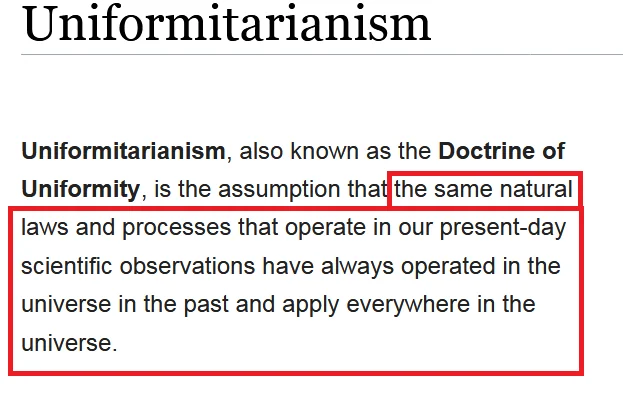
Quite simply, the very essence of a scientific explanation of any phenomenon is that the world operates in an orderly and rational manner, and that there are intelligible reasons things are the way they are. Thus, tracing the chain of explanations for why phenomena occur ultimately leads to the reasonable conclusion that the universe is designed for life. Ironically, modern science implicitly relies on a monotheistic premise. The prevailing view is that the most refined expression of the cosmos’s rational intelligibility lies in the laws of physics, wherein the fundamental principles governing nature are articulated through elegant mathematical relationships. Accordingly, physicists acknowledge that these natural laws call for a plausible explanation, and they maintain that it is both irrational and unscientific to assume that such laws exist without reason. We ask atheists: where did these laws originate? And why do they take the form that they do? Surely, the notion that they exist without any reason is profoundly anti-rational. Ultimately, Allāh’s work in nature serves as the foremost and most compelling rational demonstration of His existence, for it reveals that the universe was indeed designed. Allāh says: {˹That is˺ the design of Allāh, Who has perfected everything} (Qurʾān 27:88). He also says: {Who has perfected everything He created} (Qurʾān 32:7). Scientists have referred to this as the fine-tuned universe hypothesis or the anthropic principle, which holds that the laws of nature are set with astonishing precision to permit the existence of the universe and the flourishing of life. Each of the universe’s forces and phenomena is so finely balanced that together they produce the wondrous reality in which we live. Therefore, it is irrational to assume—without any compelling evidence—that all of these natural laws, along with the countless marvels they yield, came into being without cause or purpose.
Notes and References
- 1
Wikipedia Contributors, “Uniformitarianism,” Wikipedia: The Free Encyclopedia, last edited 30 Sep. 2024, https://en.wikipedia.org/wiki/Uniformitarianism.