Do endogenous retroviruses (ERVs) provide evidence for common ancestry?
According to Darwin, humans share specific traits with other organisms—particularly apes—due to common ancestry rather than common design. The advent of genetics revolutionized Darwinian theory, yet some earlier ideas persisted within Neo-Darwinism, now framed as a search for shared DNA sequences rather than shared morphological features. A frequently cited line of evidence for common ancestry is endogenous retroviruses (ERVs), which are favored by proponents of Darwinian evolution. They argue that ERVs are parasitic “junk” sequences in our genome derived from viral DNA, often noting their correspondence with the accepted primate phylogeny: many ERVs are common to humans and apes. ERVs originate from retroviruses—obligate intracellular parasites streamlined to carry only the elements needed to infect the next cell. Retroviruses are distinguished by their ability to integrate genetic material into the host genome; the Human Immunodeficiency Virus (HIV) is a well-known example. Retroviruses challenged the Central Dogma of Molecular Biology—the model describing the flow of information from DNA to messenger RNA to protein—by demonstrating reverse transcriptase–mediated conversion of RNA into DNA, a hallmark of all retroviruses. While retroviruses typically spread exogenously between hosts (i.e., from one individual to another), a significant proportion can persist within host cells; such viruses are termed endogenous retroviruses. A defining feature of retroviruses—and one of the factors contributing to HIV’s lethality—is their capacity to integrate into the host genome and remain for extended periods, potentially indefinitely. Thus, an ERV is a DNA sequence within an organism’s genome that resembles a retrovirus and can be readily identified by molecular biologists through its characteristic sequence motifs.1 Endogenous retroviruses are often referred to as “jumping genes.”2 This is because, although ERVs typically remain at a single locus in the genome, they are also known to mobilize and integrate at alternative genomic sites.3 Thus, ERVs offer a potential mechanism for generating intraspecific diversity from one generation to the next, depending on where they insert. Evolutionists, however, maintain that ERVs furnish compelling evidence for common ancestry: “A powerful source of evidence that modern species diverged from ancestral species via descent with modification is that of endogenous retroviruses (ERVs).”4 Evolutionists note that ERVs appear at the very same spots in the genomes of different species—one important trait of ERVs—and, guided by their belief in common ancestry, argue that this shared placement proves evolution:5

Evolutionists contend that endogenous retroviruses (ERVs) should appear at the same genetic locations in species they see as related by common ancestry. Because some ERVs do sit at identical spots in the DNA of these “related” species, they present the pattern as strong proof of evolution. But evidence never speaks for itself; interpretation is built into science, and every researcher’s viewpoint shapes the story told about origins. In truth, ERVs no more prove evolution than they prove creation. As believers, we trust the Word of God and know that ERVs cannot serve as decisive evidence for evolution. Moreover, several studies challenge the evolutionary fairy tale that ERVs prove common ancestry. For example, British molecular biologist Robin A. Weiss reported that two closely related retroviruses infect an ape (gibbon) and a marsupial (koala), and two closely related ERV genomes are found in a carnivore (fox) and a ruminant (sheep).6

That is, closely related ERV sequences show up in animals that evolutionists say traveled very different evolutionary roads—for example, carnivores and ruminants. Another irony emerges from a study led by genome researcher Evan Eichler and his team. When they combed through the finished chimpanzee genome, they spotted a retrovirus called Pan troglodytes endogenous retrovirus-1 (PTERV1) that is completely missing from humans. Checks of other primate genomes revealed the virus in African great apes and Old World monkeys, but not in humans or the Asian apes (orangutan, siamang, and gibbon). If one ancient infection had hit the common ancestor of all these groups, the virus should appear in every line. Its patchy footprint instead casts doubt on that evolutionary story.7
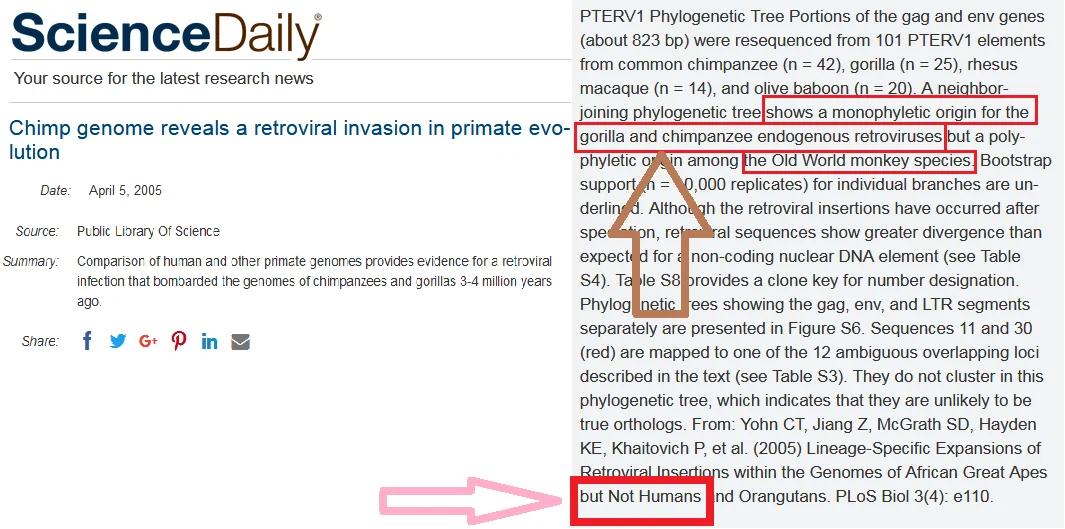
Hence, when we compare human DNA with that of other primates, we find that Pan troglodytes endogenous retrovirus-1 (PTERV1) is present in African apes—chimpanzees and gorillas—and in Old World monkeys such as baboons and macaques, yet it is completely absent from humans. Why did this retrovirus integrate into those animals but bypass us? Evolutionary theory says the human line branched off from the chimpanzee line after both had already split from the gorilla line. If that timeline were correct, a retrovirus shared by chimpanzees and gorillas should also turn up in humans. Its absence therefore puts that family-tree story in doubt. In short, the claim that identical ERVs sit in matching spots across genomes because of common ancestry does not confirm evolution; it actually calls the idea into question.
Moreover, evolutionists slip into circular reasoning: they argue that shared ERVs prove common ancestry, then cite that supposed ancestry to explain why the ERVs are shared. No evidence outside this loop supports this claim. In fact, several features of ERVs fit a creationist worldview far better. To start, ERVs are not “junk,” as evolutionists often insist. If Darwinian theory were correct, these elements would have slipped into the genome and sat idle for millions of years—hence the prediction that the same ERVs should appear in organisms said to share an ancient ancestor. Yet studies keep uncovering roles for ERVs. As Dr. Josh Dubnau of Stony Brook School of Medicine puts it, “We’ve had these things in our genomes for millions of years. Anything that can be used by evolution will be used by evolution.”8 Dubnau’s statement can easily be reduced to the following claim: evolution eliminates whatever evolution deems fit to eliminate. It is important to recognize that evolution is said to operate on a “use it or lose it” principle. The very presence of ERVs—which, in the words of evolutionists, are “leftover, useless” fragments of DNA—among primates is, in itself, a strong argument against common ancestry. Why would so-called junk DNA be preserved over millions, or even billions, of years of evolution if it truly serves no purpose? In fact, the argument for junk DNA merely extends the same flaws found in the vestigial organs argument, only now at the molecular level. According to the reasoning of evolutionists, the genome has no need for such elements, and so they should have been eliminated long ago. They cannot have it both ways.
Additionally, evolutionists’ claim that ERVs support common ancestry amounts to an appeal to ignorance—the logical fallacy of asserting that a statement must be true simply because there is no evidence to the contrary. Merely identifying ERVs in a genome does not suffice as proof that common ancestry occurred. After all, ERVs do not come with birth or death certificates. There is, therefore, no categorical way to determine—as many evolutionists assert—that their presence confirms evolution. Furthermore, evolutionists tend to dismiss arguments proposing alternative explanations for the locations in which ERVs are found. They may counter by accusing creationists of resorting to a “God of the gaps” argument to defend their position, but that is simply not the case. In fact, they themselves rely on an equivalent: an “Evolution of the Gaps.” Moreover, scientists are uncovering actual functions for a number of ERVs, disqualifying them as junk and reducing the notion that they serve as evolutionary evidence for common ancestry to mere fiction. As the 18th-century English poet William Cowper aptly wrote, “Absence of proof is not proof of absence.” Evolutionists should explain: why must the existence of an ERV in the genome be seen solely as evidence for common ancestry? In truth, such a classification introduces several problems for sound scientific practice. When evolutionists assume the outcomes of their research in advance and then shape the data to fit their interpretation, they depart from genuine science and enter the realm of self-fulfilling prophecy.
In fact, ERVs lend stronger support to design than to evolution. One of the most compelling arguments against citing ERVs as evidence for common ancestry is the concept of “plagiarized mistakes,” proposed by biomedical scientist David DeWitt:9
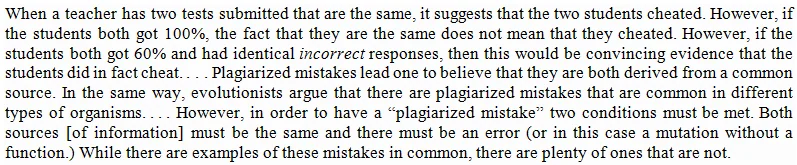
When examining any segment of DNA, the strongest assertion evolutionists can make for common descent is that the sequences merely appear related. This claim is inherently limited, as it overlooks the possibility that ERVs may occupy identical loci in distinct genomes—with precisely the same sequence—to fulfill essential functions. Indeed, the catalogue of ERVs shown to encode important proteins continues to expand, and the notion that they are functionless relics fades with every newly sequenced genome.10 One example is an essential ERV crucial for mammalian development.11 When sequences are identical, asserting common ancestry remains debatable because such sequences could instead represent essential elements of life intentionally designed by God—functions that scientists have yet to fully understand. On the other hand, when the sequences are merely similar (not identical), the argument for common ancestry becomes moot; differences undermine the claim. If ERV sequences were truly inherited from a common ancestor, their so-called “mistakes” would have to appear in precisely the same genomic locations across all lineages. While some similarities exist, the nature and extent of the differences are inconsistently distributed across the organisms presumed to share ancestry. Therefore, ERV similarity cannot serve as a definitive basis for determining common ancestry—regardless of any attempts to explain it through convergent evolutionary mechanisms. This reasoning forms a circular argument that evolutionists struggle to escape. In the end, it resembles the age-old dilemma: Which came first—the chicken or the egg? When ERVs appear to be, or are quickly becoming, essential features of the genome, it becomes even harder to determine which came first.
Another critically important point is that ERV identities and similarities are not the same thing. The concept of “plagiarized mistakes” relies heavily on percent similarity, but this metric is often misunderstood or misrepresented. Evolutionary biologists frequently appeal to DNA-level percent similarity across various discussions, and ERVs are no exception. However, the term “similarity” can be misleading, particularly for lay audiences, because biologists use it in more nuanced ways. In fact, they generally operate with three distinct categories of similarity: similar-similar, similar-dissimilar, and dissimilar-dissimilar.12 These distinctions highlight that what may appear to be a meaningful match at first glance often depends on subjective or context-specific interpretation, rather than a straightforward measure of identity. The familiar fruit analogy succeeds when discussing general percentage similarity, yet it fails miserably at the DNA level because the term “similarity” covers several distinct concepts. Some endogenous retroviruses (ERVs) are offered as evidence for common descent precisely because they are alike in the same way—“similar-similar.” Evolutionists then broaden the discussion by including examples that are alike in one respect but different in another—“similar-dissimilar”—to reinforce their case. But what about ERVs that are different in every sense—“dissimilar-dissimilar”? Should they even be considered? With all three categories on the table, the word “similar” becomes ambiguous whenever a biologist employs it. In fact, when dealing with ERVs, one is left to wonder where to draw the boundary between what matters and what does not. Ultimately, only God knows, and He has not disclosed these details in His Word.
Another difficulty in citing ERVs as proof of evolution is that evolutionary biologists cannot trace the origin of any ERV. They have yet to identify a natural, selective mechanism that explains how ERVs “jump” within DNA from one generation to the next. Although they describe these movements as random, a truly random event defies precise description. Researchers may understand the molecular components, but the larger picture—how natural selection acts on DNA to position or preserve each element—remains unclear. Without a convincing, naturalistic explanation of why particular ERVs are selected for specific sites or what function they serve, the broader narrative remains incomplete. Even so, evolutionists often present themselves as the sole authorities on why certain ERVs are retained across divergent genomes, insisting that only their explanations should be trusted. But anyone asserting exclusive expertise must be rigorously scrutinized, and the burden of proof rests with them. Until evolutionists demonstrate a clear selective advantage, their argument lacks a solid foundation.
Therefore, endogenous retroviruses (ERVs) offer weak support for common ancestry, and the points outlined above can readily silence evolutionary claims. In addition, if ERVs trigger serious diseases in humans, other mammals, or birds, epidemiology—my own field—shows that virus-infected cells usually undergo apoptosis, or programmed cell death. Such cells are unlikely to survive, let alone participate in reproduction. Nevertheless, evolutionists argue that matching ERV insertions in apes and humans still prove common descent. Notably, one research team has observed that ERVs actively shape the transcriptional network of the human tumour-suppressor protein p53 in a species-specific manner.13

The researchers wrote:14
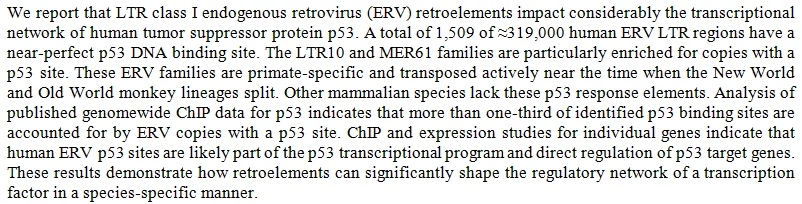
The TP53 gene encodes the tumour-suppressor protein p53, which restrains cell division so that cells do not proliferate too quickly or uncontrollably. Situated in the nucleus of nearly every cell, p53 binds directly to DNA. When DNA is damaged—by toxic chemicals, ionising radiation, or ultraviolet (UV) light—p53 decides the cell’s fate: repair or self-destruction. If repair is feasible, p53 activates genes that fix the damage; if not, it halts the cell cycle and initiates apoptosis. By stopping damaged cells from multiplying, p53 has earned the title “guardian of the genome.” More than half of human cancers carry loss-of-function mutations in TP53. The resulting defective p53 protein cannot effectively arrest proliferation or trigger apoptosis in cells with damaged DNA, allowing mutations to accumulate and tumours to form.
In fact, endogenous retroviruses (ERVs) appear to be functional. When asked how to counter the claim that certain ERVs line up with the standard primate family tree and therefore support common descent, Casey Luskin noted when analyzing common descent, the sheer count of ERVs shared by humans and chimpanzees is becoming less meaningful. He pointed out that advocates of common ancestry assume ERVs are non-functional “junk” DNA; thus, identical ERV insertions in apes and humans seem to bolster their case. But if ERVs are not junk—if they play an active role in the genome—then their shared locations could just as easily reflect common design rather than common descent, removing any special weight from this argument for evolution.15 Indeed, as Luskin observes, there is strong evidence that ERVs constitute functional DNA. A 2013 study using ENCODE data found that a large share of human ERVs align with open chromatin—an indicator of active transcription—and that their transcription is non-random, pointing to specific biological roles:16

These findings again reveal that many ERVs lie within open chromatin, strongly implying that they are actively transcribed into RNA. Proponents of the junk-DNA view reply that transcription alone does not demonstrate function, claiming the resulting RNA could still be “junk.” Yet this objection is weak. The PLOS Genetics study cited above showed that ERV-derived RNA is produced “in a cell-type-specific manner” and is “associated with cell-type-specific expression of neighboring genes.” The authors added: “Thousands of LTR/ERV sequences are activated in a cell-type-specific manner,” and ERV transcription is markedly enriched compared with most other genomic regions:17

Put plainly, ERVs are transcribed in a highly non-random pattern that mirrors embryological stages and aligns with other functional genetic elements—strong evidence of genuine purpose. Advocates of the junk-DNA view seldom confront this point. For instance, a critique by Tyler D. P. Brunet, a philosopher of biology focused on synthetic and molecular biology, and W. Ford Doolittle, an evolutionary molecular biologist, takes aim at the PLOS Genetics study but largely sidesteps its evidence that ERV transcription is orderly rather than random. Brunet and Doolittle wrote: “Jacques et al. (2013) for instance used ENCODE DNase I hypersensitivity data to place 80% of ERVs within open chromatin, and TEs in 63% of primate-specific regions.”18 However, because specific functions for each ERV have not yet been discovered, they argue that “it seems premature to imagine that a function for TEs as a class has been found!”19 Their “guilty-until-proven-innocent” stance presumes ERVs are non-functional by default—a view that reminded Luskin of ENCODE critic Dan Graur, the Romanian-American molecular evolutionist, who has stated: “If you don’t know a function, assume as a null hypothesis that it doesn’t have function, and if you find a function, you’ll refute the null hypothesis.”20 Their approach is even more troubling because it dismisses the PLOS Genetics findings showing that ERVs are not merely transcribed; they operate in a regulated, functional context. As Luskin observed: “they are transcribed in a non-random, enriched, cell type-specific manner that correlates with the transcription of other functional genetic elements. This is the opposite of random or stochastic transcription and it strongly suggests function.”21 Graur adopts the same dubious, assumption-laden approach as Brunet and Doolittle. He claims that “transcription is fundamentally a stochastic [random] process.”22 Yet, as Luskin pointed out in rebuttal to ENCODE’s critics, the project’s findings show that transcription is anything but random:23
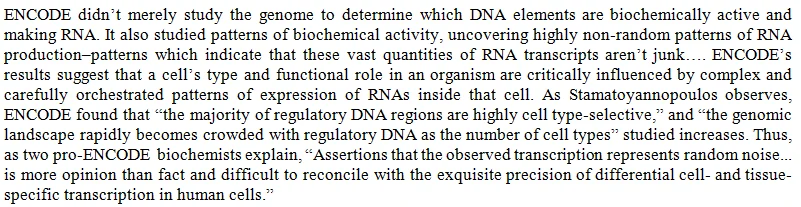
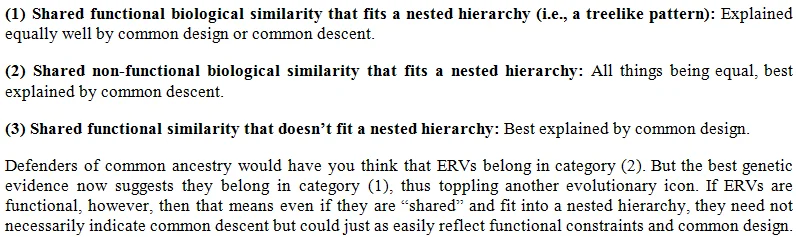
ERVs follow the same pattern, strongly implying they are functional. If that is so, their presence—even when arranged in a nested hierarchy—offers no special support for common ancestry. Luskin sets out how different kinds of evidence can favor, challenge, or remain neutral toward the common-descent hypothesis:24
To conclude, the three claims reviewed above—(1) that human chromosome 2 arose from the end-to-end fusion of two ancestral chromosomes, (2) that the recurrent laryngeal nerve disproves intelligent design and proves humans evolved from fish, and (3) that endogenous retroviruses (ERVs) demonstrate common ancestry—are the most celebrated “icons” of evolution. They constitute the chief arguments evolutionists advance for their theory. Once these pillars are overturned, the theory itself is reduced to a metaphysical assertion. Indeed, each fresh scientific discovery drives another nail into the evolutionary coffin, leaving its advocates increasingly reluctant to engage. Put simply, adopting evolution is easy because it offers the most obvious rationale for materialism, but proving its validity is another matter entirely.
Notes and References
- 1
Carl Zimmer, “We Are Viral from the Beginning,” National Geographic, 14 Jun. 2012, https://www.nationalgeographic.com/science/article/we-are-viral-from-the-beginning.
To limit the disruption these viruses can cause, mammals produce proteins that can keep most of them locked down. Eventually, most endogenous retroviruses mutate so much they are reduced to genetic baggage, unable to do anything at all. Yet they still bear all the hallmarks of viruses, and are thus recognizable to scientists who sequence genomes.
- 2
Leslie A. Pray, “Transposons: The Jumping Genes,” Nature Education, vol. 1, no. 1, 2008, p. 204, http://www.nature.com/scitable/topicpage/transposons-the-jumping-genes-518; Sandeep Ravindran, “Barbara McClintock and the Discovery of Jumping Genes,” PNAS, vol. 109, no. 50, 2012, pp. 20198–20199. DOI: https://doi.org/10.1073/pnas.1219372109; Virginia Hughes, “The Jumping Gene: Friend or Foe?” National Geographic, 25 Apr. 2013, http://phenomena.nationalgeographic.com/2013/04/25/the-jumping-gene-friend-or-foe/.
- 3
Jonathan P. Stoye, “Koala Retrovirus: A Genome Invasion in Real Time,” Genome Biology, vol. 7, no. 11, 2006, pp. 241. DOI: https://doi.org/10.1186/gb-2006-7-11-241.
- 4
“Three Layers of Endogenous Retroviral Evidence for the Evolutionary Model,” Evidence for the Evolutionary Model, Nov. 2009, http://www.evolutionarymodel.com/ervs.htm.
- 5
“Common Descent,” RationalWiki, last edited 3 Apr. 2024, http://rationalwiki.org/wiki/Common_descent.
- 6
Robin A. Weiss, “The Discovery of Endogenous Retroviruses,” Retrovirology, vol. 3, issue 67, 3 Oct. 2006. DOI: https://doi.org/10.1186/1742-4690-3-67.
- 7
Public Library of Science, “Chimp Genome Reveals a Retroviral Invasion in Primate Evolution,” ScienceDaily, 5 Apr. 2005, https://www.sciencedaily.com/releases/2005/03/050328174826.htm.
- 8
Virginia Hughes, “The Jumping Gene: Friend or Foe?” National Geographic, 25 Apr. 2013, http://phenomena.nationalgeographic.com/2013/04/25/the-jumping-gene-friend-or-foe/.
- 9
David DeWitt, Unraveling the Origins Controversy: Science and the Bible Confirm Creation, (Creation Curriculum, LLC, 2015), 2015, pp. 234–236, (emphasis in original).
- 10
Yasuko Ishida et al., “Proliferation of Endogenous Retroviruses in the Early Stages of a Host Germ Line Invasion,” Molecular Biology and Evolution, vol. 32, no. 1, 2014, pp. 109–120. DOI: https://doi.org/10.1093/molbev/msu275.
- 11
Virginia Hughes, “The Jumping Gene: Friend or Foe?” National Geographic, 25 Apr. 2013, http://phenomena.nationalgeographic.com/2013/04/25/the-jumping-gene-friend-or-foe/; Carl Zimmer, “We Are Viral from the Beginning,” National Geographic, 14 Jun. 2012, https://www.nationalgeographic.com/science/article/we-are-viral-from-the-beginning.
- 12
“Similar–similar” denotes full identity—like comparing one orange with another. “Similar–dissimilar” describes items that share most features yet differ slightly, as when comparing an orange with a lemon (both are citrus fruits). “Dissimilar–dissimilar” applies where no regions match at all, akin to setting an orange beside an apple.
- 13
Ting Wang et al. “Species-Specific Endogenous Retroviruses Shape the Transcriptional Network of the Human Tumor Suppressor Protein p53,” Proceedings of the National Academy of Sciences of the United States of America (PNAS), vol. 104, issue 47, 20 Nov. 2007, pp. 18613–18618. DOI: https://doi.org/10.1073/pnas.0703637104.
- 14
Ibid.
- 15
Casey Luskin, “Toppling Another Evolutionary Icon, ENCODE Data Suggests Endogenous Retroviruses Are Functional,” Evolution News, 7 Sep. 2015, https://evolutionnews.org/2015/09/toppling_anothe/.
- 16
Pierre-Étienne Jacques et al., “The Majority of Primate-Specific Regulatory Sequences Are Derived from Transposable Elements,” PLOS Genetics, 9 May 2013. DOI: https://doi.org/10.1371/journal.pgen.1003504, (emphases added) as cited in Casey Luskin, “Toppling Another Evolutionary Icon, ENCODE Data Suggests Endogenous Retroviruses Are Functional,” Evolution News, 7 Sep. 2015, https://evolutionnews.org/2015/09/toppling_anothe/.
- 17
Ibid.
- 18
Tyler D. P. Brunet and W. Ford Doolittle, “Multilevel Selection Theory and the Evolutionary Functions of Transposable Elements,” Genome Biology and Evolution, vol. 7, issue 8, Aug. 2015, pp. 2445–2457. DOI: https://doi.org/10.1093/gbe/evv152 as cited in Casey Luskin, “Toppling Another Evolutionary Icon, ENCODE Data Suggests Endogenous Retroviruses Are Functional,” Evolution News, 7 Sep. 2015, https://evolutionnews.org/2015/09/toppling_anothe/.
- 19
Ibid.
- 20
Yudhijit Bhattacharjee, “The Vigilante,” Science, vol. 343, issue 6177, 21 Mar. 2014, pp. 1306–1309. DOI: https://doi.org/10.1126/science.343.6177.1306.
Graur and other critics place undue emphasis on the 80% figure, says John Stamatoyannopoulos, an ENCODE principal investigator at the University of Washington, Seattle. The real take-home lesson, he says, is that "there is a tremendous amount of activity encoded in the genome"—much more than researchers had suspected.
Given the current state of knowledge, Stamatoyannopoulos says, scientists need to remain "fairly agnostic" about the potential function of various genomic elements. In other words, while the likes of Graur are asking, How do you know it's functional? Stamatoyannopoulos and others are asking the opposite: How do you know it's not? That logic infuriates Graur. "If you don't know a function, assume as a null hypothesis that it doesn't have function, and if you find a function, you'll refute the null hypothesis," he says. I asked Graur if his detractors were right in calling him rude. He didn't think so; moreover, he felt rudeness was irrelevant to the discourse. "Science is not about abiding by a code of behavior put forward by Miss Manners," he told me. "In science, a strong voice is sometimes needed to fight self-promotion and self-delusion." (p. 1309), available at: https://www.bio.davidson.edu/genomics/309redesigned/papers_current/ethics_2/2014ENCODE_critic.pdf.
- 21
Casey Luskin, “Toppling Another Evolutionary Icon, ENCODE Data Suggests Endogenous Retroviruses Are Functional,” Evolution News, 7 Sep. 2015, https://evolutionnews.org/2015/09/toppling_anothe/.
- 22
Dan Graur et al., “On the Immortality of Television Sets: “Function” in the Human Genome According to the Evolution-Free Gospel of ENCODE,” Genome Biology and Evolution, vol. 5, issue 3, Mar. 2013, pp. 578–590. DOI: https://doi.org/10.1093/gbe/evt028.
- 23
Casey Luskin, “Denying ENCODE Data Won’t Change the Emerging Facts of Biology,” Evolution News, 15 Jul. 2015, https://evolutionnews.org/2015/07/the_encode_embr_1/.
- 24
Casey Luskin, “Toppling Another Evolutionary Icon, ENCODE Data Suggests Endogenous Retroviruses Are Functional,” Evolution News, 7 Sep. 2015, https://evolutionnews.org/2015/09/toppling_anothe/.