Are goose bumps a vestigial feature in humans?
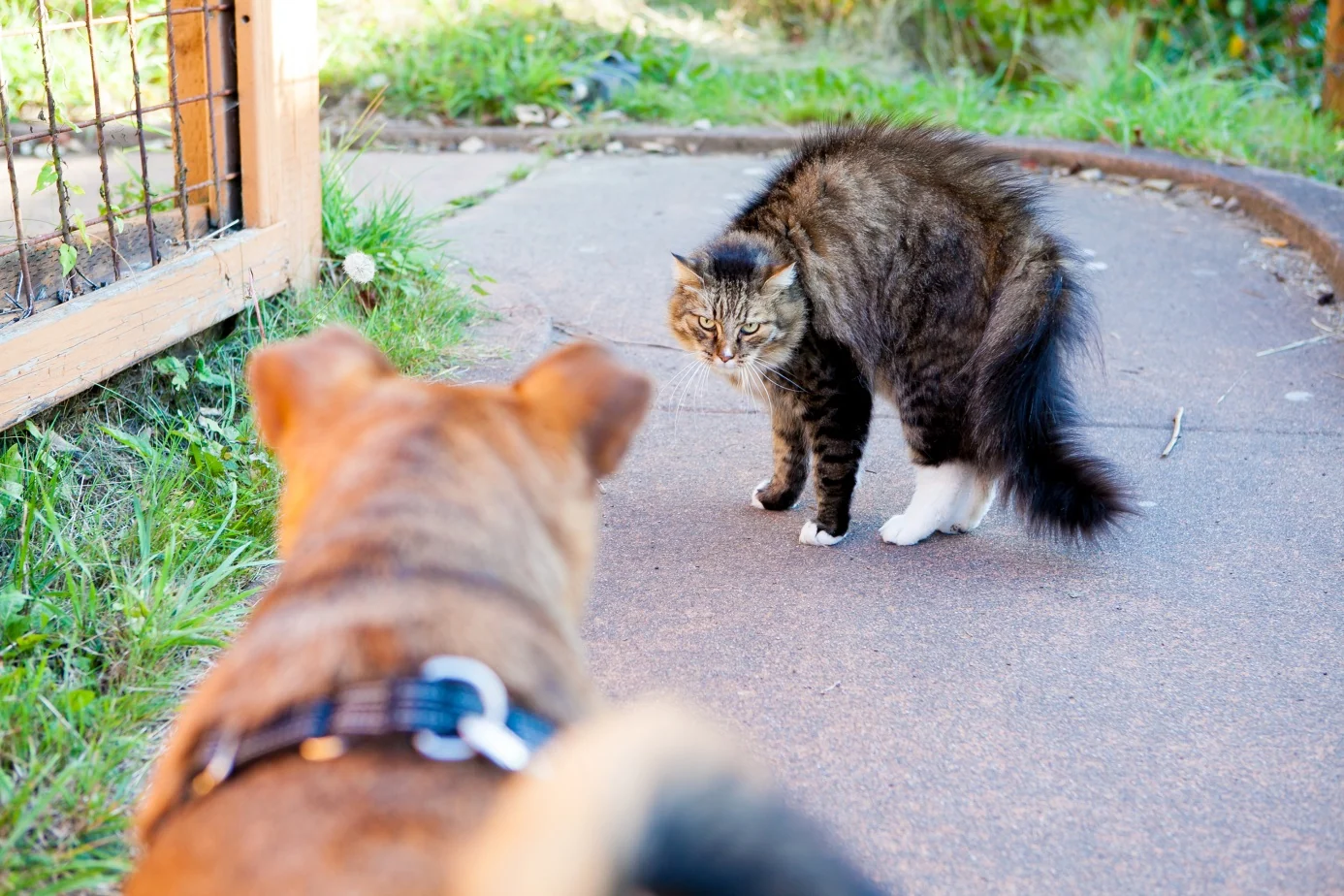
Goosebumps are small elevations on the skin that occur when tiny muscles in the hair follicles, known as arrector pili muscles (or hair erector muscles), contract and pull the hair upright. These muscles are located on the side wall of each hair follicle beneath the skin's surface. Normally, hair emerges at an angle, but when these muscles contract, they straighten the follicle, causing the hair to stand on end. In mammals, this reaction helps retain heat by creating an insulating air pocket around the follicle. Goosebumps can also be triggered by a surge of adrenaline in response to fear or threat, causing the hair to stand up—an effect that makes furry animals appear larger and more intimidating.
Strong emotions can also trigger the release of adrenaline, which is why we experience goosebumps in response to things we love or powerful memories. Goosebumps are closely tied to emotional states such as awe, wonder, and deep emotional resonance: {˹It is˺ Allāh ˹Who˺ has sent down the best message—a Book of perfect consistency and repeated lessons—which causes the skin ˹and hearts˺ of those who fear their Lord to tremble, then their skin and hearts soften at the mention of ˹the mercy of˺ Allāh} (Qurʾān 39:23). It has long been assumed that goosebumps are merely an evolutionary remnant from our ape-like ancestors—a reflex tied to the fight-or-flight response or a way to retain warmth in cold conditions. However, these tiny bumps are far more than a leftover from the past. One might reasonably ask: what possible purpose could goosebumps still serve in human beings?
Goosebumps serve several important functions in humans. The arrector pili muscles, which are attached to hair follicles, assist in squeezing out sebum—an oily substance produced by the sebaceous glands, which are also connected to the follicles. Sebum is released into the follicular duct and then onto the skin’s surface, where it lubricates the skin, reduces friction, and helps protect against moisture loss. The arrector pili muscles are innervated by the sympathetic nervous system, which is associated with the body’s “fight or flight” response. As a result, goosebumps may appear when we are frightened or emotionally aroused. They also occur in response to cold; contraction of these muscles generates a small amount of heat. If this response is insufficient to warm the body, it is often followed by shivering—an involuntary series of contractions of larger muscle groups to produce additional heat.1 More importantly—and perhaps surprisingly—goosebump muscles may hold the key to combating cancer, treating burns, and even curing baldness. Emerging research is revealing the remarkable potential of the arrector pili muscle in advancing medical treatments. Scientists have discovered that this tiny muscle could play a pivotal role in advancing therapies for burn victims, inhibiting the spread of skin cancer, and addressing the multibillion-dollar challenge of curing baldness.2 Rodney Sinclair, a Professorial Fellow in the Department of Medicine at the University of Melbourne and director of Sinclair Dermatology, has identified a significant function of the arrector pili muscles—commonly known as goosebump muscles—in healing and cell regeneration. Professor Sinclair notes that, for us “naked apes,” goosebumps are often dismissed as an evolutionary leftover, similar to the appendix: “People used to think the goosebump muscle was vestigial—an evolutionary remnant of no functional significance,” he explained. “The research we’ve done involved creating 3D reconstructions of this muscle, and it turned out to be far more interesting than we had anticipated.”3 Humans have approximately two million hair follicles, with only about 100,000 located on the scalp. As previously noted, many of these are tiny vellus hairs that offer minimal coverage. With the advent of clothing, humans no longer rely on body hair for warmth, nor do they need to puff up into a hairy ball to intimidate predators. Yet, we continue to develop hair follicles—and this is closely linked to the maintenance of vital stem cells within the skin.4

Professor Sinclair explains:5

He further states:6

Professor Sinclair explains that his discovery of the stem cell population and its connection to the goosebump muscle is highly significant for both inhibiting the division of cancer cells and accelerating healing in burn victims. Moreover, the goosebump muscle may also play a role in addressing baldness. As Professor Sinclair states:7

Hence, uncovering the reason why the goosebump muscle is destroyed could lead to major advances in treating a condition that affects millions globally. In short, goosebumps are not relics of an evolutionary past, but serve several important functions in the human body.
Notes and References
- 1
David Menton, “Chapter 24: Vestigial Organs—Evidence for Evolution?” in Ken Ham, The New Answers Book Vol. 3: Over 35 Questions on Evolution/Creation and the Bible, (Green Forest, U.S.: Master Books, 2010), available at: https://answersingenesis.org/human-body/vestigial-organs/vestigial-organs-evidence-for-evolution/.
- 2
Jane Gardner, “Goosebumps Can Give Us More than the Shivers,” Pursuit, 23 Dec. 2016, https://pursuit.unimelb.edu.au/articles/goosebumps-can-give-us-more-than-the-shivers.
- 3
Ibid.
- 4
Ibid.
- 5
Ibid.
- 6
Ibid.
- 7
Ibid.