Some People of the Book claim that the prophecies concerning the new House of God refer to a heavenly rather than an earthly house. But is this claim accurate?
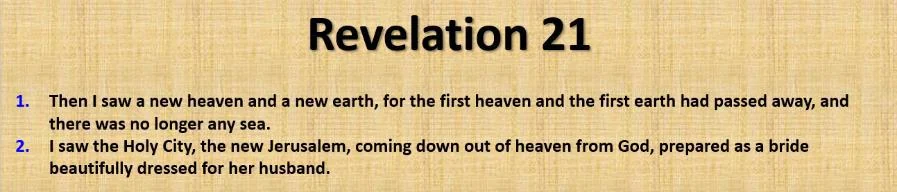
The People of the Book—the Jews and Christians—had expected the Messiah [Jesus Christ (PBUH)] to arrive as a victorious conqueror who would restore the glory of Jerusalem. However, contrary to their expectations, he (PBUH) prophesied the complete and irrevocable destruction of the Temple and of Zion. When he (PBUH) was raised unto Allāh, they were left utterly perplexed. In response, they began offering distorted interpretations of the prophecies concerning the new House of the Lord as a way to escape their dilemma. Essentially, they claimed that these prophecies refer to a heavenly temple—that is, the new Jerusalem is heavenly rather than earthly, as described in chapter 21 of the Book of Revelation: “21 1 Then I saw a new heaven and a new earth, for the first heaven and the first earth had passed away, and there was no longer any sea. 2 I saw the Holy City, the new Jerusalem, coming down out of heaven from God, prepared as a bride beautifully dressed for her husband.” (Revelation 21:1-2).
Let us, for the sake of argument, assume that the claim that the “new Jerusalem” refers to a heavenly temple is valid. How, then, could the rams of the children of Ishmael, as described in Isaiah’s prophecy, be offered to a heavenly Jerusalem? This deliberate misinterpretation of the prophecies in the Scriptures demonstrates that the People of the Book face a real problem they are unwilling to acknowledge. Without a doubt, the “new Jerusalem” refers not to the Jewish Temple but to a new House of God—the Sanctified House in Makkah.