Could the “stone that has become the capstone” in the biblical prophecy refer to Jesus Christ (PBUH)? Why not?
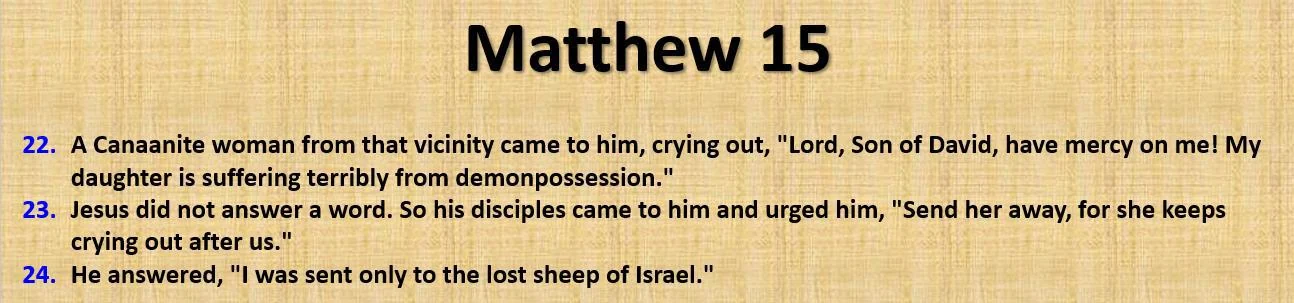
Assuredly, Jesus (PBUH) belongs to the heart of the Israelite nation, for he is among the descendants of Judah, the son of Israel. The parable states that the owner of the vineyard will rent it to other tenants who will give him his share of the crop at harvest time. Analogously, this prophecy serves as a warning that the Message will be taken away from the Israelites and entrusted to another pious and obedient nation—one that will not violate the command of Allāh as the Israelites did. In other words, a new community will arise bearing the same mission that the Israelites were given but failed to fulfill. Moreover, Jesus (PBUH) himself declared that he was sent “only to the lost sheep of Israel” (Matthew 15:24).
It is evident that Jesus (PBUH)’ prophecy refers to another Prophet, for he said: “The stone the builders rejected has become the capstone; the Lord has done this, and it is marvelous in our eyes” (Matthew 21:42). The phrase “marvelous in our eyes” suggests a shared astonishment—Jesus and his people witnessing the Lord’s decree in appointing a Prophet from another nation. If the prophecy had referred to Jesus (PBUH) himself, one might expect the expression to read, “marvelous in your eyes, O people of Israel,” rather than “in our eyes.” This development is indeed remarkable: Prophet Muḥammad (PBUH) would arise among the unlettered Arabs—a people to whom no Messenger had previously come with a revealed Book. Yet from the desert of Arabia, Allāh would establish through him a mighty nation, opening for them the kingdoms of the earth. Moreover, this once pagan people would carry the banner of pure monotheism to the farthest corners of the world—a mission that the Children of Israel, despite their long line of Prophets calling to Abrahamic monotheism, failed to accomplish. Jesus further declared: “Therefore I tell you that the kingdom of God will be taken away from you and given to a people who will produce its fruit” (Matthew 21:43).
The kingdom of Allāh signifies the revelation, the divine Message, authority, the land, and the House of the Lord. Jesus (PBUH) foretold that these would be taken away from the Children of Israel and entrusted to another nation—one that would not violate the covenant of the Lord as they had done. Allāh says: {Surely, following the heavenly Record, We decreed in the Scriptures: “My righteous servants shall inherit the land”} (Qurʾān 21:105). Jesus further declared: “He who falls on this stone will be broken to pieces; but he on whom it falls will be crushed” (Matthew 21:44). This indicates that whoever fights this Prophet will be defeated, and that he will be victorious over whomever he fights. Accordingly, the prophecy refers to a Prophet who will engage in jihād (fighting in the cause of Allāh) and cannot reasonably be applied to Jesus (PBUH), for he did not fight with the sword. Rather, Jesus (PBUH) was sent to the Jews living under Roman rule, and when he was asked about paying the imperial tax to Caesar, he replied: “Give to Caesar what is Caesar’s, and to God what is God’s” (Matthew 22:21).

The promised Prophet—the stone that the Children of Israel rejected—belongs to a nation other than the Israelites. Jesus (PBUH) said to them: “Have you never read in the Scriptures: The stone the builders rejected has become the capstone” (Matthew 21:42). This indicates that the prophecy concerning the coming of Prophet Muḥammad (PBUH) was already mentioned in the Torah centuries before the birth of Jesus (PBUH), warning the Jews that Prophethood would cease among them and be transferred to another nation. Daniel, one of the Prophets of the Israelites, saw in a dream the stone by which Allāh would destroy the unbelieving kingdoms of the earth, and Jesus reminded them of this prophecy. In other words, the Jews were made aware that a Prophet from outside the Children of Israel (i.e., the Gentiles) would come, and that they should follow him. Allāh says: {So believe in Allāh and His Messenger, the unlettered Prophet, who believes in Allāh and His revelations. And follow him, so you may be ˹rightly˺ guided} (Qurʾān 7:158).