How can we be certain that the Book of Daniel was written prior to the advent of Islam?
Historians are unanimous that the Book of Daniel was written approximately a thousand years before the advent of Islam. In fact, this book is included in the Septuagint—the earliest surviving Greek translation of the Old Testament from the original Hebrew, completed sometime between 300 and 200 B.C. The renowned Jewish historian and scholar Flavius Josephus studied the Book of Daniel in the second century C.E.—four centuries before Islam—and noted the four kingdoms, observing that the “stone” destined to destroy them had not yet appeared.1 Without a doubt, people awaited the fulfillment of Daniel (PBUH)’s prophecy to discern the identity of the nation that would restore monotheism and fight the infidel nations. Let us now examine the symbolism in the visions in the Book of Daniel—both Nebuchadnezzar’s vision of the statue and Daniel’s own vision of the four beasts—and compare them with the historical record. Daniel (PBUH) lived in the kingdom of Babylon and explicitly stated that the head of gold on the statue in Nebuchadnezzar’s dream represented Nebuchadnezzar himself and his kingdom. Thus, the first kingdom—represented by the head of gold in the king’s dream—was the Chaldean Kingdom of Babylon, symbolized by the first beast that Prophet Daniel (PBUH) saw, depicted as a lion with eagle’s wings. This winged lion served as the symbol of the Chaldean Kingdom of Babylon, and its images are still found on its temples to this day.
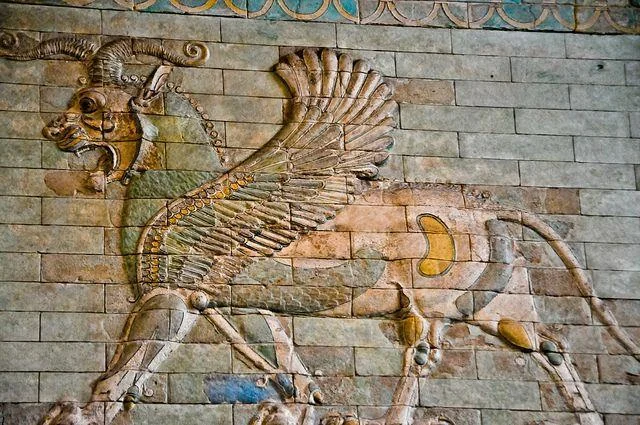
In 539 B.C., less than a century after its founding, the legendary Persian king Cyrus the Great conquered Babylon and established the Persian Empire, which at the time was the largest empire the world had yet seen.
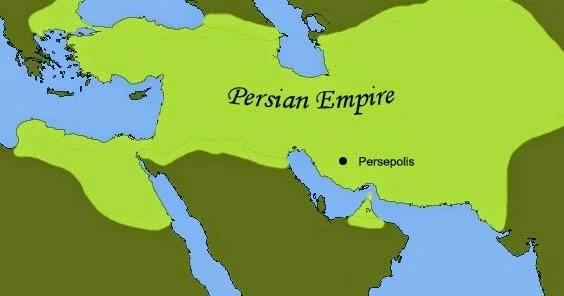
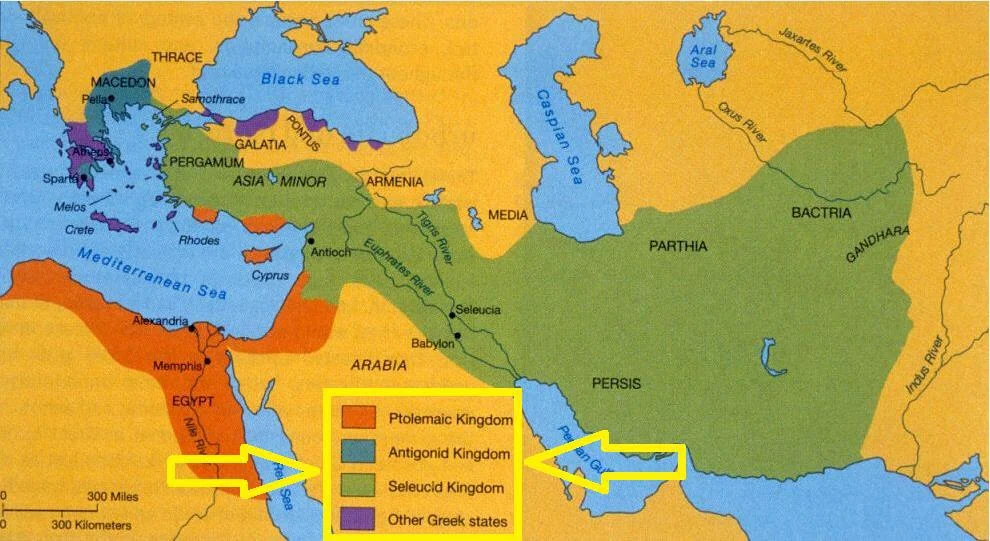
In Daniel (PBUH)’s vision, the second beast he saw—a bear—symbolized the Persian Empire, and its symbolic description of having “three ribs in its mouth between its teeth” signifies its dominion over three kingdoms: Babylon, Media, and Persia—reflecting the expansion of its rule across three continents. And Allāh knows best. The Persian Empire was conquered by Alexander the Great, who founded the Greco-Macedonian kingdom, which was symbolized by the third of the four beasts that Daniel (PBUH) saw—a leopard with four bird-like wings on its back and four heads—reflecting both the swiftness of Alexander’s conquests and the subsequent division of his empire after his death.

This swiftness of Alexander’s conquests and the subsequent division of his empire after his death can be seen in both cultural symbolism and historical reality. The leopard—representing Alexander’s swift conquests—was highly revered in Greek culture as a symbol of power and agility. Alexander the Great famously wore a helmet of leopard skin in all his battles, a tribute to Dionysos, the god linked with leopards.2 The four heads of the leopard in Daniel (PBUH)’s vision symbolized the emergence of four successor kingdoms in place of the third kingdom. Indeed, after Alexander’s untimely death in 323 B.C.—when he was only thirty-two and left no clear heir—his empire was divided among his four generals, who vied for power, each establishing one of the major successor kingdoms corresponding to the four heads of the leopard.
Daniel (PBUH) saw a fourth beast—a terrifying and exceedingly strong creature, unlike any that had appeared before—which represented a separate, dreadful, and mighty empire to follow: the Roman Empire. The ten horns of this fourth beast represented the ten Roman emperors who persecuted the Unitarian Christians during the first three centuries after Allāh raised Jesus (PBUH) up unto Himself. For this reason, in the history of Christianity, the persecutions carried out by these Roman emperors are traditionally known as the ten major persecutions of the Early Church.3

An eleventh emperor will arise after the ten Roman emperors who would persecute the Christian believers. In Daniel’s vision, he is described as “another horn, a little one,” which will subdue three powerful kings. According to the prophecy, he is the most dangerous of all Roman emperors, for he will spread disbelief and speak arrogantly against the Most High.
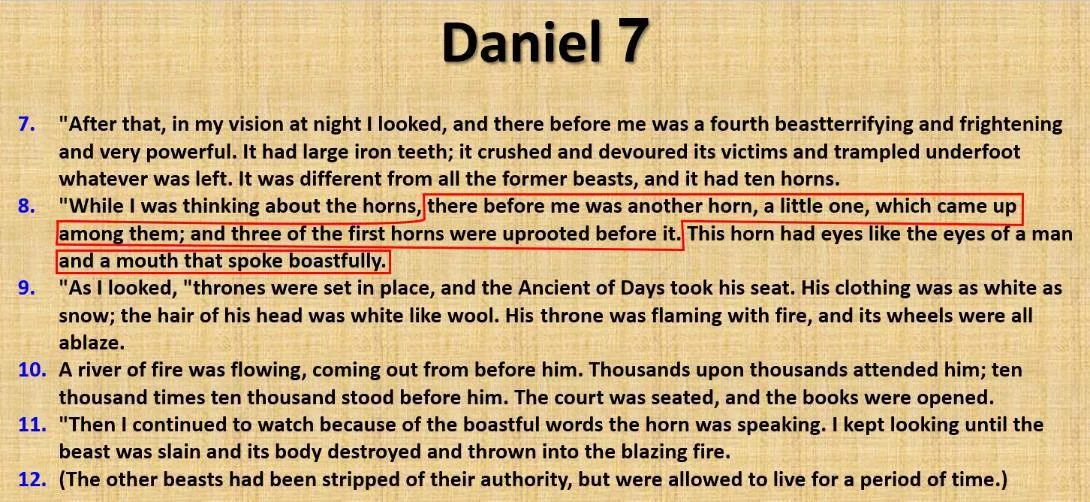
It is known historically that after the ten Roman emperors who were infamous for persecuting the Unitarian Christians, the emperor Constantine the Great came to power. Accordingly, the eleventh horn is identified with Constantine, who defeated his three rivals for the imperial throne: Maxentius, Maximinus II, and Licinius.4 Thus, he became the sole ruler of the Roman Empire.
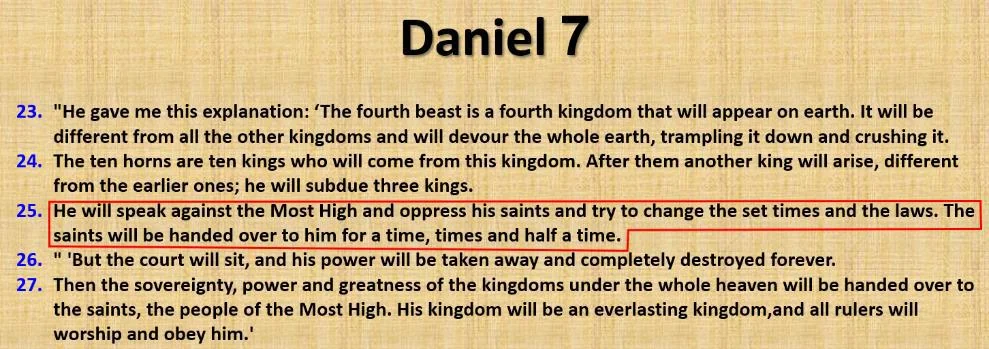
“He will speak against the Most High and oppress his saints and try to change the set times and the laws. The saints will be handed over to him for a time, times and half a time” (Daniel 7:25). Constantine the Great is depicted as one who would speak boastfully against God, oppress the Unitarian Christian believers, and alter the holy days.5 The prophecy further suggested that his dominance would endure for “a time, times, and half a time,” understood here as three and a half centuries. This therefore raises a critical question: what did Emperor Constantine the Great do to be stigmatized with all these ugly attributes? He is indeed the most dangerous figure in nearly all of Christianity’s history because he convened the First Council of Nicaea, which is the most dangerous council in human history. The council marked a decisive theological shift in early Christianity, particularly through the formal affirmation of the divinity of Jesus (PBUH)—a development that represented a departure from Abrahamic monotheism and a corruption of it.6
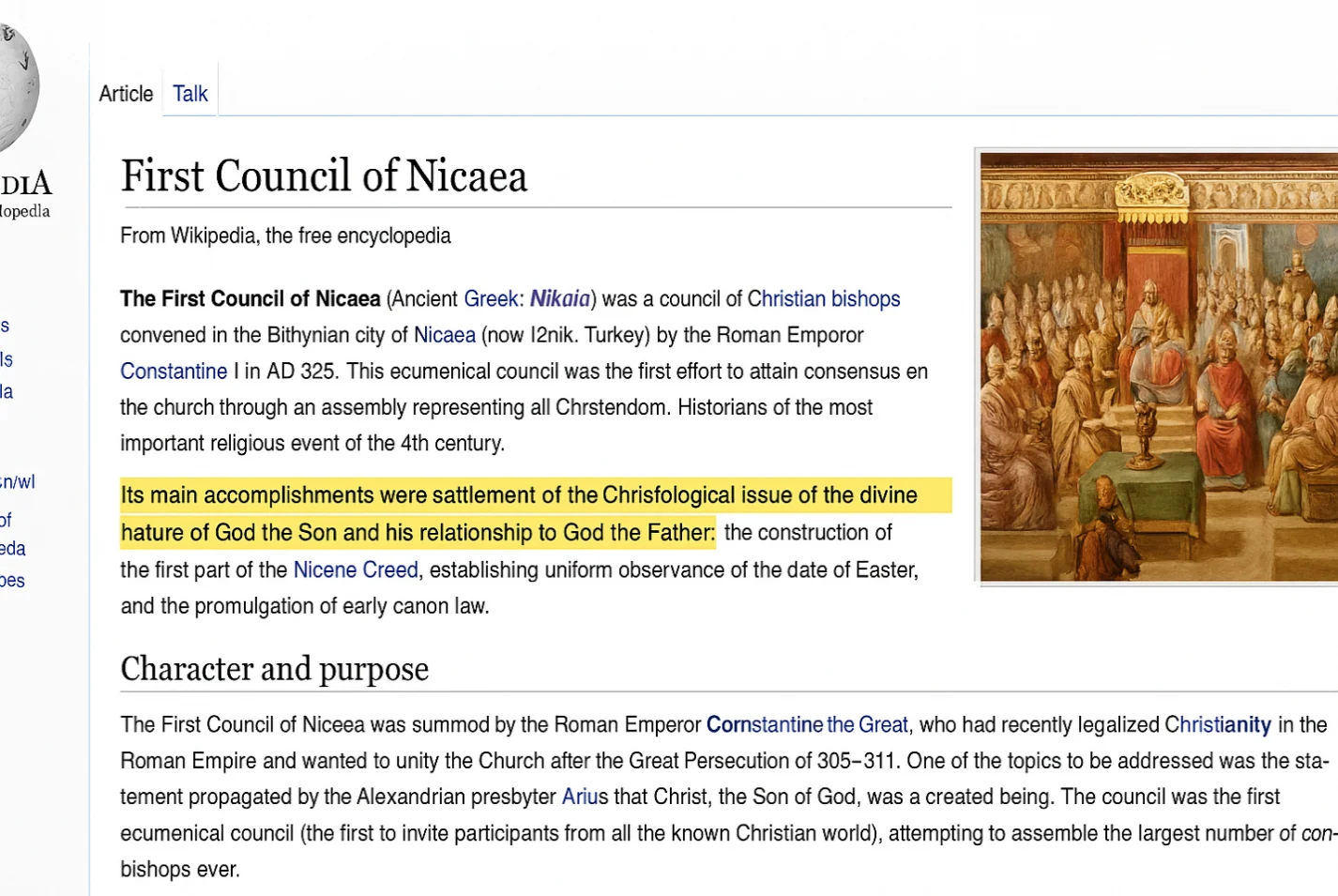
In 325 C.E., the Roman emperor Constantine the Great convened a council in the city of Nicaea, located on the Anatolian peninsula. Bishops from across Christendom were brought together to resolve divisive issues and ensure the continued unity of the church. By far the most significant of these was the Arian controversy, a dispute over whether “Jesus the Son was fully divine or subordinate to God the Father.” The bishops agreed that an official statement was necessary to reflect the orthodox view of the church regarding the relationship of the Son to the Father and to serve as a doctrinal standard for the universal church. Although the creed explicitly mentioned the Father and the Spirit, particular attention was given to the divinity of the Son. The general thrust of the statement concerning the Son’s relationship to the Father is summed up in the Greek word homoousios, usually translated as “consubstantial,” meaning “of the same substance.” This term is believed to have been included at Constantine’s request. The Christian creed established at the council condemned Arian beliefs concerning the Son, as well as those who adhered to them. In short, the orthodox position was trinitarian, asserting Christ’s complete oneness with God. Arius, however, rejected this understanding and insisted on the subordination of the Son to the Father. Hence, the pure monotheism that Jesus (PBUH) had preached was corrupted during the council. Constantine, by enforcing this creed, obligated nations to deify Jesus Christ (PBUH) and initiated a campaign of persecution against the Unitarian Christians (Arians). In doing so, he opposed the saints of the Most High and challenged monotheism in a manner unprecedented since the time of Adam (PBUH).7 Additionally, as noted earlier, Constantine, as prophesied, changed the “times,” that is, he altered the Sabbath from Saturday to Sunday. Moreover, the Unitarian Christians were targeted for persecution in the Roman Empire from his reign onward, a persecution that lasted for nearly three and a half centuries—equivalent to 330 lunar years, according to the calendar followed by both Muslims and Jews. Adding these 330 years to 306 C.E., when Constantine assumed power, brings us roughly to 640 C.E. What happened around this time? This was the era of the glory of the Islamic nation, when Muslims conquered Jerusalem and restored monotheism to the nations of the earth. Indeed, monotheism triumphed for the first time since the era of Constantine, and the Islamic nation conquered the kingdoms of the earth. Allāh says: {O believers! Stand up for Allāh, as Jesus, son of Mary, asked the disciples, “Who will stand up with me for Allāh?” The disciples replied, “We will stand up for Allāh.” Then a group from the Children of Israel believed while another disbelieved. We then supported the believers against their enemies, so they prevailed} (Qurʾān 61:14). Those who disbelieved in Jesus (PBUH) are the Jews, and those who believed in him are the Christians and Allāh granted them domination over the disbelievers with the mission of Prophet Muḥammad (PBUH).8
The original pure monotheistic faith preached by Jesus (PBUH) was restored through the mission of Prophet Muḥammad (PBUH). For the first time since the era of Prophet Daniel (PBUH), the Holy Land (i.e., Jerusalem) returned to monotheism, both in religion and governance. Jerusalem had been ruled by successive pagan kingdoms—from the Babylonians to the Persians, and from the Greeks to the Romans—until 630 C.E. During the rule of ʿUmar ibn al-Khaṭṭāb, Muslims entered Jerusalem, and for the first time in history since the time of Daniel (PBUH), as he had foretold, believers held authority over the Holy Land as well as over the pagan kingdoms of the earth. Consequently, the people were freed from the oppression and persecution of the Roman Empire and could freely practice their Unitarian (monotheistic) faith, if they so desired. Amazingly, Daniel (PBUH) received his vision while in captivity with the Jews in Babylon. He foretold with remarkable accuracy the emergence of a great caliph more than a thousand years later, to whom Allāh would open the Holy Land of the Prophets, who would restore monotheism, and who would conquer the kingdom of Babylon, where Daniel (PBUH) and the Jews had been exiled. Perhaps this explains why Daniel (PBUH) supplicated to his Lord not to be buried until monotheism returned to the Holy Land and his extraordinary visions were fulfilled. Indeed, Daniel (PBUH) was buried during the reign of ʿUmar ibn al-Khaṭṭāb, more than a thousand years after his death.Moreover, Daniel (PBUH) foretold that the Muslims would rule Constantinople, the capital of the Eastern Roman Empire (the Byzantine Empire), which was named after Constantine the Great. In short, Daniel (PBUH)’s prophecy that the saints of the Most High would inherit the kingdom of the “eleventh horn” was fulfilled when Constantinople was conquered by the Muslims.

“But the saints of the Most High will receive the kingdom and will possess it forever-yes, for ever and ever” (Daniel 7:18). Daniel (PBUH)’s prophecy was fulfilled, and even Prophet Muḥammad (PBUH) foretold the conquest of Constantinople, declaring that Allāh would forgive the sins of the first army to conquer it.9
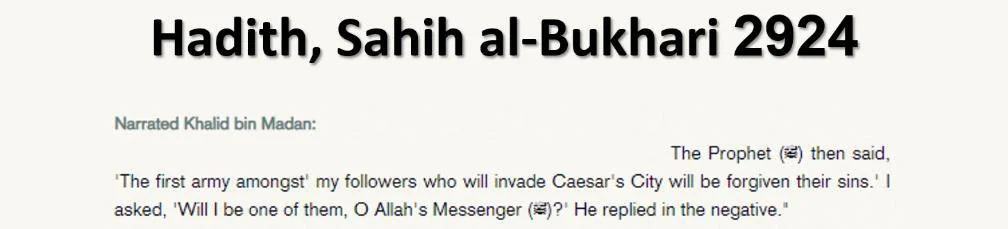
The Muslims conquered Constantinople, and since establishing their rule over it, no nation on earth has reclaimed it. Constantinople became a Muslim land and, as foretold, Muslim rule over it will continue until the Hour is established.
Indeed, the Muslims succeeded in conquering the four kingdoms that Daniel (PBUH) saw in his vision. Within the span of a single generation the Islamic nation came to dominate the kingdoms of the earth, including Babylon (in present-day Iraq), Persia, the Levant, and Egypt, and Islam extended from China in the east to Andalusia in the west. Without doubt, the four beasts in Daniel (PBUH)’s dream were brought to ruin by the monotheistic Islamic nation, whose Law will endure forever. In other words, the divine promise to grant succession in the land to those Muslims who are true in faith, pious in character, sincere in devotion, and who follow Allāh’s religion in both letter and spirit was fulfilled. Allāh says: {Allāh has promised those of you who believe and do good that He will certainly make them successors in the land, as He did with those before them; and will surely establish for them their faith which He has chosen for them; and will indeed change their fear into security—˹provided that˺ they worship Me, associating nothing with Me. But whoever disbelieves after this ˹promise˺, it is they who will be the rebellious} (Qurʾān 24:55). On the authority of Abū Hurayrah [may Allāh be pleased with him], the Messenger of Allāh (PBUH) said: “…and while I was sleeping, I was brought the keys of the treasures of the earth, and they were placed in my hand.” Abū Hurayrah said: The Messenger of Allāh (PBUH) has passed away, and you are now extracting them (i.e., he (PBUH) did not benefit from them himself).”10 The expression “while I was sleeping, I was brought the keys to the treasures of the earth, and they were placed in my hand” is an allegorical representation of Allāh’s promise regarding what He would grant the nation of His Prophet (PBUH). Indeed, this came to pass: Allāh opened many kingdoms to the Muslim nation, and they came to possess the treasuries of their rulers, such as those of Khosrow and Caesar. The keys to the treasures of the earth, placed in the hand of Prophet Muḥammad (PBUH) in his dream, also symbolize Allāh’s promise to grant his nation dominion over the earth. Indeed, the Islamic nation succeeded in bringing an end to two of the largest empires known in history, and the banner of monotheism spread across the earth for many centuries. In short, the prophecies of Prophet Daniel (PBUH) and Prophet Muḥammad (PBUH) concerning the victories of the Islamic nation were fulfilled.
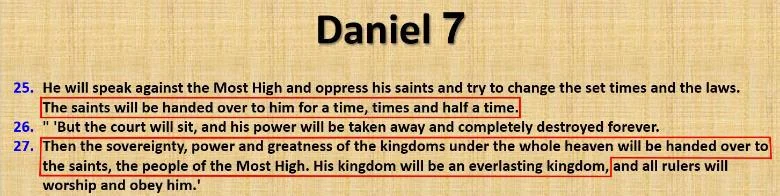
“Then the sovereignty, power and greatness of the kingdoms under the whole heaven will be handed over to the saints, the people of the Most High. His kingdom will be an everlasting kingdom, and all rulers will worship and obey him” (Daniel 7:27). This means that they will exercise dominion over all the kingdoms with power and greatness, and their authority will endure forever. Assuredly, Allāh’s Law and covenant will remain with this [Muslim] nation until the Day of Resurrection. Allāh says: {You did actually stay—as destined by Allāh—until the Day of Resurrection} (Qurʾān 30:56). Doubtlessly, the monotheistic message of Islam will endure on earth until the Hour of Resurrection, reaching every village and town, whether people like it or not. The Prophet (PBUH) said: “This religion shall definitely reach wherever the day and the night reach. Allāh shall enter this religion into every baked and unbaked home with either great honour or terrible disgrace.”

Daniel (PBUH)’s prophecy cannot apply to any nation other than the Islamic nation, neither in terms of its timeframe nor in the details described—including the rise of the Islamic nation, its characteristics, and the events surrounding the destruction of the kingdoms of the earth. The “son of man” is none other than Muḥammad (PBUH), and the saints of the Most High are his righteous followers who fought for the cause of Allāh. In short, Prophet Muḥammad (PBUH) is the stone that Nebuchadnezzar saw in his vision, which struck the statue and demolished the four oppressive pagan kingdoms.

Prophet Muḥammad (PBUH) said: “I am that brick and I am the seal (the last) of the Prophets.”11 May Allāh’s blessings and peace be upon Muḥammad, his family, his Companions, and all those who follow his guidance until the Day of Judgment. Amen!
Notes and References
- 1
Josephus Flavius, Jewish Antiquities, p. 438 as cited in Fayṣal ibn ʿAlī al-Kāmilī, Yajidūnahu Maktūban ʿIndahum (They Find Him Mentioned in their Books), (ar- Riyāḍ, Saudi Arabia: Dār al-Bayān, 2013), p. 150.
- 2
Dionysos, the Greek god of wine, theater, and ecstasy, is closely associated with leopards, which are said to symbolize his wild, untamed nature and his mythical travels to the East. In ancient art, he is frequently depicted riding a leopard, wearing a leopard skin, or in a chariot drawn by leopards.
- 3
Athanasius Fahmy George, Al-Istishhād fī Fikr al-Ābāʾ: ʿIlm al-Mārtīrūlūjī [Martyrdom in the Patristic Thought: The Science of Martyrology], (Cairo, Egypt: n.p., 2019), “Al-Iḍṭihādāt al-ʿAsharah allatī ʿAbaraṭ ʿalá al-Kanīsah fī al-ʿAṣr ar-Rūmānī,” (The Ten Persecutions That the Church Experienced During the Roman Era), p. 29, available at: https://st-takla.org/Full-Free-Coptic-Books/FreeCopticBooks-018-Father-Athanasius-Fahmy-George/003-El-Esteshhad/Martyrdom-in-the-Patristic-Thgought__007-Ten.html.
- 4
ʿAbd al-ʾAḥad Dāwūd, Muḥammad, Ṣallá Allāhu ʿAlayhi wa-Sallam, Kamā Warada fī Kitābi al-Yahūd wa-n-Naṣārá [Muḥammad, may Allāh’s Blessings and Peace be upon Him, as Mentioned in the Scriptures of the Jews and the Christians], (ar- Riyāḍ, Saudi Arabia: Maktabat al-ʿUbaykān, 2010), p. 87.
- 5
The attempt to “change the set times and the laws” is understood as a reference to the alteration of the biblical Sabbath, particularly through Constantine’s Sunday legislation, which elevated Sunday as a day of rest within the Roman Empire.
- 6
Wikipedia Contributors, “First Council of Nicaea,” Wikipedia: The Free Encyclopedia, last edited 9 March 2021, https://en.wikipedia.org/wiki/First_Council_of_Nicaea.
- 7
ʿAbd al-ʾAḥad Dāwūd, Muḥammad, Ṣallá Allāhu ʿAlayhi wa-Sallam, Kamā Warada fī Kitābi al-Yahūd wa-n-Naṣārá (Muḥammad, may Allāh’s Blessings and Peace be upon Him, as Mentioned in the Scriptures of the Jews and the Christians), (ar- Riyāḍ, Saudi Arabia: Maktabat al-ʿUbaykān, 2010), p. 93.
- 8
A group of scholars, at-Tafsīr al-Muyassar, (al-Madīnah al-Munawwarah, Saudi Arabia: King Fahd Complex for the Printing of the Noble Qurʾān, 2009).
- 9
Muḥammad al-Bukhārī, Ṣaḥīḥ al-Bukhārī, (Cairo, Egypt: Dār as-Salām. 1999), ḥadīth: 2924, available at: https://sunnah.com/bukhari:2924.
- 10
Agreed upon ḥadīth, Muḥammad al-Bukhārī, Ṣaḥīḥ al-Bukhārī, (Cairo, Egypt: Dār as-Salām. 1999), ḥadīth: 2977, available at: https://sunnah.com/bukhari:2977; Muslim ibn al-Ḥajjāj, Ṣaḥīḥ Muslim, (Bayrūt, Lebanon: Dār al-Kutub al-ʿIlmiyyah, 2020), ḥadīth: 523e, available at: https://sunnah.com/muslim:523e.
- 11
Muḥammad al-Bukhārī, Ṣaḥīḥ al-Bukhārī, (Cairo, Egypt: Dār as-Salām. 1999), ḥadīth: 3535, available at: https://sunnah.com/bukhari:3535.