Is it true that, according to Islamic law, rape falls under the category of ziná (unlawful sexual intercourse by consent) and warrants the same punishment? Is rape not a far more heinous crime?
There is a widespread misconception regarding rape (coercive ziná)—defined in Islamic law as forcible unlawful sexual intercourse by a man with a woman who is not legally married to him, without her free will and consent—and its relation to ziná (unlawful sexual intercourse by consent), another sexual crime. Some claim that Islamic law equates rape with consensual illicit sex, but this is false and represents yet another instance of anti-Islam critics misrepresenting Islam to those who do not educate themselves about its true teachings. In reality, ziná and rape are treated very differently in terms of legal implications and relevant rulings. To begin with, a woman who is a victim of rape cannot be blamed for the crime committed against her. That is, a woman who has been forced into ziná (fornication) is not considered a zāniyah (fornicator), because ziná refers specifically to consensual illicit intercourse. Accordingly, rape is treated differently in Islamic law, both with regard to the man (the offender) and the woman (the victim). Unlike a woman who willfully commits ziná, the rape victim does not receive the ḥadd (prescribed punishment), because rape falls outside the category of ziná and is instead classified under ḥirābah (lit. waging war), defined by Muslim scholars as acts committed in the land of Islam that threaten the security of life, property, and honour. In other words, Islam regards rape as a form of terrorism or a crime of violence, reflecting the severity of the offense in the eyes of the Sharīʿah. A man who forcibly abducts a woman from her home or elsewhere and then rapes her at knife-point or gun-point—placing her in fear of death or serious harm—will be categorized as a muḥārib (an outlaw who endangers the peace and security of society) and subjected to the ḥadd of ḥirābah described in this verse: {Indeed, the penalty for those who wage war against Allāh and His Messenger and spread mischief in the land is death, crucifixion, cutting off their hands and feet on opposite sides, or exile from the land. This ˹penalty˺ is a disgrace for them in this world, and they will suffer a tremendous punishment in the Hereafter} (Qurʾān 5:33). In fact, the man is liable to receive the ḥadd punishment for ḥirābah for forcefully abducting a woman, regardless of whether he rapes her. Hence, Islam neither treats ziná and rape as the same nor assigns them equal punishment. Rather, the heinous crime of forcible sexual intercourse is classified as an act of ḥirābah, reflecting Islam’s serious commitment to the honor and protection of women.
In addition to regarding rape as a serious sexual crime and condemning all its constituent elements—namely illicit sex, violence, and oppression—Islam does not tolerate the practice of unlawful sexual relations even if they are mutually consensual. This stands in stark contrast to modern Western societies, where rape is treated as a serious criminal offense, while consensual illicit sex is not considered an offense at all. It is both preposterous and dangerous to claim that consensual illicit sex is normal and harmless, while rape is a grave felony. Both are undoubtedly abhorrent and abominable sins that lead to the Hellfire; however, the former is far more harmful because its consequences are severe and far-reaching for individuals, families, and society as a whole. Consequently, Islam forbids anything that could lead to this sin, including immoral glances between the sexes, depraved speech, seductive gestures, a man and a woman being alone together, and every act or means that might stimulate desires or pave the way for illicit sexual relations. In contrast, the current sexual anarchy in the West—often referred to as “Western decadence”—is the inevitable result of accepting and normalizing the unrestricted mixing of the sexes, tabarruj (women’s impermissible display of adornment before marriageable men), nudity, and seduction. Such unlawful practices had to become commonplace before consensual illicit sex could become a widespread societal reality in the contemporary Western world. It is important to understand that consensual illicit sex is not merely unethical, but also harmful to individuals and to society. Indeed, the consequences of the sexual revolution have been monumental and devastating in the countries that cast off sexual restraint. Professor Pitirim Sorokin—an eminent Harvard sociologist who undertook a long and critical study of the sexual attitudes and habits of American men and women—honestly and courageously condemned “loose behaviour and false values” and warned that America’s world leadership is threatened by the possibility of complete sexual anarchy. Sorokin observed the following about changes in sexual standards: “any considerable change in marriage behavior, any increase in sexual promiscuity, and illicit relations, is pregnant with momentous consequences. A sex revolution drastically affects the lives of millions, deeply disturbs the community, and decisively influences the future of society.’’1 As we shall elaborate, the consequences of engaging in illicit sexual behavior can be far-reaching and profound, and it is no exaggeration to say that sexual decadence brings about the corruption and downfall of civilization.
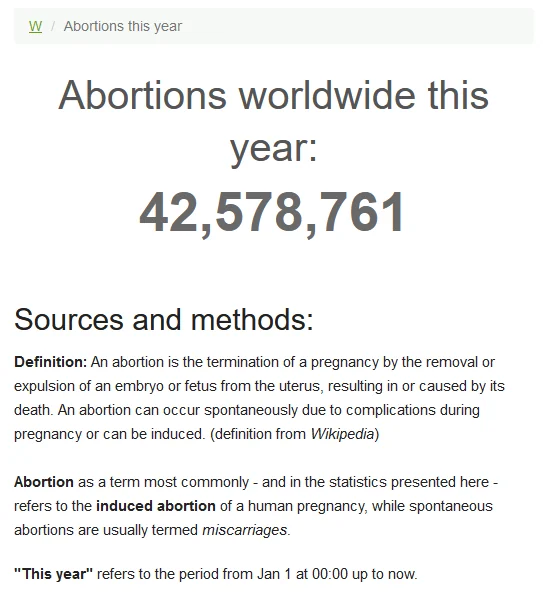
To begin with, one of the grave consequences associated with consensual illicit sexual relations is the occurrence of unintended pregnancies, many of which result in abortion. According to Worldometer—which compiles its abortion statistics from the most recent global estimates published by various sources, including the World Health Organization (WHO)—the number of abortions carried out worldwide in the year 2020 alone, up to the time of writing this section, exceeds 42 million.2
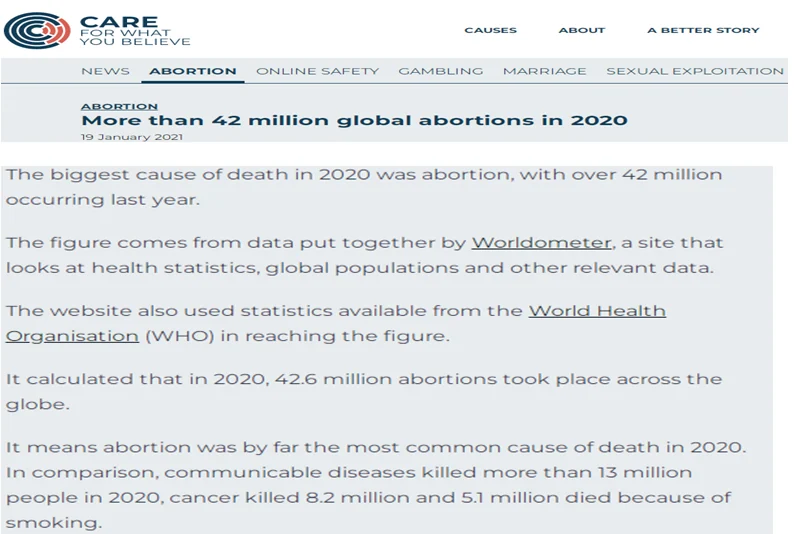
Hence, abortion was by far the most common cause of death worldwide in 2020.3
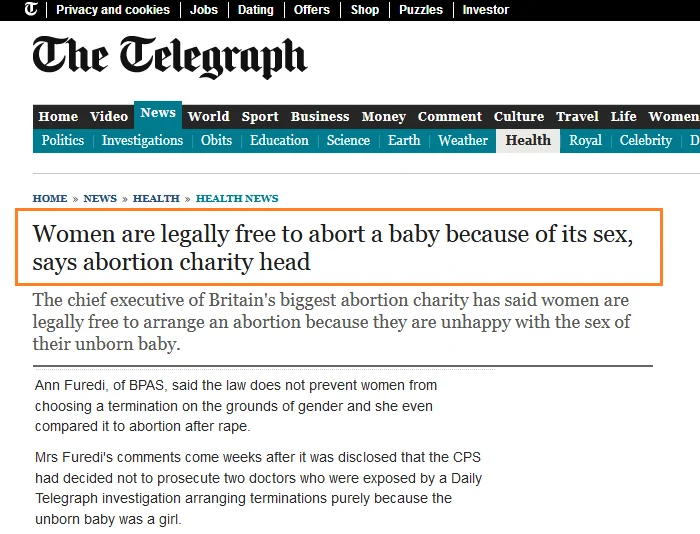
Indeed, the culture of abortion has spread rapidly across the Western world, as conception outside of a committed marriage often leads to unintended pregnancies and, consequently, abortion. It is deeply tragic that the immoral and criminal act of taking human life is legal, and even more troubling is that women are legally permitted to terminate a pregnancy based on the sex of the fetus, as occurs in Britain.4
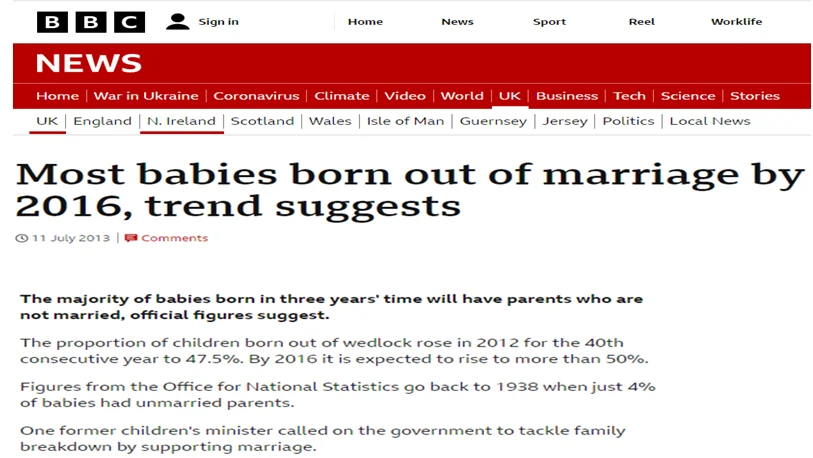
Moreover, the so-called sexual liberation in the West leads to the exploitation of women, as sex outside of marriage carries significant negative consequences, particularly for them. Women are biologically predisposed to seek monogamous, long-term relationships, and casual sexual encounters have been linked to a range of adverse emotional outcomes for them, including regret, anxiety, depression, and social stigma. Indeed, illicit sexual relations often leave women feeling used, disappointed, and emotionally confused, especially when hopes for a lasting relationship are dashed. While a male partner may feel triumphant, the woman frequently feels like a victim — and indeed rightly so. Many men, having had their way, simply discard the woman, motivated by personal gratification rather than genuine interest in her as a person or in a lifelong partnership. Consequently, when the man ends the relationship against her wishes, the woman experiences profound emotional and psychological distress. In illicit sexual relations, the man is driven by fleeting lust rather than true love, in stark contrast to the enduring commitment found in a chaste, lasting, and thriving marriage. It is noteworthy that, although in some respects women who engage in illicit sex may suffer more severely than men, the latter are also harmed, as they often struggle to build and maintain long-term relationships and may later experience lasting guilt for having exploited young women. Additionally, as the number of cohabiting but unmarried couples grows in the West, the traditional family structure is becoming less common. In other words, illicit sexual relations pose a threat to marriage and family—the foundational institutions of all societies. While men often walk away, single mothers face numerous challenges, including financial difficulties and emotional distress. Indeed, the families into which children are born in the West have changed dramatically over the past several decades. Among the most notable changes is the rise in nonmarital childbearing, that is, children born to unmarried parents. For example, official statistics indicate that the majority of babies born in the United Kingdom are born out of wedlock.5
Similarly, recent estimates indicate that approximately 40 percent of births in the United States occur outside of marriage.6

Furthermore, rather than fostering life—one of the fundamental purposes of sex—consensual illicit sexual relations lead to death, as they contribute to the spread of sexually transmitted diseases (STDs). STDs, which impose a substantial health and economic burden on Western countries, arise directly from illicit sexual activity due to the increased likelihood of having multiple or concurrent partners.7

These facts do not make for pleasant reading, but they represent the often-hidden ugliness of sexual immorality. This is the reality Westerners do not see in Hollywood romance films, in provocative advertising campaigns, or in hyper-sexualized music videos. They are constantly bombarded with the glitz and sensual glamour of what appears to be liberating sexual independence, yet they often have no real awareness—or healthy fear—of the deadly diseases that sex without boundaries can bring into their lives. It goes without saying that, while sexual immorality and STDs largely go hand in hand, two people who have never engaged in sex before or outside of marriage will almost certainly never experience an STD. Thus, consensual illicit sex harms not only the mental and emotional well-being of those who engage in it, but also their physical health. In a nutshell, sexual immorality inevitably brings detrimental consequences upon both individuals and societies. Simply put, no matter how appealing, pleasurable, or harmless it may seem, or how “safe” Western societies attempt to make illicit sex, any sexual behavior that violates Allāh’s laws is inherently unsafe and ultimately destructive, both physically and emotionally. Beyond these harms, those who engage in sexual immorality also suffer spiritual consequences, such as a growing sense of distance from God and a weakening of faith. Indeed, giving in to one’s lusts is a sin that severely undermines a believer’s faith: it hardens the heart, darkens the soul, and may even extinguish faith altogether. While committing such a sin, a believer’s faith diminishes, and as time passes without repentance, the heart becomes increasingly hardened. As we have explained, in addition to corrupting one’s faith and destroying inner peace, consensual illicit sex also erodes family bonds and, more importantly, contributes to the downfall of societies.
To conclude, consensual illicit sex is damaging on multiple levels. As shown, it profoundly affects the physical, psychological, emotional, moral, and spiritual well-being of individuals. It also ultimately leads to collective downfall, undermining the very fabric of society. This now-normalized lifestyle in Western societies has brought about family breakdown, the mixing of lineages, and widespread abortion—all disastrous and inevitable consequences. Undeniably, any society that accepts the awful sin of sexual immorality has reached the acme of moral decay, for when such immorality is normalized, it erodes traditional social values and norms, fostering crime, addiction, and other problems. Rape is also among the worst crimes a human being can commit in the sight of Allāh, but unlike consensual illicit sex, it does not produce the same widespread societal destruction. It is typically a one-off crime that harms individual victims without adversely affecting society as a whole. In a word, consensual illicit sex is a far more serious offence than rape—and it is utterly absurd that modern Western societies do not regard it as an offence at all.
Notes and References
- 1
Pitirim Sorokin, The American Sex Revolution, (Massachusetts, U.S.: Porter Sargent, 1956), p. 7.
- 2
“Abortions Worldwide this Year,” Worldometer, https://www.worldometers.info/abortions/.
- 3
“More than 42 Million Global Abortions in 2020,” Care For What You Believe, 19 Jan. 2021, https://care.org.uk/news/2021/01/more-than-42-million-global-abortions-in-2020.
- 4
Alice Philipson, “Women are Legally Free to Abort a Baby Because of its Sex, Says Abortion Charity Head,” The Telegraph, 18 Sep. 2013, https://www.telegraph.co.uk/news/health/news/10316715/Women-are-legally-free-to-abort-a-baby-because-of-its-sex-says-abortion-charity-head.html.
- 5
“Most Babies Born out of Marriage by 2016, Trend Suggests,” BBC News, 11 Jul. 2013, https://www.bbc.com/news/uk-23265810.
- 6
“Dramatic Increase in the Proportion of Births Outside of Marriage in the United States from 1990 to 2016,” Child Trends, 8 Aug. 2018, https://www.childtrends.org/publications/dramatic-increase-in-percentage-of-births-outside-marriage-among-whites-hispanics-and-women-with-higher-education-levels.
- 7
Bobbi Kumari, “Any Sex Outside of God is Unsafe,” Woman Alive, 27 Apr. 2023, https://www.womanalive.co.uk/any-sex-outside-of-god-is-unsafe/15429.article.